Removable Paper Label
CN → US| HS Code | Tariff Rate | Origin | Destination | Doc |
|---|---|---|---|---|
| 4821902000 | 35.0% | CN | US | Official Doc |
| 4821904000 | 35.0% | CN | US | Official Doc |
Product Images
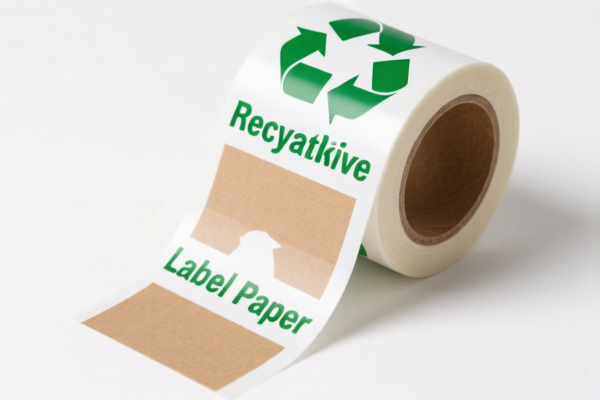

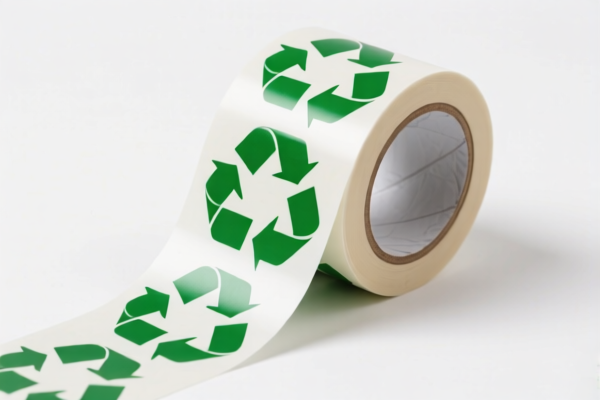
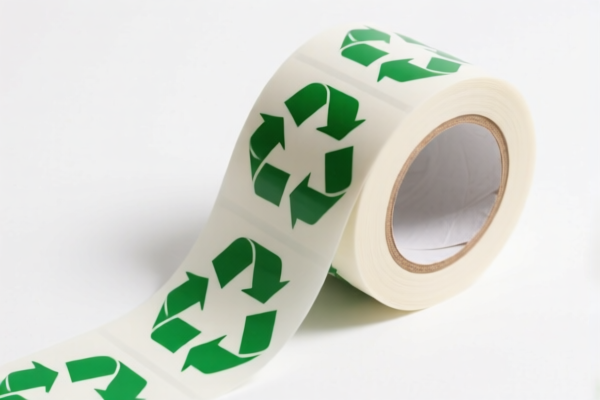
AI Analysis
🏷️ Removable Paper Label (Paper and Paperboard Labels)
🌐 HS Code Reference & Customs Clearance Guide | 2026 Latest Tariff Analysis | Professional Strategy for Paper Products
📌 I. Product Definition & Classification: What Exactly Is a "Removable Paper Label"?
"Removable Paper Labels" refer to adhesive-backed labels made primarily of paper substrate. The term "removable" implies the use of a specific low-tack adhesive that allows for clean detachment without damaging the surface, a key technical characteristic often scrutinized during customs classification. In international trade, these fall under Chapter 48 (Paper and Paperboard) and specifically Heading 48.21 (Paper or paperboard labels of all kinds, whether or not printed).
Classification hinges on two critical factors: 1. Material: Must be paper/paperboard (not plastic/film). 2. Type: Is it self-adhesive (sticker-style) or non-adhesive?
⚠️ Key Distinction:
- If the label has an adhesive backing (even if "removable"), it is classified as "Self-adhesive".
- If it has NO adhesive (e.g., glue-on or tape-on at time of application, but sold without adhesive), it falls under "Other".
- Crucial Note: "Removable" describes the performance of the adhesive, not the absence of adhesive. Therefore, most "removable labels" sold on rolls or sheets with adhesive are classified as Self-adhesive.
📦 II. HS Code Classification Details (2026 Latest Tariff Authority Match)
Based on the provided , we have two distinct classifications. It is vital to determine if your product has an adhesive layer.
| HS Code | Product Description | Applicable Scenario | Adhesive Status | Tax Rate |
|---|---|---|---|---|
4821.90.20.00 |
Self-adhesive Paper Labels | Removable stickers, peel-and-stick labels, adhesive-backed tags | ✅ Yes (Has adhesive backing) | 25.0% |
4821.90.40.00 |
Other Paper Labels | Labels requiring separate adhesive application, tape-backed labels (without prior adhesive), printed tags | ❌ No (No self-adhesive layer) | 25.0% |
🔍 重点提醒 (Key Reminder):
- Why 25% for BOTH?
According to the provided data, both codes carry the same total tax rate of 25.0%. This is due to the 25% Additional Tariff (Section 301) applied to goods of Chinese origin entering the US market, despite the 0% Base Tariff.
- Do NOT misclassify "Removable" as "Other" just because it peels off cleanly. If it has an adhesive coating on the back when imported, it MUST go under4821.90.20.00. Misclassification can lead to penalties, even if the tax rate happens to be the same, because it violates customs declaration accuracy.
💰 III. 2026 Latest Tariff Rate Breakdown (Detailed Tax Clause Explanation)
✅ Applicable Country: United States (US)
✅ Country of Origin: China (CN) (Assumed based on typical "Additional Tariff" context in the data)
✅ Effective Time: Current Status (Subject to Section 301 Orders)
🎯 1. 4821.90.20.00 —— Self-adhesive Paper Labels (Removable Type)
| Item | Content |
|---|---|
| Base Tariff Rate | 0.0% (General duty rate for paper labels) |
| Additional Tariff (Section 301) | +25.0% (Applied to Chinese imports) |
| Total Tax Rate | 25.0% |
| Tax Calculation | CIF Value × 25% |
| De Minimis Eligibility | ❌ No (Generally, Section 301 goods are excluded from de minimis thresholds under current enforcement trends, but verify specific CBP directives) |
| Legal Basis Path | HTSUS: 4821.90.20.00 → Section 301 Footnote → Total 25% |
📌 Explanation:
- "Base 0%": Paper labels are considered low-tech items with no base duty under normal trade relations.
- "+25% Additional": This is the "Section 301" tariff. It is non-negotiable and applies regardless of whether the label is removable, permanent, printed, or unprinted.
- "Removable" Feature: This is a product attribute, not a tariff exemption factor. It does not reduce the 25% additional duty.
🎯 2. 4821.90.40.00 —— Other Paper Labels (Non-Adhesive)
| Item | Content |
|---|---|
| Base Tariff Rate | 0.0% |
| Additional Tariff (Section 301) | +25.0% |
| Total Tax Rate | 25.0% |
| Tax Calculation | CIF Value × 25% |
| De Minimis Eligibility | ❌ No |
| Legal Basis Path | HTSUS: 4821.90.40.00 → Section 301 Footnote → Total 25% |
📌 Note:
- Even though these are "Other" (non-adhesive), the 25% additional tariff still applies.
- The tax burden is identical to self-adhesive labels in this dataset, so cost savings do not come from switching codes, but from accurate declaration to avoid fines.
🛠️ IV. Customs Clearance Practical Advice (Operational Pitfall Guide)
✅ 1. Preparation Checklist (Essential Documents)
| Document | Must Provide | Explanation |
|---|---|---|
| ✅ Product Specification Sheet | ✔️ | Must specify: "Paper Label," "Removable Adhesive," or "Non-Adhesive." |
| ✅ Adhesive Type Confirmation | ✔️ | Critical! Is there an adhesive coating on the back when shipped? If yes → 4821.90.20.00. If no → 4821.90.40.00. |
| ✅ Product Photos | ✔️ | Show the back of the label (for adhesive) and the front (print quality). |
| ✅ Commercial Invoice | ✔️ | Describe accurately: "Paper Labels, Removable Adhesive, Printed, HS 4821.90.20.00." |
| ✅ Packing List | ✔️ | Detail weight and dimensions. |
✅ 2. Declaration Strategy (Key Mantra)
🔥 “Adhesive Back? Code .20. No Adhesive? Code .40. Both 25%, Don’t Guess!”
| Scenario | Correct HS Code | Common Mistake | Consequence |
|---|---|---|---|
| Sticker sheet (peel off) | 4821.90.20.00 |
Classify as .40 to look "simple" | False Declaration Risk |
| Label requiring glue stick | 4821.90.40.00 |
Classify as .20 (over-declared) | Potential duty overpayment or audit flag |
| Printable paper sheets (no cut) | Check Chapter 48, Not 4821 | Use 4821 codes | Wrong Chapter (4821 is for "labels") |
| Plastic/Vinyl Labels | NOT in | Use 4821 codes | Major Error (Go to Chapter 39) |
✅ 3. Special Handling for "Removable" Feature
| Situation | Handling Advice |
|---|---|
| "Removable" Marketing Claim | Do not expect tariff reduction. Customs does not grant discounts for "removable" features. |
| Combined Packages | If shipping "Removable Labels" + "Non-Adhesive Tags" together, split the shipment or declare separately to avoid ambiguity. |
| Printed vs. Unprinted | Both codes (4821.90.20.00 and 4821.90.40.00) cover "whether or not printed." Printing status does not change the HS Code or Tax Rate. |
🌍 V. Global Market Comparison (2026 Snapshot)
| Country/Region | Recommended HS Code | Tariff (China Origin) | Remarks |
|---|---|---|---|
| 🇺🇸 USA | 4821.90.20.00 or .40 |
25.0% | High additional duty due to Section 301. |
| 🇨🇳 China | 4821.90.20.00 / .40 | 0% ~ 5% | Depends on exact subheading and free trade agreements. |
| 🇪🇺 EU | 4821.10.00 / 4821.90 | 0% | Generally low duty; check EORI compliance. |
| 🇬🇧 UK | 4821.10.00 / 4821.90 | 0% | Post-Brexit rules apply; generally favorable for paper goods. |
📌 Conclusion:
- The USA is the most expensive market for this product due to the flat 25% additional tariff.
- For other major markets (EU, UK, Asia), the duty burden is significantly lower or zero.
- Cost Optimization: Consider supply chain diversification if targeting the US heavily, or factor the 25% into your pricing strategy.
📌 VI. Common Errors & Pitfall Guide (Lessons Learned)
❌ Error 1: Calling it "Sticker" instead of "Label"
👉 Consequence: Customs may ask for clarification, causing delays. Use precise language: "Paper Label."
❌ Error 2: Assuming "Removable" = "Non-Adhesive"
👉 Consequence: Misclassification. If it has adhesive, it must be .20. Using .40 for adhesive labels is a violation.
❌ Error 3: Ignoring the 25% Additional Tariff
👉 Consequence: Shocker! Many importers forget the Section 301 duty. Total cost is 25%, not 0%. Budget accordingly.
❌ Error 4: Including Plastic Components
👉 Consequence: If the label has a plastic film facestock (even if "paper-like"), it may be classified under Chapter 39 (Plastics). Keep it 100% Paper for 4821.
✅ Correct Declaration Example:
"Self-adhesive paper labels, removable adhesive, printed, HS Code 4821.90.20.00, Country of Origin: China."
🎯 VII. Conclusion: Precision in Classification, Predictability in Cost
🎯 Key Takeaway:
🔹 "Paper + Adhesive = .20. Paper + No Adhesive = .40. Both = 25% Total Tax."
🔹 "Removable" is a feature, not a tariff class. Do not let it confuse your code selection.
📌 Pro Tip:
- If your "removable labels" are printed with security features or used for pharmaceutical packaging, ensure they meet FDA/SEC labeling requirements in addition to customs classification.
- Always request a Pre-Ruling from CBP if your product sits on the boundary (e.g., paper label with very thin adhesive vs. tape-backed).
📣 Immediate Action:
📞 Verify Adhesive Presence: Look at the back of your product roll.
🚀 Select Code:.20if sticky,.40if not.
💼 Budget: Plan for 25% Total Duty for US imports.
✨ Professional Customs Clearance Starts with Accurate Codes!
💼 Your Margin Depends on Correct Classification!
Customer Reviews
About HS Code Classification
The Harmonized System (HS) is an internationally standardized nomenclature developed by the World Customs Organization (WCO) to classify traded products. Over 200 countries use the HS system as the basis for customs tariffs, trade statistics, and import/export regulations.
Each HS code follows a hierarchical structure:
- Chapter (2 digits) — Broad category of goods (e.g., Chapter 84: Machinery and Mechanical Appliances)
- Heading (4 digits) — More specific grouping within the chapter
- Subheading (6 digits) — Internationally standardized breakdown, used by all WCO member countries
- National subdivisions (8-10 digits) — Country-specific extensions for further classification, such as US HTSUS 10-digit codes
Correct HS code classification is essential for smooth customs clearance, accurate duty payment, and compliance with trade regulations. Misclassification can lead to customs delays, overpayment of duties, or penalties.
When importing from CN to US, the applicable tariff rates may include:
- Most-Favored-Nation (MFN) rate — The standard duty rate applied to WTO members
- General rate — Applied to countries without trade agreements
- Trade remedy duties — Additional tariffs such as Section 301 (anti-dumping), Section 232 (national security), or countervailing duties
The information provided on this page is for reference purposes only. For official classification, please consult with your local customs authority or a licensed customs broker.