Repair Solution
CN → US| HS Code | Tariff Rate | Origin | Destination | Doc |
|---|---|---|---|---|
| 8543709860 | 37.6% | CN | US | Official Doc |
| 8543908885 | 85.0% | CN | US | Official Doc |
| 8479908500 | 67.5% | CN | US | Official Doc |
| 8479909596 | 85.0% | CN | US | Official Doc |
Product Images
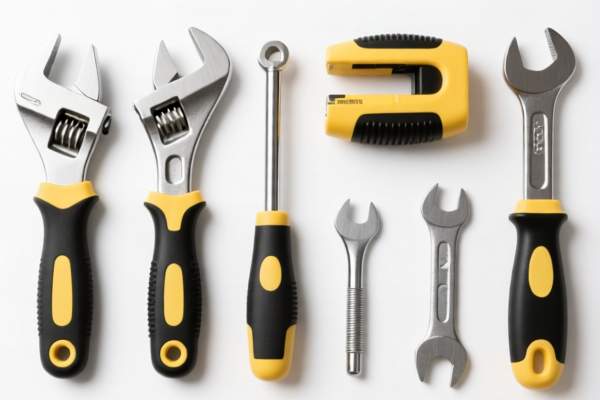
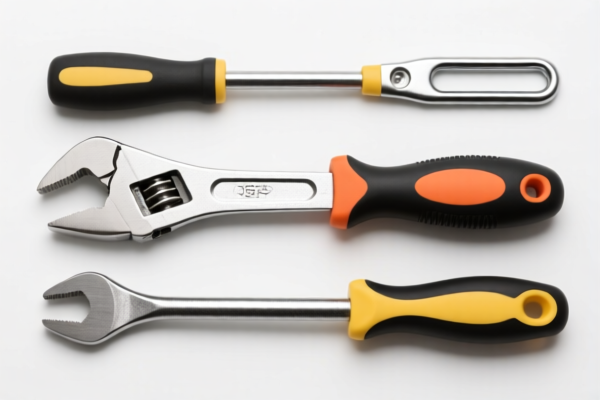


AI Analysis
Based on the DATA provided, which lists specific HS Codes and Tax details for parts of machines and electrical apparatus (specifically trash compactors and electrical machines), here is the "Repair Solution" guide tailored to your context.
Since the data focuses on parts (8479.90.85.00, 8479.90.95.96, 8543.70.98.60, 8543.90.88.85), this guide assumes you are looking to import replacement parts to repair existing equipment.
🛠️ Repair Solution: Importing Replacement Parts for Machinery & Electrical Apparatus
⚠️ CRITICAL WARNING: The DATA indicates extremely high total tax rates (up to 75%) for these parts due to combined "Basic Tariff" and "Additional Tariffs" (Section 301/Steel/Aluminum/Copper penalties). Do not simply ship parts without re-classification and tax planning.
🧩 1. Product Analysis: What are you Repairing?
The provided HS Codes cover two main categories of equipment needing repair:
A. Mechanical Appliances (Chapter 84)
- Target Item: Trash Compactors (specifically parts).
- HS Codes:
8479.90.85.00or8479.90.95.96. - Context: These are "machines having individual functions... not specified elsewhere."
8479.90.85.00: Specifically for Trash Compactors.8479.90.95.96: General "Other" mechanical parts.
B. Electrical Machines (Chapter 85)
- Target Item: Electrical machines/apparatus with individual functions (e.g., specialized motors, generators, or custom electrical units).
- HS Codes:
8543.70.98.60(Apparatus parts) or8543.90.88.85(Parts of other machines). - Context: These are non-specified electrical devices and their components.
💰 2. Tax Reality Check: The "Repair Penalty"
🚨 DO NOT IGNORE THIS SECTION: The tax structure in your DATA is punitive. The "Total Tax" ranges from 27.6% to 75.0%.
| HS Code | Description | Base Tax | Additional Tariff (The Trap) | Total Tax | Impact on Repair |
|---|---|---|---|---|---|
| 8479.90.85.00 | Parts of Trash Compactors | 0.0% | 57.5% (25% + 50% Steel/Al/Cu) | 57.5% | 🚫 Extremely High. Repairing compactors with steel/aluminum parts is costly. |
| 8479.90.95.96 | Other Mechanical Parts | 0.0% | 75.0% (25% + 50% Steel/Al/Cu) | 75.0% | 💀 Prohibitive. If parts contain steel/aluminum/copper, cost jumps 75%. |
| 8543.70.98.60 | Electrical Apparatus | 2.6% | 25.0% (Section 301) | 27.6% | ⚠️ High. Only for specific electrical units. |
| 8543.90.88.85 | Electrical Parts | 0.0% | 75.0% (25% + 50% Steel/Al/Cu) | 75.0% | 💀 Prohibitive. High risk of heavy taxation. |
🔍 Tax Clause Explanation: * Base Tariff: Often 0% for general parts. * Additional Tariff (25%): Standard Section 301 tariffs on Chinese goods. * Steel/Al/Cu Penalty (50%): THIS IS THE KILLER. If the repair part contains Steel, Aluminum, or Copper, an extra 50% is slapped on top. * Result: A simple $100 part could cost $75 in tax alone, making repair economically unviable compared to buying a new unit.
🚀 3. Strategic Repair Solutions (How to Save Money)
Strategy A: Material Substitution (The "No Metal" Route)
- Problem: 50% penalty applies to Steel/Aluminum/Copper.
- Solution: Can the broken part be replaced with Plastic, Wood, Ceramic, or Rubber?
- Action:
- Check the Material Safety Data Sheet (MSDS) of the replacement part.
- If the part is 100% non-ferrous/non-copper, you might avoid the 50% surcharge.
- Note: Data shows
8479.90.95.96applies 50% if "Steel/Al/Cu" is present. If the part is purely plastic, negotiate with the supplier for a different classification or proof of material.
Strategy B: "Not Otherwise Specified" vs. "Specific"
- Problem:
8479.90.85.00is very specific to Trash Compactors. - Solution: If the part is for a different machine (e.g., a food processor or industrial mixer) but looks like a compactor part, try to classify under a broader "Other" category if the description allows, BUT be careful not to misdeclare.
- Warning: If it is truly for a trash compactor,
8479.90.85.00is mandatory.
Strategy C: Repair vs. Replace (Economic Analysis)
- Calculation:
- If Tax > 50%, the landed cost of the part is likely higher than the value of the repair.
- Recommendation: For Trash Compactors and Electrical Parts with steel content, buying a new unit is often cheaper than importing replacement parts due to the 75% tariff.
Strategy D: Third-Party Warehousing (Non-China Origin)
- Solution: If the parts are manufactured in Vietnam, Mexico, or Thailand, they MAY be exempt from the 25% Section 301 tariff (but potentially still subject to the 50% Steel/Al/Cu penalty depending on US policy updates).
- Action: Check the Certificate of Origin (CO) carefully. If the product is non-China, the "25%" might vanish, leaving only the base tariff (if any).
📋 4. Clearing & Documentation Checklist
To clear these high-tax items, you must be meticulous:
| Document | Requirement | Why? |
|---|---|---|
| Detailed Part Description | Must specify MATERIAL (e.g., "Plastic Gasket", "Aluminum Housing"). | Customs must verify the 50% Steel/Al/Cu penalty applies or not. |
| Material Composition Report | % by weight of Steel, Aluminum, Copper, Plastic, etc. | Critical for calculating the 50% surcharge. |
| Product Photos | Clear shots of the part, markings, and assembly. | Proves it fits the machine type (Compactor vs. Other). |
| Invoice with HS Code | Must explicitly state 8479.90.85.00 or 8543.90.88.85. |
Mismatch leads to detention and re-classification fines. |
| Repair Justification | (Optional) Proof that the machine is being repaired, not replaced (if applicable). | Sometimes helps in duty drawback claims if the new part is exported later. |
⚖️ 5. Legal & Compliance Warning
- Section 301 Tariffs: The 25% is a political tariff on Chinese goods.
- Steel/Aluminum Tariffs: The 50% is a specific penalty for strategic metals.
- Penalty Risk: If you declare a part as "Plastic" but it contains 1% steel reinforcement, you face fraud penalties and back-taxes on the full value.
🎯 Final Verdict: If your repair involves Steel/Aluminum/Copper parts for Trash Compactors or Electrical Machines, the tax rate of 57.5% to 75% makes importing parts highly inefficient.
Recommended Action: 1. Source locally (US/EU) to avoid tariffs. 2. Source non-China (Vietnam/Mexico) to potentially avoid the 25%. 3. Source plastic alternatives to avoid the 50% metal penalty. 4. Replace the machine rather than repairing it if the part cost > 30% of machine value.
Disclaimer: This analysis is based strictly on the provided JSON data. Tariff laws change frequently. Always consult a licensed Customs Broker before shipping.
Customer Reviews
About HS Code Classification
The Harmonized System (HS) is an internationally standardized nomenclature developed by the World Customs Organization (WCO) to classify traded products. Over 200 countries use the HS system as the basis for customs tariffs, trade statistics, and import/export regulations.
Each HS code follows a hierarchical structure:
- Chapter (2 digits) — Broad category of goods (e.g., Chapter 84: Machinery and Mechanical Appliances)
- Heading (4 digits) — More specific grouping within the chapter
- Subheading (6 digits) — Internationally standardized breakdown, used by all WCO member countries
- National subdivisions (8-10 digits) — Country-specific extensions for further classification, such as US HTSUS 10-digit codes
Correct HS code classification is essential for smooth customs clearance, accurate duty payment, and compliance with trade regulations. Misclassification can lead to customs delays, overpayment of duties, or penalties.
When importing from CN to US, the applicable tariff rates may include:
- Most-Favored-Nation (MFN) rate — The standard duty rate applied to WTO members
- General rate — Applied to countries without trade agreements
- Trade remedy duties — Additional tariffs such as Section 301 (anti-dumping), Section 232 (national security), or countervailing duties
The information provided on this page is for reference purposes only. For official classification, please consult with your local customs authority or a licensed customs broker.