Repair Tools
CN → US| HS Code | Tariff Rate | Origin | Destination | Doc |
|---|---|---|---|---|
| 8467290040 | 17.5% | CN | US | Official Doc |
| 8205595560 | 40.3% | CN | US | Official Doc |
| 8206000000 | 0.0% | CN | US | Official Doc |
| 8467891000 | 17.5% | CN | US | Official Doc |
| 8205593080 | 35.0% | CN | US | Official Doc |
Product Images
AI Analysis
🔧 Auto Repair Tools (Hand & Power Tools)
🌐 HS Code Reference & Customs Clearance Guide | 2026 Latest Tariff Analysis | Professional Clearance Strategy
📌 I. Product Definition & Classification: Do You Really Know "Repair Tools"?
Auto repair tools are critical equipment for vehicle maintenance and mechanical operations. In international trade, they are broadly categorized into two main types:
- Power Tools (Electric/Pneumatic/Hydraulic): Tools driven by electricity, air pressure, or hydraulics, such as impact wrenches, drills, and grinders.
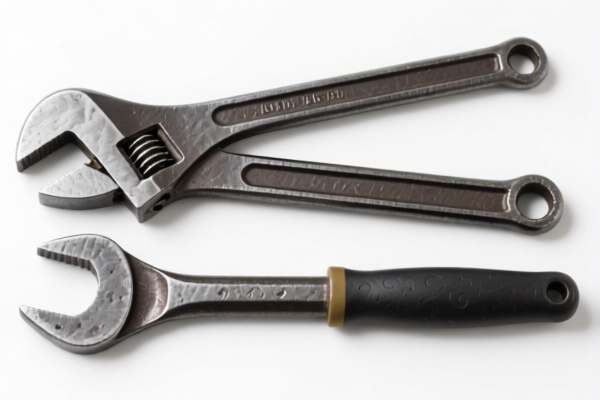
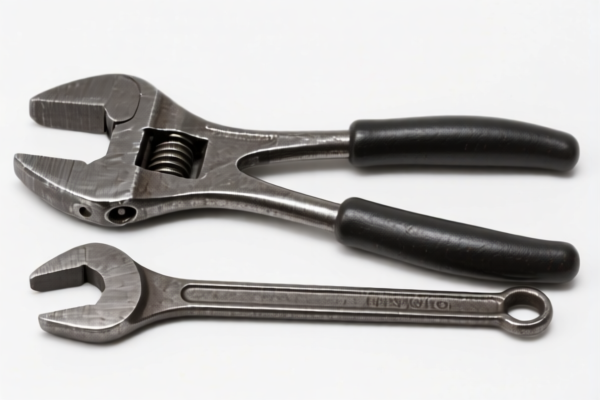
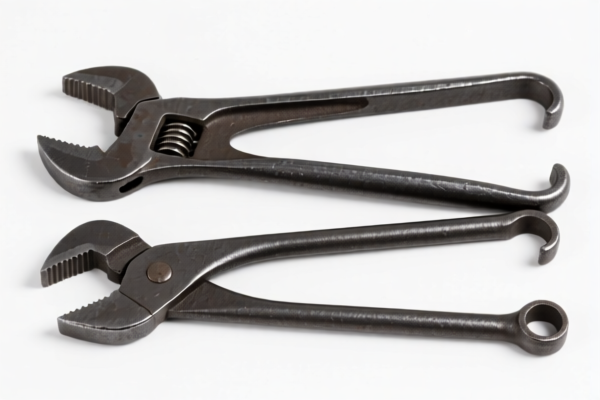
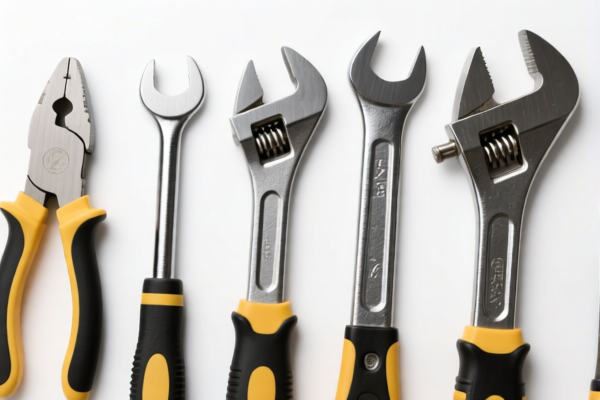
- Hand Tools (Manual): Tools operated by human force, such as wrenches, screwdrivers, pliers, and sockets.
⚠️ Key Distinction Point:
- If the tool is electric, pneumatic, or hydraulic and used for driving screws or impacting nuts → Classified under Chapter 84 (Machinery).
- If the tool is manual and made of metal (wrenches, pliers) → Classified under Chapter 82 (Tools, Implements, Spoons and Forks).
- If sold as a retail kit/set containing various tools → Classified under Chapter 82 (Hand Tools), typically based on the principal value or character.
📦 II. HS Code Classification Details (2026 Latest Tariff Authority Comparison)
| HS Code | Product Description | Application Scenario | Classification Basis |
|---|---|---|---|
8467.29.00.40 |
Parts of tools for working in the reverse direction (e.g., Impact Wrenches) | Power tools, auto repair impact drivers, pneumatic tools | ✅ Power Tool |
8205.59.55.60 |
Other hand tools; other; other (Metal Hand Tools) | Manual wrenches, pliers, screwdrivers (Metal material) | ✅ Manual Hand Tool |
8206.00.00.00 |
Hand tools, implements, etc., put up in sets for retail sale | Retail kits containing mixed hand tools | ✅ Hand Tool Set |
8467.89.10.00 |
Other parts of tools for working in the reverse direction | Other power tool parts/accessories for metal processing/mechanical operation | ✅ Power Tool Part |
8205.59.30.80 |
Other hand tools; other; other (General Hand Tools) | General manual hand tools not specified elsewhere (Catch-all) | ✅ Manual Hand Tool |
🔍 Key Reminder:
- Power Tools (Electric/Pneumatic) generally fall under 8467 due to their mechanical drive nature.
- Hand Tools (Manual) fall under 8205 or 8206.
- Sets (8206.00.00.00) are taxed based on the component with the highest duty rate within the set.
💰 III. 2026 Latest Tariff Rate Details (Including Surtaxes & Policy Add-ons)
✅ Applicable Country: United States (US)
✅ Origin: China (CN)
✅ Effective Time: Current rates apply (including Section 301 and IEEPA surcharges)
🎯 1. 8467.29.00.40 —— Impact Wrenches & Power Tool Parts
| Item | Content |
|---|---|
| Basic Tariff | 0.0% |
| Section 301 Surcharge | +7.5% |
| IEEPA Surcharge (Section 122) | +10% |
| Total Tariff Rate | 17.5% |
| Calculation Method | CIF Value × 17.5% |
| De Minimis Exemption | ❌ Not Applicable (Subject to tariffs) |
| Legal Basis Path | IEEPA:9903.01.25 → USITC:8467.29.00.40 → FOOTNOTE:9903.88.01 |
📌 Explanation:
- "Section 301 Surcharge 7.5%" applies to specific power tool categories under the US-China trade agreement.
- "IEEPA 10%" is the additional tariff on Chinese goods under the International Emergency Economic Powers Act.
- Total 17.5% is moderate compared to other categories but still significant for low-margin goods.
🎯 2. 8205.59.55.60 —— Metal Hand Tools (Non-Specific)
| Item | Content |
|---|---|
| Basic Tariff | 5.3% |
| Section 301 Surcharge | +25.0% |
| IEEPA Surcharge (Section 122) | +10% |
| Total Tariff Rate | 40.3% |
| Calculation Method | CIF Value × 40.3% |
| De Minimis Exemption | ❌ Not Applicable |
| Legal Basis Path | IEEPA:9903.01.25 → USITC:8205.59.55.60 → FOOTNOTE:9903.88.01 |
📌 Note:
- This is a High Tariff Category.
- Manual metal tools are heavily taxed due to Section 301 (25%) and IEEPA (10%).
- Even though the basic tariff is low (5.3%), the surcharges drive the total cost up significantly.
🎯 3. 8206.00.00.00 —— Hand Tools Put Up in Sets
| Item | Content |
|---|---|
| Basic Tariff | Varies by component in the set |
| Section 301 Surcharge | +25.0% |
| IEEPA Surcharge (Section 122) | +10% |
| Total Tariff Rate | Applicable Rate + 35.0% |
| Calculation Method | (Component Duty + 35%) |
| De Minimis Exemption | ❌ Not Applicable |
| Legal Basis Path | IEEPA:9903.01.25 → USITC:8206.00.00.00 |
📌 Explanation:
- For sets, the duty is calculated based on the highest duty rate component within the set.
- If the set contains power tools (e.g., drill + manual wrench), the power tool rate may apply if it dominates.
- High Complexity: Requires detailed breakdown of contents to avoid misclassification.
🎯 4. 8467.89.10.00 —— Other Power Tool Parts/Accessories
| Item | Content |
|---|---|
| Basic Tariff | 0.0% |
| Section 301 Surcharge | +7.5% |
| IEEPA Surcharge (Section 122) | +10% |
| Total Tariff Rate | 17.5% |
| Calculation Method | CIF Value × 17.5% |
| De Minimis Exemption | ❌ Not Applicable |
| Legal Basis Path | IEEPA:9903.01.25 → USITC:8467.89.10.00 |
📌 Note:
- Similar to8467.29.00.40, these parts benefit from a 0% basic tariff.
- Suitable for spare parts, attachments, or accessories for power tools.
🎯 5. 8205.59.30.80 —— General Hand Tools (Catch-All)
| Item | Content |
|---|---|
| Basic Tariff | 0.0% |
| Section 301 Surcharge | +25.0% |
| IEEPA Surcharge (Section 122) | +10% |
| Total Tariff Rate | 35.0% |
| Calculation Method | CIF Value × 35.0% |
| De Minimis Exemption | ❌ Not Applicable |
| Legal Basis Path | IEEPA:9903.01.25 → USITC:8205.59.30.80 |
📌 Note:
- Despite a 0% basic tariff, the 35% total rate is substantial due to surcharges.
- This is a common "fallback" classification for hand tools not specifically listed elsewhere.
🛠️ IV. Customs Clearance Practical Advice (实战避坑指南)
✅ 1. Preparation Checklist (Essential Documents)
| Document | Mandatory | Description |
|---|---|---|
| ✅ Product Specifications | ✔️ | Material (Metal/Plastic), Power Source (Electric/Air/Manual), Voltage/Air Pressure |
| ✅ Product Photos | ✔️ | Clear images of the tool, including brand, model, and power cord/plug |
| ✅ Commercial Invoice | ✔️ | Clearly state "Auto Repair Tool" and specify "Hand Tool" vs. "Power Tool" |
| ✅ Packing List | ✔️ | Detail items if it's a set; avoid vague descriptions |
| ✅ Certifications | ✔️ | UL/ETL (for electric), CE (for EU-bound), or specific safety standards |
✅ 2. Declaration Tips (Key Rules)
🔥 "Classify by Drive, Not by Use!"
| Scenario | Correct Classification | Wrong Action |
|---|---|---|
| Impact Wrench (Electric) | 8467.29.00.40 (17.5%) |
Misdeclare as Hand Tool → Risk of audit |
| Manual Wrench Set | 8206.00.00.00 or 8205.59.30.80 (35-40.3%) |
Misdeclare as Power Tool → Wrong rate |
| Drill + Wrench Kit | 8467.29.00.40 (if drill dominates) |
Split declaration → Complicated clearance |
| Spare Parts for Drill | 8467.89.10.00 (17.5%) |
Declare as finished tool → Higher duty risk |
📌 Key Reminder:
- Power Tools (8467) generally have lower surcharges (7.5%) than Hand Tools (8205, 25%).
- If a product can be classified as either, ensure the primary function determines the class.
- Sets are risky; consider shipping components separately if tariffs differ significantly.
✅ 3. Special Situations
| Situation | Handling Advice |
|---|---|
| OEM Custom Tools | Provide design specs to prove material and drive type. |
| Mixed Sets (Power + Manual) | Calculate duty based on the component with the highest tariff if classified as a set. Consider separating if cost-effective. |
| Pneumatic Tools | Classified as power tools (8467), not hand tools (8205). |
| Origin Non-China | If sourced from Vietnam/Mexico, IEEPA/Section 301 may not apply → Significant savings. |
🌍 V. Global Market Clearance Comparison (2026 Latest)
| Country/Region | Recommended HS Code | Tariff (China Origin) | Certification | Note |
|---|---|---|---|---|
| 🇺🇸 USA | 8467.29.00.40 / 8205.59.30.80 |
17.5% / 35.0-40.3% | UL/ETL | High surcharges on hand tools |
| 🇨🇳 China | 8467.29.00.40 / 8205.59.30.80 |
5-10% | CCC (if applicable) | No surcharges |
| 🇪🇺 EU | 8467.29 / 8205 |
2.7-5% | CE/ROHS | No Section 301/IEEPA |
| 🇯🇵 Japan | 8467.29 / 8205 |
1.5-5% | PSE/SG Mark | Low tariffs |
| 🇦🇺 Australia | 8467.29 / 8205 |
5-10% | RCM | Moderate tariffs |
📌 Conclusion:
- USA has the highest tariff burden due to Section 301 and IEEPA.
- Hand Tools face higher surcharges (25%) than Power Tools (7.5%).
- European Union and Asia are more tariff-friendly alternatives.
📌 VI. Common Errors & Pitfalls (Lessons Learned)
❌ Error 1: Declaring an Impact Wrench as a "Hand Tool" (8205)
👉 Consequence: Under-declared duty. Customs will reclassify and charge 35-40% instead of 17.5%.
❌ Error 2: Declaring a Set of Tools without a content breakdown
👉 Consequence: Customs may assess the highest duty rate for the entire set, leading to unexpected costs.
❌ Error 3: Confusing Pneumatic Tools with Hand Tools
👉 Consequence: Pneumatic tools are Power Tools (8467). Misclassification leads to audit delays.
❌ Error 4: Ignoring Section 122 (IEEPA)
👉 Consequence: Missing the 10% add-on tax, leading to unpaid duties and penalties.
✅ Correct Approach:
"Electric Impact Wrench, 1/2 inch, 120V, Model XYZ, UL Certified"
OR
"Manual Socket Wrench Set, Chrome Vanadium Steel, 10-Piece"
🎯 VII. Conclusion: Professional Declaration, Cost Control!
🎯 Remember:
🔹 "Power Tools (8467) are cheaper (17.5%) than Hand Tools (8205, 35-40.3%)!"
🔹 "Classify by Drive (Electric/Air vs. Manual), not by Name!"
🔹 "Sets are Complex; Separate if Tariffs Differ!"
📌 Tips:
If your tools are originating from Vietnam, Mexico, or Thailand, you may avoid IEEPA/Section 301 surcharges, reducing tariffs to 0-10%.
Apply for an Advance Ruling to confirm HS Code before shipping.
📣 Take Action Now:
📞 Contact a professional customs broker + Provide Product Photos + Apply for HS Code Advance Ruling
🚀 Clear Customs Smoothly, Maximize Profits!
✨ Professional Clearance Starts with Accurate Classification!
💼 Every Dollar Saved is a Dollar Earned!
Customer Reviews
About HS Code Classification
The Harmonized System (HS) is an internationally standardized nomenclature developed by the World Customs Organization (WCO) to classify traded products. Over 200 countries use the HS system as the basis for customs tariffs, trade statistics, and import/export regulations.
Each HS code follows a hierarchical structure:
- Chapter (2 digits) — Broad category of goods (e.g., Chapter 84: Machinery and Mechanical Appliances)
- Heading (4 digits) — More specific grouping within the chapter
- Subheading (6 digits) — Internationally standardized breakdown, used by all WCO member countries
- National subdivisions (8-10 digits) — Country-specific extensions for further classification, such as US HTSUS 10-digit codes
Correct HS code classification is essential for smooth customs clearance, accurate duty payment, and compliance with trade regulations. Misclassification can lead to customs delays, overpayment of duties, or penalties.
When importing from CN to US, the applicable tariff rates may include:
- Most-Favored-Nation (MFN) rate — The standard duty rate applied to WTO members
- General rate — Applied to countries without trade agreements
- Trade remedy duties — Additional tariffs such as Section 301 (anti-dumping), Section 232 (national security), or countervailing duties
The information provided on this page is for reference purposes only. For official classification, please consult with your local customs authority or a licensed customs broker.