Replaceable Photo Album Pages
CN → US| HS Code | Tariff Rate | Origin | Destination | Doc |
|---|---|---|---|---|
| 4820900000 | 35.0% | CN | US | Official Doc |
| 4820300040 | 35.0% | CN | US | Official Doc |
| 3926904800 | 13.4% | CN | US | Official Doc |
| 4820500000 | 35.0% | CN | US | Official Doc |
| 4823904000 | 35.0% | CN | US | Official Doc |
Product Images
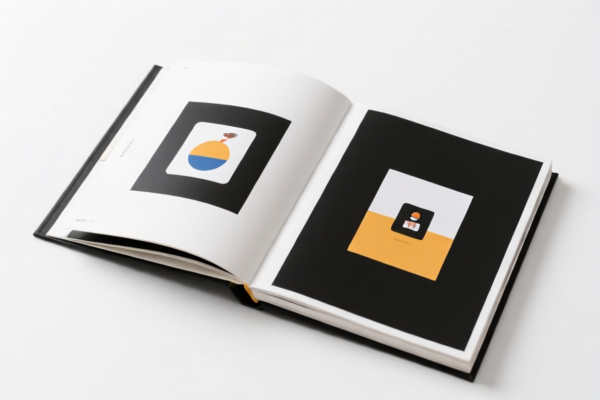

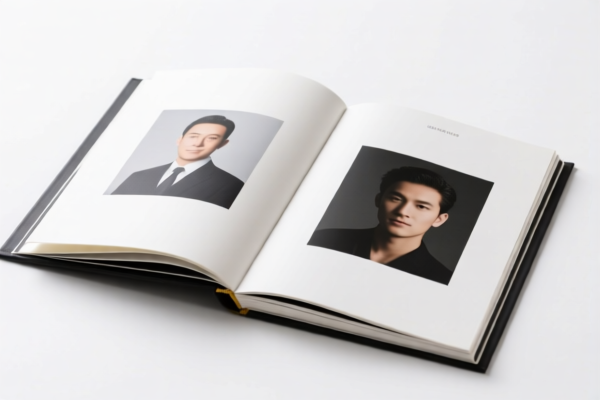
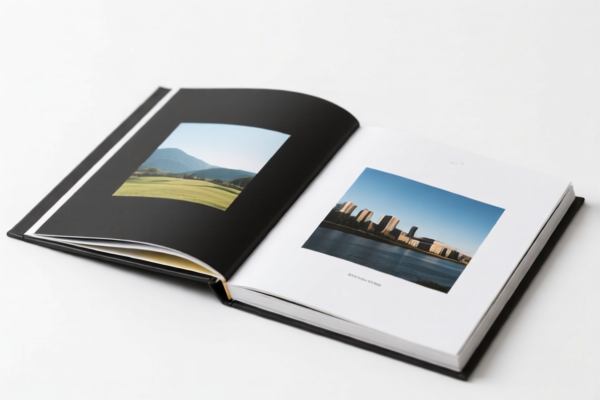
AI Analysis
📸 Replaceable Photo Album Pages (Paper & Plastic Accessories)
🌐 HS Code Reference & Customs Clearance Guide | 2026 Latest Tariff Analysis | Strategic Import Strategy for US Market
📌 I. Product Definition & Classification: What Exactly Are You Importing?
"Replaceable Photo Album Pages" are essential stationery accessories used for organizing and preserving photographs, samples, or collectibles. In international trade, the Harmonized System (HS) does not have a single unique code for this item. Instead, classification depends strictly on material composition, function, and form.
Misclassification is the #1 risk here. If you declare a paper album page as a "plastic accessory," or vice versa, the tariff rate can swing from 13.4% to 35.0%—a massive cost difference.
⚠️ Key Distinction Points:
- Paper/Cardboard Material: Falls under Chapter 48 (Paper Products). High scrutiny due to trade wars.
- Plastic Material: Falls under Chapter 39 (Plastics). Generally lower base tariffs.
- Function: Is it a standalone "album" or just "leaves/pages"? This determines if it goes to4820.90or4820.30/4820.50.
📦 II. HS Code Classification Details (2026 Latest Tariff Authority Comparison)
Based on the provided data, here are the four possible classification paths. Choose the one that matches your product's physical reality.
| HS Code | Product Description | Material/Form | Key Identifier |
|---|---|---|---|
4820.90.00.00 |
Replacement Pages for Albums (General) | Paper/Cardboard | "Loose leaves" for sample/collectible albums; general paper stationery. |
4820.30.00.40 |
Replaceable Album Leaves (Stationery Type) | Paper/Cardboard | Specifically classified as "stationery" or "document carrier" form. |
4820.50.00.00 |
Replaceable Leaves for Specimen/Collection Albums | Paper/Cardboard | Dedicated leaves for specimen or collection albums. |
4823.90.40.00 |
Other Paper/Cardboard Articles (Inferred) | Paper/Cardboard | Inferred classification if not specifically listed in 4820; general paper制品. |
3926.90.48.00 |
Replaceable Album Pages (Accessory) | Plastic or Paper | PLASTIC variant. Classified as an accessory to an album. Lowest Tax Rate. |
🔍 Critical Alert:
- If your product is Plastic (e.g., PVC sleeves, acetate sheets), use3926.90.48.00.
- If your product is Paper, you MUST pick one of the48xxcodes. Using3926...for paper goods is smuggling/fraud and will result in seizure.
- Among paper codes,4820.30.00.40and4820.50.00.00are more specific than4820.90.00.00, but all share the same high tariff structure.
💰 III. 2026 Latest Tariff Rate Breakdown (US Market Focus)
✅ Applicable Country: United States (US)
✅ Origin: China (CN)
✅ Effective Date: Post-2025 policies (including Section 301 & 122 Clause)
🎯 Scenario A: Paper-Based Album Pages (4820.xxxx & 4823.xxxx)
For all paper-based classifications (4820.90.00.00, 4820.30.00.40, 4820.50.00.00, 4823.90.40.00):
| Item | Detail |
|---|---|
| Base Tariff | 0.0% (Most paper products have 0% MFN base rate) |
| Section 301 Surcharge | +25.0% (USITC Footnote for Chinese Paper Products) |
| Section 122 Clause Tariff | +10.0% (Specific provision affecting certain Chinese imports) |
| Total Tariff Rate | 35.0% |
| Tax Calculation | CIF Value × 35% |
| De Minimis Exemption | ❌ DENIED (Items subject to Section 301/122 are explicitly excluded from $800 de minimis relief in many contexts, or flagged for rigorous inspection). |
| Legal Path | USITC:4820.xxxx → Footnote:301 → Clause:122 |
📌 Explanation:
- Despite a 0% base rate, the 25% Section 301 tariff applies to nearly all paper products from China.
- The additional 10% (122 Clause) pushes the total to 35%.
- This is a high-cost category. Profit margins must absorb this.
🎯 Scenario B: Plastic-Based Album Pages (3926.90.48.00)
For Plastic Album Accessories:
| Item | Detail |
|---|---|
| Base Tariff | 3.4% (Standard MFN rate for plastic articles) |
| Section 301 Surcharge | 0.0% (Some plastic accessories may be excluded or have different rates, but per data: 0% here) |
| Section 122 Clause Tariff | +10.0% |
| Total Tariff Rate | 13.4% |
| Tax Calculation | CIF Value × 13.4% |
| De Minimis Exemption | ⚠️ Check Carefully (Plastics are heavily scrutinized, but lower base rate helps). |
| Legal Path | USITC:3926.90.48.00 → Clause:122 |
📌 Explanation:
- This is the most cost-effective classification IF your product is genuinely plastic.
- Base tax is 3.4%, plus 10% for 122 Clause = 13.4%.
- Savings vs. Paper: 21.6% less tax!
🛠️ IV. Customs Clearance Practical Advice (Pitfall Avoidance Guide)
✅ 1. Mandatory Documentation Checklist
| Document | Required? | Description |
|---|---|---|
| ✅ Product Photo (Inside/Out) | ✔️ YES | Must clearly show material (Paper vs. Plastic). Blurry photos cause delays. |
| ✅ Material Specification Sheet | ✔️ YES | Explicitly state: "100% Cardstock" OR "100% PVC Plastic". |
| ✅ Commercial Invoice | ✔️ YES | Description: "Replaceable Plastic Photo Sleeves" (Do NOT just write "Album Pages"). |
| ✅ Packing List | ✔️ YES | Quantity and weight per box. |
| ✅ Origin Certificate | ✔️ YES | Confirm China Origin for accurate Section 301/122 application. |
✅ 2. Declaration Strategy (The "Right Word" Matters)
🔥 Golden Rule: "Material Defines Code, Code Defines Tax."
| Product Reality | Correct Declaration | HS Code | Risk if Wrong |
|---|---|---|---|
| PVC/Plastic Sleeves | "PVC Photo Album Pages" | 3926.90.48.00 |
13.4% Tax |
| Paper/Cardboard Sheets | "Paper Photo Album Inserts" | 4820.30.00.40 etc. |
35.0% Tax |
| Mixed Pack (Paper+Plastic) | Separate Lines | Split Codes | Confiscation Risk if mixed in one line |
| Hardcover Album | "Complete Album" | 4820.90.00.00 |
35.0% Tax (Same as pages) |
⚠️ Warning:
- Do NOT use the term "Plastic" for paper products to avoid taxes. CBP (Customs and Border Protection) conducts physical inspections. If they open a box labeled "Plastic" and find paper, they will fine you for misclassification. - If your product has a plastic coating on paper, it is still considered Paper (4820) unless the plastic provides the primary structural integrity.
✅ 3. Special Scenarios & Solutions
| Scenario | Recommendation |
|---|---|
| Low-Value Shipments (De Minimis) | Check if 3926.90.48.00 qualifies for $800 exemption. Note: Section 301 items are often exempt from de minimis, so verify current CBP enforcement. |
| Sample Albums (Gifts) | Still subject to duty. Do not label as "Free Gift" if sold separately. |
| Custom Size/Cut | Does not change HS Code. Still classified by material and function. |
| With Rings/Binders Included | If the pages come attached to a binder, classify as "Complete Album" (4820.90.00.00). Tax remains 35%. |
🌍 V. Global Market Comparison (Quick Reference)
| Market | HS Code (Paper) | HS Code (Plastic) | Key Duty Impact |
|---|---|---|---|
| 🇺🇸 USA | 4820... (35%) |
3926... (13.4%) |
High Section 301 + 122 Clause. Costly for paper. |
| 🇨🇳 China | ~5-10% | ~5-10% | No Section 301/122. Lower cost. |
| 🇪🇺 EU | 6.5% | 0-6.5% | No US-style surcharges. Standard MFN applies. |
| 🇯🇵 Japan | 6-8% | 0-8% | Varies by specific plastic type. |
📌 Conclusion for US Importers:
- If you can switch from Paper to Plastic (PVC/Acetate) without compromising quality, you save 21.6% on tariffs.
- If you must use Paper, budget for the 35% total duty.
📌 VI. Common Mistakes & Lessons Learned (Blood & Tears)
❌ Mistake 1: Labeling Paper Pages as "Plastic" to save tax.
👉 Consequence: CBP inspection finds paper. Penalty + Seizure + Back Taxes + 25% Penalty Fee.
❌ Mistake 2: Using 4820.90.00.00 for all paper items.
👉 Consequence: While tax is the same (35%), inaccurate descriptions trigger audits. Use specific codes (4820.30, 4820.50) if possible for better traceability.
❌ Mistake 3: Ignoring the "122 Clause".
👉 Consequence: You calculate 25% tax, but the system charges 35%. Unexpected cost spike.
❌ Mistake 4: Combining Plastic and Paper in one HS Code.
👉 Consequence: Customs Hold. You must declare them separately on the commercial invoice.
✅ Correct Approach:
"Plastic Photo Album Pages, PVC Material, 4x6 Inch, Clear, Box of 100"
HS Code:3926.90.48.00
Duty: 13.4%"Paper Photo Album Pages, Cardstock, White, Box of 50"
HS Code:4820.30.00.40
Duty: 35.0%
🎯 VII. Conclusion: Professional Classification Saves Money
🎯 Remember the Mantra:
🔹 "Plastic saves tax (13.4%), Paper costs big (35%)."
🔹 "Material is King. Code is Queen. Accuracy is Survival."
🔹 "Section 301 + 122 = 35% for Paper. Don't get caught off guard."
📌 Pro Tip:
If you are shipping small quantities (<$800) via postal carriers, check if the $800 De Minimis exemption applies to 3926.90.48.00. It may bypass duty entirely for very low-value shipments, whereas paper products under 4820 are often scrutinized more heavily due to trade tensions.
📣 Immediate Action:
📞 Consult a Licensed Customs Broker to verify your specific product's material composition.
📄 Request a Pre-Ruling from CBP if you are importing large volumes.
🚀 Optimize Your Bill of Lading: Be precise. "Photo Album Pages" is too vague. "PVC Photo Sleeves" or "Cardstock Photo Pages" is professional.
✨ Professional Clearance Starts with Accurate Classification!
💼 Every 1% of tax savings goes straight to your bottom line!
Customer Reviews
About HS Code Classification
The Harmonized System (HS) is an internationally standardized nomenclature developed by the World Customs Organization (WCO) to classify traded products. Over 200 countries use the HS system as the basis for customs tariffs, trade statistics, and import/export regulations.
Each HS code follows a hierarchical structure:
- Chapter (2 digits) — Broad category of goods (e.g., Chapter 84: Machinery and Mechanical Appliances)
- Heading (4 digits) — More specific grouping within the chapter
- Subheading (6 digits) — Internationally standardized breakdown, used by all WCO member countries
- National subdivisions (8-10 digits) — Country-specific extensions for further classification, such as US HTSUS 10-digit codes
Correct HS code classification is essential for smooth customs clearance, accurate duty payment, and compliance with trade regulations. Misclassification can lead to customs delays, overpayment of duties, or penalties.
When importing from CN to US, the applicable tariff rates may include:
- Most-Favored-Nation (MFN) rate — The standard duty rate applied to WTO members
- General rate — Applied to countries without trade agreements
- Trade remedy duties — Additional tariffs such as Section 301 (anti-dumping), Section 232 (national security), or countervailing duties
The information provided on this page is for reference purposes only. For official classification, please consult with your local customs authority or a licensed customs broker.