Reptile Anti Scald Lamp Shade
CN → US| HS Code | Tariff Rate | Origin | Destination | Doc |
|---|---|---|---|---|
| 9405920000 | 38.7% | CN | US | Official Doc |
| 9405913000 | 47.0% | CN | US | Official Doc |
| 7020006000 | 40.0% | CN | US | Official Doc |
| 7020004000 | 41.6% | CN | US | Official Doc |
Product Images
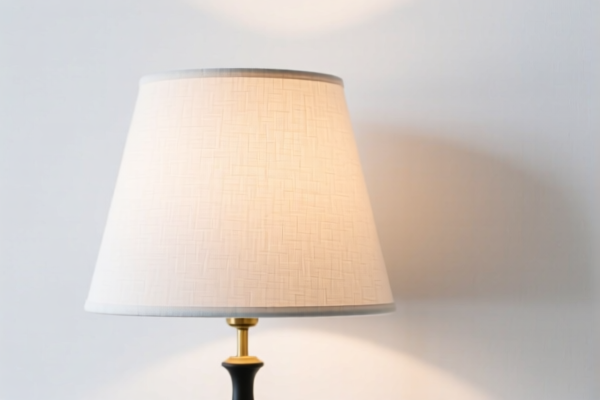
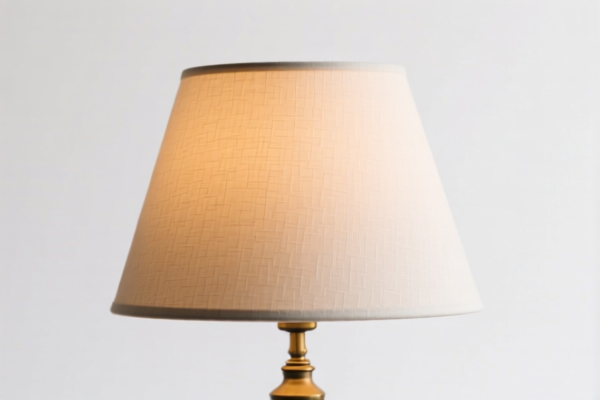
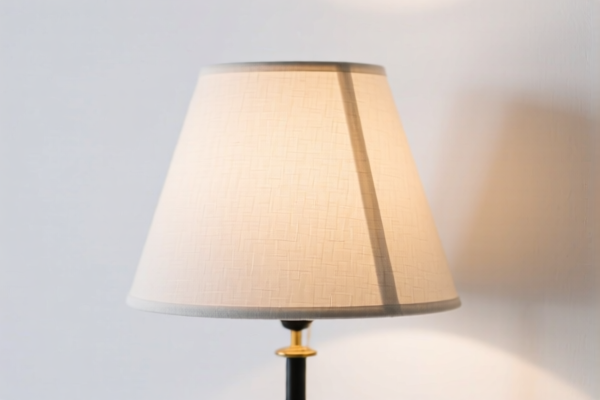
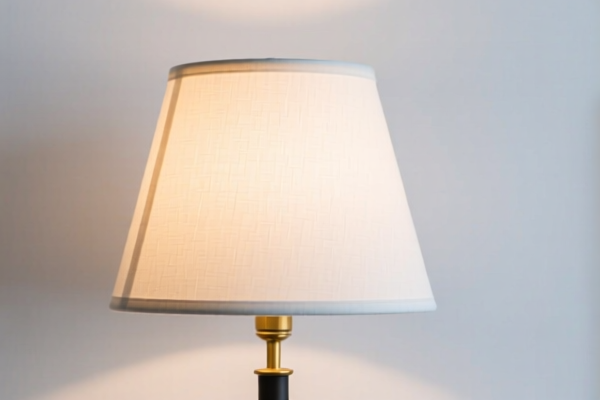
AI Analysis
🦎 Reptile Anti-Scald Lamp Shade
🌐 HS Code Reference & Customs Clearance Guide | 2026 Latest Tariff Analysis | Professional通关 Strategy
📌 I. Product Definition & Classification: Do You Really Understand "Lamp Shades"?
A Reptile Anti-Scald Lamp Shade is a protective accessory used in herpetoculture (reptile keeping). Its primary functions are: 1. Safety: Preventing the reptile from touching the high-temperature heat source (bulb), thus avoiding burns. 2. Heat Regulation: Controlling the direction and intensity of heat/light output. 3. Protection: Preventing bulbs from exploding and scattering glass debris into the enclosure.
In international trade, the classification depends strictly on the material composition and functional integration. It is generally categorized under Chapter 94 (Furniture, Lighting...) as a part/accessory of lighting apparatus, OR under Chapter 70 (Glass) if it is purely a glass/heat-resistant item without specific electrical integration.
⚠️ Key Distinction:
- If the shade is plastic/metal and specifically designed as a part of a lamp fixture → Go to 9405.92 or 9405.91.
- If the shade is glass/heat-resistant ceramic and classified as a general glass product → Go to 7020.
📦 II. HS Code Classification Details (2026 Latest Tariff Authority Comparison)
Based on the provided data, here are the four potential HS Codes and the rationale for their selection:
| HS Code | Product Description | Material/Attribute | Rationale for Classification |
|---|---|---|---|
9405.92.00.00 |
Parts of lamps and lighting fittings | Plastic, Metal, or Mixed | Primary Choice for Non-Glass. Classified as "Parts of lamps." The summary states material is inferred as plastic or metal, with no conflict. This is the standard "accessory" code for lamp shades. |
9405.91.30.00 |
Parts of lamps (Glass/Heat-Resistant) | Glass or Heat-Resistant Material | Primary Choice for Specific Glass. Classified as "Parts of lamps." The summary notes it matches the use and form of a lamp shade, inferred as glass or heat-resistant material. |
7020.00.60.00 |
Other Glass Articles | Glass or Heat-Resistant Material | Alternative for Pure Glass Goods. Classified under "Other glass articles." The summary states it conforms to the material attributes of "other glass products" for anti-scald shades. |
7020.00.40.00 |
Other Glass Articles (General) | Glass or Heat-Resistant Material | Fallback for General Glass. Classified as a "glass article." The summary uses the "catch-all" matching rule for glass products, assuming glass/heat-resistant material. |
🔍 Critical Note:
- Chapter 94 (9405) is preferred if the item is specifically designed as a part of a lighting fixture (even if made of glass, if it's sold as a "lamp part").
- Chapter 70 (7020) is used if the item is considered a general glass/heat-resistant product not exclusively tied to a specific lamp mechanism, or if customs authorities interpret it as a raw glass article.
- Material is the deciding factor: Plastic/Metal → 9405.92. Glass/Heat-Resistant → 9405.91 OR 7020 (depending on specific national interpretation).
💰 III. 2026 Latest Tariff Rate Breakdown (Including Additional Duties & Policies)
✅ Applicable Country: United States (US)
✅ Origin: China (CN)
✅ Effective Time: Includes imports from November 10, 2025 onwards
🎯 1. 9405.92.00.00 – Parts of Lamps (Plastic/Metal)
| Item | Details |
|---|---|
| Base Tariff | 3.7% |
| Section 301 Additional Tariff | +25.0% |
| Section 122 Tariff | +10.0% |
| Total Tariff Rate | 38.7% |
| Tax Calculation | CIF Value × 38.7% |
| De Minimis Exemption? | ❌ No (Not eligible for de minimis) |
| Legal Basis Path | Base Rate + USITC Footnote (301) + IEEPA (122) |
📌 Explanation:
- This is the most common code for plastic or metal lamp shades.
- The 25% Section 301 tariff is due to the trade war impact on Chinese goods.
- The 10% Section 122 tariff is an additional national security-related levy.
- Total 38.7% is a significant cost burden. Accurate material declaration is crucial.
🎯 2. 9405.91.30.00 – Parts of Lamps (Glass/Heat-Resistant)
| Item | Details |
|---|---|
| Base Tariff | 12.0% |
| Section 301 Additional Tariff | +25.0% |
| Section 122 Tariff | +10.0% |
| Total Tariff Rate | 47.0% |
| Tax Calculation | CIF Value × 47.0% |
| De Minimis Exemption? | ❌ No |
| Legal Basis Path | Base Rate + USITC Footnote (301) + IEEPA (122) |
📌 Note:
- Although it is a "part of a lamp," the base rate (12%) is higher than for plastic/metal parts (3.7%).
- This leads to the highest total tax rate (47%) among the lamp-part codes.
- Use this only if customs strictly classifies it as a glass lamp part rather than a general glass article.
🎯 3. 7020.00.60.00 – Other Glass Articles (Specific)
| Item | Details |
|---|---|
| Base Tariff | 5.0% |
| Section 301 Additional Tariff | +25.0% |
| Section 122 Tariff | +10.0% |
| Total Tariff Rate | 40.0% |
| Tax Calculation | CIF Value × 40.0% |
| De Minimis Exemption? | ❌ No |
| Legal Basis Path | Base Rate + USITC Footnote (301) + IEEPA (122) |
📌 Explanation:
- This code applies if the shade is classified as a glass article rather than a lamp part.
- The base rate is 5%, lower than the glass lamp part (12%).
- Total 40% is cheaper than 9405.91.30 (47%) but more expensive than 9405.92.00 (38.7%) if the material is plastic/metal.
- Requires strong evidence that the item is a "glass product" first and a "lamp part" second.
🎯 4. 7020.00.40.00 – Other Glass Articles (General/Catch-All)
| Item | Details |
|---|---|
| Base Tariff | 6.6% |
| Section 301 Additional Tariff | +25.0% |
| Section 122 Tariff | +10.0% |
| Total Tariff Rate | 41.6% |
| Tax Calculation | CIF Value × 41.6% |
| De Minimis Exemption? | ❌ No |
| Legal Basis Path | Base Rate + USITC Footnote (301) + IEEPA (122) |
📌 Note:
- This is a "catch-all" for other glass articles.
- Total 41.6% is slightly higher than 7020.00.60 (40%).
- Use this only if 7020.00.60 does not apply but the item is still considered a glass article.
🛠️ IV. Customs Clearance Practical Advice (Battle-Proven Pitfall Avoidance Guide)
✅ 1. Document Checklist (Mandatory)
| Document | Required | Description |
|---|---|---|
| ✅ Product Specification Sheet | ✔️ | Must clearly state Material (Plastic/Metal/Glass/Heat-Resistant Ceramic). |
| ✅ Product Photos | ✔️ | Show the shade alone, and ideally installed on a lamp fixture to prove its function as a "lamp part." |
| ✅ Commercial Invoice | ✔️ | Description should be precise: e.g., "Heat-Resistant Glass Lamp Shade for Reptile Enclosure, Part No. XYZ." |
| ✅ Packing List | ✔️ | List weights and dimensions. |
| ✅ Certificate of Origin | ✔️ | Proves Chinese origin for tariff calculation. |
| ✅ Test Report (if applicable) | ✔️ | If claiming "Heat-Resistant," a lab report adds credibility to the material claim. |
✅ 2. Declaration Strategy (Key Mantra)
🔥 "Material First, Function Second! Plastic is Cheap, Glass is Expensive!"
| Scenario | Recommended HS Code | Estimated Tax | Why? |
|---|---|---|---|
| Plastic or Metal Shade | 9405.92.00.00 |
38.7% | Lowest base rate (3.7%) for lamp parts. Best for cost saving. |
| Glass/Heat-Resistant Shade (Declared as Lamp Part) | 9405.91.30.00 |
47.0% | Highest tax. Avoid if possible unless strictly required. |
| Glass/Heat-Resistant Shade (Declared as Glass Product) | 7020.00.60.00 |
40.0% | Middle ground. Lower base rate (5%) than lamp part. |
| Glass/Heat-Resistant Shade (Generic Glass) | 7020.00.40.00 |
41.6% | Slightly higher than 7020.00.60. Use as fallback. |
📌 Critical Tip:
- If your product is glass, consider if you can reasonably classify it under 7020 (40%) instead of 9405.91 (47%). This saves 7% in taxes.
- However, if customs officials view it strictly as a "part of a lamp," they may force you to 9405.91.
- Plastic/Metal is always 9405.92 (38.7%), which is the most cost-effective option if material allows.
✅ 3. Special Handling
| Situation | Advice |
|---|---|
| Mixed Materials | If the shade has a metal clamp and glass/plastic body, declare the main material. If >50% is plastic/metal, try 9405.92. If >50% is glass, consider 7020 or 9405.91. |
| OEM/Custom Orders | Provide design drawings to prove it is a specific part of a lamp system, supporting 9405 classification. |
| "Anti-Scald" Function | Do not use "Anti-Scald" as the primary descriptive term in the HS Code description. It is a functional benefit, not a material or form. Use "Lamp Shade" or "Glass Article." |
🌍 V. Global Market Comparison (2026)
| Market | Recommended HS Code | Est. Total Tax (China Origin) | Notes |
|---|---|---|---|
| 🇺🇸 USA | 9405.92.00.00 (Plastic) |
38.7% | High additional tariffs (301 + 122). |
| 🇺🇸 USA | 9405.91.30.00 (Glass) |
47.0% | Highest rate. Avoid if possible. |
| 🇨🇳 China | 9405.92.00.00 |
~5-10% | Low import duties. No Section 301/122. |
| 🇪🇺 EU | 9405.99.90 |
~0-3% | Low base rates. No Section 301/122. |
📌 Conclusion:
- The US market imposes heavy additional tariffs (301 + 122) on Chinese lighting parts.
- Material selection is key: Plastic/Metal (38.7%) is significantly cheaper than Glass Lamp Parts (47%).
- Glass Articles (7020) offer a middle ground (40-41.6%) if classified correctly.
📌 VI. Common Errors & Pitfalls (Lessons Learned)
❌ Error 1: Declaring a Glass Shade as 9405.91 (47%) when it could be 7020 (40%).
👉 Result: Overpaying 7% in taxes.
✅ Fix: Provide evidence that it is a generic heat-resistant glass product, not just a lamp part.
❌ Error 2: Declaring a Plastic Shade as 7020 (Glass).
👉 Result: Customs rejection, fines, or forced reclassification.
✅ Fix: Accurate material declaration is non-negotiable.
❌ Error 3: Ignoring Section 122 (10%).
👉 Result: Unexpected tax bill upon arrival.
✅ Fix: Always calculate Base + 25% + 10% for US imports from China.
🎯 VII. Conclusion: Professional Declaration, Save Costs!
🎯 Remember the Mantra:
🔹 "Plastic is King (38.7%), Glass is Tricky (40-47%).
🔹 "301 (25%) + 122 (10%) = 35% Extra. Plan Ahead!"
📌 Pro Tip:
- If your supplier uses heat-resistant plastic, push for 9405.92.00.00 (38.7%).
- If you must use glass, try to classify under 7020.00.60.00 (40%) by emphasizing its nature as a "heat-resistant glass article."
- Always request a Pre-Ruling from US Customs (CBP) if the shipment value is high, to lock in the HS Code and avoid surprises.
📣 Immediate Action:
📞 Consult your customs broker with product photos and material specs.
🚀 Optimize material choice where possible to reduce tariff burden.
💼 Your profit margin depends on accurate HS Code classification!
✨ Professional Customs Clearance Starts with Precise Classification!
💼 Every percentage point matters in cross-border trade!
Customer Reviews
About HS Code Classification
The Harmonized System (HS) is an internationally standardized nomenclature developed by the World Customs Organization (WCO) to classify traded products. Over 200 countries use the HS system as the basis for customs tariffs, trade statistics, and import/export regulations.
Each HS code follows a hierarchical structure:
- Chapter (2 digits) — Broad category of goods (e.g., Chapter 84: Machinery and Mechanical Appliances)
- Heading (4 digits) — More specific grouping within the chapter
- Subheading (6 digits) — Internationally standardized breakdown, used by all WCO member countries
- National subdivisions (8-10 digits) — Country-specific extensions for further classification, such as US HTSUS 10-digit codes
Correct HS code classification is essential for smooth customs clearance, accurate duty payment, and compliance with trade regulations. Misclassification can lead to customs delays, overpayment of duties, or penalties.
When importing from CN to US, the applicable tariff rates may include:
- Most-Favored-Nation (MFN) rate — The standard duty rate applied to WTO members
- General rate — Applied to countries without trade agreements
- Trade remedy duties — Additional tariffs such as Section 301 (anti-dumping), Section 232 (national security), or countervailing duties
The information provided on this page is for reference purposes only. For official classification, please consult with your local customs authority or a licensed customs broker.