Reptile Leather Passport Holder
CN → US| HS Code | Tariff Rate | Origin | Destination | Doc |
|---|---|---|---|---|
| 4202313000 | 38.7% | CN | US | Official Doc |
| 4203403000 | 39.9% | CN | US | Official Doc |
| 4205006000 | 39.9% | CN | US | Official Doc |
| 4205008000 | 35.0% | CN | US | Official Doc |
| 4203406000 | 35.0% | CN | US | Official Doc |
| 4202316000 | 43.0% | CN | US | Official Doc |
Product Images
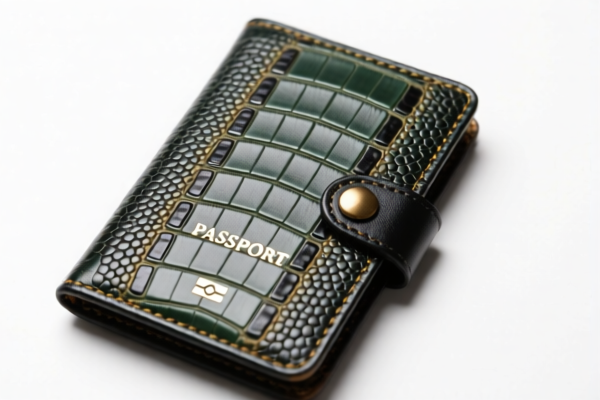
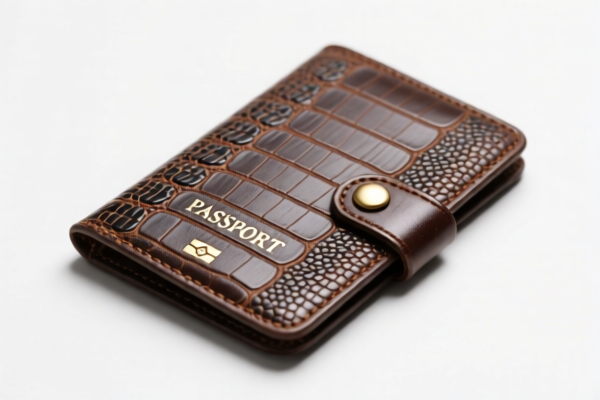
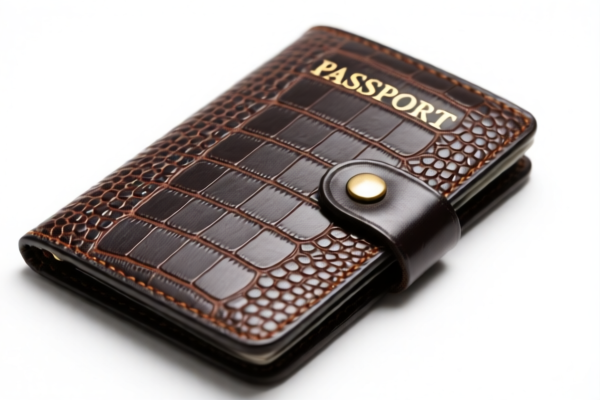
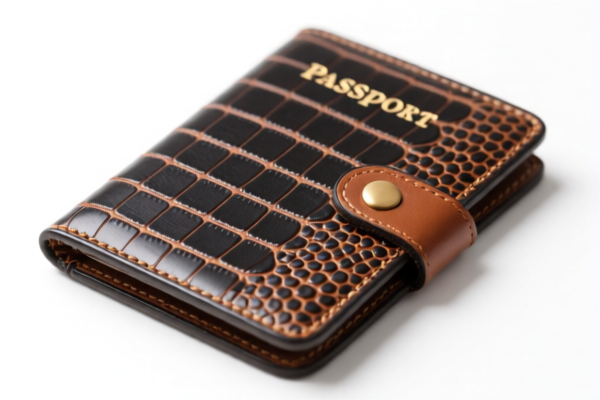
AI Analysis
🐊 Reptile Leather Passport Holder (Leather Goods)
🌐 HS Code Reference & Customs Clearance Guide | 2026 Latest Tariff Analysis | Professional Customs Strategy
📌 1. Product Definition & Classification: Do You Really Understand "Reptile Leather"?
Reptile leather passport holders are luxury accessories classified under Chapter 42 (Articles of Leather; Saddle Harnesses). The classification varies significantly based on the functional design and material description used in the declaration. In international trade, especially for US imports, the distinction between "Bag/Case" (4202) and "Other Leather Articles" (4203/4205) is critical because it determines the Base Tariff Rate, which directly impacts the final total tax burden under current US trade policies.
⚠️ Key Classification Distinction:
- Handbag/Pouch Category (4202): If the item is defined as a small carrying case, pocket-type bag, or clutch → Higher Base Tariffs (3.7% - 8.0%).
- Accessories/Other Leather (4203/4205): If defined as a clothing accessory, belt, or general leather article → Potential for Lower Base Tariffs (0.0% - 4.9%).
- Crucial Point: Regardless of the base rate, US-China trade tensions impose significant additional tariffs on all these categories.
📦 2. HS Code Classification Details (Latest Tariff Book Data)
| HS Code | Product Description Summary | Category Type | Base Tariff | Total Tax Rate |
|---|---|---|---|---|
| 4202.31.30.00 | Reptile leather passport holder; material: reptile leather; form: bag/pouch type. | Handbag/Pouch | 3.7% | 38.7% |
| 4203.40.30.00 | Reptile leather passport holder; category: clothing accessory / small leather good. | Clothing Accessory | 4.9% | 39.9% |
| 4205.00.60.00 | Reptile leather passport holder; category: leather goods, meets classification definition. | Other Leather Goods | 4.9% | 39.9% |
| 4205.00.80.00 | Reptile leather passport holder; category: leather goods, no material conflict. | Other Leather Goods | 0.0% | 35.0% |
| 4203.40.60.00 | Reptile leather passport holder; category: other accessories under clothing accessories/small leather goods. | Clothing Accessory | 0.0% | 35.0% |
| 4202.31.60.00 | Reptile leather passport holder; category: small carrying item in handbags/similar containers. | Handbag/Pouch | 8.0% | 43.0% |
🔍 Critical Note:
- HS 4202 codes (Pouches/Bags) generally carry higher base tariffs (3.7% - 8.0%).
- HS 4203/4205 codes (Accessories/Other) offer opportunities for lower base tariffs, specifically 0.0% for some sub-categories (e.g.,4205.00.80.00and4203.40.60.00).
- All entries above reflect the Total Effective Tax Rate including additional duties.
💰 3. 2026 Latest Tariff Rate Breakdown (Including Surcharges & Policy Add-ons)
✅ Applicable Country: United States (US)
✅ Origin: China (CN) (Note: Reptile leather goods from China are heavily scrutinized)
✅ Effective Time: Ongoing (Based on current Section 301 & IEEPA measures)
🎯 1. 4202.31.30.00 & 4202.31.60.00 —— Bag/Pouch Type (Higher Base)
| Item | Content |
|---|---|
| Base Tariff | 3.7% (for .30) / 8.0% (for .60) |
| Section 301 Surcharge | +25.0% (25% additional duty under USITC Footnote 9903.88.01) |
| IEEPA Surcharge | +10.0% (Targeting China/HK products under IEEPA Section 1702) |
| Total Rate | 38.7% (for .30) / 43.0% (for .60) |
| Calculation | CIF Value × Total Rate |
| De Minimis Exemption | ❌ Not Eligible (Section 321 exemption does not apply to goods subject to Section 301/IEEPA surcharges if value exceeds thresholds or if specifically blocked) |
| Legal Basis | IEEPA:9903.01.24 → USITC:4202.31.30.00/.60.00 → FOOTNOTE:9903.88.01 |
📌 Explanation:
- The 25% is the standard "Section 301" tariff on many Chinese leather goods.
- The 10% is the additional "IEEPA" tariff specifically applied to certain Chinese imports.
- Total 38.7%-43.0% is a significant cost driver. Using the "Bag" classification increases the base, thus increasing the absolute tax amount.
🎯 2. 4203.40.30.00 & 4205.00.60.00 —— Accessories/Other Leather (Medium Base)
| Item | Content |
|---|---|
| Base Tariff | 4.9% |
| Section 301 Surcharge | +25.0% |
| IEEPA Surcharge | +10.0% |
| Total Rate | 39.9% |
| Calculation | CIF Value × 39.9% |
| De Minimis Exemption | ❌ Not Eligible |
| Legal Basis | IEEPA:9903.01.24 → USITC:4203.40.30.00 / 4205.00.60.00 → FOOTNOTE:9903.88.01 |
📌 Note:
- This is a middle-ground option. It is higher than the 0% base options but lower than the 8% base option.
- Classification as "Clothing Accessory" (4203) or "Other Leather" (4205) must be strictly supported by product design (e.g., does it hold cards/passports? Is it part of a set?).
🎯 3. 4205.00.80.00 & 4203.40.60.00 —— Optimal Low-Base Options (Best for Cost)
| Item | Content |
|---|---|
| Base Tariff | 0.0% |
| Section 301 Surcharge | +25.0% |
| IEEPA Surcharge | +10.0% |
| Total Rate | 35.0% |
| Calculation | CIF Value × 35.0% |
| De Minimis Exemption | ❌ Not Eligible |
| Legal Basis | IEEPA:9903.01.24 → USITC:4205.00.80.00 / 4203.40.60.00 → FOOTNOTE:9903.88.01 |
📌 Strategic Insight:
- 35.0% is the lowest possible total tax rate for this product among the provided options.
- To use4205.00.80.00(Other leather articles) or4203.40.60.00(Other accessories), you must justify that the passport holder is not primarily a "pouch/bag" but an "accessory" or "other article."
- Risk: Customs may challenge this classification if the item resembles a small wallet or clutch. However, if the design is minimalist or clearly an accessory, it may be approved.
🛠️ 4. Customs Clearance Practical Advice (Pitfall Avoidance Guide)
✅ 1. Preparation Checklist (Non-Negotiable)
| Material | Required? | Description |
|---|---|---|
| ✅ Product Spec Sheet | ✔️ | Detailed dimensions, lining material, closure type (zipper/button). |
| ✅ Material Declaration | ✔️ | Explicitly state "Reptile Leather" (e.g., Python, Crocodile). Must specify species if required by CITES. |
| ✅ Photos (Clear) | ✔️ | Front, back, inside, and label views. Show it is a passport holder not a full bag. |
| ✅ CITES Permit | ⚠️ Critical | If the reptile is endangered (e.g., Crocodile), you MUST have CITES documentation. Without it, goods will be seized. |
| ✅ Commercial Invoice | ✔️ | Clearly state "Passport Holder" and HS Code. Do not just say "Leather Good." |
| ✅ Packing List | ✔️ | Standard format. |
🚨 CITES Warning:
- Reptile leather is highly regulated.
- Ensure the supplier provides valid CITES Export Permits and Import Permits.
- Failure to provide CITES docs leads to immediate seizure by CBP and Fish & Wildlife Service, regardless of HS code accuracy.
✅ 2. Declaration Strategy (Key Mnemonics)
🔥 “Define Function, Declare Material, CITES is King, Base Rate Matters!”
| Scenario | Recommended HS Code | Reason |
|---|---|---|
| Minimalist Card/Pass Slot | 4205.00.80.00 or 4203.40.60.00 |
Classify as "Other Leather Article" or "Accessory" → 35.0% Total Tax |
| Clutch-style with Zipper | 4202.31.30.00 |
Classify as "Pouch" → 38.7% Total Tax |
| Large Holder with Handles | 4202.31.60.00 |
Classify as "Bag/Case" → 43.0% Total Tax |
| Standard Wallet | 4202.31.30.00 |
Often falls under pouch/bag if it holds multiple cards |
💡 Pro Tip:
- If possible, design or describe the item to emphasize its role as an "Accessory" rather than a "Bag."
- Avoid terms like "Mini Bag" or "Clutch." Use "Passport Sleeve," "Holder," or "Case."
✅ 3. Special Cases & Compliance
| Case | Handling Advice |
|---|---|
| Endangered Species (CITES) | Ensure all paperwork is perfect. CBP will inspect every shipment. |
| Mixed Materials | If lining is not leather, specify clearly. If reptile leather is <50%, classification changes. |
| China Origin | Assume 35%-43% tax. Factor this into pricing. No de minimis exemption. |
| Non-China Origin (e.g., Thailand) | If processed in Thailand, may avoid US-China surcharges. Check Rules of Origin. |
🌍 5. Global Market Comparison (2026)
| Country | Recommended HS Code | Est. Tariff (China Origin) | Key Requirement |
|---|---|---|---|
| 🇺🇸 USA | 4205.00.80.00 |
35.0% | CITES + Section 301/IEEPA |
| 🇨🇳 China | 4202.31.30.00 |
~10-15% | Standard Import |
| 🇪🇺 EU | 4202.31.00 |
~4.5% | REACH + CITES |
| 🇬🇧 UK | 4202.31.00 |
~4.5% | CITES + Post-Brexit Rules |
📌 Conclusion:
- The US market is the most expensive due to the 35% minimum total tariff (Base 0% + 25% + 10%).
- EU/UK tariffs are lower (~4.5%) but have strict environmental/CITES enforcement.
- If your primary market is the US, cost optimization via HS Code selection (35% vs 43%) is vital.
📌 6. Common Mistakes & Pitfalls (Lessons Learned)
❌ Mistake 1: Ignoring CITES Requirements
👉 Result: Goods seized, fines up to $10,000 per violation.
👉 Fix: Verify reptile species and obtain permits before shipping.
❌ Mistake 2: Over-classifying as "Bag" (4202)
👉 Result: Paying 43% instead of 35% unnecessarily.
👉 Fix: If the item lacks handles or structured bag shape, argue for "Accessory" (4203/4205).
❌ Mistake 3: Missing "Origin" Declaration
👉 Result: Wrong tax rate applied, penalties for misdeclaration.
👉 Fix: Clearly state "Made in China" if applicable to trigger/confirm surcharges.
❌ Mistake 4: Using "Leather Wallet" as Description
👉 Result: Ambiguity leads to manual inspection and delays.
👉 Fix: Use precise terms: "Reptile Leather Passport Holder, Unlined, Zipper Closure."
🎯 7. Conclusion: Professional Declaration, Cost Efficiency, Compliance
🎯 Key Takeaways:
🔹 "CITES is Mandatory. Don't Skip It."
🔹 "Aim for 35%: Use HS 4205.00.80.00 or 4203.40.60.00 if design allows."
🔹 "Avoid 43%: Don't call it a 'Bag' unless it has handles/structure."
🔹 "Base Rate Matters: 0% base + 35% surcharge = 35%. 8% base + 35% surcharge = 43%."
📌 Tips:
- For high-value reptile leather, consider Advance Rulings from CBP to lock in the HS Code.
- If shipping via Parcel (De Minimis), note that Section 301/IEEPA taxes still apply for China-origin goods above $800 if specifically targeted, though enforcement varies. Do not rely on de minimis for reptile goods due to CITES strictness.
📣 Immediate Action:
📞 Contact a licensed customs broker.
📦 Verify CITES permits.
📝 Select HS Code4205.00.80.00or4203.40.60.00for optimal tax efficiency.
✨ Professional Customs Clearance Starts with Precise Classification!
💼 Every Percent Counts in Luxury Leather Trade!
Customer Reviews
About HS Code Classification
The Harmonized System (HS) is an internationally standardized nomenclature developed by the World Customs Organization (WCO) to classify traded products. Over 200 countries use the HS system as the basis for customs tariffs, trade statistics, and import/export regulations.
Each HS code follows a hierarchical structure:
- Chapter (2 digits) — Broad category of goods (e.g., Chapter 84: Machinery and Mechanical Appliances)
- Heading (4 digits) — More specific grouping within the chapter
- Subheading (6 digits) — Internationally standardized breakdown, used by all WCO member countries
- National subdivisions (8-10 digits) — Country-specific extensions for further classification, such as US HTSUS 10-digit codes
Correct HS code classification is essential for smooth customs clearance, accurate duty payment, and compliance with trade regulations. Misclassification can lead to customs delays, overpayment of duties, or penalties.
When importing from CN to US, the applicable tariff rates may include:
- Most-Favored-Nation (MFN) rate — The standard duty rate applied to WTO members
- General rate — Applied to countries without trade agreements
- Trade remedy duties — Additional tariffs such as Section 301 (anti-dumping), Section 232 (national security), or countervailing duties
The information provided on this page is for reference purposes only. For official classification, please consult with your local customs authority or a licensed customs broker.