Reptile Leather for Clothing
CN → US| HS Code | Tariff Rate | Origin | Destination | Doc |
|---|---|---|---|---|
| 4106910000 | 38.3% | CN | US | Official Doc |
| 4106400000 | 35.0% | CN | US | Official Doc |
| 4114207000 | 36.6% | CN | US | Official Doc |
| 4114100000 | 38.2% | CN | US | Official Doc |
| 4302196000 | 38.5% | CN | US | Official Doc |
Product Images
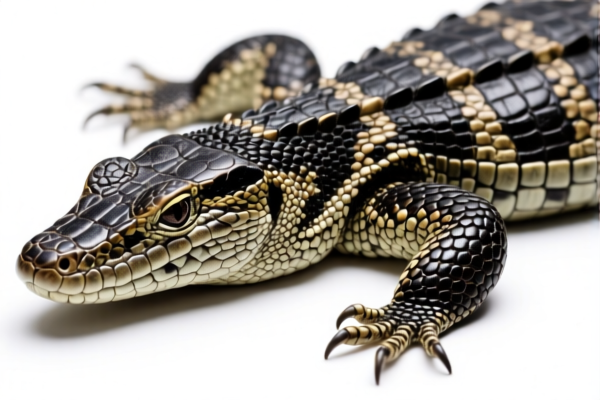
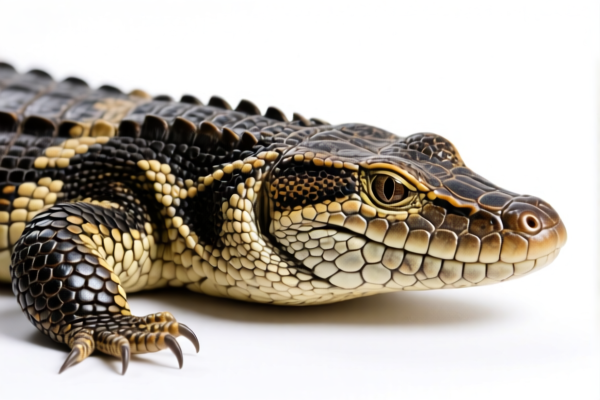
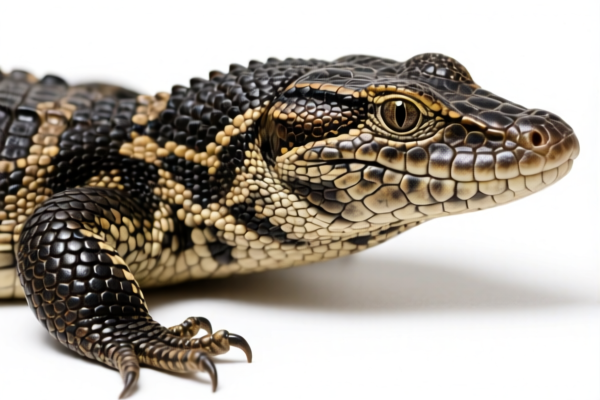

AI Analysis
🐍 Reptile Leather for Clothing (Garment Materials)
🌐 HS Code Reference & Customs Clearance Guide | 2026 Latest Tariff Analysis | Professional Clearance Strategy
📌 I. Product Definition & Classification: Do You Really Understand "Reptile Leather"?
Reptile leather, sourced from snakes, crocodiles, alligators, and lizards, is a premium material used in high-end fashion, footwear, and accessories. In international trade, it is strictly regulated and categorized based on its state of processing and material origin.
Key Distinction Points:
- Tanned/半Tanned vs. Raw: Raw skins are generally excluded from Chapter 41 (Leather). Tanned or crust leather falls under Chapter 41.
- Specific Species: Some reptile leathers (like certain crocodiles) have specific subheadings, while others fall under "Other."
- Form: Is it whole skins, cut pieces, or processed leather sheets? This affects the final HS Code.
⚠️ Critical Warning:
- CITES Compliance: Many reptile species are protected under CITES. Ensure you have valid export/import permits, regardless of HS Code classification.
- Material Conflict: Misclassifying reptile leather as general animal leather can lead to severe penalties.
📦 II. HS Code Classification Details (2026 Latest Tariff Authority Comparison)
Based on the provided data, here are the matched HS Codes for "Reptile Leather for Clothing," ranked by relevance and tax implications.
| HS Code | Product Description | Matching Logic & Summary | Total Tax Rate (CN→US) |
|---|---|---|---|
4106.40.00.00 |
Tanned or Crust Crocodilian Leather | Exact Match: The product name explicitly contains "Reptile Leather." This code specifically covers crocodilian leather (alligators/crocodiles), which is a subset of reptiles. | 35.0% |
4106.91.00.00 |
Tanned or Crust Leather of Other Animals | Inferred Match: "Reptile Leather" falls under "Other Animals" if not specifically crocodilian. Based on the "catch-all" rule for "Other" categories, it is assumed to be leather without material conflict. | 38.3% |
4114.20.70.00 |
Leather Clothing Accessories, Other (Lacquered) | Conditional Match: Assumes the leather may have a lacquered finish. If no lacquer is present, this code is less accurate. No material conflict (non-metal/plastic). | 36.6% |
4114.10.00.00 |
Suede Leather of All Animals | Inferred Match: Based on "leather" material property. If the reptile leather is suede (nubuck), this applies. Otherwise, generic leather codes are safer. | 38.2% |
4302.19.60.00 |
Furskins, Other, Unmounted | Low Probability: Infers "Reptile Leather" as unmounted pelts. However, reptile leather (tanned) is usually Chapter 41, not Chapter 43 (Furs). High risk of misclassification. | 38.5% |
🔍 Key Takeaway:
-4106.40.00.00is the most precise match if the leather is from crocodiles/alligators.
-4106.91.00.00is the safest fallback for other reptile leathers (snakes, lizards) as "Other Animals."
- Avoid Chapter 43 (4302...) unless dealing with raw, un-tanned fur skins, as reptile leather is primarily processed in Chapter 41.
💰 III. 2026 Latest Tariff Rate Breakdown (Including Surcharges & Policy Add-ons)
✅ Applicable Country: United States (US)
✅ Country of Origin: China (CN)
✅ Effective Date: From November 10, 2025 (including subsequent imports)
🎯 1. 4106.40.00.00 —— Tanned/Crust Crocodilian Leather (Best Match)
| Item | Content |
|---|---|
| Basic Tariff | 0.0% |
| USITC Surcharge (Section 301) | +25.0% |
| IEEPA Surcharge (Section 122/China-specific) | +10.0% |
| Total Tax Rate | 35.0% |
| Tax Calculation | CIF Value × 35.0% |
| De Minimis Exemption | ❌ Not Eligible (deny_de_minimis) |
| Legal Basis Path | IEEPA:9903.01.25 → IEEPA:9903.01.24 → USITC:4106.40.00.00 → FOOTNOTE:9903.88.01 |
📌 Explanation:
- 0% Basic Tariff: Crocodilian leather has a low base rate.
- 25% Section 301: Standard USITC surcharge on Chinese goods.
- 10% IEEPA: Additional China-specific tariff.
- Total 35%: A significant cost factor. Proper documentation is essential to avoid delays.
🎯 2. 4106.91.00.00 —— Tanned/Crust Leather of Other Animals (Fallback for Snakes/Lizards)
| Item | Content |
|---|---|
| Basic Tariff | 3.3% |
| USITC Surcharge (Section 301) | +25.0% |
| IEEPA Surcharge (Section 122/China-specific) | +10.0% |
| Total Tax Rate | 38.3% |
| Tax Calculation | CIF Value × 38.3% |
| De Minimis Exemption | ❌ Not Eligible (deny_de_minimis) |
| Legal Basis Path | IEEPA:9903.01.25 → IEEPA:9903.01.24 → USITC:4106.91.00.00 → FOOTNOTE:9903.88.01 |
📌 Note:
- Higher base tariff (3.3%) makes this option more expensive than crocodilian leather.
- Applies to snake skin, lizard skin, etc., if not classified under specific crocodilian codes.
🎯 3. 4114.20.70.00 —— Lacquered Leather (If Applicable)
| Item | Content |
|---|---|
| Basic Tariff | 1.6% |
| USITC Surcharge (Section 301) | +25.0% |
| IEEPA Surcharge (Section 122/China-specific) | +10.0% |
| Total Tax Rate | 36.6% |
| Tax Calculation | CIF Value × 36.6% |
| De Minimis Exemption | ❌ Not Eligible (deny_de_minimis) |
📌 Note:
- Only apply if the leather has a lacquered or varnished finish.
- Lower base rate (1.6%) but still subject to full surcharges.
🎯 4. 4114.10.00.00 —— Suede Leather (If Applicable)
| Item | Content |
|---|---|
| Basic Tariff | 3.2% |
| USITC Surcharge (Section 301) | +25.0% |
| IEEPA Surcharge (Section 122/China-specific) | +10.0% |
| Total Tax Rate | 38.2% |
| Tax Calculation | CIF Value × 38.2% |
| De Minimis Exemption | ❌ Not Eligible (deny_de_minimis) |
📌 Note:
- Apply only if the reptile leather is suede/nubuck.
- Otherwise, use4106.40or4106.91.
🎯 5. 4302.19.60.00 —— Furskins (High Risk)
| Item | Content |
|---|---|
| Basic Tariff | 3.5% |
| USITC Surcharge (Section 301) | +25.0% |
| IEEPA Surcharge (Section 122/China-specific) | +10.0% |
| Total Tax Rate | 38.5% |
| Tax Calculation | CIF Value × 38.5% |
| De Minimis Exemption | ❌ Not Eligible (deny_de_minimis) |
📌 Warning:
- Reptile leather is typically Chapter 41, not Chapter 43.
- Misclassification here may lead to customs audits or penalties. Only use if dealing with raw, un-tanned skins.
🛠️ IV. Customs Clearance Practical Advice (Real-World Pitfall Guide)
✅ 1. Required Documentation Checklist (Mandatory)
| Document | Required | Description |
|---|---|---|
| ✅ Commercial Invoice | ✔️ | Clearly state "Reptile Leather for Clothing" and HS Code. |
| ✅ Packing List | ✔️ | Detail quantity, weight, and packaging. |
| ✅ CITES Permit | ✔️ | CRITICAL: Export/Import permits for reptile species. |
| ✅ Material Certification | ✔️ | Proof of tanning process (tanned, crust, suede, lacquered). |
| ✅ Product Photos | ✔️ | Show texture, finish, and any labels. |
| ✅ Certificate of Origin | ✔️ | To determine eligibility for any potential exemptions. |
✅ 2. Declaration Tips (Key Mantra)
🔥 "Species Specific, CITES Clear, Finish Defined, Tax Saved!"
| Scenario | Correct Declaration | Wrong Practice |
|---|---|---|
| Crocodile/Alligator Leather | 4106.40.00.00 + CITES Permit |
General "Reptile Leather" → Ambiguity |
| Snake/Lizard Leather | 4106.91.00.00 + CITES Permit |
Misclassify as "General Leather" → Audit |
| Lacquered Reptile Leather | 4114.20.70.00 |
Assume default leather code → Wrong Tax |
| Suede Reptile Leather | 4114.10.00.00 |
Assume tanned leather → Wrong Tax |
✅ 3. Special Cases Handling
| Situation | Handling Advice |
|---|---|
| Mixed Species | Declare each species separately if possible. Grouping may trigger audits. |
| Cut Pieces vs. Whole Skins | Specify in description. Cut pieces may still fall under the same HS but affect duty valuation. |
| CITES Restricted Species | Do not import without valid permits. Seizure and fines are common. |
| OEM Custom Leather | Provide client specs and design drawings to prove end-use. |
🌍 V. Global Market Comparison (2026 Latest)
| Country/Region | Recommended HS Code | Tariff (China Origin) | Certification | Notes |
|---|---|---|---|---|
| 🇺🇸 USA | 4106.40.00.00 |
35.0% | CITES + IEEPA | High surcharges. |
| 🇨🇳 China | 4106.40.00.00 |
5-10% | CITES + CCC (if applicable) | No additional surcharges. |
| 🇪🇺 EU | 4106.40.00.00 |
4-6% | CITES + REACH | Lower tariffs, strict CITES. |
| 🇬🇧 UK | 4106.40.00.00 |
4-6% | CITES + UKCA | Post-Brexit rules apply. |
| 🇯🇵 Japan | 4106.40.00.00 |
3-5% | CITES | Low tariffs, strict inspection. |
📌 Conclusion:
- USA has the highest effective tariff (35%) due to Section 301 and IEEPA surcharges.
- EU, UK, and Japan have lower tariffs but strict CITES enforcement.
- China Origin adds significant cost to US imports. Consider supply chain diversification if possible.
📌 VI. Common Errors & Pitfall Guide (Lessons Learned)
❌ Error 1: Ignoring CITES Permits
👉 Consequence: Seizure, fines, and legal action. Reptile leather is highly regulated.
❌ Error 2: Misclassifying Reptile Leather as General Animal Leather
👉 Consequence: Audits, back taxes, and penalties. Different species have different codes.
❌ Error 3: Not Specifying Finish (Tanned, Suede, Lacquered)
👉 Consequence: Wrong HS Code assigned → Higher/lower tax, delays.
❌ Error 4: Using "Leather" Without Species Detail
👉 Consequence: Customs requests clarification → Delayed clearance.
✅ Correct Practice:
"Tanned Crocodilian Leather for Clothing, CITES Permit Attached, HS Code 4106.40.00.00"
🎯 VII. Conclusion: Precise Classification, Smooth Clearance, Cost Control!
🎯 Remember the Mantra:
🔹 "CITES First, Species Specific, Finish Defined, Tax Optimized!"
🔹 "HS Code Determines Duty, Surcharge Adds 35%, Declaration Must Be Precise!"
📌 Pro Tip:
If your reptile leather originates from Vietnam, Thailand, or other non-China sources, you may avoid the 25% Section 301 + 10% IEEPA surcharges, reducing total tax to ~5-10%.
Recommend applying for an Advance Ruling from US Customs to confirm HS Code and tariff applicability before shipment.
📣 Immediate Action:
📞 Contact a professional customs broker + Provide CITES Permits + Apply for HS Code Advance Ruling
🚀 Ensure your reptile leather clears smoothly, legally, and cost-effectively!
✨ Professional Clearance Starts with Accurate Classification!
💼 Every cent of cost deserves precise calculation!
Customer Reviews
About HS Code Classification
The Harmonized System (HS) is an internationally standardized nomenclature developed by the World Customs Organization (WCO) to classify traded products. Over 200 countries use the HS system as the basis for customs tariffs, trade statistics, and import/export regulations.
Each HS code follows a hierarchical structure:
- Chapter (2 digits) — Broad category of goods (e.g., Chapter 84: Machinery and Mechanical Appliances)
- Heading (4 digits) — More specific grouping within the chapter
- Subheading (6 digits) — Internationally standardized breakdown, used by all WCO member countries
- National subdivisions (8-10 digits) — Country-specific extensions for further classification, such as US HTSUS 10-digit codes
Correct HS code classification is essential for smooth customs clearance, accurate duty payment, and compliance with trade regulations. Misclassification can lead to customs delays, overpayment of duties, or penalties.
When importing from CN to US, the applicable tariff rates may include:
- Most-Favored-Nation (MFN) rate — The standard duty rate applied to WTO members
- General rate — Applied to countries without trade agreements
- Trade remedy duties — Additional tariffs such as Section 301 (anti-dumping), Section 232 (national security), or countervailing duties
The information provided on this page is for reference purposes only. For official classification, please consult with your local customs authority or a licensed customs broker.