Reptile Leather for Shoe Uppers
CN → US| HS Code | Tariff Rate | Origin | Destination | Doc |
|---|---|---|---|---|
| 4106910000 | 38.3% | CN | US | Official Doc |
| 4106400000 | 35.0% | CN | US | Official Doc |
| 4114207000 | 36.6% | CN | US | Official Doc |
| 4114100000 | 38.2% | CN | US | Official Doc |
| 4302196000 | 38.5% | CN | US | Official Doc |
Product Images
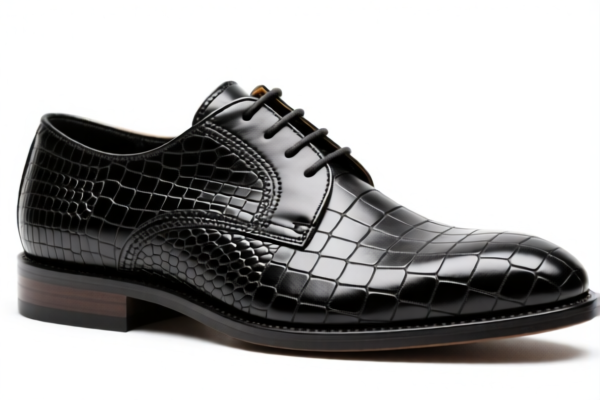
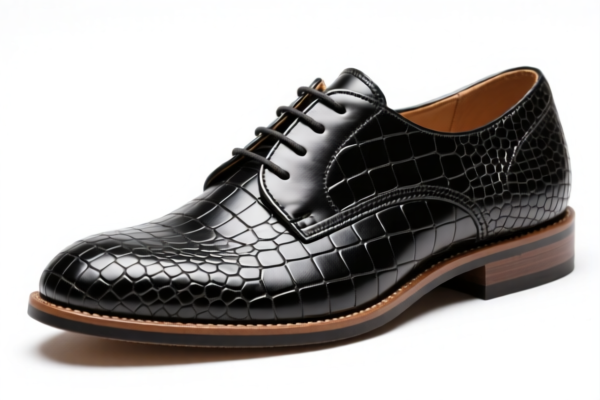
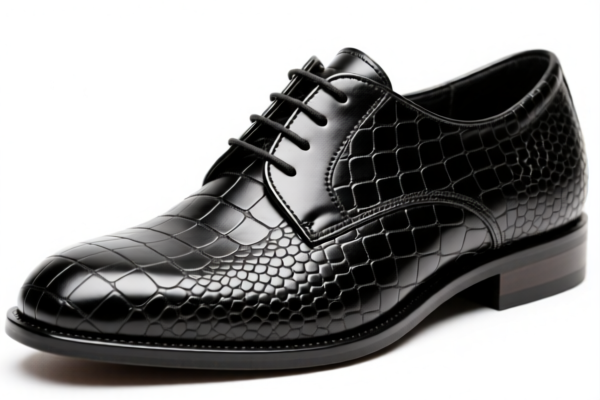
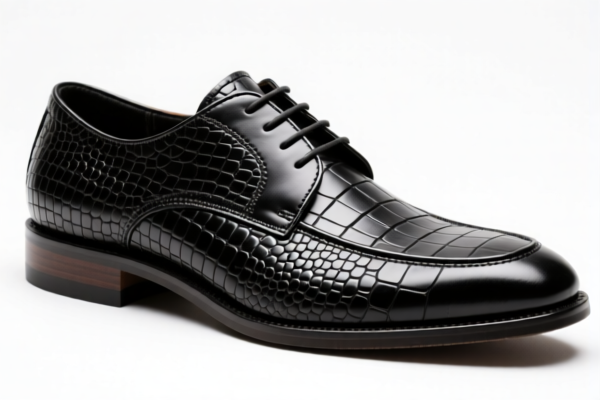
AI Analysis
🐍 Reptile Leather for Shoe Uppers (鞋面用爬行动物皮革)
🌐 HS Code Reference & Customs Clearance Guide | 2026 Latest Tariff Breakdown | Professional Entry Strategy
📌 Part 1: Product Definition & Classification Nuances
Reptile leather intended for shoe uppers is a premium raw material used in luxury footwear manufacturing. Unlike finished goods, these are semi-processed or fully processed leather hides/skins (not yet made into shoes).
In international trade (specifically entering the US market from China), the classification depends heavily on: 1. Preparation Level: Are they raw, tanned, crust, or finished? 2. Material Specificity: Is the species specified or general "reptile"? 3. End Use: Intended for footwear (shoe uppers).
⚠️ Critical Distinction:
- Raw/Tanned Hides → Classified under Chapter 41 (Leather)
- Ready-to-use Uppers (cut/stitched) → Could fall under Chapter 64 (Footwear parts) or 4114 (Chemically treated leather)
- Fur vs. Leather: Reptile skin is Leather, not Fur (Chapter 43). Misclassification as fur leads to delays and penalties.
📦 Part 2: HS Code Classification Matrix (Based on Provided Data)
The following HS Codes are derived from the provided dataset, each representing a different interpretation of the product's state and material specificity.
| HS Code | Summary Description | Tax Detail Breakdown | Total Tax Rate | Key Interpretation |
|---|---|---|---|---|
4106.91.00.00 |
Matches reptile leather material, falls under "other animal leather" classification. | Base: 3.3% Add-on: 25.0% Sec 122: 10% |
38.3% | General "Other Animal Leather" bucket when specific reptile codes don't fit perfectly. |
4106.40.00.00 |
Explicitly matches reptile leather material. | Base: 0.0% Add-on: 25.0% Sec 122: 10% |
35.0% | Best Match: Specific heading for reptile skins. Lowest base duty. |
4114.20.70.00 |
Classified based on leather material & residual principle. | Base: 1.6% Add-on: 25.0% Sec 122: 10% |
36.6% | Likely refers to Chemically Treated Leather (Crust/Finished). |
4114.10.00.00 |
Fits leather category attributes, no material conflict. | Base: 3.2% Add-on: 25.0% Sec 122: 10% |
38.2% | Broad "Leather" category, potentially for less processed skins. |
4302.19.60.00 |
Inferred as undyed whole fur skins, fits un-assembled leather property. | Base: 3.5% Add-on: 25.0% Sec 122: 10% |
38.5% | Risk: Misclassified as "Fur" (Ch 43). Highest tax rate. Avoid if possible. |
🔍 Key Insight:
-4106.40.00.00is the most accurate technical classification for Reptile Skins because Chapter 41, Heading 4106 specifically covers "Assembled Reptile Skins".
-4302.19.60.00is risky because it classifies reptile skin as "Fur" (Heading 4302), which is technically incorrect for non-fur reptiles (like snakes/crocodiles unless specified as fur, which is rare for shoe uppers). This results in a higher total tax (38.5%).
💰 Part 3: 2026 Tariff Rate Detailed Analysis (US Import from China)
✅ Applicable Country: United States (US)
✅ Origin: China (CN)
✅ Effective Date: Post-November 2025 (Including subsequent imports)
🎯 1. 4106.40.00.00 — Reptile Skins (Explicit Match)
The Recommended Classification for Reptile Leather
| Item | Content |
|---|---|
| Base Duty Rate | 0% (Ad Valorem) |
| USITC Add-on Duty | +25% (Section 301 Tariff) |
| IEEPA Add-on Duty | +10% (Section 122 Tariff, targeting China/HK products) |
| Total Tax Rate | 35.0% |
| Tax Calculation | CIF Value × 35% |
| De Minimis Exemption | ❌ Not Eligible (deny_de_minimis) |
| Legal Path | USITC:4106.40.00.00 → Section 301: +25% → IEEPA Sec 122: +10% |
📌 Explanation:
- Base 0%: Recognizes reptile skins as a raw material with low base duty.
- 25% + 10%: Aggressive US trade policy on Chinese goods.
- Total 35%: The lowest total tax among all options. Strongly recommend this classification if documentation supports "Reptile Skins."
🎯 2. 4106.91.00.00 — Other Animal Leather (General Reptile)
| Item | Content |
|---|---|
| Base Duty Rate | 3.3% |
| USITC Add-on Duty | +25% |
| IEEPA Add-on Duty | +10% |
| Total Tax Rate | 38.3% |
| Tax Calculation | CIF Value × 38.3% |
| De Minimis Exemption | ❌ Not Eligible |
| Legal Path | USITC:4106.91.00.00 → Section 301: +25% → IEEPA Sec 122: +10% |
📌 Explanation:
- Used when the specific reptile code (4106.40) is not applicable or disputed.
- 3.3% higher than the explicit reptile code. Only use if customs requires a "catch-all" classification.
🎯 3. 4114.20.70.00 — Chemically Treated Leather (Crust/Finished)
| Item | Content |
|---|---|
| Base Duty Rate | 1.6% |
| USITC Add-on Duty | +25% |
| IEEPA Add-on Duty | +10% |
| Total Tax Rate | 36.6% |
| Tax Calculation | CIF Value × 36.6% |
| De Minimis Exemption | ❌ Not Eligible |
| Legal Path | USITC:4114.20.70.00 → Section 301: +25% → IEEPA Sec 122: +10% |
📌 Explanation:
- Applicable if the leather is chemically treated (crust or finished) but not yet made into shoes.
- 36.6% is a middle-ground option. Use if the leather is heavily processed (dyeing/finishing) rather than raw/tanned.
🎯 4. 4114.10.00.00 — Other Leather (No Material Conflict)
| Item | Content |
|---|---|
| Base Duty Rate | 3.2% |
| USITC Add-on Duty | +25% |
| IEEPA Add-on Duty | +10% |
| Total Tax Rate | 38.2% |
| Tax Calculation | CIF Value × 38.2% |
| De Minimis Exemption | ❌ Not Eligible |
| Legal Path | USITC:4114.10.00.00 → Section 301: +25% → IEEPA Sec 122: +10% |
📌 Explanation:
- A broader "Leather" category. Similar tax to4106.91but slightly lower base. Use only if specific reptile classification is rejected.
🎯 5. 4302.19.60.00 — Undyed Whole Fur Skins (Misclassified)
| Item | Content |
|---|---|
| Base Duty Rate | 3.5% |
| USITC Add-on Duty | +25% |
| IEEPA Add-on Duty | +10% |
| Total Tax Rate | 38.5% |
| Tax Calculation | CIF Value × 38.5% |
| De Minimis Exemption | ❌ Not Eligible |
| Legal Path | USITC:4302.19.60.00 → Section 301: +25% → IEEPA Sec 122: +10% |
📌 Warning:
- Highest Tax Rate (38.5%).
- Incorrect Classification: Reptile skin is Leather (Ch 41), not Fur (Ch 43).
- Using this code may trigger customs audits for misclassification, leading to penalties even if tax is similar. Avoid this unless the product is actually fur (e.g., crocodile fur trim, which is rare).
🛠️ Part 4: Customs Clearance Practical Advice (Pitfall Avoidance)
✅ 1. Required Documentation Checklist (Non-Negotiable)
| Document | Mandatory? | Description |
|---|---|---|
| ✅ Product Specification Sheet | ✔️ | Must specify: Species (e.g., Python, Crocodile), Tanning Method (Chrome, Vegetable), Finish (Glossy, Matte). |
| ✅ Commercial Invoice | ✔️ | Clearly state: "Reptile Leather Hides for Shoe Uppers" - Do NOT use generic terms like "Animal Skin" or "Fur". |
| ✅ Packing List | ✔️ | Detail number of hides, size, weight, and any packaging materials. |
| ✅ CITES Permit (If Applicable) | ✔️ | Critical! Most reptile species (Python, Crocodile, Caiman) are listed under CITES. Without CITES, shipment will be seized. |
| ✅ Photo of Product | ✔️ | Clear images showing texture, underside, and any brand markings. |
| ✅ Origin Certificate | ✔️ | Proof of origin from China. |
📌 Key Reminder:
- CITES Compliance is the biggest hurdle for reptile leather. Ensure the supplier has valid export permits and you have import permits if required.
- Do NOT declare as "Fur" unless it is actually fur. Customs officers are trained to spot reptile skin, and misclassification leads to severe penalties.
✅ 2. Declaration Strategy (Key Mantras)
🔥 "Be Specific, Not Generic! 'Reptile Leather' > 'Animal Skin'!"
| Scenario | Correct Declaration | Wrong Declaration |
|---|---|---|
| Raw/Tanned Skins | 4106.40.00.00 - "Reptile Skins, Tanned, for Shoe Uppers" |
"Animal Leather" → 4106.91.00.00 (Higher Tax) |
| Finished/Colored Skins | 4114.20.70.00 - "Chemically Treated Reptile Leather" |
"Finished Leather" → Vague, leads to audit |
| CITES Listed Species | Must include CITES Permit No. on Invoice | No Permit → Seizure & Destruction |
✅ 3. Special Cases
| Situation | Recommendation |
|---|---|
| OEM Custom Reptile Leather | Provide design specs and customer agreement. Ensure material matches CITES listing. |
| Mixed Shipments (Leather + Fabric) | Declare separately. Reptile leather goes to 4106.40, fabric to its own HS Code. Do not lump together. |
| Small Samples (< $800) | ❌ Still subject to Tariffs! deny_de_minimis applies to Section 301/122 goods. No de minimis exemption. |
| Cross-Border E-commerce | High risk. Ensure accurate HS Code. If flagged, provide CITES permits immediately. |
🌍 Part 5: Global Market Comparison (2026 Update)
| Country/Region | Recommended HS Code | Total Tax (China Origin) | Key Requirement | Notes |
|---|---|---|---|---|
| 🇺🇸 USA | 4106.40.00.00 |
35.0% | CITES + Section 301/122 | Highest Tax. Strict CITES enforcement. |
| 🇨🇳 China | 4106.40.00.00 |
~10-15% | CITES (Import Permit) | Lower tax, but import control is strict. |
| 🇪🇺 EU | 4106.40.00.00 |
~12% | CITES + REACH | No Section 301. Lower tax, but complex CITES. |
| 🇬🇧 UK | 4106.40.00.00 |
~12% | CITES + UKCA | Post-Brexit rules apply. |
| 🇦🇺 Australia | 4106.40.00.00 |
~5-10% | CITES | Lower tax, but strict biosecurity. |
📌 Conclusion:
- USA is the most expensive market due to 35% total duty.
- CITES compliance is universal. All markets require proper wildlife documentation.
- Consider sourcing from non-China origins (e.g., USA, EU, Australia) to avoid Section 301/122 tariffs, but CITES still applies.
📌 Part 6: Common Mistakes & Pitfalls (Blood Lessons)
❌ Mistake 1: Declaring as "Leather" without specifying "Reptile"
👉 Consequence: Misclassification to 4106.91.00.00 → 38.3% tax instead of 35%. Wasted money.
❌ Mistake 2: Declaring as "Fur" (4302.19.60.00)
👉 Consequence: 38.5% tax + Customs Audit for misclassification + Potential CITES violations. Worst outcome.
❌ Mistake 3: Ignoring CITES Permits
👉 Consequence: Shipment Seized & Destroyed. Fines up to $10,000+ per species. Total Loss.
❌ Mistake 4: Using "De Minimis" for Small Shipments
👉 Consequence: Customs Seizure. Section 301/122 goods are NOT eligible for $800 de minimis exemption.
✅ Correct Practice:
"Reptile Leather, Tanned, Python, for Shoe Uppers, CITES Permit No. ABC123, HS Code 4106.40.00.00"
🎯 Part 7: Conclusion: Precision Saves Money
🎯 Remember the Mantras:
🔹 "Reptile = 4106.40, Not Fur (4302)!"
🔹 "CITES is King, No Permit = No Entry!"
🔹 "35% Tax for Reptile, 38.5% for Fur Mistake!"
📌 Pro Tip:
If you are shipping high-value luxury reptile leather, consider Advance Ruling (Pre-classification) from US Customs and Border Protection (CBP) to lock in the 35% rate and avoid disputes.
📣 Immediate Action:
📞 Verify CITES Status for your specific reptile species.
📦 Prepare Detailed Invoice with "Reptile Leather" clearly stated.
🚀 Ensure 35% Tax Budget is factored into your pricing.
✨ Professional Clearance Starts with Accurate Classification!
💼 Your Luxury Goods Deserve the Best Treatment!
Customer Reviews
About HS Code Classification
The Harmonized System (HS) is an internationally standardized nomenclature developed by the World Customs Organization (WCO) to classify traded products. Over 200 countries use the HS system as the basis for customs tariffs, trade statistics, and import/export regulations.
Each HS code follows a hierarchical structure:
- Chapter (2 digits) — Broad category of goods (e.g., Chapter 84: Machinery and Mechanical Appliances)
- Heading (4 digits) — More specific grouping within the chapter
- Subheading (6 digits) — Internationally standardized breakdown, used by all WCO member countries
- National subdivisions (8-10 digits) — Country-specific extensions for further classification, such as US HTSUS 10-digit codes
Correct HS code classification is essential for smooth customs clearance, accurate duty payment, and compliance with trade regulations. Misclassification can lead to customs delays, overpayment of duties, or penalties.
When importing from CN to US, the applicable tariff rates may include:
- Most-Favored-Nation (MFN) rate — The standard duty rate applied to WTO members
- General rate — Applied to countries without trade agreements
- Trade remedy duties — Additional tariffs such as Section 301 (anti-dumping), Section 232 (national security), or countervailing duties
The information provided on this page is for reference purposes only. For official classification, please consult with your local customs authority or a licensed customs broker.