Reptile Leather for Suitcases
CN → US| HS Code | Tariff Rate | Origin | Destination | Doc |
|---|---|---|---|---|
| 4106910000 | 38.3% | CN | US | Official Doc |
| 4106400000 | 35.0% | CN | US | Official Doc |
| 4114207000 | 36.6% | CN | US | Official Doc |
| 4114100000 | 38.2% | CN | US | Official Doc |
| 4302196000 | 38.5% | CN | US | Official Doc |
Product Images
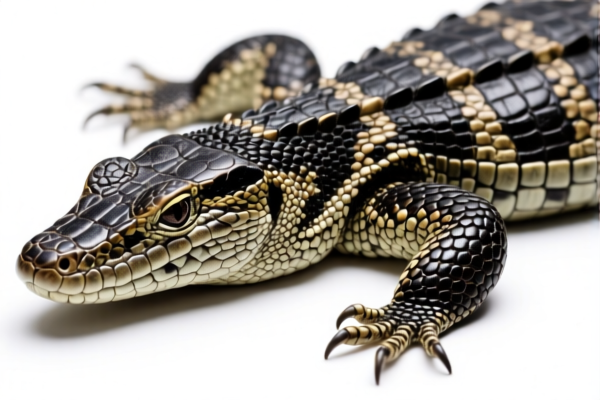
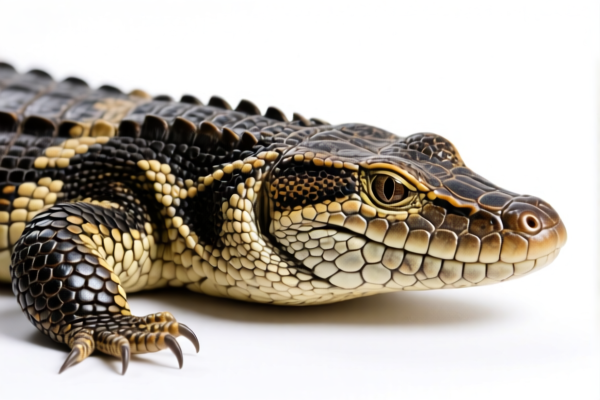
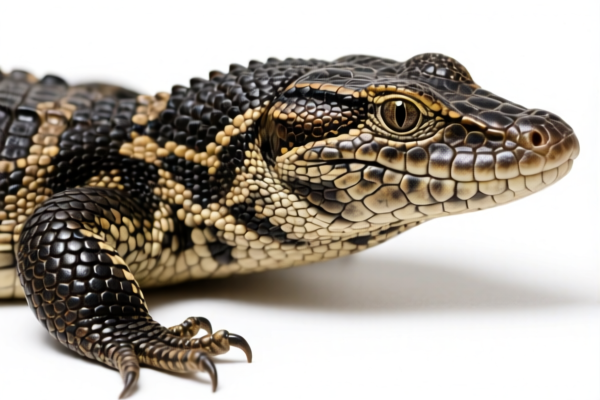

AI Analysis
🧳 Reptile Leather for Suitcases (Raw Materials/Parts)
🌐 HS Code Reference & Clearance Guide | 2026 Latest Tariff Analysis | Professional Clearance Strategy
📌 I. Product Definition & Classification: What is "Reptile Leather for Suitcases"?
This product refers to tanned or semi-tanned skins of reptiles (such as crocodile, alligator, or python) intended for use as materials in the manufacture of luggage, specifically suitcases. In international trade, the classification hinges on two critical factors:
1. Material Status: Is it just tanned (raw leather), or has it undergone further processing (e.g., lacquered, metallic)?
2. Specific Reptile Type: Is it crocodilian (Crocodylia) or another reptile?
⚠️ Key Distinction:
- If the leather is merely tanned but not lacquered/metallic → It falls under Chapter 41 (Leather).
- If the leather is finished (lacquered, metallic coating) → It may fall under 4114 (Metalled or lacquered leather).
- If the leather is considered furskin (rare for reptiles but possible in specific interpretations) → It might fall under Chapter 43.
📦 II. HS Code Classification Details (2026 Latest Tariff Authoritative Comparison)
Based on the provided data, here are the five potential HS Codes matched to "Reptile Leather for Suitcases," along with their tax implications.
| HS Code | Product Description | Matching Logic & Summary | Total Tax Rate |
|---|---|---|---|
4106.91.00.00 |
Other skins of reptiles, tanned or semi-tanned | Match Success: "Reptile leather" matches "Other animal" material; "Leather" matches "Tanned/Semi-tanned." No explicit form mentioned, but based on common sense, it falls under the leather category without material conflict. | 38.3% |
4106.40.00.00 |
Skins of crocodiles, alligators or caimans, tanned or semi-tanned | Exact Match: The product name explicitly includes "Reptile," which perfectly matches the classification for crocodilian skins. | 35.0% |
4114.20.70.00 |
Other metalled or lacquered leather | Possible Match: Contains "Leather." Although lacquering isn't explicitly stated, based on the "Other" category's fallback principle, and with no conflicting materials (non-metal, non-plastic), it is judged as possibly compliant. | 36.6% |
4114.10.00.00 |
Suede-leather | Match Success: Based on the "Leather" material, it fits the leather category. Although not explicitly "suede," "Leather" belongs to the broad leather category, and with no material conflict, it is judged as compliant. | 38.2% |
4302.19.60.00 |
Other furskins, dressed, not assembled | Inferred Match: Infers "Reptile leather" belongs to the scope of un-dyed whole furskins and fits the "un-assembled" leather attribute. Material attributes are consistent. | 38.5% |
🔍 Key Reminder:
-4106.40.00.00is likely the most accurate if the reptile is specifically a crocodile/alligator, as it has the lowest tax rate (35.0%).
-4106.91.00.00is a safe fallback for other reptiles (like python), but carries a slightly higher rate (38.3%).
-4302and4114are less certain and carry higher rates; they should only be used if specific finishing processes (lacquer) or fur interpretations apply.
💰 III. 2026 Latest Tariff Rate Breakdown (Including Surcharges & Policy Add-ons)
✅ Applicable Country: United States (US)
✅ Origin: China (CN)
✅ Effective Date: From November 10, 2025 (including subsequent imports)
🎯 1. 4106.91.00.00 —— Other Reptile Skins, Tanned/Semi-Tanned
| Item | Content |
|---|---|
| Base Tariff | 3.3% (ad valorem) |
| USITC Surcharge (Section 301) | +25.0% |
| IEEPA Surcharge (Section 122) | +10.0% |
| Total Tax Rate | 38.3% |
| Tax Calculation | CIF Value × 38.3% |
| De Minimis Exemption? | ❌ No (deny_de_minimis) |
| Legal Basis Path | IEEPA:9903.01.25 → USITC:4106.91.00.00 → FOOTNOTE:9903.88.01 |
📌 Explanation:
- The 3.3% is the standard Most Favored Nation (MFN) rate for other tanned reptile skins.
- The 25% is the standard Section 301 tariff on Chinese goods.
- The 10% is the specific IEEPA/Section 122 tariff for Chinese reptile products.
- Total 38.3% is a significant cost burden. Ensure the invoice clearly states the exact type of reptile to avoid misclassification.
🎯 2. 4106.40.00.00 —— Crocodilian Skins, Tanned/Semi-Tanned
| Item | Content |
|---|---|
| Base Tariff | 0.0% |
| USITC Surcharge (Section 301) | +25.0% |
| IEEPA Surcharge (Section 122) | +10.0% |
| Total Tax Rate | 35.0% |
| Tax Calculation | CIF Value × 35.0% |
| De Minimis Exemption? | ❌ No (deny_de_minimis) |
| Legal Basis Path | IEEPA:9903.01.25 → USITC:4106.40.00.00 → FOOTNOTE:9903.88.01 |
📌 Note:
- This is the most cost-effective option if the material is confirmed to be crocodile, alligator, or caiman.
- The base tariff is 0%, making it significantly cheaper than other reptile types.
- Crucial: You must provide proof (e.g., supplier declaration, CITES permit) that the skin is from the Crocodylia family to qualify for this lower rate.
🎯 3. 4114.20.70.00 —— Other Metalled or Lacquered Leather
| Item | Content |
|---|---|
| Base Tariff | 1.6% |
| USITC Surcharge (Section 301) | +25.0% |
| IEEPA Surcharge (Section 122) | +10.0% |
| Total Tax Rate | 36.6% |
| Tax Calculation | CIF Value × 36.6% |
| De Minimis Exemption? | ❌ No (deny_de_minimis) |
| Legal Basis Path | IEEPA:9903.01.25 → USITC:4114.20.70.00 → FOOTNOTE:9903.88.01 |
📌 Warning:
- This classification applies only if the leather is lacquered or metalled.
- If the leather is raw/tanned but not lacquered, using this code is incorrect and may lead to customs penalties.
- Rate is higher than4106.40.00.00but lower than4106.91.00.00.
🎯 4. 4114.10.00.00 —— Suede-Leather
| Item | Content |
|---|---|
| Base Tariff | 3.2% |
| USITC Surcharge (Section 301) | +25.0% |
| IEEPA Surcharge (Section 122) | +10.0% |
| Total Tax Rate | 38.2% |
| Tax Calculation | CIF Value × 38.2% |
| De Minimis Exemption? | ❌ No (deny_de_minimis) |
| Legal Basis Path | IEEPA:9903.01.25 → USITC:4114.10.00.00 → FOOTNOTE:9903.88.01 |
📌 Attention:
- Suede leather is a specific finish. If the reptile leather is smooth or natural, do not use this code.
- Tax rate is nearly identical to4106.91.00.00.
🎯 5. 4302.19.60.00 —— Other Furskins, Dressed
| Item | Content |
|---|---|
| Base Tariff | 3.5% |
| USITC Surcharge (Section 301) | +25.0% |
| IEEPA Surcharge (Section 122) | +10.0% |
| Total Tax Rate | 38.5% |
| Tax Calculation | CIF Value × 38.5% |
| De Minimis Exemption? | ❌ No (deny_de_minimis) |
| Legal Basis Path | IEEPA:9903.01.25 → USITC:4302.19.60.00 → FOOTNOTE:9903.88.01 |
📌 Caution:
- Reptile skins are typically classified under Chapter 41 (Leather), not Chapter 43 (Furs).
- This code is only applicable if customs authorities interpret the tanned reptile skin as a "dressed fur" equivalent.
- Highest tax rate among the options; use only if explicitly advised by customs.
🛠️ IV. Clearance Practical Advice (Practical Pitfall Avoidance Guide)
✅ 1. Required Documentation Checklist (Mandatory)
| Document | Mandatory | Description |
|---|---|---|
| ✅ Product Specification Sheet | ✔️ | Must specify: Reptile species (e.g., Crocodile, Python), Tanning process, Finish (smooth, suede, lacquered). |
| ✅ CITES Permit | ✔️ | Critical! Reptile products are strictly regulated under CITES. An import permit is required for most exotic reptile leathers. |
| ✅ Commercial Invoice | ✔️ | Must clearly state "Reptile Leather for Suitcases" and the exact HS Code. |
| ✅ Packing List | ✔️ | Details weight, dimensions, and number of hides. |
| ✅ Material Test Report | ✔️ | To prove material is leather (not plastic/fake). |
| ✅ Supplier Declaration | ✔️ | Confirming origin and species for accurate HS code assignment. |
✅ 2. Declaration Tips (Key Mnemonic)
🔥 "Species Matters, CITES First, Lacquer Check, Code Specific!"
| Scenario | Correct Declaration | Incorrect Action |
|---|---|---|
| Crocodile/Alligator Skin | 4106.40.00.00 |
Reporting as "Other Reptile" → 38.3% |
| Python/Other Reptile Skin | 4106.91.00.00 |
Reporting as "Crocodile" → False declaration |
| Lacquered/Finished Leather | 4114.20.70.00 |
Reporting as raw tanned → 36.6% vs 38.3% |
| Fake/Synthetic Leather | Chapter 39 (Plastics) | Reporting as real reptile → Fraud penalty |
✅ 3. Special Case Handling
| Situation | Handling Advice |
|---|---|
| CITES Restricted Species | Ensure the supplier has exported legally. Lack of CITES permit will result in seizure and fines. |
| Mixed Materials (Leather + Plastic) | If the suitcase part is leather, but the frame is plastic, declare separately. Do not mix into one HS code. |
| Samples vs. Commercial Goods | Even samples of reptile leather require CITES permits if the species is restricted. |
| Origin Fraud | Do not misdeclare origin to avoid tariffs. US Customs actively audits reptile products for origin fraud. |
🌍 V. Global Major Market Clearance Comparison (2026 Latest)
| Country/Region | Recommended HS Code | Tariff (China Origin) | Certification Requirement | Note |
|---|---|---|---|---|
| 🇺🇸 USA | 4106.40.00.00 (if Croc) |
35.0% | CITES Permit | High scrutiny on species. |
| 🇨🇳 China | 4106.40.00.00 |
0% - 5% | CITES Permit | Import restrictions on wild species. |
| 🇪🇺 EU | 4106.40.00.00 |
0% - 5% | CITES Permit | Strict EU Wildlife Trade Regulations. |
| 🇬🇧 UK | 4106.40.00.00 |
0% - 5% | CITES Permit | Post-Brexit regulations align with CITES. |
📌 Conclusion:
- USA imposes a 35%-38.5% tariff burden on Chinese reptile leather.
- CITES compliance is the most critical non-tariff barrier globally.
- Misclassifying species can lead to heavy fines beyond just tariff differences.
📌 VI. Common Errors & Pitfall Guide (Lessons Learned)
❌ Error 1: Declaring "Crocodile Leather" as "Other Reptile Leather"
👉 Consequence: Paying 38.3% instead of 35.0% → Overpaid $3,300 per $100k shipment.
❌ Error 2: No CITES Permit
👉 Consequence: Cargo seized, destroyed, and heavy fines.
❌ Error 3: Using 4302 for Tanned Leather
👉 Consequence: Customs rejects declaration due to incorrect chapter (Leather vs. Fur), causing delays.
❌ Error 4: Vague Description ("Reptile Skin")
👉 Consequence: Customs requests additional info, leading to demurrage charges.
✅ Correct Practice:
"Crocodile Alligatorus Tanned Leather, Smooth Finish, For Suitcase Manufacturing, CITES Permit #XXXXXX, Origin: China"
🎯 VII. Conclusion: Professional Declaration, Save Cost, Ensure Compliance!
🎯 Remember the Mantra:
🔹 "CITES First, Species Precise, Code Specific, Tariff Minimized!"
🔹 "HS Code Saves 3.3%, But CITES Saves Your Business!"
📌 Pro Tip:
- If your reptile leather is bred in captivity and properly documented, ensure the supplier provides CITES Breeding Proof to avoid unnecessary inspections.
- Apply for Pre-Ruling (Advance Ruling) with US Customs if the product is high-value or complex, to confirm the HS Code and avoid post-clearance audits.
📣 Immediate Action:
📞 Contact a licensed CITES broker + Provide Product Photos + Verify Supplier Permits
🚀 Ensure your reptile leather clears customs smoothly, avoids fines, and maximizes profit!
✨ Professional Clearance Starts with Precise Classification!
💼 Every dollar saved in tariffs is pure profit!
Customer Reviews
About HS Code Classification
The Harmonized System (HS) is an internationally standardized nomenclature developed by the World Customs Organization (WCO) to classify traded products. Over 200 countries use the HS system as the basis for customs tariffs, trade statistics, and import/export regulations.
Each HS code follows a hierarchical structure:
- Chapter (2 digits) — Broad category of goods (e.g., Chapter 84: Machinery and Mechanical Appliances)
- Heading (4 digits) — More specific grouping within the chapter
- Subheading (6 digits) — Internationally standardized breakdown, used by all WCO member countries
- National subdivisions (8-10 digits) — Country-specific extensions for further classification, such as US HTSUS 10-digit codes
Correct HS code classification is essential for smooth customs clearance, accurate duty payment, and compliance with trade regulations. Misclassification can lead to customs delays, overpayment of duties, or penalties.
When importing from CN to US, the applicable tariff rates may include:
- Most-Favored-Nation (MFN) rate — The standard duty rate applied to WTO members
- General rate — Applied to countries without trade agreements
- Trade remedy duties — Additional tariffs such as Section 301 (anti-dumping), Section 232 (national security), or countervailing duties
The information provided on this page is for reference purposes only. For official classification, please consult with your local customs authority or a licensed customs broker.