Research grade Synthetic Rubber and Natural Rubber Mixture
CN → US| HS Code | Tariff Rate | Origin | Destination | Doc |
|---|---|---|---|---|
| 4002800000 | 35.0% | CN | US | Official Doc |
| 4002990000 | 35.0% | CN | US | Official Doc |
| 4005990000 | 35.0% | CN | US | Official Doc |
| 4005910000 | 35.0% | CN | US | Official Doc |
Product Images
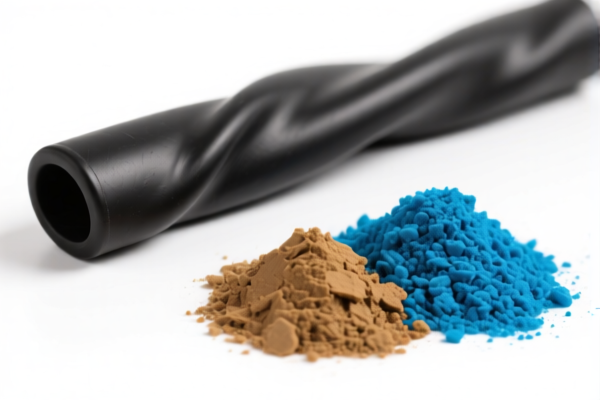
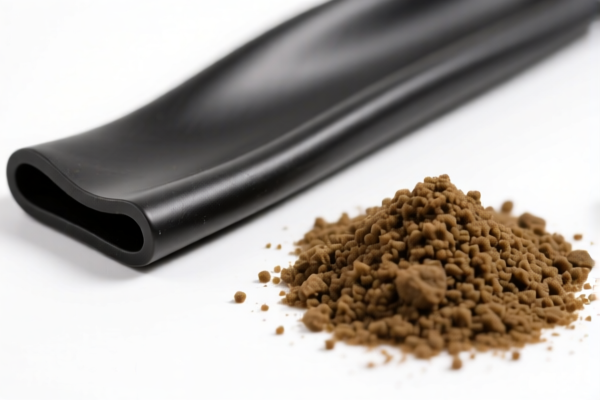
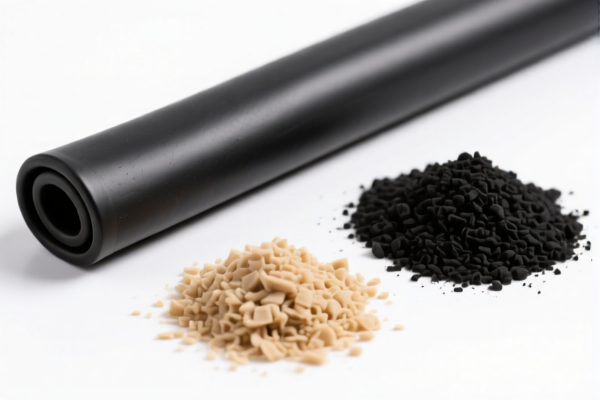
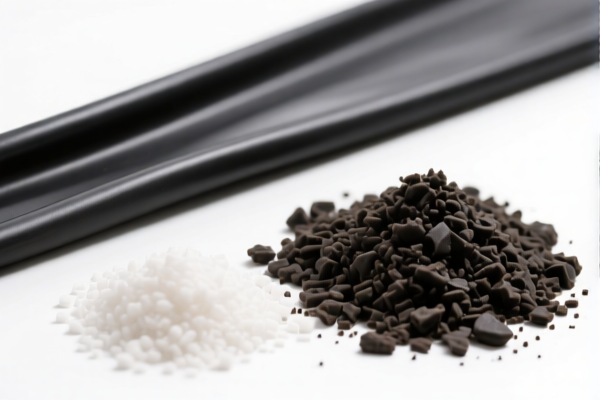
AI Analysis
🧪 Synthetic Rubber and Factice Derived from Oils in Primary Forms or in Plates, Sheets or Strip (Including Mixtures with Natural Rubber)
🌐 HS Code Reference & Customs Clearance Guide | 2026 Latest Tariff Analysis | Professional-Level Clearance Strategy
📌 I. Product Definition and Classification: Do You Really Understand "Synthetic Rubber Mixtures"?
Synthetic rubber, factice derived from oils, and their mixtures with natural rubber (heading 4001) are critical raw materials in the automotive, footwear, and industrial manufacturing sectors. In international trade, these products are classified based on their physical form (primary, plates, sheets, or strip) and specific composition.
⚠️ Key Distinction:
- If the product is a mixture of synthetic rubber/factice with natural rubber → It falls under Heading 4002 or 4005 depending on compounding.
- If it is unvulcanized compounded rubber (with additives like carbon black, accelerators) → It falls under Heading 4005.
- Primary forms include latex, lumps, pellets, or powders.
- Non-primary forms include plates, sheets, or strip.
📦 II. HS Code Classification Details (2026 Latest Tariff Authority对照)
| HS Code | Product Description | Application Scenario | Tax Details (Base + Additional) |
|---|---|---|---|
4002.80.00.00 |
Synthetic rubber and factice derived from oils, in primary forms or in plates, sheets or strip; mixtures of any product of heading 4001 with any product of this heading | General synthetic rubber blends (e.g., SBR, BR) in sheets/strip or primary forms | 0% Base + 25% Additional = 25.0% |
4002.99.00.00 |
Synthetic rubber and factice derived from oils, in primary forms or in plates, sheets or strip; mixtures of any product of heading 4001 with any product of this heading, in primary forms or in plates, sheets or strip: Other: Other | Other unspecified synthetic rubbers or mixtures not covered under 4002.80 | 0% Base + 25% Additional = 25.0% |
4005.99.00.00 |
Compounded rubber, unvulcanized, in primary forms or in plates, sheets or strip: Other: Other | Unvulcanized compounded rubber (with additives) in unspecified forms | 0% Base + 25% Additional = 25.0% |
4005.91.00.00 |
Compounded rubber, unvulcanized, in primary forms or in plates, sheets or strip: Other: Plates, sheets, and strip | Unvulcanized compounded rubber specifically in plates, sheets, or strip form | 0% Base + 25% Additional = 25.0% |
🔍 Key Reminder:
- All listed HS codes for synthetic rubber, factice, and unvulcanized compounded rubber from China to the US currently carry a 25% total tariff (0% base + 25% additional).
- Mixtures of natural rubber (4001) with synthetic rubber/factice (4002) are still classified under 4002 if the synthetic component dominates or if it’s a blend of synthetic types.
- Compounded rubber (with additives) is 4005, not 4002, even if it contains synthetic rubber.
💰 III. 2026 Latest Tariff Rate Breakdown (Including Additional Taxes, Policy Surcharges)
✅ Applicable Country: United States (US)
✅ Origin: China (CN)
✅ Effective Date: 2025–2026 (Subject to ongoing trade policy)
🎯 1. 4002.80.00.00 —— Synthetic Rubber/Factice Mixtures (Primary, Plates, Sheets, Strip)
| Item | Content |
|---|---|
| Base Tariff | 0% (ad valorem) |
| USITC Additional Tariff (Section 301) | +25% |
| Total Tariff | 25.0% |
| Tax Calculation | CIF Value × 25% |
| De Minimis Exemption Available? | ❌ No (Most shipments subject to full duty) |
| Legal Basis Path | USITC:4002.80.00.00 → FOOTNOTE:9903.88.01 (if applicable) |
📌 Explanation:
- The 25% additional tariff is applied under Section 301 of the Trade Act of 1974, targeting specific Chinese-origin rubber products.
- There is no base tariff (0%), so the entire cost burden comes from the additional duty.
- No de minimis exemption applies for these goods in standard commercial shipments.
🎯 2. 4002.99.00.00 —— Other Synthetic Rubber/Factice Mixtures
| Item | Content |
|---|---|
| Base Tariff | 0% |
| USITC Additional Tariff | +25% |
| Total Tariff | 25.0% |
| Tax Calculation | CIF × 25% |
| De Minimis Exemption? | ❌ No |
| Legal Basis Path | USITC:4002.99.00.00 → FOOTNOTE:9903.88.01 |
📌 Note:
- This code is for unspecified synthetic rubber mixtures not covered under 4002.80.
- Same 25% total duty applies.
🎯 3. 4005.99.00.00 —— Unvulcanized Compounded Rubber (Other Forms)
| Item | Content |
|---|---|
| Base Tariff | 0% |
| USITC Additional Tariff | +25% |
| Total Tariff | 25.0% |
| Tax Calculation | CIF × 25% |
| De Minimis Exemption? | ❌ No |
| Legal Basis Path | USITC:4005.99.00.00 → FOOTNOTE:9903.88.01 |
📌 Important:
- Compounded rubber includes additives (e.g., carbon black, zinc oxide, vulcanizing agents).
- Even if it contains synthetic rubber, if it’s compounded, it goes to 4005, not 4002.
🎯 4. 4005.91.00.00 —— Unvulcanized Compounded Rubber (Plates, Sheets, Strip)
| Item | Content |
|---|---|
| Base Tariff | 0% |
| USITC Additional Tariff | +25% |
| Total Tariff | 25.0% |
| Tax Calculation | CIF × 25% |
| De Minimis Exemption? | ❌ No |
| Legal Basis Path | USITC:4005.91.00.00 → FOOTNOTE:9903.88.01 |
📌 Note:
- Specific to plates, sheets, or strip of compounded rubber.
- Same 25% total duty.
🛠️ IV. Customs Clearance Practical Advice (Real-World Pitfall Avoidance)
✅ 1. Required Documentation Checklist (Mandatory)
| Document | Required | Notes |
|---|---|---|
| ✅ Product Specification Sheet | ✔️ | Must specify: type of synthetic rubber (SBR, BR, etc.), presence of additives, physical form |
| ✅ Formula/Composition Report | ✔️ | Critical to distinguish between 4002 (pure/mixture) and 4005 (compounded) |
| ✅ Product Photos | ✔️ | Clear images of packaging, labels, and physical form (lumps, sheets, pellets) |
| ✅ Third-Party Test Report | ✔️ | If applicable, include lab analysis confirming no vulcanization |
| ✅ Commercial Invoice | ✔️ | Clearly state “Synthetic Rubber” or “Compounded Rubber,” NOT just “Rubber” |
| ✅ Packing List | ✔️ | Detail weight, dimensions, and form (primary vs. sheets) |
| ✅ Certificate of Origin | ✔️ | Required for origin verification and potential exemption claims (if applicable) |
✅ 2. Declaration Tips (Key Mnemonics)
🔥 “Pure Mix = 4002, Compounded = 4005, All 25% Duty, No De Minimis!”
| Scenario | Correct HS Code | Wrong Practice |
|---|---|---|
| Synthetic rubber + natural rubber mix (no additives) | 4002.80.00.00 or 4002.99.00.00 |
Declare as “Compounded Rubber” → Risk of audit |
| Synthetic rubber with carbon black/zinc oxide | 4005.91.00.00 or 4005.99.00.00 |
Declare as “Raw Rubber” → Incorrect classification |
| Plates/sheets of synthetic rubber | 4002.80.00.00 |
Declare as “Primary Form” → Mismatch |
| Pellets/lumps of compounded rubber | 4005.99.00.00 |
Declare as “Natural Rubber” → High penalty risk |
✅ 3. Special Case Handling
| Scenario | Handling Advice |
|---|---|
| OEM Custom Rubber Blend | Provide customer contract + formulation sheet to prove composition |
| Rubber with Unclear Additives | Conduct lab test to confirm if it’s “compounded” → If yes, use 4005 |
| Mixed Shipment (Natural + Synthetic) | Ensure synthetic portion is dominant or clearly labeled as “Mixture” under 4002 |
| Small Sample Shipments | No de minimis exemption → Still pay 25% duty |
🌍 V. Global Market Comparison (2026 Latest)
| Country/Region | Recommended HS Code | Tariff | Certification | Notes |
|---|---|---|---|---|
| 🇺🇸 USA | 4002.80.00.00 / 4005.99.00.00 |
25% (China origin) | None | High duty cost |
| 🇨🇳 China | 4002 / 4005 |
5–10% | None | Lower import duty |
| 🇪🇺 EU | 4002 / 4005 |
0–6.5% | REACH Registration | No additional duties |
| 🇯🇵 Japan | 4002 / 4005 |
0–7% | JIS | No additional duties |
| 🇦🇺 Australia | 4002 / 4005 |
5% | None | Standard rate |
📌 Conclusion:
- USA imposes a steep 25% additional tariff on Chinese-origin rubber products.
- EU and Japan have significantly lower tariffs, making them more cost-effective markets.
- Consider supply chain diversification (e.g., sourcing from Malaysia, Thailand) to avoid US duties.
📌 VI. Common Mistakes & Pitfalls (Lessons Learned)
❌ Mistake 1: Declaring “Compounded Rubber” as “Raw Synthetic Rubber”
👉 Consequence: Incorrect HS Code → Potential audit, fines, or detention
❌ Mistake 2: Ignoring the “Compounded” status (additives)
👉 Consequence: Misclassification → 25% duty may still apply, but wrong HS code causes compliance issues
❌ Mistake 3: Assuming small shipments qualify for de minimis exemption
👉 Consequence: Duty still applied → Unexpected costs
❌ Mistake 4: Using vague descriptions like “Rubber Material”
👉 Consequence: Customs delay, request for additional info, possible rejection
✅ Best Practice:
“Unvulcanized Synthetic Rubber SBR, Mixed with Natural Rubber, in Plate Form, for Tire Manufacturing, No Additives, Origin: China”
🎯 VII. Conclusion: Precise Classification Saves Money and Time!
🎯 Remember the Mnemonic:
🔹 “Pure Mix = 4002, Compounded = 4005, All 25%, No De Minimis!”
🔹 “HS Code Determines Duty, 25% Extra for US, Compliance is Key!”
📌 Pro Tip:
If your rubber products are originating from Malaysia, Thailand, or Indonesia, you may qualify for lower or zero additional tariffs under US trade agreements. Consider re-shoring or transshipment strategies to mitigate costs.
📣 Immediate Action:
📞 Contact a licensed customs broker + Provide product specs + Apply for Advance Ruling
🚀 Ensure smooth customs clearance, minimize costs, and maximize profitability!
✨ Professional customs clearance starts with accurate classification!
💼 Every percent of duty saved is profit earned!
Customer Reviews
About HS Code Classification
The Harmonized System (HS) is an internationally standardized nomenclature developed by the World Customs Organization (WCO) to classify traded products. Over 200 countries use the HS system as the basis for customs tariffs, trade statistics, and import/export regulations.
Each HS code follows a hierarchical structure:
- Chapter (2 digits) — Broad category of goods (e.g., Chapter 84: Machinery and Mechanical Appliances)
- Heading (4 digits) — More specific grouping within the chapter
- Subheading (6 digits) — Internationally standardized breakdown, used by all WCO member countries
- National subdivisions (8-10 digits) — Country-specific extensions for further classification, such as US HTSUS 10-digit codes
Correct HS code classification is essential for smooth customs clearance, accurate duty payment, and compliance with trade regulations. Misclassification can lead to customs delays, overpayment of duties, or penalties.
When importing from CN to US, the applicable tariff rates may include:
- Most-Favored-Nation (MFN) rate — The standard duty rate applied to WTO members
- General rate — Applied to countries without trade agreements
- Trade remedy duties — Additional tariffs such as Section 301 (anti-dumping), Section 232 (national security), or countervailing duties
The information provided on this page is for reference purposes only. For official classification, please consult with your local customs authority or a licensed customs broker.