Resin Brake Pads
CN → US| HS Code | Tariff Rate | Origin | Destination | Doc |
|---|---|---|---|---|
| 4016996010 | 37.5% | CN | US | Official Doc |
| 8708305030 | 0.0% | CN | US | Official Doc |
| 8708305040 | 0.0% | CN | US | Official Doc |
| 4016993000 | 35.0% | CN | US | Official Doc |
Product Images
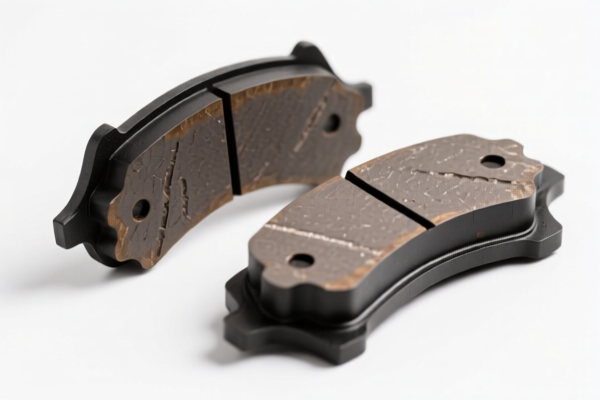
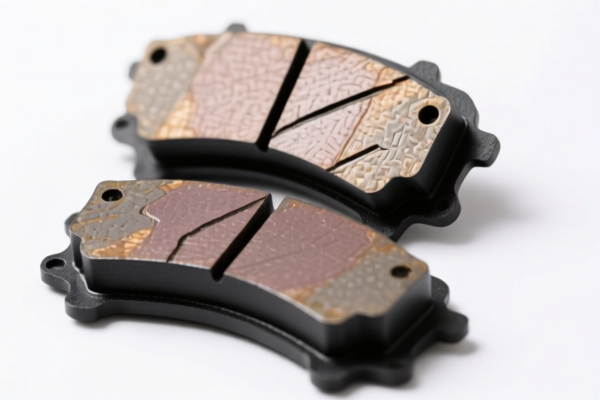


AI Analysis
🛑 Resin Brake Pads (Automotive Brake System Components)
🌐 HS Code Reference & Customs Clearance Guide | 2026 Latest Tariff Analysis | Professional Compliance Strategy
📌 I. Product Definition & Classification: What Exactly Are "Resin Brake Pads"?
"Resin Brake Pads" refer to friction materials used in automotive braking systems, typically composed of rubber, resins, fibers, and other fillers, bound together under heat and pressure (vulcanized rubber or resin-based composite materials). In international trade, these parts fall into two main categories based on their material composition and functional integration:
- Friction Material/Raw Component: Brake linings or pads made primarily of vulcanized rubber/resin composites, often classified under Chapter 40 (Rubber Articles) or Chapter 87 (Vehicle Parts) depending on specific formulation and integration.
- Integrated Vehicle Part: Brake system components (e.g., complete brake pad assemblies with metal backing plates) specifically designed for automotive use, classified under Chapter 87.
⚠️ Key Distinction Point:
- If the product is primarily vulcanized rubber/friction material without a dedicated vehicle-specific shape or mounting structure →归入 4016.99.60.10 (Other vulcanized rubber articles).
- If the product is a specifically shaped brake lining/pad for vehicle brake systems →归入 8708.30.50.30 / 8708.30.50.40 (Parts and accessories of brakes).
- If it is a composite material (rubber/metal) used for damping or braking, not explicitly listed →归入 4016.99.30.00 (Other vulcanized rubber articles, possibly as a generic vehicle part).
📦 II. HS Code Classification Details (2026 Latest Tariff Authority对照)
| HS Code | Product Description | Application Scenario | Material/Function |
|---|---|---|---|
4016.99.60.10 |
Other vulcanized rubber articles, including those containing rubber | Brake friction materials, rubber-based brake pads, non-specific vehicle brake linings | ✅ Rubber/Resin Composite |
8708.30.50.30 |
Parts and accessories of brakes: Brake linings | Automotive brake system components, specifically shaped brake pads/linings | ✅ Vehicle-Specific Friction Part |
8708.30.50.40 |
Parts and accessories of brakes: Brake linings (friction consumables) | Vehicle brake system friction consumables, brake pads with metal backing | ✅ Vehicle-Specific Friction Part |
4016.99.30.00 |
Other vulcanized rubber articles (vehicle accessories fallback) | Rubber-metal composite parts, brake/damping components not explicitly listed | ✅ Rubber/Metal Composite |
🔍 Critical Reminder:
- Brake pads with metal backing plates are typically classified under 8708.30.50.30/40 as "parts of brakes," not as generic rubber articles, because they are specifically identifiable as vehicle parts.
- Pure friction material sheets or unshaped rubber brake components may fall under 4016.99.60.10.
- Misclassification Risk: Declaring vehicle-specific brake pads as generic rubber parts may lead to customs queries; declaring generic rubber as vehicle parts may result in overpayment of duties if not justified.
💰 III. 2026 Latest Tariff Rate Breakdown (Including Additional Taxes & Policy Surcharges)
✅ Applicable Country: United States (US)
✅ Country of Origin: China (CN)
✅ Effective Date: November 10, 2025 (and subsequent imports)
🎯 1. 4016.99.60.10 —— Other Vulcanized Rubber Articles (Including Brake Friction Materials)
| Item | Content |
|---|---|
| Base Rate | 2.5% (ad valorem) |
| Section 301 Additional Tariff | +25.0% |
| IEEPA Additional Tariff (Section 122) | +10.0% |
| Total Tariff Rate | 37.5% |
| Tax Calculation | CIF Value × 37.5% |
| De Minimis Eligibility | ❌ Not Eligible (deny_de_minimis) |
| Legal Basis Path | USITC:4016.99.60.10 → FOOTNOTE:301.99.60 → IEEPA:9903.01.25 |
📌 Explanation:
- This classification treats the product as a rubber article rather than a specific vehicle part.
- The 25% Section 301 tariff applies to most Chinese-made rubber articles.
- The 10% IEEPA tariff applies to Chinese-origin goods under specific executive orders.
- Total 37.5% is a high tariff, significantly impacting cost margins.
🎯 2. 8708.30.50.30 & 8708.30.50.40 —— Parts of Brakes: Brake Linings (Vehicle-Specific)
| Item | Content |
|---|---|
| Base Rate | 2.5% (ad valorem) |
| Section 301 Additional Tariff | +25.0% |
| IEEPA Additional Tariff (Section 122) | +10.0% |
| Total Tariff Rate | 37.5% (Note: Data shows "2.5% +35.0%", which equals 37.5%) |
| Tax Calculation | CIF Value × 37.5% |
| De Minimis Eligibility | ❌ Not Eligible (deny_de_minimis) |
| Legal Basis Path | USITC:8708.30.50.30 / 8708.30.50.40 → FOOTNOTE:301.87.08 → IEEPA:9903.01.25 |
📌 Explanation:
- These codes classify the product as specific brake system components for vehicles.
- The tariff structure is identical to the rubber article classification due to the Section 301 and IEEPA surcharges.
- Key Advantage: Being classified as a vehicle part (8708) may be more accurate for brake pads with metal backing, aligning with customs expectations for auto parts.
- Total 37.5% remains high, but the classification is more defensible for automotive aftermarket parts.
🎯 3. 4016.99.30.00 —— Other Vulcanized Rubber Articles (Vehicle Accessories Fallback)
| Item | Content |
|---|---|
| Base Rate | 0.0% |
| Section 301 Additional Tariff | +25.0% |
| IEEPA Additional Tariff (Section 122) | +10.0% |
| Total Tariff Rate | 35.0% |
| Tax Calculation | CIF Value × 35.0% |
| De Minimis Eligibility | ❌ Not Eligible (deny_de_minimis) |
| Legal Basis Path | USITC:4016.99.30.00 → FOOTNOTE:301.99.30 → IEEPA:9903.01.25 |
📌 Explanation:
- This code has a 0% base rate, making it 2.5% cheaper than the other classifications.
- It is suitable for rubber-metal composite parts that don't fit neatly into specific brake lining codes.
- Risk: Customs may challenge this classification if the product is clearly identifiable as a brake pad. Misclassification can lead to penalties.
- Total 35% is the lowest option but carries higher classification risk.
🛠️ IV. Customs Clearance Practical Advice (Avoiding Pitfalls)
✅ 1. Documentation Checklist (All Required)
| Document | Mandatory | Description |
|---|---|---|
| ✅ Product Specification Sheet | ✔️ | Details composition (rubber/resin content), dimensions, weight, and intended vehicle models. |
| ✅ Technical Drawing/Structure Diagram | ✔️ | Shows if the part includes a metal backing plate or is pure friction material. |
| ✅ Product Photos (with Label) | ✔️ | Clear images showing the part, including any part numbers or branding. |
| ✅ Commercial Invoice | ✔️ | Must clearly state "Brake Pads" or "Brake Linings" and HS Code. |
| ✅ Packing List | ✔️ | Details quantity, weight, and packaging to avoid mixed shipment issues. |
| ✅ Certificate of Origin (CO) | ✔️ | Required for duty calculation and potential exemption claims. |
| ✅ Third-Party Test Report | ✔️ | If applicable, include safety or material compliance reports (e.g., SAE, ISO). |
✅ 2. Declaration Tips (Key Mantra)
🔥 “Clear Name, Accurate Code, Composite Disclosed, Tariff Avoided!”
| Scenario | Correct Declaration | Incorrect Practice |
|---|---|---|
| Brake Pads with Metal Backing | 8708.30.50.30 or 8708.30.50.40 as "Brake Linings for Vehicle" |
Misdeclaring as "Rubber Parts" → Potential penalty for misclassification. |
| Pure Rubber Friction Material | 4016.99.60.10 as "Vulcanized Rubber Friction Material" |
Declaring as "Brake Pads" without context → Customs may demand clarification. |
| Rubber-Metal Composite Parts | 4016.99.30.00 as "Vulcanized Rubber Vehicle Part" |
Declaring as "Brake Pads" without metal backing plate evidence → Disputes. |
| Mixed Shipments (Pads + Accessories) | Separate Line Items | Combining into one HS Code → High risk of audit and delayed clearance. |
✅ 3. Special Case Handling
| Scenario | Handling Advice |
|---|---|
| OEM Brake Pads | Provide OEM agreement and part number to prove vehicle-specific design. |
| Aftermarket Brake Pads | Clearly state "Aftermarket" and include compatibility list (e.g., "Fits Toyota Camry 2015-2020"). |
| Composite Materials | Declare material composition explicitly (e.g., "60% Rubber, 40% Metal Fiber") to support 4016.99.30.00. |
| Brake Pads with Noise Dampers | Include details of additional components (shims, sensors) in the specification sheet. |
🌍 V. Global Market Customs Comparison (2026 Latest)
| Country/Region | Recommended HS Code | Tariff Rate (China Origin) | Certification Required | Notes |
|---|---|---|---|---|
| 🇺🇸 USA | 8708.30.50.30 / 4016.99.60.10 |
35.0% - 37.5% | None Specific | High tariffs due to Section 301 & IEEPA. |
| 🇨🇳 China | 8708.30.50.30 |
5% - 10% | CCC (if applicable) | Lower tariffs, domestic market friendly. |
| 🇪🇺 EU | 8708.30.50 |
0% (if under 100% value) | E-mark (for vehicles) | No additional surcharges for brake parts. |
| 🇬🇧 UK | 8708.30.50 |
0% - 4.5% | UKCA Mark | Post-Brexit rules apply. |
| 🇨🇦 Canada | 8708.30.50 |
0% (under CUSMA) | Transport Canada | Preferential tariff under CUSMA. |
📌 Conclusion:
- USA is the most challenging market due to high additional tariffs (Section 301 & IEEPA).
- EU and UK offer better tariff conditions for brake parts.
- Canada offers zero tariffs under CUSMA if origin requirements are met.
📌 VI. Common Errors & Pitfalls (Lessons Learned)
❌ Error 1: Declaring "Brake Pads" as "Rubber Gaskets"
👉 Consequence: Misclassification → Delayed clearance, potential fines.
❌ Error 2: Omitting Material Composition
👉 Consequence: Customs cannot verify if it's a rubber article or vehicle part → Query and hold.
❌ Error 3: Not Disclosing Metal Backing Plate
👉 Consequence: Underpayment of duties if classified as generic rubber → Back taxes and penalties.
❌ Error 4: Using Vague Terms like "Auto Parts"
👉 Consequence: Lack of specificity → Customs may assign a higher tariff code by default.
✅ Correct Practice:
"Brake Pads, Model XYZ, for Toyota Camry, Composition: 70% Rubber, 30% Steel Backing Plate, HS Code: 8708.30.50.30"
🎯 VII. Conclusion: Precise Classification Saves Money!
🎯 Remember the Mantra:
🔹 “Brake Pads are Parts, Not Just Rubber, Declaring Correctly Avoids Trouble!”
🔹 “37.5% Tariff is High, but Misclassification is Higher!”
📌 Tips:
- If your brake pads are originating from Vietnam, Thailand, or Malaysia, you may exempt from IEEPA tariffs, reducing the total rate to 25% (Section 301 only).
- Consider applying for an Advance Ruling from CBP to confirm the correct HS Code before shipping.
- For large shipments, pre-arrival filing can speed up clearance.
📣 Act Now:
📞 Consult a licensed customs broker + Provide product specs + File for Advance Ruling
🚀 Ensure your brake pads clear customs smoothly, avoid delays, and protect your profit margins!
✨ Professional clearance starts with accurate classification!
💼 Every percentage point of tariff savings matters!
Customer Reviews
About HS Code Classification
The Harmonized System (HS) is an internationally standardized nomenclature developed by the World Customs Organization (WCO) to classify traded products. Over 200 countries use the HS system as the basis for customs tariffs, trade statistics, and import/export regulations.
Each HS code follows a hierarchical structure:
- Chapter (2 digits) — Broad category of goods (e.g., Chapter 84: Machinery and Mechanical Appliances)
- Heading (4 digits) — More specific grouping within the chapter
- Subheading (6 digits) — Internationally standardized breakdown, used by all WCO member countries
- National subdivisions (8-10 digits) — Country-specific extensions for further classification, such as US HTSUS 10-digit codes
Correct HS code classification is essential for smooth customs clearance, accurate duty payment, and compliance with trade regulations. Misclassification can lead to customs delays, overpayment of duties, or penalties.
When importing from CN to US, the applicable tariff rates may include:
- Most-Favored-Nation (MFN) rate — The standard duty rate applied to WTO members
- General rate — Applied to countries without trade agreements
- Trade remedy duties — Additional tariffs such as Section 301 (anti-dumping), Section 232 (national security), or countervailing duties
The information provided on this page is for reference purposes only. For official classification, please consult with your local customs authority or a licensed customs broker.