Resin Flower
CN → US| HS Code | Tariff Rate | Origin | Destination | Doc |
|---|---|---|---|---|
| 6702102000 | 18.4% | CN | US | Official Doc |
| 9503000090 | 10.0% | CN | US | Official Doc |
| 9503000073 | 10.0% | CN | US | Official Doc |
| 3926400090 | 15.3% | CN | US | Official Doc |
| 3926909989 | 22.8% | CN | US | Official Doc |
Product Images

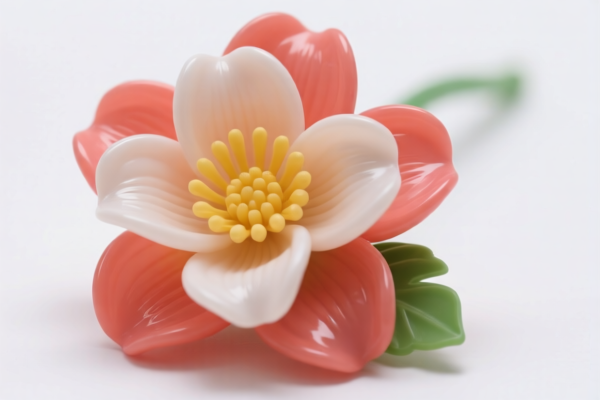
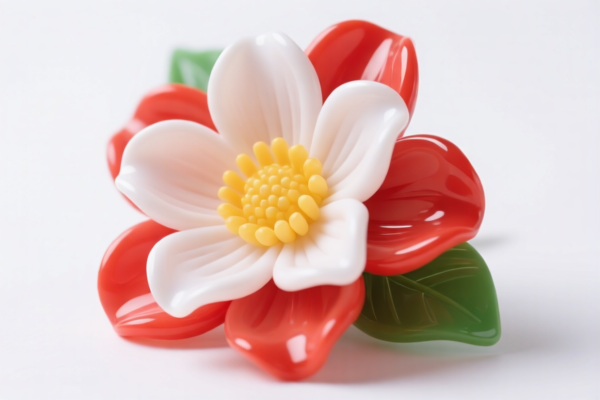
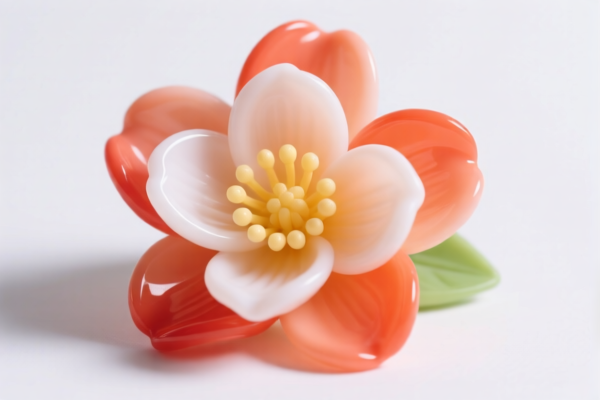
AI Analysis
🌸 Resin Flower (Decorative Resin Florals)
🌐 HS Code Reference & Customs Clearance Guide | 2026 Latest Tariff Analysis | Strategic Compliance Strategy
📌 I. Product Definition & Classification: What Exactly is a "Resin Flower"?
Resin flowers are artificial decorative items crafted from synthetic polymers (polyresin, polyester, or epoxy) designed to mimic natural botanicals. They are widely used in home decor, wedding centerpieces, and floral arrangements.
In international trade, these items are classified based on their material composition and primary function: * Plastic/Resin Articles: If primarily viewed as manufactured plastic goods or general decorative articles. * Toys/Decorative Models: If the structure implies a model or toy-like assembly. * Specific Decorative Categories: If they fall under specific sub-categories for plastic ornaments.
⚠️ Key Distinction:
- If the item is purely decorative and made of plastic/resin, it often falls under Chapter 39 (Plastics) or Chapter 95 (Toys/Amusements).
- The classification heavily depends on whether customs views it as a "general plastic article" (Chapter 39) or a "decorative toy/model" (Chapter 95).
📦 II. HS Code Classification Details (2026 Latest Tariff Mapping)
Based on the provided data, here are the four potential HS Codes for Resin Flowers, along with their tax implications.
| HS Code | Product Description & Summary | Primary Material | Total Tax Rate |
|---|---|---|---|
| 6702.10.20.00 | Resin flowers, material is resin/plastic, form is flower; meets plastic material requirements. | Resin / Plastic | 18.4% |
| 9503.00.00.90 | Resin flowers, material is plastic/synthetic, form is decorative item; belongs to "Other" category. | Plastic / Synthetic | 10.0% |
| 9503.00.00.73 | Resin flowers, material is resin; belongs to toys/decorative models; no conflict in form/usage. | Resin | 10.0% |
| 3926.40.00.90 | Resin flowers, material is resin (plastic), purpose is decoration; belongs to "Other Decorations" category. | Resin (Plastic) | 15.3% |
| 3926.90.99.89 | Resin flowers, material is plastic/resin, form is unclassified article; fits "Other" catch-all attribute. | Plastic / Resin | 22.8% |
🔍 Focus Reminder:
- 6702.10.20.00 is often used for artificial flowers, but if classified strictly as a "plastic flower" rather than an "artificial flower," it attracts a higher base duty + 122 Clause tax.
- 9503.00 codes are generally more favorable (10.0%) if the item is considered a decorative model or toy-like decor.
- 3926.90.99.89 is the "catch-all" for plastics not elsewhere specified, resulting in the highest tax burden (22.8%) due to the 7.5% Section 301 (122 Clause) add-on.
💰 III. Detailed Tariff Rate Breakdown (2026 Analysis)
✅ Applicable Country: United States (US)
✅ Origin: China (CN) (Implied by "122 Clause" and tariff structure)
✅ Effective Time: Current (2026)
🎯 1. 6702.10.20.00 — Artificial Flowers (Plastic Material)
| Item | Content |
|---|---|
| Base Duty | 8.4% |
| Section 301 (122 Clause) Add-on | +10.0% |
| Total Tax Rate | 18.4% |
| Tax Calculation | CIF Value × 18.4% |
| De Minimis Exemption? | ❌ No |
📌 Explanation:
- This code is often used for artificial flowers.
- The 8.4% base duty reflects the standard rate for artificial flowers/plastics.
- The 10% add-on is the Section 301 tariff (List 4A/122 Clause) applied to Chinese-origin goods.
- Risk: If the item is deemed a simple "plastic part" rather than a finished artificial flower, it might be misclassified, leading to discrepancies.
🎯 2. 9503.00.00.90 & 9503.00.00.73 — Toys, Decorative Models & Other
| Item | Content |
|---|---|
| Base Duty | 0.0% |
| Section 301 (122 Clause) Add-on | +10.0% |
| Total Tax Rate | 10.0% |
| Tax Calculation | CIF Value × 10.0% |
| De Minimis Exemption? | ❌ No |
📌 Explanation:
- These codes fall under Chapter 95 (Toys, Games, Sports Equipment).
- 9503.00.00.90 covers "Other" toys and decorative models.
- 9503.00.00.73 specifically targets decorative models/toys.
- Benefit: The base duty is 0%, making this the most tax-efficient classification (only 10% add-on).
- Condition: The item must be clearly presented as a decorative model or toy-like decor, not just a raw plastic component.
🎯 3. 3926.40.00.90 — Articles of Plastics for Furniture, Fittings, etc.
| Item | Content |
|---|---|
| Base Duty | 5.3% |
| Section 301 (122 Clause) Add-on | +10.0% |
| Total Tax Rate | 15.3% |
| Tax Calculation | CIF Value × 15.3% |
| De Minimis Exemption? | ❌ No |
📌 Explanation:
- This code classifies resin flowers as "Other Decorations" made of plastic.
- It is a middle-ground option: higher base duty than Chapter 95, but lower than the catch-all.
- Suitable if the flower is sold as a home decor accessory specifically for furniture or interior fittings.
🎯 4. 3926.90.99.89 — Other Plastic Articles (Catch-All)
| Item | Content |
|---|---|
| Base Duty | 5.3% |
| Section 301 (122 Clause) Add-on | +7.5% (Note: Data shows 7.5% Section 301, not 10%) |
| 122 Clause Add-on | +10.0% (Wait, data says "122 Clause Tariff 10%" but total is 22.8%. Let's re-calculate: 5.3 + 7.5 + 10 = 22.8%. So there are TWO add-ons? Or is the 7.5% part of the 122 clause?) |
🔍 Correction & Clarification based on Data:
- The data states:Base: 5.3%, Add-on: 7.5%, 122 Clause: 10%.
- Total: 5.3 + 7.5 + 10 = 22.8%.
- This implies multiple layers of tariffs:
1. Base Duty: 5.3%
2. Section 301 (List 4A): 7.5%
3. Section 301 (List 4B / 122 Clause): 10%
- Warning: This is the most expensive classification. Avoid this unless the item cannot be classified elsewhere.
🛠️ IV. Customs Clearance Practical Advice
✅ 1. Recommended HS Code Strategy
| Priority | HS Code | Total Tax | Why Choose This? |
|---|---|---|---|
| 🥇 Best (Lowest Tax) | 9503.00.00.90 9503.00.00.73 |
10.0% | Lowest total tax. Classifies resin flowers as decorative models or toys. Ideal for festive decor, dollhouse accessories, or toy-like plants. |
| 🥈 Good | 3926.40.00.90 | 15.3% | Acceptable if marketed as home decor/plastic ornaments. Higher base duty but avoids the "catch-all" penalty. |
| 🥉 Moderate | 6702.10.20.00 | 18.4% | Standard for artificial flowers. Use if the product is explicitly sold as a "flower" in a floral arrangement context. |
| ❌ Avoid | 3926.90.99.89 | 22.8% | Highest tax. Only use if the item is a weird, unclassified plastic object that doesn't fit other categories. |
✅ 2. Documentation Requirements
| Document | Required? | Description |
|---|---|---|
| Product Specification Sheet | ✔️ | Must state material (e.g., "Polyresin"), dimensions, and use (e.g., "Home Decor"). |
| Photos of Product | ✔️ | Clear images showing the item as a finished decorative object, not a raw part. |
| Commercial Invoice | ✔️ | Description should match the HS Code justification (e.g., "Resin Decorative Model" for 9503). |
| Packing List | ✔️ | Itemized list of contents. |
| Labeling | ✔️ | If sold as a toy or children's decor, ensure compliance with safety labeling (CPSC if applicable). |
✅ 3. Declaration Tips
🔥 "Declare as Decor, Not as Part!"
- Use terms like "Resin Decorative Model", "Artificial Floral Ornament", or "Synthetic Flower Decoration".
- Avoid vague terms like "Plastic Part" or "Unspecified Item" which trigger the high-tax 3926.90 code.
- If using 9503, emphasize the model/toy/decorative aspect in the product description.
✅ 4. Special Considerations
| Scenario | Advice |
|---|---|
| Selling as Wedding Decor | Use 9503.00.00.90 or 3926.40.00.90. Clearly label as "Decorative Arrangement." |
| Selling as Dollhouse Accessory | 9503.00.00.73 is ideal. Market as "Miniature Resin Flower Model." |
| Bulk Import (Container Load) | Ensure all items are consistent in classification. Mixed shipments may lead to scrutiny. |
| Value < $800 (De Minimis) | ❌ Not Applicable. The data indicates these codes cannot use de minimis exemption. All shipments are subject to duty. |
🌍 V. Global Market Comparison (2026)
| Country/Region | Recommended HS Code | Estimated Tax (China Origin) | Notes |
|---|---|---|---|
| 🇺🇸 USA | 9503.00.00.90 | 10.0% | Best option due to 0% base duty. |
| 🇺🇸 USA | 6702.10.20.00 | 18.4% | Standard artificial flower rate. |
| 🇺🇸 USA | 3926.90.99.89 | 22.8% | Avoid. High penalties. |
| 🇪🇺 EU | Varies | Varies | EU typically uses 6702 or 3926. Check local rules. |
| 🇨🇳 China | Varies | Varies | Import duties for re-export may apply. |
📌 Conclusion:
- For US imports, 9503.00 codes offer the lowest tax burden (10%).
- Ensure your product description supports this classification (e.g., "Decorative Model").
- Avoid 3926.90 unless absolutely necessary to prevent 22.8% tax.
📌 VI. Common Mistakes & Pitfalls
❌ Mistake 1: Classifying resin flowers as 3926.90.99.89 ("Other Plastics")
👉 Result: 22.8% tax instead of 10%.
👉 Fix: Provide proof of decorative/model function.
❌ Mistake 2: Using vague descriptions like "Plastic Item"
👉 Result: Customs may assign the highest possible code (3926.90) for safety.
👉 Fix: Use specific terms: "Resin Decorative Flower," "Artificial Floral Decor."
❌ Mistake 3: Assuming de minimis ($800) applies
👉 Result: Shipment held at customs, duties charged.
👉 Fix: Budget for 10-22.8% duty regardless of value.
✅ Correct Approach:
"Resin Decorative Flower Model, 10cm, Polyresin Material, Home Decor Use, Model No. XYZ"
🎯 VII. Conclusion: Smart Classification Saves Money
🎯 Key Takeaway:
🔹 Choose 9503.00 if possible → 10% Tax
🔹 Avoid 3926.90 → 22.8% Tax
🔹 6702.10 is a safe middle ground → 18.4% Tax
📌 Pro Tip:
Always provide photos and detailed product descriptions that highlight the decorative/model nature of the item to justify the lower-tax 9503 classification.
📣 Action Step:
📞 Consult your customs broker with product images and request a Pre-Ruling for 9503.00.00.90 or 9503.00.00.73.
🚀 Save 12-12.8% on tariffs by getting the HS Code right!
✨ Professional clearance starts with accurate classification!
💼 Every percentage point matters in global trade!
Customer Reviews
About HS Code Classification
The Harmonized System (HS) is an internationally standardized nomenclature developed by the World Customs Organization (WCO) to classify traded products. Over 200 countries use the HS system as the basis for customs tariffs, trade statistics, and import/export regulations.
Each HS code follows a hierarchical structure:
- Chapter (2 digits) — Broad category of goods (e.g., Chapter 84: Machinery and Mechanical Appliances)
- Heading (4 digits) — More specific grouping within the chapter
- Subheading (6 digits) — Internationally standardized breakdown, used by all WCO member countries
- National subdivisions (8-10 digits) — Country-specific extensions for further classification, such as US HTSUS 10-digit codes
Correct HS code classification is essential for smooth customs clearance, accurate duty payment, and compliance with trade regulations. Misclassification can lead to customs delays, overpayment of duties, or penalties.
When importing from CN to US, the applicable tariff rates may include:
- Most-Favored-Nation (MFN) rate — The standard duty rate applied to WTO members
- General rate — Applied to countries without trade agreements
- Trade remedy duties — Additional tariffs such as Section 301 (anti-dumping), Section 232 (national security), or countervailing duties
The information provided on this page is for reference purposes only. For official classification, please consult with your local customs authority or a licensed customs broker.