Resin Level Table
CN → US| HS Code | Tariff Rate | Origin | Destination | Doc |
|---|---|---|---|---|
| 9403708031 | 35.0% | CN | US | Official Doc |
| 9403704031 | 35.0% | CN | US | Official Doc |
| 3926909989 | 22.8% | CN | US | Official Doc |
Product Images


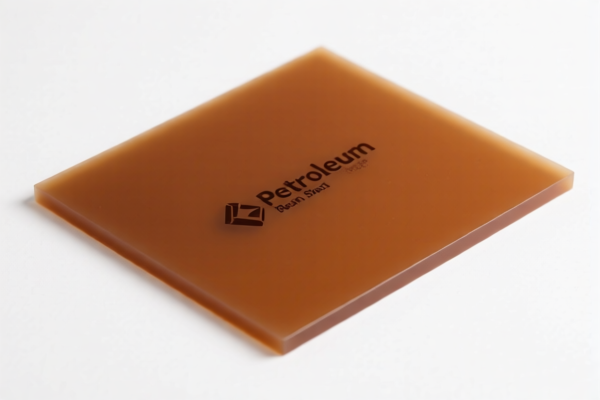
AI Analysis
🪑 Resin Level Table (Plastic Furniture & Components)
🌐 HS Code Reference & Clearance Guide | 2026 Latest Tariff Analysis | Professional Customs Strategy
📌 Section 1: Product Definition & Classification – Do You Really Understand "Resin Tables"?
"Resin Level Table" (often referred to as Resin Furniture, Plastic Tables, or Molded Tables) is a broad category in international trade. The classification depends entirely on whether the item is a standalone finished piece of furniture or general plastic articles/parts.
Two Main Categories:
1. Finished Furniture (Furniture of Plastics):
Tables where the resin/plastic forms the structural body, intended for sitting, dining, or office use. These fall under Heading 9403.
2. Other Plastic Articles (Miscellaneous Plastic Goods):
Items that are not considered "furniture" (e.g., shelves, trays, or generic plastic components not meeting furniture criteria). These fall under Heading 3926.
⚠️ Key Distinction Point:
- If it is a standalone table (legs + top + structure) used for furniture purposes → Classify under 9403
- If it is a generic plastic part, tray, or non-furniture item → Classify under 3926
📦 Section 2: HS Code Classification Details (2026 Latest Tariff Concordance)
| HS Code | Product Description | Application Scenario | Furniture Category? |
|---|---|---|---|
3926.90.99.89 |
Other articles of plastics and articles of other materials of headings 3901 to 3914: Other Other | Generic plastic trays, molds, non-furniture parts, storage bins | ❌ No |
9403.70.80.31 |
Other furniture and parts thereof: Furniture of plastics: Other Other | Standard molded resin tables, cafe tables, outdoor plastic tables | ✅ Yes |
9403.70.40.31 |
Other furniture and parts thereof: Furniture of plastics: Of reinforced or laminated plastics Other | High-end resin furniture, fiberglass tables, laminated plastic desks | ✅ Yes |
🔍 Important Note:
-9403.70is the critical heading for "Plastic Furniture."
- If the table is made of reinforced or laminated plastics (e.g., fiberglass-resin composite), it may fall under9403.70.40.31.
- If it is standard molded plastic/resin (not reinforced/laminated specifically), it falls under9403.70.80.31.
- If the item is not furniture (e.g., a plastic shelf unit or tray), it falls under3926.90.99.89.
💰 Section 3: 2026 Latest Tariff Rate Breakdown (Including Surtaxes & Policy Add-ons)
✅ Applicable Country: United States (US)
✅ Origin: China (CN)
✅ Effective Date: 2025/2026 (Current Surtax Regime)
🎯 1. 3926.90.99.89 – Other Plastic Articles (Non-Furniture)
| Item | Content |
|---|---|
| Base Duty Rate | 5.3% (ad valorem) |
| Section 301 Surtax | +7.5% (Special Additional Duty for China) |
| Total Tax Rate | 12.8% |
| Tax Calculation | CIF Value × 12.8% |
| De Minimis Eligibility | ❌ No (Subject to surtax) |
| Legal Basis | USITC 3926.90.99.89 + Section 301 Footnote |
📌 Explanation:
- This code is for non-furniture plastic items.
- The 5.3% base rate is standard for most plastic articles.
- The 7.5% additional duty is part of the ongoing trade measures against China.
- Total 12.8% is relatively moderate compared to furniture.
🎯 2. 9403.70.80.31 – Plastic Furniture (Other/Standard)
| Item | Content |
|---|---|
| Base Duty Rate | 0.0% (Free entry for many furniture items under HTSUS) |
| Section 301 Surtax | +25.0% (High Additional Duty for China) |
| Total Tax Rate | 25.0% |
| Tax Calculation | CIF Value × 25.0% |
| De Minimis Eligibility | ❌ No |
| Legal Basis | USITC 9403.70.80.31 + Section 301 Footnote |
📌 Explanation:
- While the base duty is 0%, the 25% surtax makes it significantly more expensive.
- This applies to standard resin/plastic tables (e.g., patio tables, indoor plastic tables).
🎯 3. 9403.70.40.31 – Plastic Furniture (Reinforced/Laminated)
| Item | Content |
|---|---|
| Base Duty Rate | 0.0% (Free entry) |
| Section 301 Surtax | +25.0% (High Additional Duty for China) |
| Total Tax Rate | 25.0% |
| Tax Calculation | CIF Value × 25.0% |
| De Minimis Eligibility | ❌ No |
| Legal Basis | USITC 9403.70.40.31 + Section 301 Footnote |
📌 Explanation:
- This applies if the resin table is reinforced (e.g., fiberglass, carbon-fiber reinforced plastic, or laminated layers).
- Same 25% total duty as standard plastic furniture.
🛠️ Section 4: Clearance Operational Advice (Practical Pitfall Avoidance Guide)
✅ 1. Documentation Checklist (Essential)
| Document | Mandatory? | Description |
|---|---|---|
| ✅ Product Specification Sheet | ✔️ | Dimensions, material type (plastic/resin/fiberglass), weight, load capacity |
| ✅ Material Composition Report | ✔️ | Confirm if "reinforced" or "laminated" to distinguish between 9403.70.40.31 and 9403.70.80.31 |
| ✅ Product Photos (With Context) | ✔️ | Show the table in a room setting to prove "furniture" use |
| ✅ Commercial Invoice | ✔️ | Clearly state "Plastic Resin Table for Dining/Office Use" |
| ✅ Packing List | ✔️ | Detail components (e.g., table top + legs) |
| ✅ Origin Certificate | ✔️ | If not China-origin, may qualify for lower/zero surtax |
✅ 2. Declaration Tips (Key Rules)
🔥 “Clarify Furniture vs. Article, Reinforced vs. Standard!”
| Scenario | Correct HS Code | Wrong Approach |
|---|---|---|
| Standard molded resin table (patio, indoor) | 9403.70.80.31 |
Misclassified as 3926 → Underpay tax, risk penalty |
| Fiberglass/laminated resin table | 9403.70.40.31 |
Not specified as "reinforced" → May lead to clarification delays |
| Plastic tray or shelf (not furniture) | 3926.90.99.89 |
Classified as furniture → Overpay tax (25% vs 12.8%) |
| Table with wooden legs + plastic top | Mixed Material Rules | May not qualify for 9403.70 if non-plastic parts are essential |
✅ 3. Special Cases Handling
| Scenario | Recommendation |
|---|---|
| OEM Resin Tables | Provide design specs; ensure "furniture" intent is clear |
| Modular/Disassembled Tables | Declare as single article; do not split parts |
| Outdoor vs. Indoor | No difference in HS Code, but specify in description for customs clarity |
| Reinforced vs. Standard | Provide material test report if asked; critical for 9403.70.40.31 |
🌍 Section 5: Global Market Clearance Comparison (2026 Latest)
| Country/Region | Recommended HS Code | Duty Rate | Certification | Notes |
|---|---|---|---|---|
| 🇺🇸 USA | 9403.70.80.31 / 9403.70.40.31 |
25.0% (China) | None specific | High surtax; verify "plastic" vs "reinforced" |
| 🇨🇳 China | 9403.70 |
5% - 10% | CCC (if applicable) | No surtax for exports |
| 🇪🇺 EU | 9403.70 |
0% (Most) | CE (if electrical, but none here) | Low duty for plastic furniture |
| 🇬🇧 UK | 9403.70 |
0% | UKCA | Post-Brexit rules apply |
| 🇦🇺 Australia | 9403.70 |
5% | C-Tick | Moderate duty |
📌 Conclusion:
- USA imposes a 25% surtax on plastic furniture, making it expensive.
- Non-furniture plastic items (3926) only face 12.8%, so correct classification is crucial for cost optimization.
- EU/UK/Australia offer much lower duty rates for plastic furniture.
📌 Section 6: Common Errors & Pitfall Guide (Lessons Learned)
❌ Error 1: Classifying a furniture table as 3926 (Other Plastic Articles)
👉 Consequence: Underpayment of duty (12.8% vs 25%) → Penalties + Back Taxes!
❌ Error 2: Classifying a plastic tray or shelf as 9403 (Furniture)
👉 Consequence: Overpayment of duty (25% vs 12.8%) → Lost Profit!
❌ Error 3: Not specifying "Reinforced/Laminated" for fiberglass tables
👉 Consequence: Customs may misclassify under 9403.70.80.31 (still 25%, but may lead to inspections)
❌ Error 4: Using vague terms like "Plastic Item"
👉 Consequence: Delays in clearance → Storage Fees!
✅ Correct Practice:
"Plastic Resin Dining Table, Outdoor Use, Molded Polyethylene, Model XYZ, Dimensions 60x60x75cm"
🎯 Section 7: Conclusion – Professional Declaration, Cost Efficiency!
🎯 Remember the Rules:
🔹 “Furniture = 25% (China), Non-Furniture = 12.8% (China)”
🔹 “Reinforced/Laminated? Use .40.31. Standard? Use .80.31.”
🔹 “Clarify Intent: Furniture or Article? Tax Differs by 12.2%!”
📌 Pro Tip:
If your resin tables are not made in China (e.g., Vietnam, Thailand, Malaysia), the 25% surtax may not apply → Check for FTZ/ASEAN benefits.
Always request an Advance Ruling from US CBP if unsure about "Reinforced" vs. "Standard" classification.
📣 Immediate Action:
📞 Consult with a licensed customs broker
📤 Provide detailed product photos & material reports
🚀 Ensure correct HS Code to avoid 25% penalty and ensure smooth clearance!
✨ Professional Clearance Starts with Accurate Classification!
💼 Every Percent Counts in International Trade!
Customer Reviews
About HS Code Classification
The Harmonized System (HS) is an internationally standardized nomenclature developed by the World Customs Organization (WCO) to classify traded products. Over 200 countries use the HS system as the basis for customs tariffs, trade statistics, and import/export regulations.
Each HS code follows a hierarchical structure:
- Chapter (2 digits) — Broad category of goods (e.g., Chapter 84: Machinery and Mechanical Appliances)
- Heading (4 digits) — More specific grouping within the chapter
- Subheading (6 digits) — Internationally standardized breakdown, used by all WCO member countries
- National subdivisions (8-10 digits) — Country-specific extensions for further classification, such as US HTSUS 10-digit codes
Correct HS code classification is essential for smooth customs clearance, accurate duty payment, and compliance with trade regulations. Misclassification can lead to customs delays, overpayment of duties, or penalties.
When importing from CN to US, the applicable tariff rates may include:
- Most-Favored-Nation (MFN) rate — The standard duty rate applied to WTO members
- General rate — Applied to countries without trade agreements
- Trade remedy duties — Additional tariffs such as Section 301 (anti-dumping), Section 232 (national security), or countervailing duties
The information provided on this page is for reference purposes only. For official classification, please consult with your local customs authority or a licensed customs broker.