Resin for Mold Repair
CN → US| HS Code | Tariff Rate | Origin | Destination | Doc |
|---|---|---|---|---|
| 3208100000 | 38.7% | CN | US | Official Doc |
| 3208200000 | 38.6% | CN | US | Official Doc |
| 3824100000 | 41.0% | CN | US | Official Doc |
Product Images
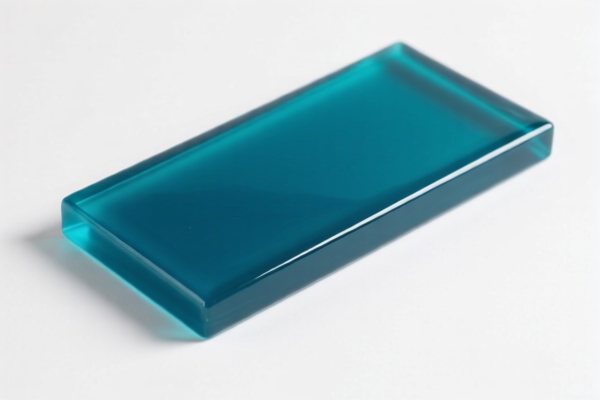
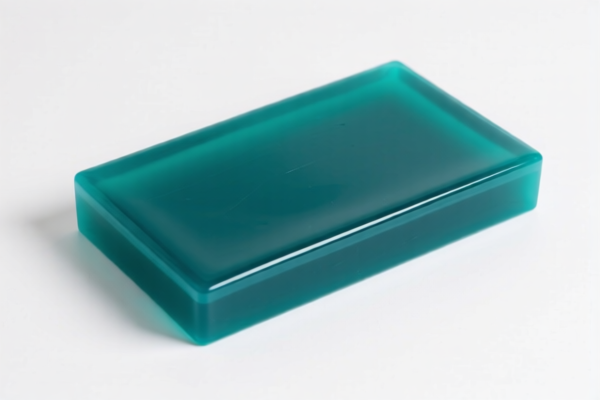
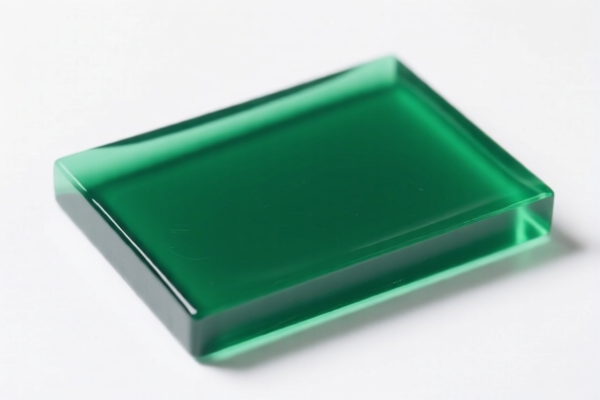

AI Analysis
🛠️ Resin for Mold Repair: The Ultimate HS Code & Duty Guide (2026)
🌐 HS Code Reference & Customs Clearance Guide | 2026 Latest Tariff Analysis | Professional-Level Compliance Strategy
📌 Part 1: Product Definition & Classification: Do You Really Understand "Resin for Mold Repair"?
"Resin for Mold Repair" is a specialized chemical material used to restore, seal, or reinforce damaged molds (typically for injection molding, die-casting, or precision machining). In international trade, these products are not classified as a single entity. Instead, they are split based on their chemical composition and primary function.
Misclassification here is dangerous. If you declare it incorrectly, you could face: 1. Incorrect Tariff Application: Paying significantly more duty than necessary. 2. Customs Delays: Additional scrutiny on chemical ingredients. 3. Penalties: For providing false information about the product's nature.
The key distinction lies in whether the resin is: - Coating/Paint-based: Used primarily to coat the mold surface. - Adhesive/Binder-based: Used to glue or bind mold materials together.
📦 Part 2: Detailed HS Code Classification (2026 Latest Tariff Authority)
| HS Code | Product Description | Key Characteristics | Primary Function |
|---|---|---|---|
3208.10.00.00 |
Polyester-Based Resins | Based on polyester resins; liquid or paste form; used as paints/varnishes. | Coating/Sealing: Applied as a protective or restorative layer on the mold surface. |
3208.20.00.00 |
Acrylic/Vinyl-Based Resins | Based on acrylic or vinyl polymers; liquid or paste form; used as paints/varnishes. | Coating/Sealing: Similar to above, but uses acrylic/vinyl chemistry for different curing/durability properties. |
3824.10.00.00 |
Mold Binding Agents | Specialized chemical preparations for molding or core-making. | Structural Bonding: Acts as an adhesive or binder to repair cracks, fill voids, or bond mold components. |
🔍 Critical Distinction: - If the resin is thinner, paint-like, and meant to coat the mold surface → Go with 3208.xx codes. - If the resin is thicker, glue-like, and meant to bond/fill structural gaps → Go with 3824.10 code. - Do not classify these under general adhesives (like 3506) unless they do not fit the specific "mold binding" definition in 3824.
💰 Part 3: 2026 Latest Tariff Rate Breakdown (Including Additional Duties)
✅ Applicable Country: United States (US)
✅ Origin: China (CN)
✅ Effective Date: Post-2025 policies (Includes Section 301 & Section 122 Duties)
🎯 1. 3208.10.00.00 – Polyester-Based Resin for Mold Repair (Coating Type)
| Item | Details |
|---|---|
| Base Tariff Rate | 3.7% |
| Section 301 Additional Duty | +25.0% (Trade Act of 1974, Section 301) |
| Section 122 Additional Duty | +10.0% (Presidential Proclamation 11156) |
| Total Tariff Rate | 38.7% |
| Calculation Basis | CIF Value × 38.7% |
| De Minimis Exemption | ❌ NOT Eligible (Value exceeds $800 threshold for exemption from additional duties) |
| Legal Authority Path | HTSUS:3208.10.00 → Section 301 Footnote 9903.01.25 → Section 122 (19 U.S.C. 2257) |
📌 Explanation:
- 3.7% is the standard Most Favored Nation (MFN) rate for polyester resins used as coatings. - 25% is the additional tariff imposed on Chinese goods under Section 301. - 10% is the additional tariff under Section 122 for certain chemical products. - Total: 38.7%. This is a high tariff category. Proper documentation is crucial to prove the "coating" nature.
🎯 2. 3208.20.00.00 – Acrylic/Vinyl-Based Resin for Mold Repair (Coating Type)
| Item | Details |
|---|---|
| Base Tariff Rate | 3.6% |
| Section 301 Additional Duty | +25.0% |
| Section 122 Additional Duty | +10.0% |
| Total Tariff Rate | 38.6% |
| Calculation Basis | CIF Value × 38.6% |
| De Minimis Exemption | ❌ NOT Eligible |
| Legal Authority Path | HTSUS:3208.20.00 → Section 301 Footnote 9903.01.24 → Section 122 |
📌 Note:
- This code is for acrylic or vinyl polymers. - The total duty is 38.6%, just slightly lower than the polyester version. - Ensure your SDS (Safety Data Sheet) clearly states "Acrylic" or "Vinyl" as the main polymer.
🎯 3. 3824.10.00.00 – Chemical Preparations for Mold Binding (Adhesive/Filler Type)
| Item | Details |
|---|---|
| Base Tariff Rate | 6.0% |
| Section 301 Additional Duty | +25.0% |
| Section 122 Additional Duty | +10.0% |
| Total Tariff Rate | 41.0% |
| Calculation Basis | CIF Value × 41.0% |
| De Minimis Exemption | ❌ NOT Eligible |
| Legal Authority Path | HTSUS:3824.10.00 → Section 301 Footnote 9903.01.25 → Section 122 |
📌 Explanation:
- This code is for prepared binders or chemical preparations specifically for molding or core-making. - The base rate is higher (6.0%) because it is considered a more specialized chemical preparation. - Total: 41.0%. This is the highest duty among the three. Use this ONLY if the product is clearly a binding/adhesive agent, not a coating.
🛠️ Part 4: Customs Clearance Practical Advice (Avoid Pitfalls)
✅ 1. Essential Documentation Checklist (Non-Negotiable)
| Document | Required | Reason |
|---|---|---|
| Safety Data Sheet (SDS) | ✔️ Mandatory | Must clearly state the chemical composition (Polyester vs. Acrylic vs. Binder) and HS Code classification. |
| Technical Data Sheet (TDS) | ✔️ Highly Recommended | Shows the product's application (coating vs. bonding) to support HS Code selection. |
| Commercial Invoice | ✔️ Mandatory | Must accurately describe the product (e.g., "Polyester-Based Coating Resin for Mold Repair"). Avoid vague terms like "Chemical Glue." |
| Packing List | ✔️ Mandatory | Details the net/gross weight and volume. |
| Certificate of Origin | ✔️ Optional but Recommended | Proves Chinese origin for duty calculation. |
| Product Photos | ✔️ Recommended | Show the product in its container, label, and application context. |
⚠️ Critical Warning:
- Mislabeling is a major risk. If you declare "Acrylic Resin" but the SDS shows "Polyester," customs will reclassify it, leading to back-taxes, penalties, and shipment delays. - Never use generic terms like "Repair Kit" without specifying the chemical nature.
✅ 2. Declaration Tips (Key Mnemonics)
🔥 "Coating gets 32, Binding gets 38, Check the Polymer, Avoid the Car!"
| Scenario | Correct Declaration | HS Code | Duty |
|---|---|---|---|
| Liquid Resin, used for surface coating/sealing | "Polyester-based Coating Resin for Mold Repair" | 3208.10.00.00 |
38.7% |
| Liquid Resin, used for surface coating/sealing | "Acrylic-based Coating Resin for Mold Repair" | 3208.20.00.00 |
38.6% |
| Thick Paste/Adhesive, used for filling/bonding | "Chemical Binding Agent for Mold Repair" | 3824.10.00.00 |
41.0% |
| Wrong Declaration | "Glue" or "Adhesive" (without specifying mold use) | Could be misclassified as 3506 or 3520 |
Risk of reclassification penalty |
✅ 3. Special Cases & Handling
| Scenario | Advice |
|---|---|
| Mixed Packages (Coating + Binder) | Declare each component separately if possible. If mixed, use the HS Code for the primary component by volume/value. |
| Kit with Tools & Resin | If the resin is the main value, declare the whole kit as resin. If tools are significant, consider separating them. |
| Small Samples (Under $800) | May qualify for de minimis entry, but additional duties (Section 301/122) may still apply. Consult your broker. |
| UN Number & Hazmat | If the resin is flammable or hazardous, ensure proper UN packaging and Hazmat declaration. This affects freight costs but not HS duty. |
🌍 Part 5: Global Market Comparison (2026 Latest)
| Country/Region | Recommended HS Code | Base Duty | Additional Duties (China) | Total Duty | Notes |
|---|---|---|---|---|---|
| 🇺🇸 USA | 3208.10.00.00 / 3208.20.00.00 / 3824.10.00.00 |
3.6%-6.0% | +35% (301+122) | 38.6%-41.0% | High duty burden. |
| 🇨🇳 China | Same HS Codes | 6.5%-8.0% | None | 6.5%-8.0% | Lower duty, but import restrictions may apply. |
| 🇪🇺 EU | Similar Codes (e.g., 3909, 3208) | 0%-6.5% | None | 0%-6.5% | No additional tariffs. CE marking required. |
| 🇬🇧 UK | Similar Codes | 0%-6.5% | None | 0%-6.5% | Post-Brexit, no additional US-China tariffs. |
| 🇯🇵 Japan | Similar Codes | 0%-5.0% | None | 0%-5.0% | Low duty, strict chemical registration (FIEC). |
📌 Conclusion:
- The USA is the most expensive market for importing resins from China due to Section 301 and Section 122 tariffs. - Consider diversifying supply chains to Vietnam, Mexico, or Thailand if possible, to mitigate tariff risks. - For EU/UK/Japan, the focus should be on chemical compliance (REACH, CLP, FIEC) rather than tariffs.
📌 Part 6: Common Mistakes & Pitfalls (Lessons Learned)
❌ Mistake 1: Declaring "Resin" without specifying the polymer type.
👉 Consequence: Customs may assign a default higher tariff code or request additional documentation, delaying clearance.
❌ Mistake 2: Using "Adhesive" for a coating product.
👉 Consequence: Misclassification under 3506/3520, leading to potential audits and back-taxes.
❌ Mistake 3: Ignoring Section 122 Duties.
👉 Consequence: Underpayment of 10% additional duty, resulting in penalties and interest.
❌ Mistake 4: Not providing a clear SDS.
👉 Consequence: Customs cannot verify chemical composition, leading to seizure or return.
✅ Correct Practice:
"Polyester-Based Liquid Coating Resin for Mold Repair, HS Code 3208.10.00.00, SDS Attached, No Hazmat Required"
🎯 Part 7: Conclusion: Precision Classification Saves Money!
🎯 Remember the Mnemonic:
🔹 "Coating = 32, Binding = 38, Polymer Type is Key!"
🔹 "Total Duty: 38.6% to 41.0%, Plan Ahead!"
🔹 "SDS is Your Best Friend, Avoid the Headache!"
📌 Pro Tip:
If you are importing large volumes, consider applying for an Advance Ruling from U.S. Customs and Border Protection (CBP) to confirm the correct HS Code and duty rate. This provides legal certainty and avoids surprises.
📣 Immediate Action:
📞 Contact a licensed customs broker
📄 Prepare a detailed SDS and Technical Data Sheet
🚀 Apply for an Advance Ruling if importing regularly
✨ Professional Customs Clearance Starts with Accurate Classification!
💼 Your Profit Margin Depends on Precise Duty Calculation!
Customer Reviews
About HS Code Classification
The Harmonized System (HS) is an internationally standardized nomenclature developed by the World Customs Organization (WCO) to classify traded products. Over 200 countries use the HS system as the basis for customs tariffs, trade statistics, and import/export regulations.
Each HS code follows a hierarchical structure:
- Chapter (2 digits) — Broad category of goods (e.g., Chapter 84: Machinery and Mechanical Appliances)
- Heading (4 digits) — More specific grouping within the chapter
- Subheading (6 digits) — Internationally standardized breakdown, used by all WCO member countries
- National subdivisions (8-10 digits) — Country-specific extensions for further classification, such as US HTSUS 10-digit codes
Correct HS code classification is essential for smooth customs clearance, accurate duty payment, and compliance with trade regulations. Misclassification can lead to customs delays, overpayment of duties, or penalties.
When importing from CN to US, the applicable tariff rates may include:
- Most-Favored-Nation (MFN) rate — The standard duty rate applied to WTO members
- General rate — Applied to countries without trade agreements
- Trade remedy duties — Additional tariffs such as Section 301 (anti-dumping), Section 232 (national security), or countervailing duties
The information provided on this page is for reference purposes only. For official classification, please consult with your local customs authority or a licensed customs broker.