Resistance Bands Set
CN → US| HS Code | Tariff Rate | Origin | Destination | Doc |
|---|---|---|---|---|
| 3926909989 | 22.8% | CN | US | Official Doc |
| 4016993550 | 35.0% | CN | US | Official Doc |
| 4016993510 | 35.0% | CN | US | Official Doc |
| 9506910030 | 22.1% | CN | US | Official Doc |
| 3926909905 | 22.8% | CN | US | Official Doc |
Product Images
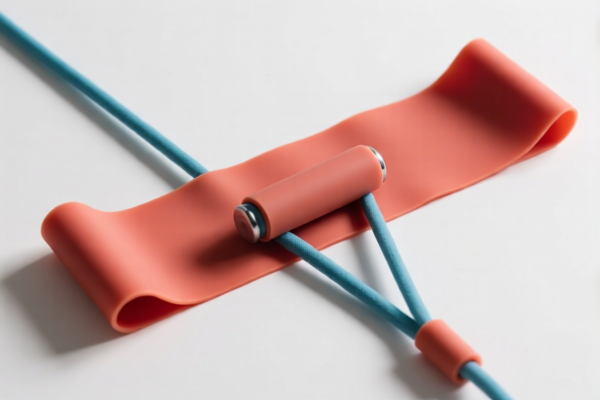
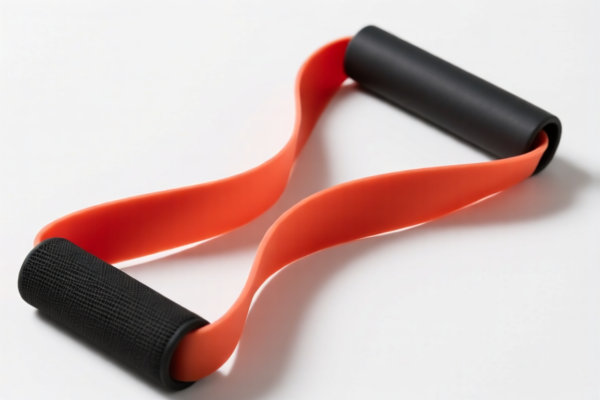
AI Analysis
🏋️♀️ Resistance Bands Set (Resistance Bands Kit)
🌐 HS Code Reference & Customs Clearance Guide | 2026 Latest Tariff Analysis | Strategic Compliance for Elastic Gear
📌 I. Product Definition & Classification: Do You Really Know "Resistance Bands"?
Resistance bands, also known as exercise bands or resistance tubing, are versatile fitness equipment used for strength training, physical therapy, and general aerobic exercise. In international trade, they are primarily classified based on Material Composition and Functional Design.
The Core Classification Conflict: * Sporting Goods Approach: If viewed purely as "articles for general physical exercise," they may fall under Chapter 95. * Material Approach: If viewed primarily as "elastic products made of rubber or plastics," they fall under Chapter 40 (Rubber) or Chapter 39 (Plastics).
⚠️ Key Classification Point:
Customs authorities often scrutinize the material composition. If the band is primarily rubber, Chapter 40 is preferred. If it is TPE/Latex blend or purely plastic, Chapter 39 or 95 might be argued. Misclassification can lead to significant tariff differences (e.g., 0% vs. 25% base duties).
📦 II. HS Code Classification Details (Based on Provided Data)
| HS Code | Product Description | Material/Usage Logic | Why This Code? |
|---|---|---|---|
| 9506.91.00.30 | Articles & Equipment for General Physical Exercise | Sporting Goods | Fits the definition of "Articles and equipment for general physical exercise." No material conflict with common elastic materials (latex/TPE). |
| 3926.90.99.05 | Other Articles of Plastics | Plastic/TPE Elastic Band | Shape is an elastic band; material inferred as plastic/rubber-like (TPE/PVC). Matches the "plastic elastic band" attribute. |
| 3926.90.99.89 | Other Plastic Articles | Plastic Components | Made of elastic plastic or rubber-like material. Classified as "other plastic articles" for fitness accessories. No material conflict. |
| 4016.99.35.50 | Other Articles of Vulcanized Rubber Except Hard Rubber | Natural/Synthetic Rubber | Inferred material is natural or synthetic rubber (vulcanized). Form is non-specific ("other") rubber article. |
| 4016.99.35.10 | Other Articles of Vulcanized Rubber | Elastic Rubber Product | Material inferred as elastic or vulcanized rubber. Fits the material characteristics of rubber elastic products. |
🔍 Critical Insight:
- Chapter 95 (9506) is often the most logical for finished fitness kits if the primary identity is "exercise equipment." - Chapter 40 (4016) typically applies if the item is strictly rubber-based and not specifically designed as a "sporting article" in its finished form. - Chapter 39 (3926) applies if the material is predominantly plastic/TPE.
💰 III. 2026 Latest Tariff Rate Breakdown (Including Surtaxes & Policy Add-ons)
✅ Applicable Country: USA (US)
✅ Origin: China (CN)
✅ Effective Date: 2025/2026 Tariff Regime
🎯 1. 9506.91.00.30 — Sporting Goods (General Exercise Equipment)
| Item | Content |
|---|---|
| Base Duty Rate | 4.6% |
| Section 301 Surtax | +7.5% (List 4B/4C) |
| Section 122 Tariff | +10% (Specific to certain goods) |
| Section 232 Tariff (Steel/Aluminum/Copper) | +50% (Note: Only applies if components contain steel/aluminum/copper, e.g., metal handles. Pure bands usually exempt.) |
| Total Effective Tax | 22.1% (Assuming no Section 232 application) |
| De Minimis Exemption | ❌ Denied |
| Legal Path | USITC:9506.91.00.30 → 301:7.5% → 122:10% |
📌 Explanation:
- This is the lowest tariff option among the choices. - Section 232 (50%) is included in the raw data but typically does not apply to pure rubber/plastic bands. If the set includes metal clips or weights, customs may challenge this. - Total: 22.1%. Highly competitive for fitness gear.
🎯 2. 3926.90.99.05 — Plastic Articles
| Item | Content |
|---|---|
| Base Duty Rate | 5.3% |
| Section 301 Surtax | +7.5% |
| Section 122 Tariff | +10% |
| Total Effective Tax | 22.8% |
| De Minimis Exemption | ❌ Denied |
| Legal Path | USITC:3926.90.99.05 → 301:7.5% → 122:10% |
📌 Explanation:
- Slightly higher base duty (5.3%) than Chapter 95. - Suitable if the product is marketed primarily as "plastic accessories" rather than "sports equipment."
🎯 3. 3926.90.99.89 — Other Plastic Articles
| Item | Content |
|---|---|
| Base Duty Rate | 5.3% |
| Section 301 Surtax | +7.5% |
| Section 122 Tariff | +10% |
| Total Effective Tax | 22.8% |
| De Minimis Exemption | ❌ Denied |
| Legal Path | USITC:3926.90.99.89 → 301:7.5% → 122:10% |
📌 Explanation:
- Same tariff structure as3926.90.99.05. Use this if the specific subheading.05is not available for your specific plastic formulation.
🎯 4. 4016.99.35.50 — Vulcanized Rubber Articles
| Item | Content |
|---|---|
| Base Duty Rate | 0.0% |
| Section 301 Surtax | +25.0% |
| Section 122 Tariff | +10% |
| Total Effective Tax | 35.0% |
| De Minimis Exemption | ❌ Denied |
| Legal Path | USITC:4016.99.35.50 → 301:25% → 122:10% |
📌 Explanation:
- Highest Tariff Risk! Although the base duty is 0%, the Section 301 surtax is 25% (higher than the 7.5% for plastics/sports goods). - Only use this if you can prove it is 100% natural/synthetic rubber and the "sporting goods" classification is rejected by customs. - Do NOT use if you have a valid sporting goods classification.
🎯 5. 4016.99.35.10 — Other Vulcanized Rubber Articles
| Item | Content |
|---|---|
| Base Duty Rate | 0.0% |
| Section 301 Surtax | +25.0% |
| Section 122 Tariff | +10% |
| Total Effective Tax | 35.0% |
| De Minimis Exemption | ❌ Denied |
| Legal Path | USITC:4016.99.35.10 → 301:25% → 122:10% |
📌 Explanation:
- Identical tax structure to4016.99.35.50. - High risk of double taxation (Base 0% + 25% + 10%).
🛠️ IV. Customs Clearance Practical Advice (Pitfall Avoidance Guide)
✅ 1. Documentation Checklist (Non-negotiable)
| Document | Required | Explanation |
|---|---|---|
| ✅ Product Specification Sheet | ✔️ | Must clearly state Material (e.g., "100% Natural Latex," "TPE," "PVC"). This is critical for distinguishing between Ch. 39, 40, and 95. |
| ✅ Product Photos (Clear) | ✔️ | Show the bands, handles, and packaging. Label must say "Exercise Band" or "Fitness Equipment." |
| ✅ Commercial Invoice | ✔️ | Description should be precise: "Resistance Bands Set for Fitness, Material: [Specify], Not for Medical Use." |
| ✅ Certificate of Origin (CO) | ✔️ | Essential for proving CN origin to apply correct Section 301/122 rates. |
| ✅ Material Test Report | ✔️ | If claiming Ch. 95, prove it’s not just a generic rubber band. If claiming Ch. 40, prove rubber content. |
✅ 2. Classification Strategy (Key Tips)
🔥 "Sport First, Material Second. Lower Tax Wins."
| Scenario | Recommended HS Code | Reason |
|---|---|---|
| Complete Set (Handles + Bands + Door Anchor) | 9506.91.00.30 |
Best "complete article" classification. Lowest total tax (22.1%). |
| Pure Rubber Bands (No Handles) | 4016.99.35.50 / .10 |
If no sports context, falls to rubber. Higher tax (35%). Only use if Ch. 95 is rejected. |
| TPE/Plastic Bands | 3926.90.99.05 / .89 |
Mid-range tax (22.8%). Good backup if rubber content is low. |
| Bands with Metal Clips | Caution | Metal parts may trigger Section 232 (50%). Check if clips are integral or removable. |
✅ 3. Special Situations & Solutions
| Situation | Handling Advice |
|---|---|
| OEM Custom Bands | Provide design files. If designed specifically for fitness, push for 9506. |
| Medical Rehabilitation Bands | If marketed for medical therapy, it may fall under Ch. 90 (Medical Devices), which has different rules. Do not mix with fitness codes. |
| Mixed Material (Rubber + Plastic Handles) | Customs may apply GRI 3(b) (Essential Character). If rubber is the main volume, Ch. 40 might be argued. If fitness function dominates, Ch. 95. Pre-ruling recommended. |
| Small Kits (De Minimis) | ❌ Not Eligible. These codes are subject to Section 301 and 122 tariffs even in small shipments. |
🌍 V. Global Market Comparison (2026 Latest)
| Country/Region | Recommended HS Code | Approx. Duty | Notes |
|---|---|---|---|
| 🇺🇸 USA | 9506.91.00.30 |
22.1% | Best Option. Includes 301 (7.5%) + 122 (10%). |
| 🇺🇸 USA | 4016.99.35.50 |
35.0% | Avoid unless necessary. High 301 surtax (25%). |
| 🇨🇳 China | 9506.91.00.30 |
~15-20% | Import duty varies. No 301/122. |
| 🇪🇺 EU | 9506.99 |
0-6.5% | Generally low duty. No Section 122/301. |
| 🇬🇧 UK | 9506.99 |
0-6.5% | Similar to EU post-Brexit. |
📌 Conclusion:
- USA is the most complex market due to Section 301 and 122 tariffs. -9506.91.00.30is the optimal code for Resistance Bands Sets entering the US, balancing functionality and cost.
📌 VI. Common Errors & Pitfalls (Lessons Learned)
❌ Error 1: Classifying Rubber Bands as 4016 without proving sports use.
👉 Consequence: Paying 35% tax instead of 22.1%.
👉 Fix: Highlight "Fitness," "Exercise," "Gym" in descriptions.
❌ Error 2: Ignoring Section 232 Metal Components.
👉 Consequence: If bands have metal carabiners, customs may assess 50% surtax on the whole item or metal parts.
👉 Fix: Ensure handles are plastic or detachable. Disclose metal content accurately.
❌ Error 3: Vague Description "Elastic Band."
👉 Consequence: Customs reclassifies to worst-case scenario (e.g., Ch. 40 or Ch. 59).
👉 Fix: Use precise terms: "Resistance Bands for Fitness, Made of TPE."
✅ Correct Declaration Example:
"Resistance Bands Set for Fitness Exercise, Consisting of 5 TPE Bands, 2 Foam Handles, 1 Door Anchor, Model RB-2026. For General Physical Exercise."
🎯 VII. Conclusion: Professional Classification Saves Money!
🎯 Key Takeaway:
🔹 Choose
9506.91.00.30if possible. It offers the lowest total tariff (22.1%).
🔹 Avoid4016unless you have no sporting context, as the 35% tax is a 13% penalty.
🔹 Always declare material clearly to prevent customs disputes.
📌 Pro Tip:
If you are shipping small quantities (< $800), remember that Section 301 and 122 tariffs STILL APPLY. There is no de minimis exemption for these surcharges.
📣 Immediate Action:
📞 Consult with your customs broker to confirm material composition.
📄 Prepare product images and specs showing fitness use.
🚀 Secure the 22.1% tariff rate by claiming9506.91.00.30.
✨ Smart Classification, Higher Profits!
💼 Don't let 13% extra tax eat your margins!
Customer Reviews
About HS Code Classification
The Harmonized System (HS) is an internationally standardized nomenclature developed by the World Customs Organization (WCO) to classify traded products. Over 200 countries use the HS system as the basis for customs tariffs, trade statistics, and import/export regulations.
Each HS code follows a hierarchical structure:
- Chapter (2 digits) — Broad category of goods (e.g., Chapter 84: Machinery and Mechanical Appliances)
- Heading (4 digits) — More specific grouping within the chapter
- Subheading (6 digits) — Internationally standardized breakdown, used by all WCO member countries
- National subdivisions (8-10 digits) — Country-specific extensions for further classification, such as US HTSUS 10-digit codes
Correct HS code classification is essential for smooth customs clearance, accurate duty payment, and compliance with trade regulations. Misclassification can lead to customs delays, overpayment of duties, or penalties.
When importing from CN to US, the applicable tariff rates may include:
- Most-Favored-Nation (MFN) rate — The standard duty rate applied to WTO members
- General rate — Applied to countries without trade agreements
- Trade remedy duties — Additional tariffs such as Section 301 (anti-dumping), Section 232 (national security), or countervailing duties
The information provided on this page is for reference purposes only. For official classification, please consult with your local customs authority or a licensed customs broker.