Resistors
CN → US| HS Code | Tariff Rate | Origin | Destination | Doc |
|---|---|---|---|---|
| 8533210090 | 35.0% | CN | US | Official Doc |
| 8534000095 | 35.0% | CN | US | Official Doc |
| 8533290000 | 35.0% | CN | US | Official Doc |
| 8548000000 | 35.0% | CN | US | Official Doc |
| 8533210090 | 35.0% | CN | US | Official Doc |
Product Images
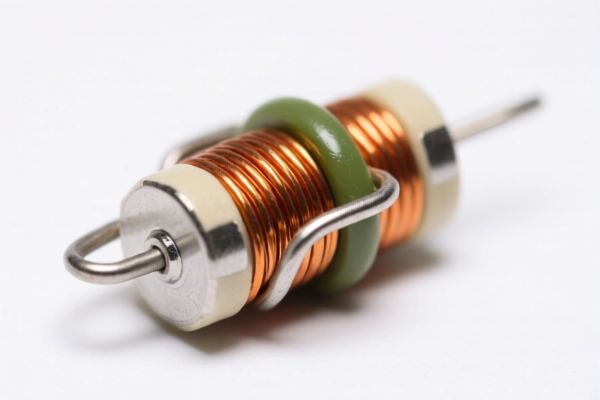
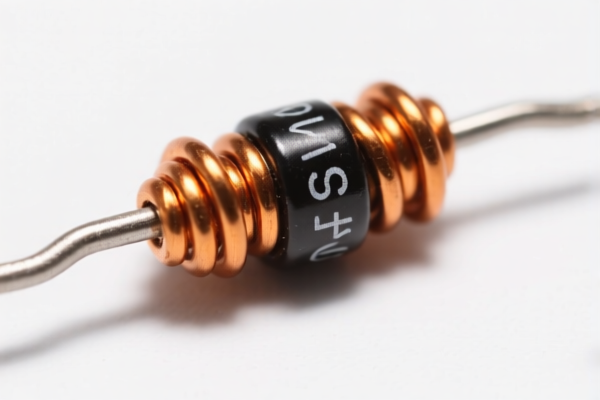
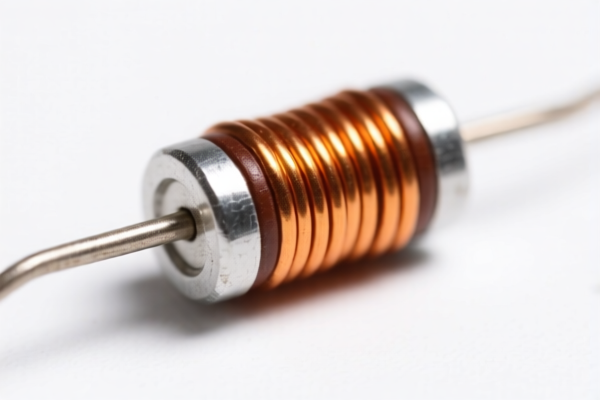
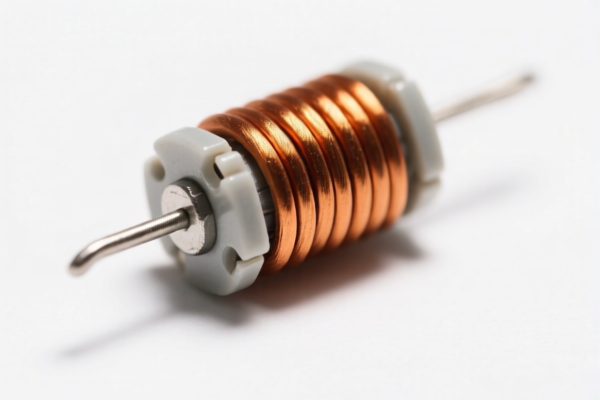
AI Analysis
⚡ Resistors (Electrical Resistors & Fixed Resistors)
🌐 HS Code Reference & Customs Clearance Guide | 2026 Latest Tariff Analysis | Professional Clearance Strategy
📌 I. Product Definition & Classification: Do You Really Understand "Resistors"?
Resistors are fundamental passive electronic components used to reduce current flow or adjust signal levels in electrical circuits. In international trade, they are not a single homogeneous category. Their classification depends heavily on their structure, power rating, material, and integration.
Common Misconceptions:
- Many importers mistakenly lump all resistors under one code.
- Fixed Resistors (fixed resistance) are often confused with Circuit Assemblies or General Electrical Parts.
⚠️ Critical Distinction Points:
- Fixed Resistors (8533): Individual components with specific power ratings and material compositions.
- Circuit Assemblies (8534): Resistors mounted on non-flexible, non-ceramic substrates forming part of a printed circuit.
- General Electrical Parts (8548): Resistors treated as general parts of machinery/devices where no specific subheading applies.
📦 II. HS Code Classification Details (2026 Latest Tariff Authority Comparison)
| HS Code | Product Description | Application Scenario | Key Classification Criteria |
|---|---|---|---|
8533.21.00.90 |
Other Fixed Resistors, not specified for power/material | General fixed resistors falling outside specific high-power/precise categories | "Other fixed resistors" category; inferred based on no obvious conflict |
8534.00.00.95 |
Other Printed Circuits (Non-flexible, Non-ceramic substrate) | Resistors integrated into PCBs or circuit boards as components | Part of a circuit assembly; not standalone components |
8533.29.00.00 |
Other Fixed Electrical Resistors | Other fixed resistors not covered by 8533.21 or 8533.24/29 | Broad category for fixed resistors outside specific subheadings |
8548.00.00.00 |
Waste, Scrap, and Other Parts of Electrical Machinery | Electrical parts of motors or devices not specifically covered elsewhere | Treated as general electrical parts; no specific resistor subheading applies |
🔍 Key Reminder:
- Standalone Resistors: Must be classified under 8533 (Electrical Resistors).
- Resistors on PCBs: If the resistor is part of a larger circuit assembly on a non-ceramic/non-flexible substrate, it may fall under 8534 (Printed Circuits).
- General Parts: If the resistor is part of a complex device and doesn't fit specific 8533 subheadings, it might be misclassified under 8548 (though this is less common for standard resistors).
💰 III. 2026 Latest Tariff Rate Detailed Breakdown (Including Surcharges & Policy Additions)
✅ Applicable Country: United States (US)
✅ Country of Origin: China (CN)
✅ Effective Date: From November 10, 2025 (including subsequent imports)
🎯 1. 8533.21.00.90 & 8533.29.00.00 —— Fixed Resistors
| Item | Content |
|---|---|
| Base Tariff Rate | 0% (ad valorem) |
| USITC Surcharge (Section 301) | +25% |
| IEEPA Surcharge (Section 122/China-specific) | +10% |
| Total Tariff Rate | 35.0% |
| Tax Calculation | CIF Value × 35% |
| De Minimis Exemption Eligibility | ❌ Not Eligible (deny_de_minimis) |
| Legal Basis Path | IEEPA:9903.01.25 → IEEPA:9903.01.24 → USITC:8533.21.00.90 / 8533.29.00.00 → FOOTNOTE:9903.88.01 |
📌 Explanation:
- The 25% USITC surcharge is under the Trade Act of 1974, Section 301.
- The 10% IEEPA surcharge is an additional duty targeting Chinese products.
- Total 35% is a high tariff, requiring advance planning.
🎯 2. 8534.00.00.95 —— Printed Circuits (with Resistors)
| Item | Content |
|---|---|
| Base Tariff Rate | 0% |
| USITC Surcharge | +25% |
| IEEPA Surcharge | +10% |
| Total Tariff Rate | 35.0% |
| Tax Calculation | CIF × 35% |
| De Minimis Exemption Eligibility | ❌ Not Eligible |
| Legal Basis Path | IEEPA:9903.01.24 → USITC:8534.00.00.95 → FOOTNOTE:9903.88.01 |
📌 Note:
- Same tariff structure as fixed resistors.
- Even if resistors are integrated into PCBs, the 35% total rate applies.
🎯 3. 8548.00.00.00 —— General Electrical Parts
| Item | Content |
|---|---|
| Base Tariff Rate | 0% |
| USITC Surcharge | +25% |
| IEEPA Surcharge | +10% |
| Total Tariff Rate | 35.0% |
| Tax Calculation | CIF × 35% |
| De Minimis Exemption Eligibility | ❌ Not Eligible |
| Legal Basis Path | IEEPA:9903.01.24 → USITC:8548.00.00.00 → FOOTNOTE:9903.88.01 |
📌 Warning:
- This code is often used as a fallback. Ensure you are not misclassifying standard resistors here if a more specific 8533 code applies. However, the tariff rate remains 35%.
🛠️ IV. Customs Clearance Practical Advice (Combat Pitfall Guide)
✅ 1. Required Documentation Checklist (None Can Be Missing)
| Document | Mandatory | Explanation |
|---|---|---|
| ✅ Product Specification Sheet | ✔️ | Must include resistance value, tolerance, power rating, dimensions, material |
| ✅ Circuit Diagram/Structure Image | ✔️ | To determine if resistors are standalone or part of a PCB (8533 vs. 8534) |
| ✅ Product Photos (with Label) | ✔️ | Clear image of model number, brand, and electrical parameters |
| ✅ Third-Party Test Report | ✔️ | UL, CE, RoHS compliance (if applicable) |
| ✅ Commercial Invoice | ✔️ | Must specify "Fixed Electrical Resistor" or "Printed Circuit Assembly with Resistors" |
| ✅ Certificate of Origin (CO) | ✔️ | If non-Chinese origin, may qualify for preferential rates (rare for CN) |
| ✅ Packing List | ✔️ | Clarify relationship between components to avoid split declarations |
✅ 2. Declaration Tips (Key Mantra)
🔥 "Standalone goes to 8533, PCBs to 8534, Don't Split, Get the 35% Right!"
| Scenario | Correct Declaration | Wrong Action |
|---|---|---|
| Standalone Fixed Resistors | 8533.21.00.90 or 8533.29.00.00 |
Misdeclare as "Electrical Parts" → 35% (same rate, but wrong HS) |
| Resistors on PCB (Non-flexible) | 8534.00.00.95 |
Misdeclare as "Resistors" → 35% (same rate, but wrong HS) |
| General Electrical Parts | 8548.00.00.00 |
Misdeclare as "Resistors" → 35% (same rate, but wrong HS) |
| Loose Resistors + Wires + PCBs | Declare as Components | Bundle incorrectly → Risk of additional duties or seizure |
📌 Critical Note:
While the total tariff rate is 35% for all codes in the provided data, misclassification can lead to legal penalties, delayed clearance, and audits. The correct HS Code is essential for compliance and future trade negotiations.
✅ 3. Special Case Handling
| Scenario | Handling Advice |
|---|---|
| OEM Custom Resistors | Provide customer order + design specs to avoid "non-standard" classification issues |
| Resistors in Kits | Declare as "Electrical Components" with detailed list; avoid bundling with unrelated items |
| High-Power Resistors | Ensure power rating is clearly stated; may require specific subheadings under 8533 |
| Resistors in Medical Devices | If part of a complete device, declare the whole device; do not split unless required |
🌍 V. Global Market Comparison (2026 Latest)
| Country/Region | Recommended HS Code | Tariff (CN Origin) | Certification Required | Notes |
|---|---|---|---|---|
| 🇺🇸 USA | 8533.21.00.90 / 8533.29.00.00 / 8534.00.00.95 / 8548.00.00.00 |
35% | FCC, UL (if applicable) | 35% applies to all codes; strict enforcement |
| 🇨🇳 China | 8533.21.00.90 |
0%~5% | CCC (if applicable) | No additional surcharges |
| 🇪🇺 EU | 8533.21.00.00 |
0%~4.5% | CE, RoHS | No surcharges |
| 🇯🇵 Japan | 8533.21.00.00 |
0%~5% | PSE (if applicable) | No surcharges |
📌 Conclusion:
- USA imposes a 35% total tariff on Chinese-origin resistors, regardless of specific HS Code variation.
- Other markets have significantly lower or zero tariffs.
- Consider supply chain diversification (e.g., Vietnam, Thailand) to mitigate US tariff risks.
📌 VI. Common Errors & Pitfall Guide (Lessons Learned)
❌ Error 1: Declaring "Resistors" without specifying "Fixed" or "Variable"
👉 Consequence: Customs may classify under 8548 or request further clarification → Delays
❌ Error 2: Bundling standalone resistors with PCBs and declaring as "Mixed Goods"
👉 Consequence: Risk of split assessment or additional duties → Complicated Clearance
❌ Error 3: Omitting Power Rating or Material in Documentation
👉 Consequence: Customs cannot determine correct 8533 subheading → Reclassification & Penalties
❌ Error 4: Assuming "De Minimis" (Section 321) applies
👉 Consequence: Not eligible for Chinese-origin electronics → Immediate Duty Assessment
✅ Correct Approach:
"Fixed Electrical Resistor, Carbon Film, 1/4 Watt, 10k Ohm, Model XYZ, RoHS Compliant"
🎯 VII. Conclusion: Precise Classification Saves Money and Time
🎯 Remember the Mantra:
🔹 "Fixed Resistors: 8533, PCBs: 8534, Parts: 8548. All 35% in US!"
🔹 "HS Code Matters for Compliance, Even if Rate is Same!"
📌 Pro Tip:
If your resistors are originating from Vietnam, Mexico, or Malaysia, you may qualify for IEEPA Exemptions or lower tariffs.
Recommend applying for an Advance Ruling to ensure correct classification and avoid surprises.
📣 Immediate Action:
📞 Contact a Licensed Customs Broker + Provide Product Specs + Apply for HS Code Advance Ruling
🚀 Ensure your resistors clear customs smoothly, efficiently, and cost-effectively!
✨ Professional Clearance Starts with Accurate Classification!
💼 Every Cent Counts in Global Trade!
Customer Reviews
About HS Code Classification
The Harmonized System (HS) is an internationally standardized nomenclature developed by the World Customs Organization (WCO) to classify traded products. Over 200 countries use the HS system as the basis for customs tariffs, trade statistics, and import/export regulations.
Each HS code follows a hierarchical structure:
- Chapter (2 digits) — Broad category of goods (e.g., Chapter 84: Machinery and Mechanical Appliances)
- Heading (4 digits) — More specific grouping within the chapter
- Subheading (6 digits) — Internationally standardized breakdown, used by all WCO member countries
- National subdivisions (8-10 digits) — Country-specific extensions for further classification, such as US HTSUS 10-digit codes
Correct HS code classification is essential for smooth customs clearance, accurate duty payment, and compliance with trade regulations. Misclassification can lead to customs delays, overpayment of duties, or penalties.
When importing from CN to US, the applicable tariff rates may include:
- Most-Favored-Nation (MFN) rate — The standard duty rate applied to WTO members
- General rate — Applied to countries without trade agreements
- Trade remedy duties — Additional tariffs such as Section 301 (anti-dumping), Section 232 (national security), or countervailing duties
The information provided on this page is for reference purposes only. For official classification, please consult with your local customs authority or a licensed customs broker.