Resistors and their parts
CN → US| HS Code | Tariff Rate | Origin | Destination | Doc |
|---|---|---|---|---|
| 8534000095 | 35.0% | CN | US | Official Doc |
| 8533290000 | 35.0% | CN | US | Official Doc |
| 8533210090 | 35.0% | CN | US | Official Doc |
Product Images
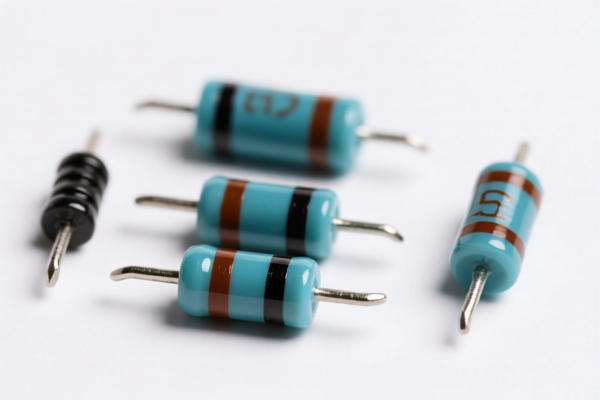
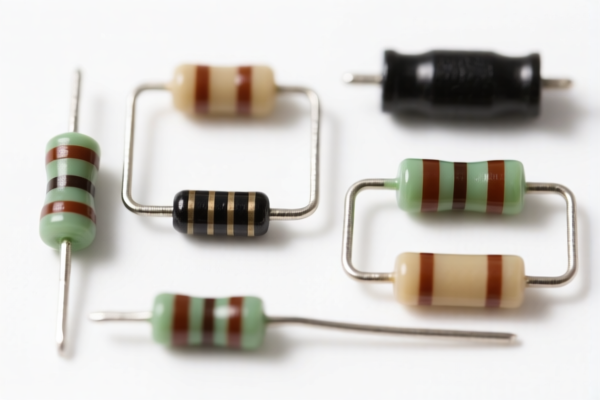
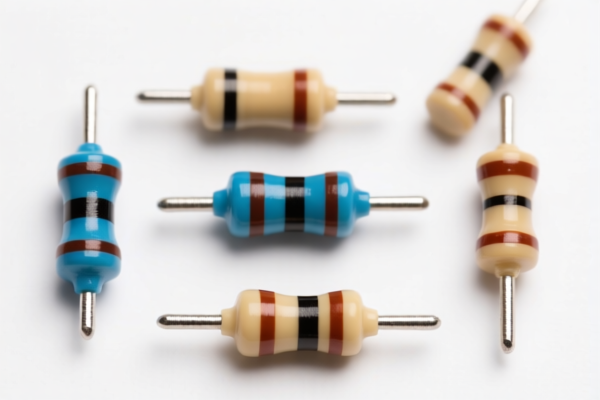
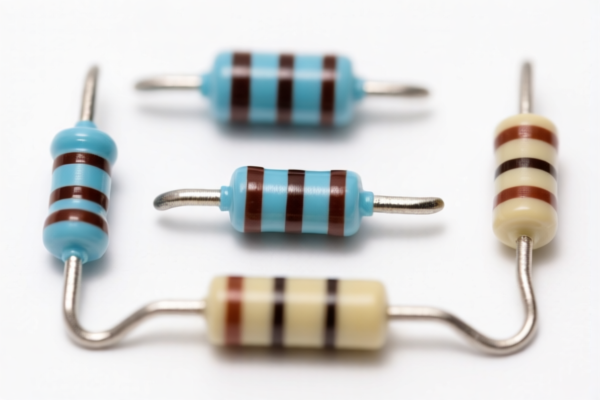
AI Analysis
🔌 Resistors & Components (Electrical Resistors and Parts)
🌐 HS Code Reference & Customs Clearance Guide | 2026 Latest Tariff Analysis | Professional Clearance Strategy
📌 I. Product Definition & Classification: Do You Really Understand "Resistors"?
Resistors are fundamental passive electronic components used to reduce current flow and adjust signal levels in electronic circuits. In international trade, they are primarily classified under Chapter 85 (Electrical machinery and equipment). However, the specific HS Code depends heavily on the physical form, power rating, and integration level (e.g., mounted on a PCB vs. discrete component).
1. Discrete Fixed Resistors (Individual Components)
These are standalone components, often cylindrical (carbon film, metal film) or rectangular (SMD). They belong to Heading 85.33.
2. Printed Circuit Boards (PCBs) with Resistors
If resistors are mounted onto a printed circuit board (PCB) as part of a complete assembly, the classification shifts to the PCB category under Heading 85.34.
⚠️ Key Distinction Point:
- If the item is a standalone resistor (discrete component) →归入 8533.29.00.00 / 8533.21.00.90
- If the item is a PCB containing resistors (assembled board) →归入 8534.00.00.95
📦 II. HS Code Classification Details (2026 Latest Tariff Authority Comparison)
| HS Code | Product Description | Application Scenario | Integration Level |
|---|---|---|---|
8534.00.00.95 |
Printed circuits Other | Assembled PCBs containing resistors, capacitors, ICs, etc. | ✅ Assembled (PCB) |
8533.29.00.00 |
Electrical resistors; other fixed resistors (excluding wirewound) | General-purpose fixed resistors (non-wirewound, non-power-specific) | ✅ Discrete Component |
8533.21.00.90 |
Wirewound resistors (Other) | High-power wirewound resistors or those not specified by power | ✅ Discrete Component |
🔍 Important Reminder:
- Discrete Resistors: Must be classified under 8533. The sub-code depends on whether they are wirewound and their power rating. If power/material is not explicitly defined, "Other" categories (8533.29or8533.21) are used as fallbacks. - Assembled Boards: If the resistors are already soldered onto a PCB, do not classify as individual resistors. They must be classified under 8534.00 (Printed Circuits). Misclassification here is a common customs error.
💰 III. 2026 Latest Tariff Rate Details (Including Surcharges & Policy Add-ons)
✅ Applicable Country: United States (US)
✅ Country of Origin: China (CN)
✅ Effective Date: From November 10, 2025 (including subsequent imports)
🎯 1. 8534.00.00.95 —— Printed Circuits, Other (Assembled Boards)
| Item | Content |
|---|---|
| Base Tax Rate | 0.0% (ad valorem) |
| Section 301 Surcharge | +25.0% |
| Section 122 Tariff | +10.0% |
| Total Tax Rate | 35.0% |
| Tax Calculation | CIF Value × 35% |
| De Minimis Eligibility | ❌ Not Eligible (deny_de_minimis) |
| Legal Basis Path | USITC:8534.00.00.95 → Section 301: Footnote 9903.88.01 → Section 122: IEEPA |
📌 Explanation:
- Even though printed circuits may have a 0% base rate, Section 301 adds 25% for Chinese goods. - Additionally, Section 122 (often associated with IEEPA authorities for national security/trade balance) adds another 10%. - Total 35% applies to assembled PCBs containing resistors.
🎯 2. 8533.29.00.00 —— Other Fixed Electrical Resistors
| Item | Content |
|---|---|
| Base Tax Rate | 0.0% |
| Section 301 Surcharge | +25.0% |
| Section 122 Tariff | +10.0% |
| Total Tax Rate | 35.0% |
| Tax Calculation | CIF Value × 35% |
| De Minimis Eligibility | ❌ Not Eligible |
| Legal Basis Path | USITC:8533.29.00.00 → Section 301 → Section 122 |
📌 Note:
- This code covers non-wirewound fixed resistors (e.g., carbon film, metal oxide) that do not fall into specific power-rated categories. - Tax rate is identical to PCBs: 35%.
🎯 3. 8533.21.00.90 —— Wirewound Resistors (Other)
| Item | Content |
|---|---|
| Base Tax Rate | 0.0% |
| Section 301 Surcharge | +25.0% |
| Section 122 Tariff | +10.0% |
| Total Tax Rate | 35.0% |
| Tax Calculation | CIF Value × 35% |
| De Minimis Eligibility | ❌ Not Eligible |
| Legal Basis Path | USITC:8533.21.00.90 → Section 301 → Section 122 |
📌 Note:
- This code is a fallback for wirewound resistors where specific power ratings are not clearly defined in the sub-headings. - Total 35% applies. All three HS codes provided in the data result in the same total tax rate of 35%.
🛠️ IV. Customs Clearance Practical Advice (Battle-Tested Pitfall Guide)
✅ 1. Preparation Checklist (Mandatory)
| Document | Required | Description |
|---|---|---|
| ✅ Product Specification Sheet | ✔️ | Must specify: Resistance value, tolerance, power rating, material (wirewound vs. non-wirewound). |
| ✅ Circuit Diagram / Structure Photo | ✔️ | Crucial for distinguishing between Discrete Resistors (8533) and Assembled PCBs (8534). |
| ✅ Commercial Invoice | ✔️ | Clearly state "Resistor" or "Printed Circuit Board" based on physical state. |
| ✅ Packing List | ✔️ | Detail quantities and weights. Ensure no mixed shipments without clear labeling. |
| ✅ Country of Origin Certificate | ✔️ | If not China, may affect Section 301 applicability (check FTAs). |
✅ 2. Declaration Tips (Key Mantra)
🔥 “Discrete vs. Assembled: Define the State!”
| Scenario | Correct Declaration | Wrong Practice |
|---|---|---|
| Loose Resistors (in bulk bags) | 8533.29.00.00 or 8533.21.00.90 |
Declare as "PCB" → Higher risk of inspection delay |
| Resistors Soldered on PCB | 8534.00.00.95 |
Declare as "Resistor" → Misclassification error |
| Undefined Power/Material | Use "Other" codes (8533.29/8533.21) |
Guessing specific sub-codes without data |
✅ 3. Special Cases Handling
| Scenario | Handling Advice |
|---|---|
| OEM Resistor Brands | Ensure invoice matches brand claims. Counterfeit goods face severe penalties. |
| Mixed Shipments (PCB + Loose Parts) | Separate Declarations Required. Do not bundle PCBs and loose resistors under one HS Code. |
| High-Power Industrial Resistors | Verify if they fall under specific power headings. If not, use 8533.29.00.00 as the "Other" fallback. |
🌍 V. Global Market Comparison (2026 Latest)
| Country/Region | Recommended HS Code | Tariff (CN Origin) | Certification Required | Notes |
|---|---|---|---|---|
| 🇺🇸 USA | 8533.29.00.00 / 8534.00.00.95 |
35% | FCC (if part of RF device), UL (if safety-critical) | High tariff burden; no de minimis. |
| 🇨🇳 China | 8533.29.00.00 |
5% | CCC (if applicable) | Base tariff lower, no Section 301. |
| 🇪🇺 EU | 8533.29.00.00 |
0% | CE, RoHS, REACH | Generally duty-free for electronic components. |
| 🇬🇧 UK | 8533.29.00.00 |
0% | UKCA, RoHS | Post-Brexit alignment with EU rules mostly. |
| 🇻🇳 Vietnam | 8533.29.00.00 |
Varies | None specific | Potential transshipment risk; ensure genuine origin. |
📌 Conclusion:
- USA is the most challenging market for resistors/PCBs due to 35% total tariff. - EU/UK/China offer significantly lower or zero tariffs, but require strict compliance with environmental standards (RoHS/REACH).
📌 VI. Common Errors & Pitfall Guide (Lessons Learned)
❌ Error 1: Classifying Assembled PCBs as Discrete Resistors
👉 Consequence: Misclassification by CBP → Penalty + Back Taxes (35% vs 0% base, but still 35% total here, yet compliance risk remains high).
❌ Error 2: Classifying Loose Resistors as PCBs
👉 Consequence: Undervaluation risk if PCBs are deemed more complex → Audit trigger.
❌ Error 3: Ignoring Section 122 and Section 301
👉 Consequence: Underpayment of duties → Seizure of goods + Fines.
👉 Reminder: Both Section 301 (25%) and Section 122 (10%) apply, totaling 35%.
❌ Error 4: Vague Product Description ("Electronic Part")
👉 Consequence: Customs holds shipment for clarification → Delays.
👉 Correct: "Fixed Electrical Resistor, Carbon Film, 1k Ohm, 1/4 Watt, Discrete Component" or "Printed Circuit Board, Assembled, 2-Layer".
✅ Correct Practice:
“Resistor, Fixed, Non-Wirewound, 0.5W, Ceramic Body, Discrete Component, Model XYZ, HS 8533.29.00.00”
🎯 VII. Conclusion: Precision Classification Saves Costs!
🎯 Remember the Mantra:
🔹 “Discrete is 8533, PCB is 8534. Base 0%, but 35% Total for China.”
🔹 “Section 301 (25%) + Section 122 (10%) = 35%. Don’t Miss It!”
🔹 “If it’s on a board, it’s a PCB. If it’s loose, it’s a Resistor.”
📌 Pro Tip:
If your resistors are originating from Vietnam, Mexico, or Malaysia, you may be eligible for Section 301 Exclusions or lower tariffs under USMCA (for Mexico).
✅ Recommendation: Apply for a Binding Ruling from CBP if your product structure is complex (e.g., semi-assembled).
📣 Take Action Now:
📞 Contact a Licensed Customs Broker + Provide Circuit Diagrams + Verify Origin
🚀 Ensure your Resistors and PCBs pass US Customs smoothly, avoiding the 35% tax trap and delays!
✨ Professional Clearance Starts with Accurate Classification!
💼 Every Percent Counts in Electronic Component Trade!
Customer Reviews
About HS Code Classification
The Harmonized System (HS) is an internationally standardized nomenclature developed by the World Customs Organization (WCO) to classify traded products. Over 200 countries use the HS system as the basis for customs tariffs, trade statistics, and import/export regulations.
Each HS code follows a hierarchical structure:
- Chapter (2 digits) — Broad category of goods (e.g., Chapter 84: Machinery and Mechanical Appliances)
- Heading (4 digits) — More specific grouping within the chapter
- Subheading (6 digits) — Internationally standardized breakdown, used by all WCO member countries
- National subdivisions (8-10 digits) — Country-specific extensions for further classification, such as US HTSUS 10-digit codes
Correct HS code classification is essential for smooth customs clearance, accurate duty payment, and compliance with trade regulations. Misclassification can lead to customs delays, overpayment of duties, or penalties.
When importing from CN to US, the applicable tariff rates may include:
- Most-Favored-Nation (MFN) rate — The standard duty rate applied to WTO members
- General rate — Applied to countries without trade agreements
- Trade remedy duties — Additional tariffs such as Section 301 (anti-dumping), Section 232 (national security), or countervailing duties
The information provided on this page is for reference purposes only. For official classification, please consult with your local customs authority or a licensed customs broker.