Restaurant Wall Lamp
CN → US| HS Code | Tariff Rate | Origin | Destination | Doc |
|---|---|---|---|---|
| 9405198010 | 38.9% | CN | US | Official Doc |
| 9405196010 | 42.6% | CN | US | Official Doc |
| 9405198020 | 38.9% | CN | US | Official Doc |
Product Images
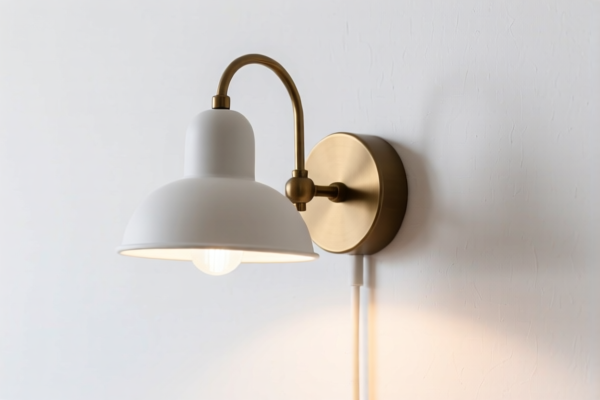
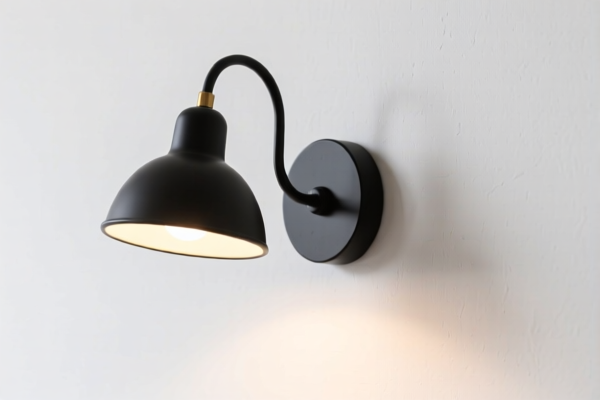
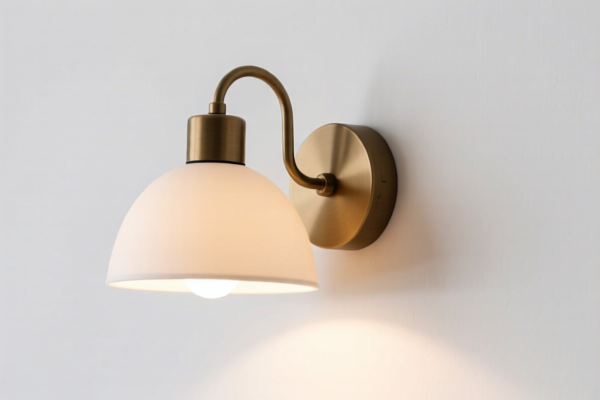
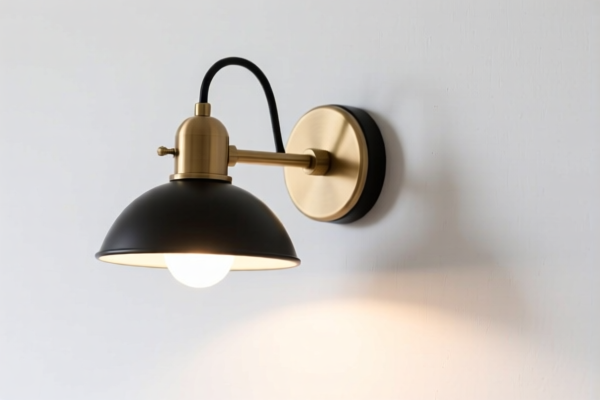
AI Analysis
🏮 Restaurant Wall Lamp (Wall Lighting for Hospitality & Commercial Use)
🌐 HS Code Reference & Customs Clearance Guide | 2026 Latest Tariff Analysis | Professional Clearance Strategy
📌 I. Product Definition & Classification: What Exactly Is a "Restaurant Wall Lamp"?
A "Restaurant Wall Lamp" falls under the broader category of Electric Lighting Fittings. In international trade, specifically under Chapter 94 of the Harmonized System (HS), these are classified based on their physical form and specific application (ceiling, wall, etc.).
Unlike general household lamps, restaurant lighting often requires durability, aesthetic design, and specific electrical safety certifications. However, for HS classification purposes, the key differentiator is the attachment method:
Wall-Mounted Fixtures (Wall Lamps): Devices designed to be fixed to a wall, often extending outward to provide ambient, accent, or task lighting. * Key Feature: They are not freestanding (floor lamps) and not directly flush-mounted into the ceiling without a bracket (ceiling lamps), though the line can be blurry. * Material Irrelevance for Broad Category: Whether made of metal, glass, ceramic, or plastic, the primary classification usually lands under "Other electric ceiling or wall lights."
⚠️ Critical Distinction:
- If the product is a complete fixture (shade + base + socket + wiring harness) ready for installation → Chapter 94.
- If the product is just the bulb/LED module itself → Chapter 85.
- If it is an unpowered decorative object (no electricity) → Chapter 70 (Glass) or Chapter 39 (Plastic), but "Wall Lamp" implies electric function.
📦 II. HS Code Classification Details (2026 Latest Tariff Authority Match)
Based on the provided data, the Restaurant Wall Lamp is classified under Heading 9405.19 ("Other electric ceiling or wall lights"). The specific 10-digit subheadings depend on minor variations in material or specific design intent, but the tax implications are dominated by US trade policies.
| HS Code | Product Description | Application Scenario | Material/Design Note |
|---|---|---|---|
9405.19.80.10 |
Electric ceiling or wall lights, other (Home Use Focus) | Standard home-style wall sconces; simple metal/glass designs | ✅ General Home Lighting |
9405.19.60.10 |
Electric ceiling or wall lights, other (Material Specific) | Lamps with specific material constraints (e.g., specific metal alloys or composite materials) | ✅ Specific Material Composition |
9405.19.80.20 |
Electric ceiling or wall lights, other (General Other) | Standard commercial/residential wall lamps; no special material restrictions | ✅ General Commercial/Home |
🔍 Key Insight:
- All three codes fall under 9405.19, meaning they are "Other electric ceiling or wall lights."
- The difference between.80.10,.60.10, and.80.20is often based on specific material definitions or sub-segmentation within the US Harmonized Tariff Schedule (HTSUS).
- Crucially: All three are subject to high additional tariffs due to US-China trade tensions.
💰 III. 2026 Latest Tariff Rate Breakdown (Including Additional Duties & Policy Surcharges)
✅ Applicable Country: United States (US)
✅ Origin: China (CN) (Note: Tariffs shown are for Chinese origin. If shipped from Vietnam/Malaysia, verify IEEPA exemptions)
✅ Effective Date: Current US Trade Policy (Section 301 + IEEPA)
🎯 1. HS Code 9405.19.80.10 & 9405.19.80.20 (General Wall Lamps)
These two codes share the same tax structure in the provided data, suggesting they are treated similarly for tariff purposes.
| Item | Content |
|---|---|
| Base Tariff | 3.9% (Standard MFN Rate for Lighting Fittings) |
| Section 301 Tariff (Add-on) | +25.0% (USITC Footnote 9903.88.01) |
| Section 122 Tariff (Add-on) | +10.0% (Specific 122 Clause Tariff) |
| Total Effective Rate | 38.9% |
| Tax Calculation | CIF Value × 38.9% |
| De Minimis Eligibility | ❌ Not Eligible (deny_de_minimis applies) |
| Legal Basis Path | IEEPA:9903.01.25 → USITC:9405.19.80.xx → FOOTNOTE:301/122 |
📌 Explanation:
- Base 3.9%: The standard duty for electric lighting.
- 25% Section 301: Imposed on Chinese goods under trade dispute rulings. This is the largest chunk of the tax.
- 10% Section 122: A specific additional tariff clause mentioned in the data, adding further cost.
- Total 38.9%: This is a significant cost multiplier. A $100 lamp costs $138.9 in duties alone.
🎯 2. HS Code 9405.19.60.10 (Material-Specific Wall Lamps)
This code is for wall lamps with specific material characteristics (e.g., certain metals or composites as inferred from the summary).
| Item | Content |
|---|---|
| Base Tariff | 7.6% (Higher base rate for specific materials) |
| Section 301 Tariff (Add-on) | +25.0% |
| Section 122 Tariff (Add-on) | +10.0% |
| Total Effective Rate | 42.6% |
| Tax Calculation | CIF Value × 42.6% |
| De Minimis Eligibility | ❌ Not Eligible |
| Legal Basis Path | IEEPA:9903.01.24 → USITC:9405.19.60.10 |
📌 Note:
- The base rate is higher (7.6% vs 3.9%), likely due to the specific material classification.
- The additional tariffs (25% + 10%) remain the same, pushing the total to 42.6%.
- This code is less favorable than the .80 variants due to the higher base duty.
🛠️ IV. Customs Clearance Practical Advice (Real-World Pitfall Avoidance)
✅ 1. Documentation Checklist (Non-Negotiable)
| Document | Required? | Purpose |
|---|---|---|
| ✅ Product Specifications | ✔️ | Must state: Material (Metal/Glass/Plastic), Wattage, Voltage (110V/220V), IP Rating (if outdoor). |
| ✅ Commercial Invoice | ✔️ | Must clearly state: "Electric Wall Lamp, Made in China, HS Code: 9405.19.80.10" |
| ✅ Packing List | ✔️ | Detail net/gross weight. Ensure no hidden accessories are listed separately if they are part of the set. |
| ✅ Certificate of Origin (CO) | ✔️ | Critical to prove Chinese origin. If transshipped, ensure no false origin declaration. |
| ✅ FCC Certification | ✔️ | Mandatory for US. Electrical lighting with LEDs/wiring must comply with FCC Part 15. Provide report number. |
| ✅ UL/ETL Listing (Recommended) | ✔️ | Not always required for customs, but highly recommended for commercial safety compliance in restaurants. |
✅ 2. Declaration Strategy (Key Mantra)
🔥 "Accurate Material, Precise HS, No De Minimis!"
| Scenario | Correct Declaration | Wrong Action |
|---|---|---|
| Standard Metal/Glass Wall Lamp | 9405.19.80.10 or 80.20 (38.9%) |
Misdeclaring as "Decorative Item" (HS 70/39) → High Risk of Audit/Seizure |
| Specific Material Lamp | 9405.19.60.10 (42.6%) |
Using general code to save 3.7% → Penalty for Misclassification |
| Shipment via De Minimis (Under $800) | ❌ Not Allowed | Trying to split shipment to avoid duty → ICEF/Customs will block & fine |
| Bulk Container vs. Parcel | Container → Formal Entry | Parcel → Informal Entry (if eligible, but NOT for CN origin lighting) |
✅ 3. Special Case Handling
| Situation | Handling Advice |
|---|---|
| Mixed Materials | If the lamp is 50% metal, 50% glass, classify based on essential character (usually the metal frame or the electric component). |
| Smart Wall Lamps | If it has WiFi/Bluetooth, it is still a Wall Lamp (9405), NOT a data processing machine (8517). The light function is primary. |
| Transshipment (Vietnam/Malaysia) | If shipped from Vietnam, ensure substantial transformation occurred. Otherwise, US Customs may apply Chinese origin rules + tariffs. |
| OEM/ODM | Provide contract/PO showing who designed the product. If US brand, still subject to CN origin tariffs if manufactured in China. |
🌍 V. Global Market Comparison (2026 Update)
| Country/Region | Recommended HS Code | Tariff Rate | Certification | Notes |
|---|---|---|---|---|
| 🇺🇸 USA | 9405.19.80.10 / .80.20 |
38.9% | FCC + UL | Highest Duty due to 301/122. |
| 🇨🇳 China | 9405.10.00.00 |
~13% | CCC | Domestic market rates differ. |
| 🇪🇺 EU | 9405.10 |
0% (if Ecodesign met) | CE + RoHS | Tariff-Free for most lighting. |
| 🇬🇧 UK | 9405.10 |
0% | UKCA | Post-Brexit alignment with EU mostly. |
| 🇨🇦 Canada | 9405.10 |
~5% | CSA/CET | Moderate duties, no heavy sanctions. |
📌 Conclusion:
- The US market is the most expensive for Chinese-made wall lamps due to the 38.9%-42.6% duty burden.
- EU/UK offer 0% tariff, making them more attractive for price-sensitive hospitality projects.
- Strategy: For US imports, consider cost-padding into the final hotel/restaurant contract price, or explore third-country assembly (if valid).
📌 VI. Common Mistakes & Pitfalls (Blood & Tears Lessons)
❌ Mistake 1: Declaring as "Decorative Lighting" (HS 70 or 39) to avoid lighting tariffs.
👉 Result: Customs inspection reveals electrical components. Penalty: 100% fine + back duties + seizure.
❌ Mistake 2: Ignoring the Section 122 Tariff.
👉 Result: Underpaying 10% on every shipment. Result: Debt collection from CBP.
❌ Mistake 3: Assuming De Minimis ($800) applies to wall lamps from China.
👉 Result: Packages held at border. Result: Delayed projects, angry hotel managers.
❌ Mistake 4: Misidentifying Material.
👉 Result: Using 9405.19.80.10 (38.9%) for a product that fits 9405.19.60.10 (42.6%) or vice versa. While .80 is cheaper, if it's actually .60, you risk misdeclaration.
✅ Correct Approach:
"Electric Wall Lamp, Metal Frame, Glass Shade, 120V, FCC Certified, Model XYZ, HS 9405.19.80.10, Origin: China"
🎯 VII. Conclusion: Smart Clearance for Cost Efficiency
🎯 Remember:
🔹 "Lighting in US? Expect ~40% Duty."
🔹 "FCC is Mandatory. No FCC = No Entry."
🔹 "De Minimis is Closed for CN Lighting."
📌 Pro Tip:
If importing for large hotel chains, negotiate DDP (Delivered Duty Paid) terms with suppliers who understand HS codes, or hire a customs broker to file a Binding Ruling if volume is high. This ensures predictable costs.
📣 Immediate Action:
📞 Confirm FCC Certification with your supplier.
📦 Verify HS Code against the physical product (material check).
💰 Budget 39% Duty into your cost model for US imports.
✨ Professional Clearance Starts with Accurate Classification!
💼 Your Profit Margin Depends on This 38.9%!
Customer Reviews
About HS Code Classification
The Harmonized System (HS) is an internationally standardized nomenclature developed by the World Customs Organization (WCO) to classify traded products. Over 200 countries use the HS system as the basis for customs tariffs, trade statistics, and import/export regulations.
Each HS code follows a hierarchical structure:
- Chapter (2 digits) — Broad category of goods (e.g., Chapter 84: Machinery and Mechanical Appliances)
- Heading (4 digits) — More specific grouping within the chapter
- Subheading (6 digits) — Internationally standardized breakdown, used by all WCO member countries
- National subdivisions (8-10 digits) — Country-specific extensions for further classification, such as US HTSUS 10-digit codes
Correct HS code classification is essential for smooth customs clearance, accurate duty payment, and compliance with trade regulations. Misclassification can lead to customs delays, overpayment of duties, or penalties.
When importing from CN to US, the applicable tariff rates may include:
- Most-Favored-Nation (MFN) rate — The standard duty rate applied to WTO members
- General rate — Applied to countries without trade agreements
- Trade remedy duties — Additional tariffs such as Section 301 (anti-dumping), Section 232 (national security), or countervailing duties
The information provided on this page is for reference purposes only. For official classification, please consult with your local customs authority or a licensed customs broker.