Retractable Barrier
CN → US| HS Code | Tariff Rate | Origin | Destination | Doc |
|---|---|---|---|---|
| 7326908688 | 87.9% | CN | US | Official Doc |
| 7326908635 | 87.9% | CN | US | Official Doc |
| 3926909940 | 22.8% | CN | US | Official Doc |
| 3926909989 | 22.8% | CN | US | Official Doc |
Product Images
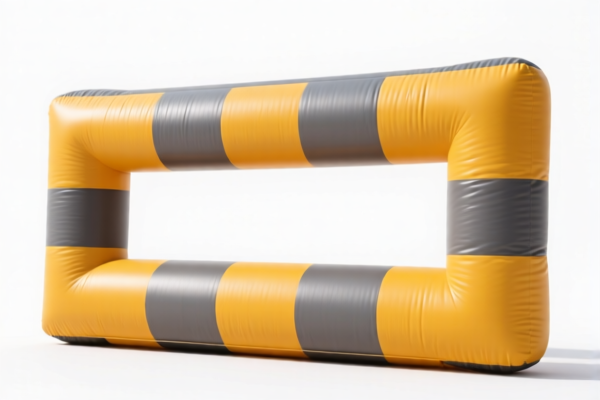


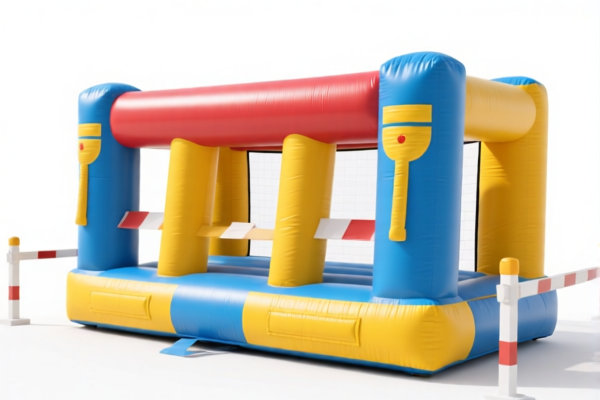
AI Analysis
🚧 Retractable Barrier (Access Control & Security Systems)
🌐 HS Code Reference & Customs Clearance Guide | 2024/2026 Tax Analysis | Professional Clearance Strategy
📌 I. Product Definition & Classification: What Exactly is a "Retractable Barrier"?
"Retractable Barrier" is a broad term in the global trade of security and traffic control equipment. It generally refers to devices used to control access, restrict vehicle/pedestrian movement, or protect infrastructure. In international trade, this term can cover two distinct categories based on material and function:
- Metal Barriers (Iron/Steel): Often referred to as "Revolving Gates," "Turnstiles," or "Anti-Tailgating Gates." These are mechanical or electromechanical devices used in high-security areas (airports, subways, stadiums).
- Plastic/Composite Barriers: Often referred to as "Retractable Belt Barriers" (stanchions) or "Crowd Control Barriers." These are non-mechanical or simple mechanical devices used for queuing or temporary fencing.
⚠️ Critical Distinction Point:
- If the device is made of iron or steel and involves complex mechanical/electrical components for access control → It falls under Chapter 73 (Articles of Iron or Steel).
- If the device is primarily made of plastics (e.g., plastic housing, plastic belts, plastic posts) or is a simple crowd control post → It falls under Chapter 39 (Articles of Plastics) or other chapters depending on the specific material composition.
- Do not confuse "Retractable Barrier" with "Automatic Door" or "Gate" (Chapter 83). The specific material dictates the HS Code in the provided dataset.
📦 II. HS Code Classification Details (Based on Provided Data)
The provided data contains four specific HS Codes. We must analyze which one applies to a "Retractable Barrier" based on its construction.
| HS Code | Product Description | Applicable Scenario for "Retractable Barrier" | Key Determinant |
|---|---|---|---|
7326.90.86.88 |
Other articles of iron or steel: Other: Other: Other: Other | Steel Retractable Gates/Bollards: Heavy-duty, industrial, or high-security retractable barriers made primarily of steel. | Material: Iron/Steel Function: General "other" article |
7326.90.86.35 |
Other articles of iron or steel: Other: Other: Other: Other Fence posts, studded with corrugations, knobs, studs, notches or similar protrusions, with or without anchor plates | Steel Studded Posts/Fences: If the "barrier" consists of steel posts with specific protrusions (knobs/studs) used for fencing or containment. | Material: Iron/Steel Specific Feature: Studded/Corrugated design |
3926.90.99.40 |
Other articles of plastics and articles of other materials of headings 3901 to 3914: Other: Other Covers, rings and frames for manholes; catch basins; drainage gates and frames thereof; cleanout covers and frames thereof; valve, service and meter boxes | ⚠️ NOT Typical for General Barriers: This code is for infrastructure frames (manhole covers, drainage gates). If your "retractable barrier" is a metal/plastic frame for a manhole or drainage gate, use this. | Material: Plastic/Other Specific Use: Manhole/Drainage Frames |
3926.90.99.89 |
Other articles of plastics and articles of other materials of headings 3901 to 3914: Other: Other Other | Plastic Retractable Stanchions/Belts: Crowd control barriers with plastic posts, plastic belts, or plastic casings that do not fit into specific sub-categories like manhole frames. | Material: Plastic/Other<brFunction: General "Other" article |
🔍 Priority Note:
- Most security retractable gates (metal) fall under 7326.90.86.88.
- Most crowd control retractable belts (plastic) fall under 3926.90.99.89.
- Never use3926.90.99.40unless the product is explicitly a frame for a manhole or drainage gate.
💰 III. 2024/2026 Latest Tariff Rate Breakdown (Including Additional Taxes)
✅ Applicable Country: United States (US)
✅ Origin: China (CN)
✅ Effective Time: Ongoing (Subject to Section 301 and IEEPA regulations)
🎯 1. 7326.90.86.88 & 7326.90.86.35 —— Steel/Iron Articles
| Item | Content |
|---|---|
| Base Tariff | 2.9% (ad valorem) |
| Additional Tariff (Section 301) | +25.0% |
| Additional Tariff (Steel/Aluminum/Copper) | +50.0% (Note: Data specifies "Steel, Aluminum, Copper Products Additional Tariff: 50%") |
| Total Tariff Rate | 77.9% |
| Tax Calculation | CIF Value × 77.9% |
| De Minimis Eligibility | ❌ Not Eligible (High-risk goods) |
| Legal Basis Path | Base: 7326.90.86.88 → Section 301: 25% → IEEPA/Steel Tariff: 50% |
📌 Explanation:
- The data explicitly states a 50% additional tariff for "Steel, Aluminum, Copper Products."
- Combined with the 2.9% base and 25% Section 301, the total burden is 77.9%.
- This is a very high tariff impact, significantly affecting the cost of steel-based retractable gates or bollards.
🎯 2. 3926.90.99.40 —— Plastic Frames (Manhole/Drainage)
| Item | Content |
|---|---|
| Base Tariff | 0.0% |
| Additional Tariff | 0.0% |
| Total Tariff Rate | 0.0% |
| Tax Calculation | CIF Value × 0.0% |
| De Minimis Eligibility | ✅ Potentially Eligible (Low risk, low duty) |
| Legal Basis Path | Base: 3926.90.99.40 → No Additional Tariff |
📌 Note: If your product is correctly classified here (e.g., a plastic frame for a drainage gate), it is duty-free. However, misclassification is a major risk.
🎯 3. 3926.90.99.89 —— Other Plastic Articles
| Item | Content |
|---|---|
| Base Tariff | 5.3% |
| Additional Tariff | +7.5% |
| Total Tariff Rate | 12.8% |
| Tax Calculation | CIF Value × 12.8% |
| De Minimis Eligibility | ✅ Potentially Eligible (Depending on value) |
| Legal Basis Path | Base: 3926.90.99.89 → Additional: 7.5% |
📌 Note: This is the likely code for plastic retractable belt barriers. The tariff is much lower than steel products.
🛠️ IV. Customs Clearance Practical Advice (Battle-Tested Pitfall Guide)
✅ 1. Preparation Checklist (Non-Negotiable)
| Document | Must Provide | Explanation |
|---|---|---|
| ✅ Product Specification Sheet | ✔️ | Must clearly state Material Composition (% Iron/Steel vs. % Plastic). |
| ✅ Product Photos | ✔️ | Clear images of the product, including any branding, labels, and specific features (e.g., "studded post" vs. "smooth belt"). |
| ✅ Bill of Materials (BOM) | ✔️ | To justify the HS Code (e.g., "80% Plastic, 20% Steel" might still go to Chapter 39 if plastic is the essential character). |
| ✅ Commercial Invoice | ✔️ | Must accurately describe the item as "Retractable Barrier" or "Crowd Control Stanchion," not generic "Hardware." |
| ✅ Packing List | ✔️ | Include weights and dimensions. |
| ✅ Certifications | ✔️ | FCC, CE, UL (if electronic components are present). |
✅ 2. Declaration Strategy (Key Mantra)
🔥 "Material is King, Function is Queen! Don't Mix Steel and Plastic in One Line!"
| Scenario | Correct HS Code | Common Mistake |
|---|---|---|
| Steel Retractable Gate | 7326.90.86.88 |
Declaring as "Plastic Barrier" → Seizure & Fraud Penalties |
| Plastic Retractable Belt | 3926.90.99.89 |
Declaring as "Steel Article" → 77.9% Tax instead of 12.8% |
| Drainage Gate Frame | 3926.90.99.40 |
Declaring as "General Plastic Item" → 12.8% Tax instead of 0% |
| Mixed Material (Steel + Plastic) | Analyze Essential Character | Often falls under Chapter 39 if plastic is dominant, but requires expert review. |
✅ 3. Special Cases & Handling
| Situation | Handling Advice |
|---|---|
| OEM Custom Design | Provide CAD drawings and material specs. Ensure the description matches the physical product. |
| Electronic Components | If the retractable barrier has motors/sensors, the base material still determines the HS Code, but FCC certification is mandatory. |
| Misclassification Risk | If you are unsure, apply for an Advance Ruling from US Customs (CBP) before shipping. The cost is low compared to the 77.9% tax risk. |
🌍 V. Global Market Comparison (2024/2026)
| Country/Region | Recommended HS Code (Steel) | Tariff Rate | Remarks |
|---|---|---|---|
| 🇺🇸 USA | 7326.90.86.88 |
77.9% | Highest duty burden due to Steel/Aluminum tariffs. |
| 🇨🇳 China | 7326.90.86.88 |
~2-5% | Lower duties for import into China. |
| 🇪🇺 EU | 7326.90.90 |
~6-14% | Standard MFN rates; no 50% steel tariff. |
| 🇦🇺 Australia | 7326.90.90 |
~5% | Lower duties; GST applies. |
| 🇯🇵 Japan | 7326.90.90 |
~7-15% | No major additional tariffs. |
📌 Conclusion:
- The USA market is extremely expensive for steel-based retractable barriers due to the 50% additional tariff.
- For the US market, consider Plastic (3926.90.99.89) or Aluminum (if exempt) alternatives if possible, or factor in the 77.9% cost into your pricing strategy.
📌 VI. Common Errors & Pitfall Guide (Lessons Learned)
❌ Error 1: Declaring a Steel Gate as "Plastic Barrier" to avoid the 50% tariff.
👉 Consequence: Customs inspection will reveal steel content. 100% seizure, fines, and potential criminal charges.
❌ Error 2: Using 3926.90.99.40 for General Crowd Control Barriers.
👉 Consequence: Misclassification. The product is not a manhole frame. Back taxes + penalties.
❌ Error 3: Ignoring the "Studded" Feature.
👉 Consequence: If your steel post has knobs/protrusions, it must go to 7326.90.86.35. Using 7326.90.86.88 is incorrect and may trigger audits.
❌ Error 4: Combining multiple HS Codes in one shipment without clear separation.
👉 Consequence: Customs may assess the highest duty rate for the entire shipment or delay clearance for detailed inspection.
✅ Correct Approach:
"Retractable Steel Gate, Anti-Tailgating, Model XYZ, Material: 80% Steel, 20% Plastic, FCC Certified"
🎯 VII. Conclusion: Precision Classification Saves Money!
🎯 Remember the Mantra:
🔹 "Steel = 77.9% Tax. Plastic = 12.8% or 0%. Don't Guess, Verify!"
🔹 "HS Code Determines Profit Margin. A 65% difference can kill your business!"
📌 Pro Tip:
If your product is mostly plastic (e.g., plastic posts, belts, housings), ensure it is classified under 3926.90.99.89 to benefit from the 12.8% rate.
If it is mostly steel, prepare for the 77.9% rate and consider sourcing from countries with trade agreements or applying for exclusions if available.
📣 Immediate Action:
📞 Contact a Licensed Customs Broker + Provide Material Specs + Request Advance Ruling for high-value shipments.
🚀 Avoid Surprise Bills, Ensure Smooth Clearance, Maximize Your Profits!
✨ Professional Clearance Starts with Accurate Classification!
💼 Your Bottom Line Depends on the Details!
Customer Reviews
About HS Code Classification
The Harmonized System (HS) is an internationally standardized nomenclature developed by the World Customs Organization (WCO) to classify traded products. Over 200 countries use the HS system as the basis for customs tariffs, trade statistics, and import/export regulations.
Each HS code follows a hierarchical structure:
- Chapter (2 digits) — Broad category of goods (e.g., Chapter 84: Machinery and Mechanical Appliances)
- Heading (4 digits) — More specific grouping within the chapter
- Subheading (6 digits) — Internationally standardized breakdown, used by all WCO member countries
- National subdivisions (8-10 digits) — Country-specific extensions for further classification, such as US HTSUS 10-digit codes
Correct HS code classification is essential for smooth customs clearance, accurate duty payment, and compliance with trade regulations. Misclassification can lead to customs delays, overpayment of duties, or penalties.
When importing from CN to US, the applicable tariff rates may include:
- Most-Favored-Nation (MFN) rate — The standard duty rate applied to WTO members
- General rate — Applied to countries without trade agreements
- Trade remedy duties — Additional tariffs such as Section 301 (anti-dumping), Section 232 (national security), or countervailing duties
The information provided on this page is for reference purposes only. For official classification, please consult with your local customs authority or a licensed customs broker.