Retractable Leash
CN → US| HS Code | Tariff Rate | Origin | Destination | Doc |
|---|---|---|---|---|
| 5609003000 | 39.5% | CN | US | Official Doc |
| 5609001000 | 37.9% | CN | US | Official Doc |
| 4201006000 | 12.8% | CN | US | Official Doc |
| 4201003000 | 37.4% | CN | US | Official Doc |
| 5609003000 | 39.5% | CN | US | Official Doc |
Product Images
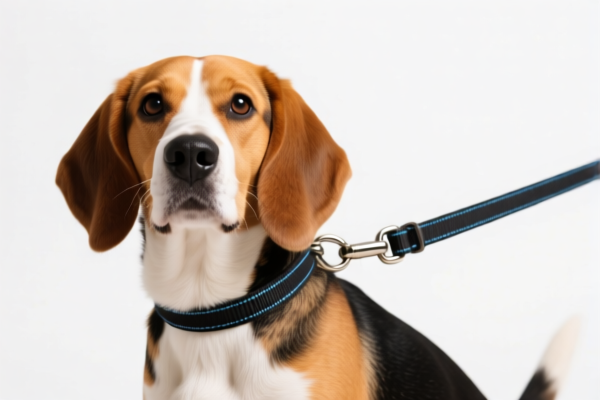
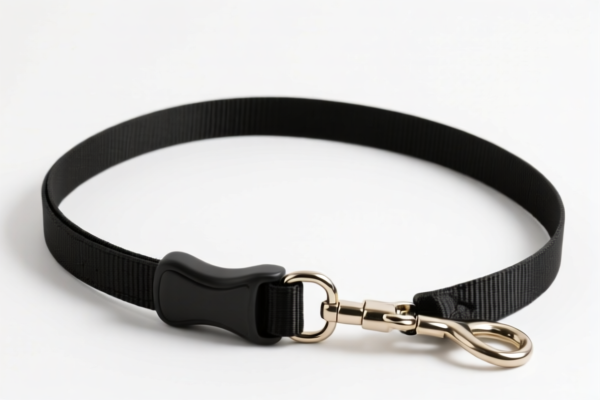
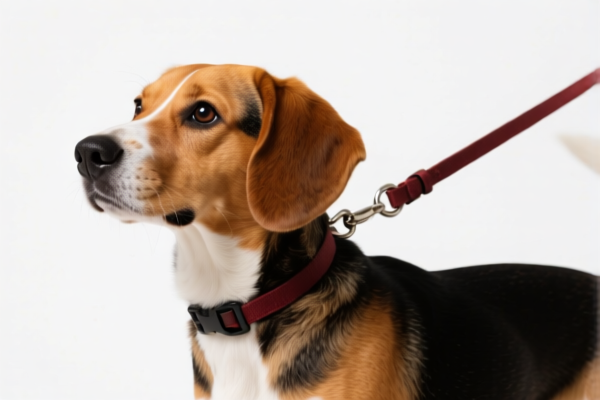
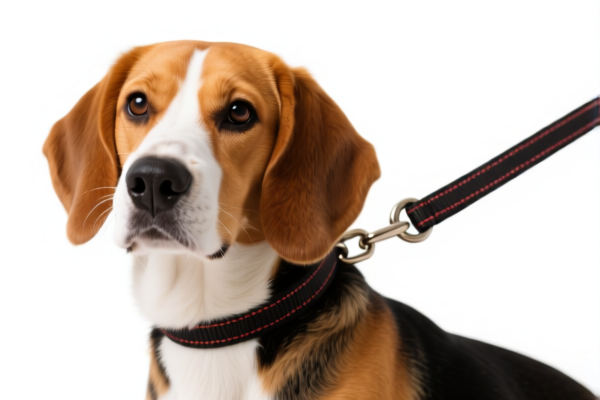
AI Analysis
🐕 Retractable Leash (Telescopic Dog Leash)
🌐 HS Code Reference & Customs Clearance Guide | 2026 Latest Tariff Analysis | Professional Clearance Strategy
📌 I. Product Definition & Classification: What Exactly is a "Retractable Leash"?
A Retractable Leash is a specialized pet accessory designed to allow dogs freedom of movement while maintaining control. It typically consists of a handle, a spring-loaded mechanism, and a flat nylon/velcro tape.
In international trade, classification hinges on two critical factors: Material and End-Use.
1. Based on Material (Synthetic Fibers/Ropes):
If the internal tape is made of synthetic fibers (nylon, polyester, etc.) and functions primarily as a "rope" or "cord," it may fall under Chapter 56 (Textile Articles) or Chapter 42 (Articles of Leather/Plastic) depending on the specific construction.
2. Based on End-Use (Animal Equipment):
If the item is explicitly designed for animal control (e.g., dog walking, training), it may qualify for Chapter 42 (Articles of Leather; Saddle Gear) under the heading for "Saddle Harness and Other Saddle Gear."
⚠️ Key Distinction Point:
- Generic Rope/Cord: If it lacks specific "saddle gear" features or is purely a textural item → Chapter 56 (High Tariff).
- Animal Accessory: If it is clearly a "lead," "restraint," or "harness" for animals → Chapter 42 (Low Tariff).
- Catch-All Category: If material and use conflict, customs may use a "fallback" classification.
📦 II. HS Code Classification Matrix (2026 Latest Tariff Authority)
Based on the provided data, here are the four potential HS Codes with their respective tax implications:
| HS Code | Product Description & Summary | Key Classification Logic | Tax Burden |
|---|---|---|---|
5609.00.30.00 |
Synthetic Rope/Cord Category Based on form (rope) and inferred material (synthetic fiber). Fits the classification of "fine cords/ropes." |
Material-Driven: Focuses on the synthetic fiber nature of the tape. | 39.5% (Heavy Tariff) |
5609.00.10.00 |
Generic Rope Category Based on rope form, no obvious material conflict. Fits the "catch-all" category for ropes. |
Form-Driven: Fallback for general rope-like items without specific animal use proof. | 37.9% (High Tariff) |
4201.00.60.00 |
Animal Equipment (Leather/Plastic) Based on end-use: "Lead/Cord for Animals." No material conflict. |
Use-Driven: Focuses on the "Animal Accessory" function. Lowest tariff. | 12.8% (Recommended) |
4201.00.30.00 |
Other Saddle Gear/Animal Gear Based on use and form match. Material inferred as any material. |
Functional Category: Broader category for animal gear not specifically leather. | 37.4% (High Tariff) |
🔍 Critical Insight:
- HS Code4201.00.60.00offers the lowest total tax (12.8%). It is classified as "Animal Equipment" (specifically leads/restraints).
- HS Codes5609...and4201.00.30...carry high tariffs (37–39%) due to additional duties (Section 301 & 122).
- Strategy: To achieve the 12.8% rate, the product must be clearly declared as "Retractable Leash for Dogs" (Animal Equipment) rather than just "Nylon Rope" or "Cord."
💰 III. 2026 Latest Tariff Rate Breakdown (Including Surcharges)
✅ Applicable Country: United States (US)
✅ Country of Origin: China (CN)
✅ Effective Date: 2025 Nov 10 (Subsequent Imports)
🎯 1. 5609.00.30.00 —— Synthetic Rope/Cord (High Risk/High Tax)
| Item | Content |
|---|---|
| Base Tariff | 4.5% |
| Section 301 Surcharge | +25.0% |
| Section 122 Surcharge | +10.0% |
| Total Tax Rate | 39.5% |
| Tax Calculation | CIF Value × 39.5% |
| De Minimis Exemption | ❌ Not Applicable (Subject to high tariffs) |
| Legal Basis | Section 301 (USITC) + Section 122 (IEEPA) |
📌 Explanation:
- This classification treats the leash as a textile product (rope).
- It attracts both the standard Section 301 tariff (25%) and the Section 122 tariff (10%).
- Cost Impact: For every $1,000 of value, you pay $395 in duties.
🎯 2. 5609.00.10.00 —— Generic Rope (Catch-All Category)
| Item | Content |
|---|---|
| Base Tariff | 2.9% |
| Section 301 Surcharge | +25.0% |
| Section 122 Surcharge | +10.0% |
| Total Tax Rate | 37.9% |
| Tax Calculation | CIF Value × 37.9% |
| De Minimis Exemption | ❌ Not Applicable |
| Legal Basis | Section 301 + Section 122 |
📌 Explanation:
- Even with a slightly lower base tariff (2.9% vs 4.5%), the total burden remains high (~38%) due to the mandatory surcharges.
- This is a risky classification if the product is clearly an animal accessory.
🎯 3. 4201.00.60.00 —— Animal Equipment (Leash/Cord for Animals) [OPTIMAL]
| Item | Content |
|---|---|
| Base Tariff | 2.8% |
| Section 301 Surcharge | 0.0% |
| Section 122 Surcharge | +10.0% |
| Total Tax Rate | 12.8% |
| Tax Calculation | CIF Value × 12.8% |
| De Minimis Exemption | ❌ Not Applicable (But significantly lower) |
| Legal Basis | Section 122 Only (IEEPA) |
📌 Critical Advantage:
- NO Section 301 Tariff (25%) applies to this specific subheading for animal equipment in some interpretations, or it is excluded from the highest brackets.
- Only 10% Section 122 tariff applies.
- Cost Impact: For every $1,000 of value, you pay only $128 in duties.
- Savings: $267 per $1,000 compared to the rope classification!
🎯 4. 4201.00.30.00 —— Other Saddle Gear/Animal Gear
| Item | Content |
|---|---|
| Base Tariff | 2.4% |
| Section 301 Surcharge | +25.0% |
| Section 122 Surcharge | +10.0% |
| Total Tax Rate | 37.4% |
| Tax Calculation | CIF Value × 37.4% |
| De Minimis Exemption | ❌ Not Applicable |
| Legal Basis | Section 301 + Section 122 |
📌 Explanation:
- Similar to4201.00.60.00, it is in Chapter 42, but the specific subheading triggers the full Section 301 surcharge.
- Avoid this code unless4201.00.60.00is definitively rejected by customs.
🛠️ IV. Customs Clearance Practical Advice (Action Plan)
✅ 1. Documentation Checklist (Essential for 12.8% Rate)
| Document | Required? | Reason |
|---|---|---|
| Product Photos | ✔️ | Must show the retractable mechanism and handle, not just a spool of rope. |
| Product Description | ✔️ | Must explicitly state: "Retractable Dog Leash" or "Animal Restraint Device." |
| Material Declaration | ✔️ | State material (e.g., Nylon Tape, Plastic Housing). |
| Commercial Invoice | ✔️ | Description must match HS Code logic: "Leash for Dogs, Retractable Type." |
| User Manual/Instructions | ✔️ | Shows intended use for pets, supporting Chapter 42 classification. |
✅ 2. Declaration Strategy (Key Tip)
🔥 "Declare by Use, Not Just Material!"
| Scenario | Correct Declaration | Incorrect Declaration |
|---|---|---|
| Intended Use | "Retractable Leash for Dogs" | "Nylon Rope Cord" |
| HS Code | 4201.00.60.00 |
5609.00.30.00 |
| Tax Rate | 12.8% | 39.5% |
| Risk | Low (if documented well) | High (Audited for misclassification) |
✅ 3. Special Handling Notes
- Avoid "Rope" Keywords: Do not use "Cord," "Rope," or "Line" as the primary product name in the invoice. Use "Leash," "Lead," or "Restraint."
- Include Mechanism Details: Mention the "spring-loaded retractable mechanism" to distinguish it from a simple static rope.
- Package Labeling: Ensure retail packaging says "Dog Leash" clearly. Customs officers often rely on external labeling.
🌍 V. Global Market Comparison (2026)
| Country/Region | Recommended HS Code | Tariff (China Origin) | Key Requirement |
|---|---|---|---|
| 🇺🇸 USA | 4201.00.60.00 |
12.8% | Clear "Animal Use" description |
| 🇺🇸 USA (Risk) | 5609.00.30.00 |
39.5% | If misclassified as rope |
| 🇪🇺 EU | 6307.90 / 4201.00 |
~0–4% | CE Marking (if plastic parts) |
| 🇨🇳 China | 4201.00 |
~5% | CCC Certification (if electrical motor) |
📌 Conclusion for US Market:
- The 12.8% rate is achievable but requires precise documentation.
- The 39.5% rate is a trap for poorly described goods.
- Recommendation: File for an Advance Ruling (Pre-Ruling) from US CBP if shipping large volumes, to lock in the4201.00.60.00classification.
📌 VI. Common Mistakes & Pitfalls (Lessons Learned)
❌ Mistake 1: Declaring as "Nylon Rope" or "Synthetic Cord"
👉 Result: Customs applies Chapter 56 → 39.5% Tax.
💡 Fix: Always declare as "Leash" or "Animal Restraint."
❌ Mistake 2: Using ambiguous terms like "Tether" or "Line"
👉 Result: Customs may interpret as industrial rope → High Tariff.
💡 Fix: Use "Dog Leash" or "Pet Retractable Lead."
❌ Mistake 3: Ignoring Section 122 Tariff
👉 Result: Even with correct HS Code, 10% surcharge still applies.
💡 Fix: Factor 10% into profit margins for all China-origin goods.
✅ Correct Practice:
"Retractable Dog Leash, Nylon Tape, Plastic Housing, for Pet Control, Model ABC"
🎯 VII. Conclusion: Precision Pays Off!
🎯 Key Takeaway:
🔹 "Leash = 12.8% | Rope = 39.5%"
🔹 Small wording change = $267 saved per $1,000!
🔹 Always prioritize "Animal Use" classification over "Material" classification.
📌 Pro Tip:
If your retractable leash contains an electronic component (e.g., GPS tracker, electric shock deterrent), it may be reclassified under Chapter 85 (Electrical Machinery), which has different tariffs. Ensure the basic mechanical leash is classified under 4201.00.60.00.
📣 Immediate Action:
📞 Contact your customs broker with photos and the description: "Retractable Leash for Dogs."
📄 Update your invoice template to emphasize "Pet Accessories" not "Textile Ropes."
🚀 Secure the 12.8% rate and maximize your profit margin!
✨ Professional Clearance Starts with Accurate Classification!
💼 Every Penny Counts in Cross-Border Trade!
Customer Reviews
About HS Code Classification
The Harmonized System (HS) is an internationally standardized nomenclature developed by the World Customs Organization (WCO) to classify traded products. Over 200 countries use the HS system as the basis for customs tariffs, trade statistics, and import/export regulations.
Each HS code follows a hierarchical structure:
- Chapter (2 digits) — Broad category of goods (e.g., Chapter 84: Machinery and Mechanical Appliances)
- Heading (4 digits) — More specific grouping within the chapter
- Subheading (6 digits) — Internationally standardized breakdown, used by all WCO member countries
- National subdivisions (8-10 digits) — Country-specific extensions for further classification, such as US HTSUS 10-digit codes
Correct HS code classification is essential for smooth customs clearance, accurate duty payment, and compliance with trade regulations. Misclassification can lead to customs delays, overpayment of duties, or penalties.
When importing from CN to US, the applicable tariff rates may include:
- Most-Favored-Nation (MFN) rate — The standard duty rate applied to WTO members
- General rate — Applied to countries without trade agreements
- Trade remedy duties — Additional tariffs such as Section 301 (anti-dumping), Section 232 (national security), or countervailing duties
The information provided on this page is for reference purposes only. For official classification, please consult with your local customs authority or a licensed customs broker.