Retreaded Bus Specific Tires
CN → US| HS Code | Tariff Rate | Origin | Destination | Doc |
|---|---|---|---|---|
| 4012124025 | 39.0% | CN | US | Official Doc |
| 4011201015 | 39.0% | CN | US | Official Doc |
| 4011201035 | 39.0% | CN | US | Official Doc |
| 4012124035 | 39.0% | CN | US | Official Doc |
Product Images
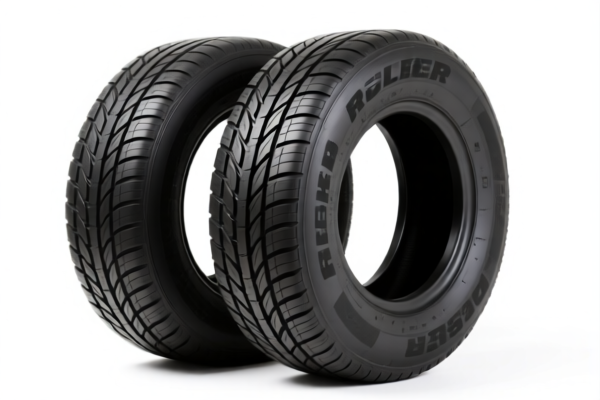
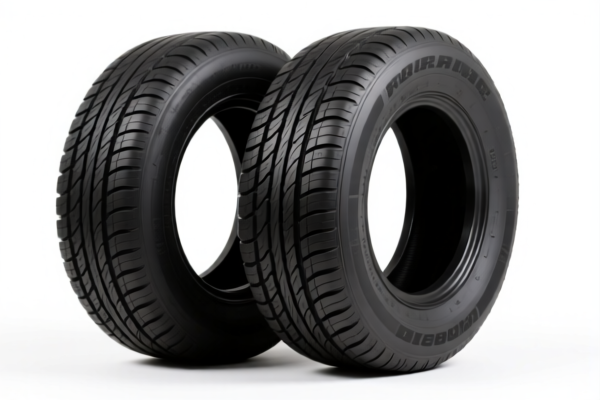
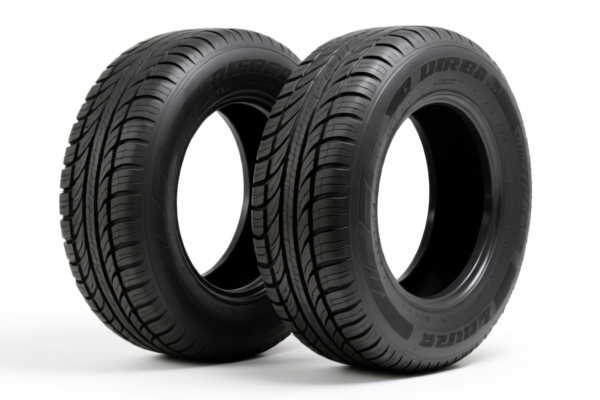
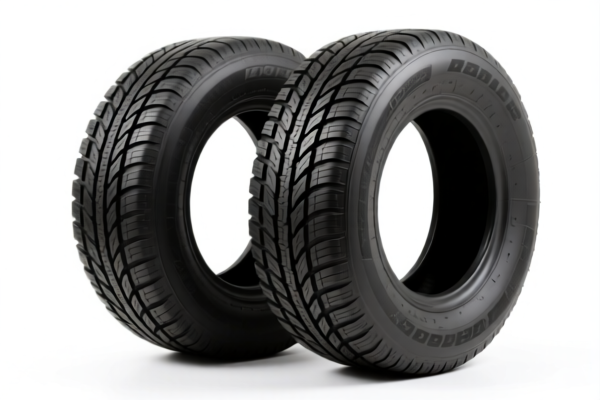
AI Analysis
🚌 Retreaded Bus Specific Tires: High-Stakes Import Classification & US Customs Strategy
🌐 HS Code Reference & Customs Clearance Guide | 2026 Latest Tariff Analysis | Professional Entry Strategy
📌 I. Product Definition & Classification: Are You Sure You Know "Retreaded Bus Tires"?
Retreaded tires are not "new" tires; they are used tire casings that have been re-surfaced with new tread rubber. In international trade, particularly for bus-specific heavy-duty tires, classification is strictly tied to the construction type (Radial vs. Non-Radial) and specific sub-category nuances.
For US Customs (CBP) purposes, the critical distinction lies in: 1. Structure: Is it Radial (standard for modern buses) or Bias? (The data indicates Radial). 2. Sub-type: Does it fall under specific "Other" specifications or material matches?
⚠️ Key Distinction Point:
- If the tire is Radial and intended for buses, it falls under heading 4012.12.
- If it is Non-Radial (Bias) and intended for buses, it falls under heading 4011.20.
- "Retreaded" status triggers specific Section 301 and Section 122 additional duties, making the HS Code selection critical for cost calculation.
📦 II. HS Code Classification Details (2026 Latest Tariff Authority Mapping)
Based on the provided , here are the specific HS Codes for Retreaded Bus Specific Tires. Note that while the HTSUS (Harmonized Tariff Schedule of the United States) often groups these under broader categories, the specific 10-digit codes provided below reflect detailed sub-classifications for "Other Specifications" and "Material/Structure Matches."
| HS Code | Product Summary | Key Classification Criteria | Construction Type |
|---|---|---|---|
4012.12.40.25 |
Retreaded Bus Tires, Other Specifications | Matches Use, Form & Specification Class | Radial |
4011.20.10.15 |
Retreaded Bus Tires, Other Specifications | Matches Use, Structure & Material Inference | Non-Radial (Bias) |
4011.20.10.35 |
Retreaded Bus Tires, Other Specifications | Matches Material, Form, Use & Spec Class | Non-Radial (Bias) |
4012.12.40.35 |
Retreaded Bus Tires, Other Specifications | Matches Material, Form, Use & Spec Class | Radial |
🔍 Critical Reminder:
- Radial Tires use fabric/steel cords arranged radially (like a bicycle tire's belt). They are more durable and common for buses. Use codes starting with4012.12.
- Non-Radial (Bias) Tires have cords arranged at alternating angles. Use codes starting with4011.20.
- All listed codes carry a Total Tax of 39.0%. Do not assume "Retreaded" automatically means lower duty; the additional tariffs equalize the cost significantly.
💰 III. 2026 Latest Tariff Rate Breakdown (Including Surtaxes & Policy Add-ons)
✅ Applicable Country: United States (US)
✅ Origin: China (CN)
✅ Effective Time: Current (Subject to Section 301 & 122 enforcement)
🎯 1. The "39% Penalty" Structure Explained
For all HS Codes listed above (4012.12.40.25, 4011.20.10.15, 4011.20.10.35, 4012.12.40.35), the tax structure is identical. This is a high-risk classification due to the accumulation of standard tariffs and punitive trade measures.
| Item | Content | Details |
|---|---|---|
| Base Duty Rate | 4.0% | Standard MFN (Most Favored Nation) rate for retreaded tires. |
| Section 301 Surcharge | +25.0% | "Add-on Tariff" for Chinese goods under Trade Act of 1974, Section 301. |
| Section 122 Surcharge | +10.0% | "122 Clause Tariff" (Often related to specific trade enforcement or emergency actions). |
| Total Effective Rate | 39.0% | Sum of Base + 301 + 122. |
| Tax Calculation | CIF Value × 39% | Applied to the Customs Value (Cost, Insurance, Freight). |
| De Minimis Exemption | ❌ NOT ELIGIBLE | Retreaded tires from China cannot use the $800 de minimis threshold (Section 321). Must file formal entry. |
📌 Explanation:
- The 25% is the heavy lift from the US-China Trade War (Section 301).
- The 10% is a specific additional duty (Section 122) often applied to automotive parts or tires in specific enforcement windows.
- Total 39% is extremely high. Importers must factor this into landed cost calculations immediately.
🛠️ IV. Customs Clearance Practical Advice (Battle-Tested Pitfall Guide)
✅ 1. Documentation Checklist (Non-Negotiable)
| Document | Required? | Purpose |
|---|---|---|
| ✅ Certificate of Origin (CO) | ✔️ | To prove Chinese origin and confirm applicability of 301/122 duties. |
| ✅ Retread Process Documentation | ✔️ | Proof that the tire is retreaded, not new. CBP may require invoices from the retreading facility. |
| ✅ Technical Specification Sheet | ✔️ | Must explicitly state "Radial" or "Bias" to distinguish between 4012 and 4011. |
| ✅ Commercial Invoice | ✔️ | Must clearly state "Retreaded Bus Tire" and HS Code. |
| ✅ Packing List | ✔️ | Detail count, weight, and dimensions. |
| ✅ FMV (Fair Market Value) Evidence | ✔️ | To justify the declared value if questioned by CBP. |
✅ 2. Declaration Strategy (Key Mantra)
🔥 "Classify by Structure, Declare Origin, Pay the 39%, Don't Split!"
| Situation | Correct Declaration | Wrong Practice |
|---|---|---|
| Mixed Shipment (Radial & Bias) | Declare separately with correct 10-digit HS Codes for each. | Lump sum "Tires" → Customs Seizure Risk. |
| New Tires vs. Retreaded | Clearly mark as "Retreaded" on invoice. | Labeling as "New" → Fraud Allegations + Penalties. |
| Small Sample Shipment | Do NOT use de minimis ($800). File Formal Entry. | Attempting $800 exemption → Seizure & Penalty. |
| Transshipment | If routed through Vietnam/Malaysia, origin is still China if substantial transformation didn't occur. | Mislabeling as "Made in Vietnam" → Evasion of 301 Tariffs. |
✅ 3. Special Circumstances Handling
| Situation | Handling Advice |
|---|---|
| OEM Retreads for Bus Fleets | Provide contract/agreement showing bulk purchase to justify value. |
| Used Casings Import | If importing casings for retreading (not finished tires), HS Code differs (likely 4012.90). Do not confuse with 4012.12 (finished retreads). |
| Audit Defense | Keep samples of the retread process (belt wrapping, curing) in case CBP requests physical verification. |
🌍 V. Global Market Comparison for Retreaded Bus Tires (2026)
| Country/Region | Recommended HS Code | Base Duty | Additional Tariffs (China) | Total Est. Cost | Notes |
|---|---|---|---|---|---|
| 🇺🇸 USA | 4012.12.40.xx / 4011.20.10.xx |
4.0% | +35% (25% Sec 301 + 10% Sec 122) | 39.0% | Highest Barrier. Strict enforcement. |
| 🇨🇳 China | 4012.12.40.90 / 4011.20.90 | 10-15% | 0% | ~10-15% | Lower duty, but limited re-export incentives. |
| 🇪🇺 EU | 4012.12.90 / 4011.20.90 | 4.5% | 0% (Usually) | ~4.5% | No Section 301 equivalent, but strict REACH/Eco-label rules. |
| 🇲🇽 Mexico | 4012.12.90 / 4011.20.90 | 5% | 0% (if USMCA compliant) | ~5% | Potential if substantial transformation occurs in Mexico. |
📌 Conclusion:
- The US market is uniquely punitive for Chinese retreaded tires due to the combination of Section 301 and Section 122.
- No other major market applies a flat 39% tariff to this category.
- Importers should consider supply chain diversification (e.g., retreading in Vietnam/Malaysia using Chinese casings, if legal/substantial transformation occurs) to mitigate costs.
📌 VI. Common Errors & Pitfall Guide (Lessons from the Field)
❌ Error 1: Using the HS Code for New Tires (4011 or 4012 non-retreaded)
👉 Consequence: CBP detects "Retreaded" on the label or invoice. Misdeclaration Penalty + Back Duties.
👉 Correction: Always use the specific retreaded subheadings if available, or ensure the description explicitly says "Retreaded."
❌ Error 2: Ignoring the Section 122 (10%) Surcharge
👉 Consequence: Under-declaring total tax liability. CBP audits will reveal the missing 10%.
👉 Correction: Include all surcharges in your landed cost model. Total is 39%, not 25%.
❌ Error 3: Attempting De Minimis ($800) for Bulk Shipments
👉 Consequence: Cargo held at port, storage fees accrue, potential seizure.
👉 Correction: Always file a Formal Entry for retreaded tires from China.
❌ Error 4: Confusing Radial (4012) with Bias (4011)
👉 Consequence: Administrative delay while CBP requests clarification.
👉 Correction: Verify the tire sidewall marking "R" (Radial) or "B" (Bias) and match the HS Code precisely.
✅ Correct Declaration Example:
"RETREADED BUS TIRES, RADIAL CONSTRUCTION, SIZE 11R22.5, MADE IN CHINA, SUBJECT TO SECTION 301 & 122 DUTIES, HS: 4012.12.40.25"
🎯 VII. Conclusion: Professional Clearance, Cost Control, Risk Mitigation
🎯 Remember the Mantra:
🔹 "Retreaded + China = 39% Total Duty."
🔹 "Radial is 4012, Bias is 4011."
🔹 "No De Minimis. Formal Entry Only."
📌 Pro Tip:
If you are importing large volumes, consider applying for a Customs Ruling or Tariff Classification Letter from CBP in advance. While it won't change the 39% rate (due to trade policy), it will lock in the correct 10-digit HS Code, preventing administrative delays and ensuring audit compliance.
📣 Immediate Action:
📞 Engage a licensed US Customs Broker.
📄 Provide technical specs to confirm Radial vs. Bias.
📉 Calculate Landed Cost with 39% Total Duty included.
🚀 Avoid surprise penalties by getting it right the first time.
✨ Precision Classification Saves Money.
💼 Your 39% Duty Rate is Non-Negotiable – Plan Accordingly!
Customer Reviews
About HS Code Classification
The Harmonized System (HS) is an internationally standardized nomenclature developed by the World Customs Organization (WCO) to classify traded products. Over 200 countries use the HS system as the basis for customs tariffs, trade statistics, and import/export regulations.
Each HS code follows a hierarchical structure:
- Chapter (2 digits) — Broad category of goods (e.g., Chapter 84: Machinery and Mechanical Appliances)
- Heading (4 digits) — More specific grouping within the chapter
- Subheading (6 digits) — Internationally standardized breakdown, used by all WCO member countries
- National subdivisions (8-10 digits) — Country-specific extensions for further classification, such as US HTSUS 10-digit codes
Correct HS code classification is essential for smooth customs clearance, accurate duty payment, and compliance with trade regulations. Misclassification can lead to customs delays, overpayment of duties, or penalties.
When importing from CN to US, the applicable tariff rates may include:
- Most-Favored-Nation (MFN) rate — The standard duty rate applied to WTO members
- General rate — Applied to countries without trade agreements
- Trade remedy duties — Additional tariffs such as Section 301 (anti-dumping), Section 232 (national security), or countervailing duties
The information provided on this page is for reference purposes only. For official classification, please consult with your local customs authority or a licensed customs broker.