Retreaded Horticultural Machinery Tires
CN → US| HS Code | Tariff Rate | Origin | Destination | Doc |
|---|---|---|---|---|
| 4012204500 | 35.0% | CN | US | Official Doc |
| 8436990090 | 35.0% | CN | US | Official Doc |
| 8436990070 | 35.0% | CN | US | Official Doc |
| 4012208000 | 35.0% | CN | US | Official Doc |
| 4004000000 | 35.0% | CN | US | Official Doc |
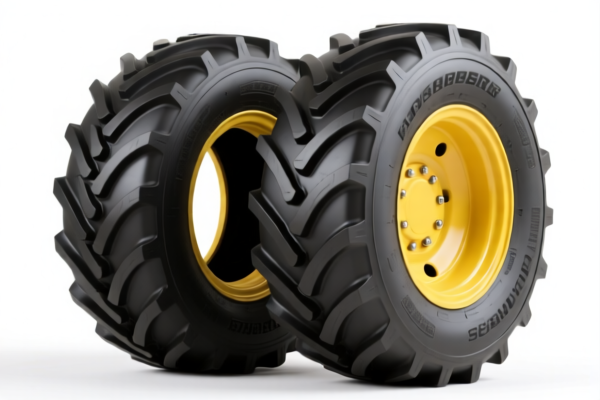
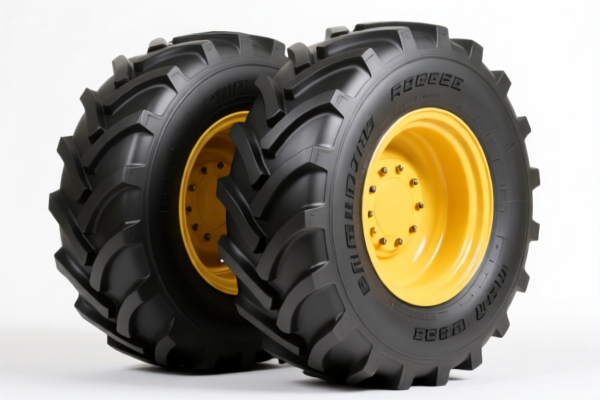
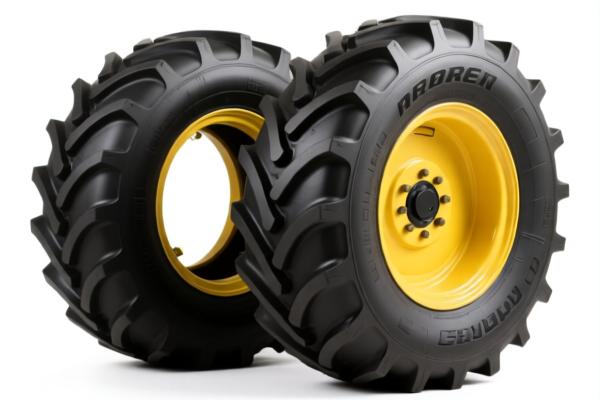
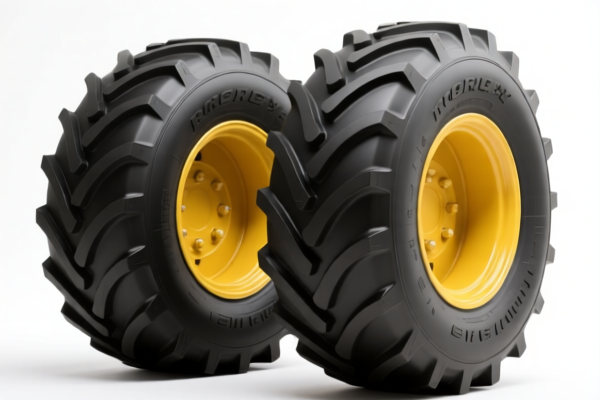
Product Images
AI Analysis
🚜 Retreaded Horticultural Machinery Tires (Used Agricultural Tires)
🌐 HS Code Reference & Customs Clearance Guide | 2026 Latest Tariff Analysis | Professional Compliance Strategy
📌 I. Product Definition & Classification: What Are "Retreaded Horticultural Tires"?
Retreaded horticultural machinery tires are used pneumatic tires that have undergone a rebuilding process (recapping) to extend their service life. In international trade, these products fall under the broader category of Used Pneumatic Tires or Rubber Waste/Scrap, depending on their condition and intended reuse.
Key Distinction:
- Retreaded/Used Tires (for reuse): Classified under Chapter 40 (Rubber and articles thereof), specifically as used pneumatic tires or parts thereof.
- Shredded/Scrap Tires (for recycling): Classified under 4004 (Rubber waste and scrap).
⚠️ Critical Identification Point:
- If the tire is structurally intact and intended for retreading or reuse on machinery →归入 4012 (Used pneumatic tires) or 8436 (Parts of agricultural machinery).
- If the tire is damaged, shredded, or intended solely for rubber recovery → 归入 4004 (Rubber waste).
📦 II. HS Code Classification Details (2026 Official Tariff Alignment)
| HS Code | Product Description | Application Scenario | Tax Rate (Total) | Legal Basis |
|---|---|---|---|---|
| 4012.20.45.00 | Used pneumatic tires for horticultural machinery | Direct reuse as wheels for garden tractors, mowers, or lawn equipment | 35.0% | 4012/20/45 |
| 4012.20.80.00 | Other used pneumatic tires (incl. retreaded) | General use of used tires in agricultural/horticultural contexts | 35.0% | 4012/20/80 |
| 8436.99.00.90 | Parts of agricultural/horticultural machinery (other) | Tires classified as "spare parts" for machinery rather than standalone tires | 35.0% | 8436/99/90 |
| 8436.99.00.70 | Parts of machinery: Wheels/Casing assemblies | Tires sold as part of a wheel/casing unit for specific machinery models | 35.0% | 8436/99/70 |
| 4004.00.00.00 | Rubber waste and scrap (including shredded tires) | Tires destroyed, shredded, or not suitable for reuse | 35.0% | 4004/00/00 |
🔍 Key Reminder:
- All listed HS Codes for used/retreaded tires or rubber scrap from China to the US carry a 35% total tariff.
- Do not misclassify used tires as "new parts" or "machinery" to avoid duty evasion penalties.
💰 III. 2026 Tariff Rate Breakdown (Including Additional Duties & Policy Levies)
✅ Applicable Country: United States (US)
✅ Origin: China (CN)
✅ Effective Date: 2025年11月10日起 (including subsequent imports)
🎯 1. HS Code 4012.20.45.00 – Used Tires for Horticultural Machinery
| Item | Detail |
|---|---|
| Base Tariff | 0.0% |
| Section 301 Additional Duty | +25.0% |
| Section 122 Duty | +10.0% |
| Total Tariff | 35.0% |
| Calculation | CIF Value × 35% |
| De Minimis Exemption | ❌ Not Eligible (deny_de_minimis) |
| Legal Path | USITC:4012.20.45.00 → SEC301:25% → SEC122:10% |
📌 Explanation:
- Base Tariff 0%: Used tires generally have low base duties.
- Section 301 (25%): Applies to Chinese rubber products under trade restrictions.
- Section 122 (10%): Additional levy under U.S. Customs Law for specific rubber goods.
- Total 35%: High effective rate; no de minimis relief applies.
🎯 2. HS Code 4012.20.80.00 – Other Used Pneumatic Tires
| Item | Detail |
|---|---|
| Base Tariff | 0.0% |
| Section 301 Additional Duty | +25.0% |
| Section 122 Duty | +10.0% |
| Total Tariff | 35.0% |
| Calculation | CIF Value × 35% |
| De Minimis Exemption | ❌ Not Eligible |
| Legal Path | USITC:4012.20.80.00 → SEC301:25% → SEC122:10% |
📌 Note:
- Same tariff structure as4012.20.45.00.
- Applies to retreaded tires not specifically designated for horticultural use but still in usable condition.
🎯 3. HS Code 8436.99.00.90 – Parts of Agricultural Machinery
| Item | Detail |
|---|---|
| Base Tariff | 0.0% |
| Section 301 Additional Duty | +25.0% |
| Section 122 Duty | +10.0% |
| Total Tariff | 35.0% |
| Calculation | CIF Value × 35% |
| De Minimis Exemption | ❌ Not Eligible |
| Legal Path | USITC:8436.99.00.90 → SEC301:25% → SEC122:10% |
📌 Clarification:
- If tires are declared as spare parts for horticultural machinery, they fall under Chapter 84.
- Despite being "parts," they still incur the same 35% total duty due to origin-based levies.
🎯 4. HS Code 8436.99.00.70 – Wheels/Casing Assemblies
| Item | Detail |
|---|---|
| Base Tariff | 0.0% |
| Section 301 Additional Duty | +25.0% |
| Section 122 Duty | +10.0% |
| Total Tariff | 35.0% |
| Calculation | CIF Value × 35% |
| De Minimis Exemption | ❌ Not Eligible |
| Legal Path | USITC:8436.99.00.70 → SEC301:25% → SEC122:10% |
📌 Note:
- Applies when tires are sold as a mounted wheel assembly for specific machinery models.
- Tariff remains 35% regardless of assembly status.
🎯 5. HS Code 4004.00.00.00 – Rubber Waste and Scrap
| Item | Detail |
|---|---|
| Base Tariff | 0.0% |
| Section 301 Additional Duty | +25.0% |
| Section 122 Duty | +10.0% |
| Total Tariff | 35.0% |
| Calculation | CIF Value × 35% |
| De Minimis Exemption | ❌ Not Eligible |
| Legal Path | USITC:4004.00.00.00 → SEC301:25% → SEC122:10% |
📌 Important:
- If tires are shredded, cut, or not fit for reuse, they are classified as rubber scrap.
- Same 35% duty applies.
- No environmental exemption for scrap tires under current U.S. policy.
🛠️ IV. Customs Clearance Practical Advice (Avoid Pitfalls)
✅ 1. Required Documentation Checklist
| Document | Mandatory | Notes |
|---|---|---|
| ✅ Commercial Invoice | ✔️ | Must specify "Retreaded/Used Tires" or "Rubber Scrap" |
| ✅ Packing List | ✔️ | Detail quantity, weight, and packaging type |
| ✅ Certificate of Origin (CO) | ✔️ | Confirm China origin; required for duty assessment |
| ✅ Product Photos (Including Tread & Sidewall) | ✔️ | Prove condition (used vs. scrap) |
| ✅ Retreading Certificate (if applicable) | ✔️ | For retreaded tires, confirm compliance with U.S. standards |
| ✅ Third-Party Inspection Report | ✔️ | For rubber scrap, confirm no hazardous materials |
✅ 2. Declaration Best Practices
🔥 Golden Rule:
"Describe condition accurately, declare origin clearly, avoid misclassification!"
| Scenario | Correct Declaration | Incorrect Declaration | Risk |
|---|---|---|---|
| Used tires for reuse | Used Pneumatic Tires, HS 4012.20.45.00 |
"New Tires" | ❌ Severe penalty, seizure |
| Retreaded tires | Retreaded Tires, HS 4012.20.80.00 |
"Rubber Parts" | ❌ Misclassification, 35% duty + fines |
| Shredded tires | Rubber Scrap, HS 4004.00.00.00 |
"Recyclable Raw Material" | ❌ Environmental compliance issues |
| Tire as machinery part | Spare Tire for Horticultural Machine, HS 8436.99.00.90 |
"Part of Machine" | ❌ Ambiguity, delay |
✅ 3. Special Handling Tips
| Situation | Recommendation |
|---|---|
| OEM Retreaded Tires | Provide retreading process certificate and U.S. DOT compliance if required |
| Mixed Shipments (Tires + Machinery) | Declare separately; do not bundle under machinery HS code |
| Tires with Residual Air | Must be deflated; safety hazard for sea freight |
| Tires with Oil/Chemical Contamination | Prohibited; may be rejected or fined |
🌍 V. Global Market Comparison (2026)
| Country/Region | Recommended HS Code | Total Tariff | Certification | Notes |
|---|---|---|---|---|
| 🇺🇸 USA | 4012.20.45.00 / 4004.00.00.00 |
35% | DOT (if applicable) | High duty, no de minimis |
| 🇨🇳 China | 4012.20.45.00 |
0-5% | CCC (if applicable) | Lower duty for domestic trade |
| 🇪🇺 EU | 4012.20.45.00 |
0-4% | ECE R108/R117 | Stricter safety standards |
| 🇦🇺 Australia | 4012.20.45.00 |
5% | ADR Compliance | Moderate duty |
| 🇯🇵 Japan | 4012.20.45.00 |
5-10% | JIS Standards | Moderate duty |
📌 Conclusion:
- USA imposes the highest effective duty (35%) on Chinese-origin used/retreaded tires.
- No duty-free or de minimis exemptions apply.
- Plan logistics and pricing accordingly.
📌 VI. Common Errors & Pitfalls (Lessons Learned)
❌ Error 1: Declaring used tires as "New Tires"
👉 Consequence: Duty evasion detected → Seizure + Fines + Blacklist
❌ Error 2: Misclassifying scrap tires as "Parts of Machinery"
👉 Consequence: Audit failure → Back taxes + Penalties
❌ Error 3: Failing to specify "Used/Retreaded" in description
👉 Consequence: Customs request for clarification → Delay in clearance
❌ Error 4: Ignoring Section 122 (10%) duty
👉 Consequence: Underpayment → 10% shortfall + Interest
✅ Correct Approach:
"Retreaded Pneumatic Tires for Horticultural Machinery, Used, Chinese Origin, HS 4012.20.45.00, 35% Duty Applicable"
🎯 VII. Conclusion: Precision in Classification Saves Money!
🎯 Remember:
🔹 "Used tires are not new; scrap is not parts; declare correctly!"
🔹 "35% duty is fixed; avoid mistakes, avoid costs!"
🔹 "Origin matters; China origin = 35%; no exemptions!"
📌 Pro Tip:
If your tires are originating from Vietnam, Thailand, or Malaysia, check for IEEPA exemptions or FTZ benefits.
Consider Advance Ruling from U.S. Customs to pre-approve classification.
📣 Immediate Action:
📞 Hire a licensed customs broker + Provide product photos + Submit for HS Code Advance Ruling
🚀 Ensure smooth clearance, minimize duties, maximize profit!
✨ Professional Clearance Starts with Accurate Classification!
💼 Every dollar saved is a dollar earned!
Customer Reviews
About HS Code Classification
The Harmonized System (HS) is an internationally standardized nomenclature developed by the World Customs Organization (WCO) to classify traded products. Over 200 countries use the HS system as the basis for customs tariffs, trade statistics, and import/export regulations.
Each HS code follows a hierarchical structure:
- Chapter (2 digits) — Broad category of goods (e.g., Chapter 84: Machinery and Mechanical Appliances)
- Heading (4 digits) — More specific grouping within the chapter
- Subheading (6 digits) — Internationally standardized breakdown, used by all WCO member countries
- National subdivisions (8-10 digits) — Country-specific extensions for further classification, such as US HTSUS 10-digit codes
Correct HS code classification is essential for smooth customs clearance, accurate duty payment, and compliance with trade regulations. Misclassification can lead to customs delays, overpayment of duties, or penalties.
When importing from CN to US, the applicable tariff rates may include:
- Most-Favored-Nation (MFN) rate — The standard duty rate applied to WTO members
- General rate — Applied to countries without trade agreements
- Trade remedy duties — Additional tariffs such as Section 301 (anti-dumping), Section 232 (national security), or countervailing duties
The information provided on this page is for reference purposes only. For official classification, please consult with your local customs authority or a licensed customs broker.