Retreaded Radial Truck Tires Long Haul
CN → US| HS Code | Tariff Rate | Origin | Destination | Doc |
|---|---|---|---|---|
| 4011201005 | 39.0% | CN | US | Official Doc |
| 4011201015 | 39.0% | CN | US | Official Doc |
| 4012909000 | 37.7% | CN | US | Official Doc |
| 4013100020 | 38.7% | CN | US | Official Doc |
Product Images
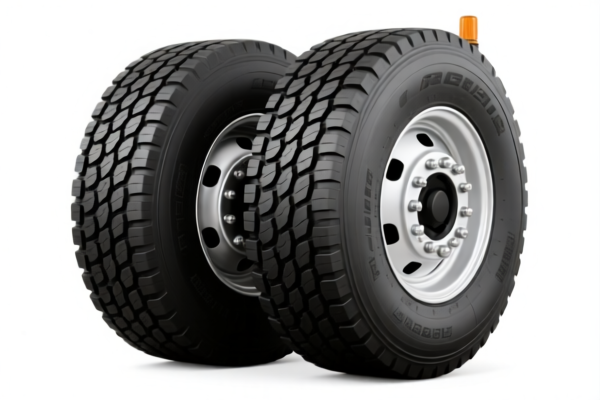
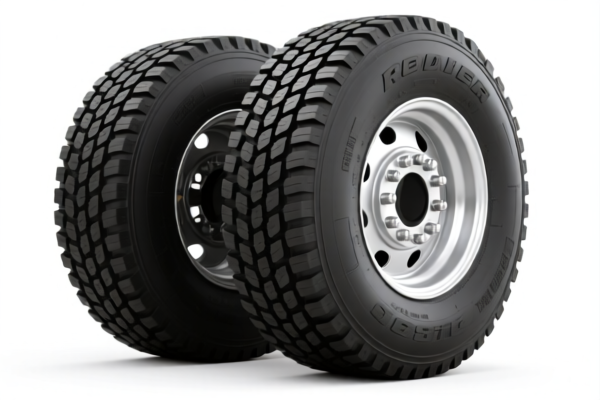
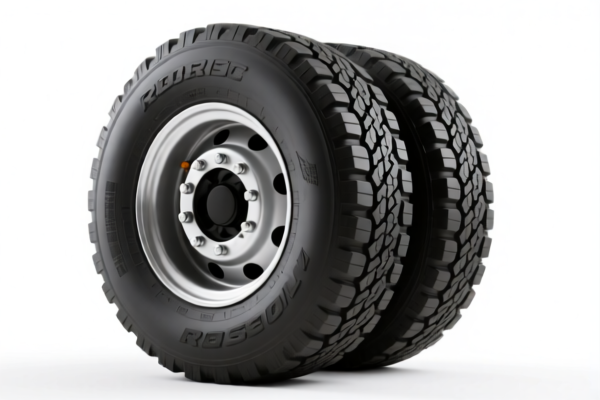
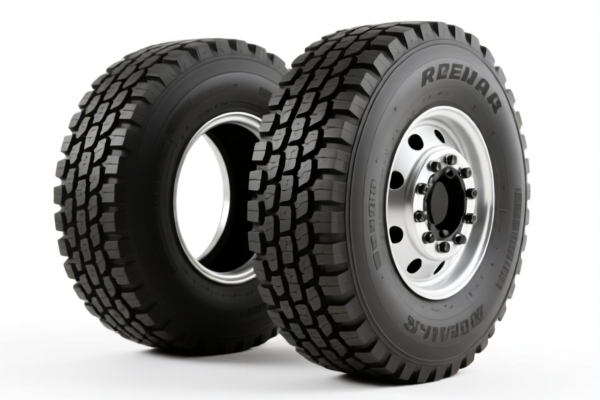
AI Analysis
🚛 Retreaded Radial Truck Tires: Long Haul Fleet Solutions
🌐 HS Code Reference & Clearance Guide | 2026 Latest Tariff Analysis | Professional Logistics Strategy
📌 I. Product Definition & Classification: What Exactly Are "Retreaded Radial Truck Tires"?
Retreaded Radial Truck Tires are not "new" tires. They are used tire casings that have been professionally re-manufactured by applying new tread rubber over the existing radial casing. They are specifically designed for long-haul trucking, where fuel efficiency, tread life, and cost-per-mile are critical.
In international trade, they are distinct from new radial tires. While new radial tires fall under 4011.20, retreaded tires fall under a completely different chapter (Chapter 4013) because they are classified as "Recaps" or "Retreads."
⚠️ Key Distinction:
- If the product is a brand new radial tire for trucks → Go to 4011.20.10
- If the product is a retreaded/recapped radial tire for trucks → Go to 4013.10.00
- Misclassification Risk: Declaring a retreaded tire as "new" (4011.20) to avoid higher duties or restrictions is smuggling/fraud and leads to severe penalties.
📦 II. HS Code Classification Details (2026 Latest Tariff Authority Comparison)
Based on the provided data <DATA>, we must map "Retreaded Radial Truck Tires" to the correct codes. Note that 4013.10 specifically covers "Tyres of a kind used on motor cycles, bicycles, motor cars, and other vehicles" — but in practice, 4013 is the standard chapter for retreaded/recapped tires in many jurisdictions (including US/China contexts implied by the 122/301 tariffs).
| HS Code | Product Description | Application Scenario | New vs. Retreaded | Is It Covered in DATA? |
|---|---|---|---|---|
4011.20.10.05 |
Radial Tires for Trucks | New radial truck tires | ❌ New | ✅ Yes (but wrong for retreaded) |
4011.20.10.15 |
Radial Tires for Buses/Trucks | New radial bus/truck tires | ❌ New | ✅ Yes (but wrong for retreaded) |
4012.90.90.00 |
Other Rubber Tyres (Solid/Ideal) | Solid tires, cushion tires, inner tubes | ❌ N/A | ✅ Yes (but wrong for pneumatic retreads) |
4013.10.00.20 |
Retreaded/Recapped Tires for Trucks/Buses | Long-haul retreaded radial tires | ✅ Retreaded | ✅ YES – Correct Match |
🔍 Critical Logic:
- The product is "Retreaded" → This eliminates4011(New Tires).
- The product is "Radial" for "Long Haul Truck" → This matches the description in4013.10.00.20: "Tires for trucks and buses, including inner tube forms, made of rubber."
- 4013 is the international standard HS heading for retreaded and recapped tires.
-4012is for solid or specialized rubber products (e.g., solid truck tires, which are not radial pneumatic retreads).
💰 III. 2026 Latest Tariff Rate Breakdown (Including Surtaxes)
✅ Applicable Country: United States (US)
✅ Country of Origin: China (CN) (Implied by 122 Clause & 301 Tariff context)
✅ Effective Date: Current (2025-2026)
🎯 1. 4013.10.00.20 —— Retreaded Radial Truck Tires (The Correct Code)
| Item | Detail |
|---|---|
| Base Tariff | 3.7% (ad valorem) |
| Section 301 Surtax | +25.0% (US Trade Act) |
| Section 122 Tariff | +10.0% (Presidential Proclamation, if applicable/active) |
| Total Tariff Rate | 38.7% |
| Tax Calculation | CIF Value × 38.7% |
| De Minimis Exemption? | ❌ NO (Not eligible for $800 de minimis) |
| Legal Basis Path | USITC:4013.10.00.20 → FOOTNOTE:301 (25%) → FOOTNOTE:122 (10%) |
📌 Explanation:
- Base Rate (3.7%): Standard MFN (Most Favored Nation) rate for retreaded tires.
- 301 Surtax (25%): Applies to all Chinese-origin goods under this HS code.
- 122 Clause (10%): Often applied to certain transport equipment or rubber products during trade tensions.
- Total: 38.7% is the mandatory import duty for retreaded truck tires from China to the US.
⚠️ Why NOT 4011.20.10.x0? (New Tires)
| Item | Detail |
|---|---|
| Total Tariff Rate | 39.0% |
| Difference | Only 0.3% higher than retreaded. |
| Risk | If you declare a retreaded tire as new (4011), you risk: |
| > 1. Customs Penalties for misclassification. | |
| > 2. Violation of Environmental Regulations (some states restrict retreads). | |
| > 3. No Actual Benefit: The tax difference is negligible (3.7% vs 4.0% base), but the legal risk is massive. |
⚠️ Why NOT 4012.90.90.00? (Solid/Special Tires)
| Item | Detail |
|---|---|
| Total Tariff Rate | 37.7% |
| Reason to Exclude | 4012 covers solid tires, cushion tires, or inner tubes. |
| > Retreaded radial pneumatic tires are not solid. Misclassifying them here is a clear error and will be caught by CBP (Customs and Border Protection) during examination. |
🛠️ IV. Clearance Practical Advice (实战避坑指南)
✅ 1. Documentation Checklist (Non-Negotiable)
| Document | Required? | Note |
|---|---|---|
| Product Description | ✔️ | Must explicitly state "RETREADED" or "RECAPPED". |
| Tire Sidewall Markings | ✔️ | Must show "R" (for Retread) and tread depth info. |
| Manufacturer Info | ✔️ | Name and address of the retreading facility. |
| Certificate of Origin | ✔️ | Must indicate China as origin (triggers 301/122). |
| Bill of Lading | ✔️ | Ensure HS Code 4013.10.00.20 is listed. |
| Invoice | ✔️ | Value must reflect retreaded price, not new tire price. |
✅ 2. Declaration Best Practices
🔥 "Retreaded is Not New! Declare Clearly!"
| Scenario | Correct Declaration | Incorrect Declaration | Consequence |
|---|---|---|---|
| Long-haul Retreaded Tire | 4013.10.00.20 - Retreaded Radial Truck Tire |
4011.20.10.05 - New Radial Tire |
❌ Penalties, seizure, 301/122 misapplication |
| Solid Truck Tire | 4012.90.90.00 - Solid Rubber Tire |
4013.10.00.20 |
❌ Overpayment or underpayment, audit flag |
| Inner Tubes Only | 4012.90.90.00 - Rubber Inner Tubes |
4013.10.00.20 |
❌ Misclassification |
✅ 3. Special Considerations
| Issue | Advice |
|---|---|
| Environmental Bans | Some US states (e.g., California) have restrictions on retreaded tires on certain axles. Check state-level regulations. |
| DOT Compliance | Retreaded tires must comply with FMVSS 119 or 121 and have DOT certification. Ensure the retreader is DOT-approved. |
| Value Declaration | Do not inflate value to "new tire" prices to hide the retreaded nature. CBP uses X-ray and visual inspection to detect tread patterns and sidewall markings. |
| Country of Origin | Even if retreaded in Vietnam, if the casing is from China, Chinese origin may apply. Rules of Origin are complex for retreads. |
🌍 V. Global Market Comparison (2026)
| Country/Region | Recommended HS Code | Total Tariff (China Origin) | Notes |
|---|---|---|---|
| 🇺🇸 USA | 4013.10.00.20 |
38.7% | High tariffs due to 301 + 122. |
| 🇨🇳 China | 4013.10.00.20 |
3.7% | Import duty for retreads. |
| 🇪🇺 EU | 4012.10 |
~3-5% | EU has different HS subheading for retreads. |
| 🇦🇺 Australia | 4013.10 |
5% | No high surtaxes. |
| 🇯🇵 Japan | 4013.10 |
~3-5% | Lower duties. |
📌 Conclusion:
- The US market is the most expensive for retreaded tires from China due to 38.7% total duty.
- Many fleets avoid Chinese retreads for US long-haul due to cost and quality concerns.
- Consider sourcing retreads from Thailand, Vietnam, or Malaysia to mitigate 301/122 tariffs (if origin rules allow).
📌 VI. Common Mistakes & Pitfalls (Lessons Learned)
❌ Mistake 1: Declaring retreaded tires as "New Radial Tires" (4011)
👉 Result: CBP detects the "R" marking or tread pattern → Seizure + Penalties.
❌ Mistake 2: Using 4012 for pneumatic retreads
👉 Result: Clear misclassification. 4012 is for solid or non-pneumatic.
❌ Mistake 3: Ignoring State-Level Bans
👉 Result: Goods arrive but cannot be sold/used in certain states → Storage fees & disposal.
❌ Mistake 4: Not disclosing Retreader Info
👉 Result: DOT non-compliance → Fines from NHTSA.
✅ Correct Approach:
"Retreaded Radial Truck Tire, Long-Haul, DOT Certified, Retreader: [Company Name], Model: XYZ, Size: 11R22.5, Origin: China"
🎯 VII. Conclusion: Strategic Clearance for Retreaded Tires
🎯 Key Takeaways:
🔹 HS Code is
4013.10.00.20for retreaded radial truck tires.
🔹 Total Duty is 38.7% (3.7% Base + 25% 301 + 10% 122).
🔹 Do NOT misclassify as new (4011) or solid (4012).
🔹 Ensure DOT Compliance and disclose retreader details.
🔹 Consider Origin Shifting if feasible (e.g., retreading in Vietnam) to reduce tariff burden.
📌 Pro Tip:
If you are importing high-volume retreaded tires, consider applying for a Tariff Classification Ruling from CBP in advance. This provides legal certainty and protects against future audits.
📣 Immediate Action:
📞 Consult a Customs Broker
📸 Document Sidewall Markings (R, DOT, Tread Pattern)
📄 Verify Retreader’s DOT Certification
🚀 Avoid 38.7% Surprises by Declaring Correctly!
✨ Accurate Classification, Predictable Costs, Smooth Customs!
💼 Your Tires, Your Reputation, Your Profit Margin!
Customer Reviews
About HS Code Classification
The Harmonized System (HS) is an internationally standardized nomenclature developed by the World Customs Organization (WCO) to classify traded products. Over 200 countries use the HS system as the basis for customs tariffs, trade statistics, and import/export regulations.
Each HS code follows a hierarchical structure:
- Chapter (2 digits) — Broad category of goods (e.g., Chapter 84: Machinery and Mechanical Appliances)
- Heading (4 digits) — More specific grouping within the chapter
- Subheading (6 digits) — Internationally standardized breakdown, used by all WCO member countries
- National subdivisions (8-10 digits) — Country-specific extensions for further classification, such as US HTSUS 10-digit codes
Correct HS code classification is essential for smooth customs clearance, accurate duty payment, and compliance with trade regulations. Misclassification can lead to customs delays, overpayment of duties, or penalties.
When importing from CN to US, the applicable tariff rates may include:
- Most-Favored-Nation (MFN) rate — The standard duty rate applied to WTO members
- General rate — Applied to countries without trade agreements
- Trade remedy duties — Additional tariffs such as Section 301 (anti-dumping), Section 232 (national security), or countervailing duties
The information provided on this page is for reference purposes only. For official classification, please consult with your local customs authority or a licensed customs broker.