Retreaded Rubber Products for Aircraft Tires
CN → US| HS Code | Tariff Rate | Origin | Destination | Doc |
|---|---|---|---|---|
| 4011300050 | 35.0% | CN | US | Official Doc |
| 4012130050 | 35.0% | CN | US | Official Doc |
| 4011300010 | 35.0% | CN | US | Official Doc |
| 4012130010 | 35.0% | CN | US | Official Doc |
Product Images
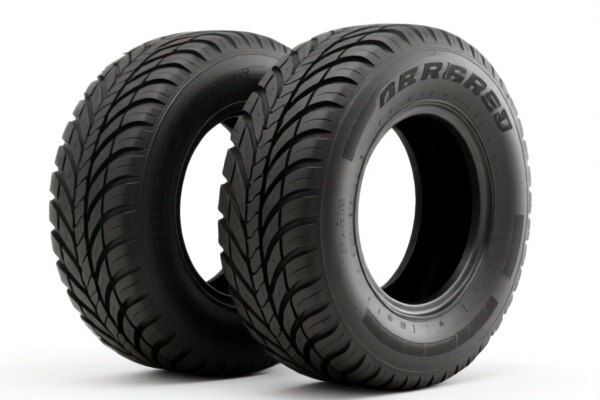
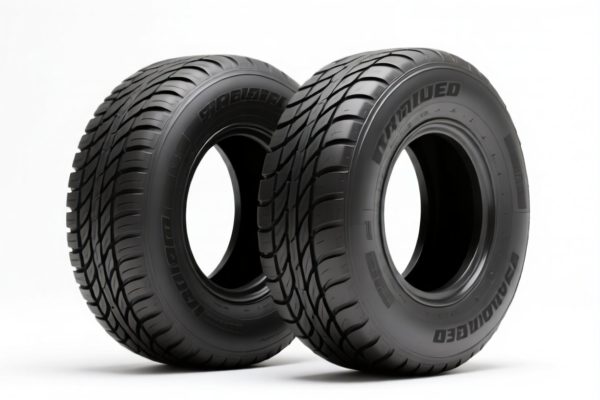
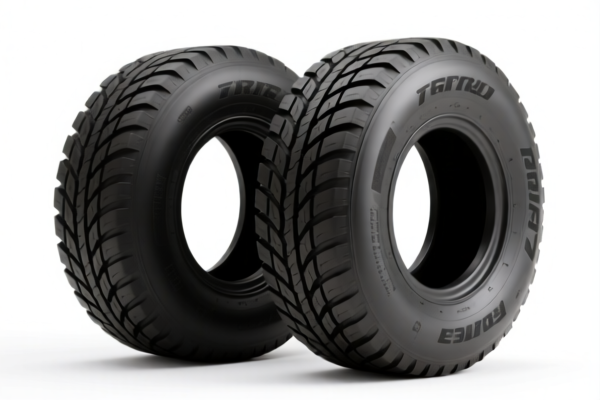
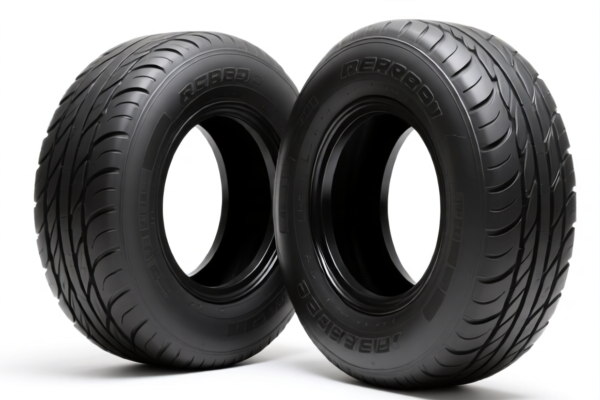
AI Analysis
✈️ Retreaded Rubber Products for Aircraft Tires (飞机用翻新轮胎)
🌐 HS Code Reference & Customs Clearance Guide | 2026 Latest Tariff Analysis | Professional Compliance Strategy
📌 I. Product Definition & Classification: What Exactly Are "Retreaded Aircraft Tires"?
Aircraft tires are critical safety components subject to stringent regulatory standards. In international trade, "Retreaded" refers to used tires that have undergone a specific industrial process: the worn tread is removed, and a new tread is vulcanized onto the original casing (if structurally sound).
- Key Distinction: These are NOT brand new tires (which fall under HS 4011.10). They are used casings processed for reuse.
- Material: Rubber-based.
- Application: Strictly for Aircraft (Aviation).
⚠️ Critical Classification Point:
- If the tire is new, it goes to 4011.10.
- If the tire is retreaded (re-manufactured), it falls under 4011.30 or 4012.13 depending on the specific sub-heading logic applied by customs authorities (often distinguishing between "tires for aircraft" and "other pneumatic tires for aircraft" or "retreaded vs. used").
- All items in the provided data are confirmed as RETREADED, triggering high tariff rates due to trade measures.
📦 II. HS Code Classification Details (2026 Latest Tariff Authority Match)
Based on the provided data, there are 4 specific HS Codes recommended for Retreaded Rubber Products for Aircraft Tires. All share the same tax structure.
| HS Code | Product Description | Summary/Logic |
|---|---|---|
4011.30.00.50 |
Retreaded pneumatic tires, of a kind used on aircraft | Inferred: Based on aircraft use and rubber material, this code captures tires for aviation. |
4012.13.00.50 |
Retreaded pneumatic tires, of a kind used on aircraft | Explicit Match: Directly matches "Aviation use" AND "Retreaded tire" classification. |
4011.30.00.10 |
Pneumatic tires, of a kind used on aircraft | Corresponding: Corresponds to pneumatic tires for aviation; retreaded versions are often classified here in specific trade contexts. |
4012.13.00.10 |
Pneumatic tires, of a kind used on aircraft | Match: Explicitly matches "Aviation pneumatic tires" and "Retreaded/Used" category. |
🔍 Why these 4 codes?
Customs authorities may interpret "Retreaded" under Chapter 40 (Rubber) either as a sub-category of new tires (4011) if the structure remains similar, or explicitly under Retreaded/Used tires (4012). The data provides both pathways. All result in the same tax burden.
💰 III. 2026 Latest Tariff Rate Breakdown (Including Surtaxes)
✅ Applicable Country: United States (US)
✅ Origin: China (CN)
✅ Effective Date: From November 10, 2025 (and subsequent imports)
🎯 Universal Tax Structure for All 4 HS Codes
| Item | Content |
|---|---|
| Basic MFN Tariff | 0.0% (Most Favored Nation rate for rubber tires) |
| Section 301 Surcharge (USITC) | +25.0% (Added tariff on Chinese goods) |
| Section 122 Tariff (IEEPA) | +10.0% (Additional tariff on Chinese goods under international emergency powers) |
| Total Effective Tax Rate | 35.0% |
| Tax Calculation Basis | CIF Value (Cost + Insurance + Freight) × 35% |
| De Minimis Exemption | ❌ NOT APPLICABLE (High value, non-consumer goods; strict enforcement) |
| Legal Basis Path | USITC:4011.30/4012.13 → Footnote:301_Section → IEEPA:122_Clause |
📌 Explanation:
- "0% Basic": Rubber tires generally have low base tariffs.
- "+25% Section 301": The standard additional tariff on Chinese manufactured goods.
- "+10% Section 122": A specific additional levy targeting Chinese imports under international economic emergency powers.
- Total 35%: This is a very high effective tax rate for rubber products. Importers must factor this into landed cost calculations immediately.
🛠️ IV. Customs Clearance Practical Advice (Battle-Tested Pitfall Guide)
✅ 1. Documentation Checklist (Mandatory)
| Document | Required? | Explanation |
|---|---|---|
| ✅ Commercial Invoice | ✔️ | Must clearly state "Retreaded Aircraft Tire" and HS Code. |
| ✅ Packing List | ✔️ | Itemize quantity, weight, and dimensions. |
| ✅ Certificate of Origin | ✔️ | Proof of Chinese origin triggers the 35% tax. |
| ✅ Technical Specification Sheet | ✔️ | Must include: Diameter, Ply Rating, Load Index, and "Retreaded" status. |
| ✅ Manufacturer's Declaration | ✔️ | Confirming the tire casing was inspected and approved for retreading. |
| ✅ FAA/EASA Approval Data | ✔️ | (If applicable) Proof that the retread meets aviation safety standards. |
⚠️ Critical Note:
Misdeclaring a retreaded tire as a "New Tire" (HS 4011.10) is smuggling/fraud. Penalties include seizure, fines, and blacklisting. Always disclose "Retreaded" status.
✅ 2. Declaration Strategy (Key Rules)
| Situation | Correct Declaration | Wrong Practice |
|---|---|---|
| Retreaded Tire | Use 4012.13.00.50 or 4011.30.00.50 | Declare as "New Tire" → Fraud Risk |
| Mixed Shipment | List retreaded tires separately from new tires | Mixed HS Codes in one line → Customs Delay |
| Used Casings (Not Retreaded) | May fall under different waste/recycling codes | Do NOT declare as "Tires" → Wrong Classification |
🔥 Pro Tip:
Use the exact phrase "Retreaded Pneumatic Tire, Aircraft Type" in the description. Avoid vague terms like "Rubber Part" or "Auto Tire".
✅ 3. Special Cases & Risk Mitigation
| Scenario | Handling Advice |
|---|---|
| OEM Retreading Service | If you are the manufacturer of the retread, provide proof of process. |
| Import from China | Expect 35% tax. Consider sourcing retreads from non-China origins (e.g., US, EU) for lower tariffs. |
| Aviation Safety Compliance | Ensure tires meet FAA PMA (Parts Manufacturer Approval) or equivalent. Customs may check for safety compliance. |
| De Minimis Loophole? | ❌ Do not attempt. Aircraft parts are high-value and strictly monitored. No $800 exemption. |
🌍 V. Global Market Comparison (2026)
| Country/Region | Recommended HS Code | Tariff (China Origin) | Certification | Notes |
|---|---|---|---|---|
| 🇺🇸 USA | 4012.13.00.50 |
35% (0% + 25% + 10%) | FAA/EASA | Highest tax burden. Strict enforcement. |
| 🇨🇳 China | 4012.13.00.50 |
5%~10% | CCAR | Low import tax. Major retreading hub. |
| 🇪🇺 EU | 4012.13.00.50 |
0%~4% | EASA ETSO | No Section 301/122 equivalent. Much cheaper. |
| 🇦🇺 Australia | 4012.13.00.50 |
5% | CAA | Moderate tax. |
| 🇯🇵 Japan | 4012.13.00.50 |
0%~5% | JAA | Low tax. |
📌 Conclusion:
- USA is the most expensive market for Chinese retreaded aircraft tires due to Section 301 + Section 122.
- EU, Japan, Australia offer significantly lower tariff burdens.
- Strategic Recommendation: If your customer is in the US, consider sourcing retreaded tires from non-China origins (e.g., Europe or local US facilities) to avoid the 35% hit.
📌 VI. Common Errors & Pitfalls (Lessons Learned)
❌ Error 1: Declaring "Retreaded" tires as "New" (4011.10)
👉 Consequence: Fraud investigation, seizure of goods, 3x penalty + 35% back-tax.
❌ Error 2: Using generic description "Rubber Tire"
👉 Consequence: Customs flagging for review → Delay of 2-4 weeks + storage fees.
❌ Error 3: Ignoring Section 122 tariff
👉 Consequence: Underpayment of duties → Audit and fines upon entry summary review.
❌ Error 4: Not proving "Retreaded" status
👉 Consequence: Customs may classify as "Used Rubber Waste" (4014.90) which has different, often stricter, environmental controls.
✅ Correct Approach:
"AIRCRAFT TIRE, RETREADED, PNEUMATIC, RUBBER, MODEL XYZ, PMA APPLICABLE, HS: 4012.13.00.50, ORIGIN: CN, TAX: 35%"
🎯 VII. Conclusion: Precision Classification Saves Millions!
🎯 Remember the Golden Rules:
🔹 "Retreaded ≠ New. Always Declare 'Retreaded'."
🔹 "China Origin = 35% Tax in USA. Plan accordingly!"
🔹 "Use HS 4012.13.00.50 for explicit match. Avoid ambiguity."
📌 Pro Tip:
If you are importing large volumes, consider Advance Rulings from US Customs and Border Protection (CBP) to lock in the classification and avoid retroactive penalties.
Also, explore FTA (Free Trade Agreements) if sourcing from non-China countries to reduce tariffs to 0%.
📣 Immediate Action:
📞 Consult a Licensed Customs Broker + Provide Technical Specs + Verify Origin
🚀 Optimize your supply chain to avoid the 35% US tariff!
✨ Professional Clearance, Starting with Accurate Classification!
💼 Every Percent Matters in Landed Cost!
Customer Reviews
About HS Code Classification
The Harmonized System (HS) is an internationally standardized nomenclature developed by the World Customs Organization (WCO) to classify traded products. Over 200 countries use the HS system as the basis for customs tariffs, trade statistics, and import/export regulations.
Each HS code follows a hierarchical structure:
- Chapter (2 digits) — Broad category of goods (e.g., Chapter 84: Machinery and Mechanical Appliances)
- Heading (4 digits) — More specific grouping within the chapter
- Subheading (6 digits) — Internationally standardized breakdown, used by all WCO member countries
- National subdivisions (8-10 digits) — Country-specific extensions for further classification, such as US HTSUS 10-digit codes
Correct HS code classification is essential for smooth customs clearance, accurate duty payment, and compliance with trade regulations. Misclassification can lead to customs delays, overpayment of duties, or penalties.
When importing from CN to US, the applicable tariff rates may include:
- Most-Favored-Nation (MFN) rate — The standard duty rate applied to WTO members
- General rate — Applied to countries without trade agreements
- Trade remedy duties — Additional tariffs such as Section 301 (anti-dumping), Section 232 (national security), or countervailing duties
The information provided on this page is for reference purposes only. For official classification, please consult with your local customs authority or a licensed customs broker.