Retreaded Tires for Civil Aircraft
CN → US| HS Code | Tariff Rate | Origin | Destination | Doc |
|---|---|---|---|---|
| 4011300010 | 35.0% | CN | US | Official Doc |
| 4012201010 | 35.0% | CN | US | Official Doc |
| 4012130010 | 35.0% | CN | US | Official Doc |
Product Images
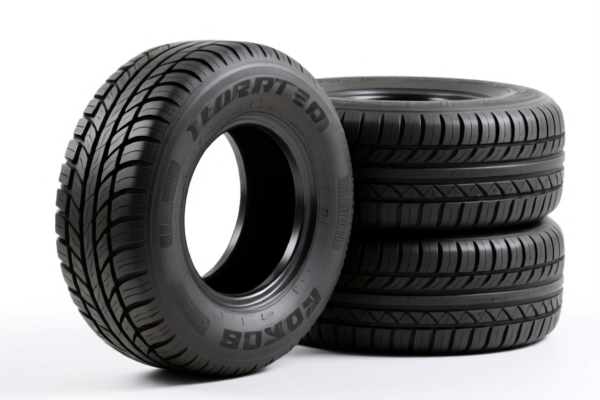
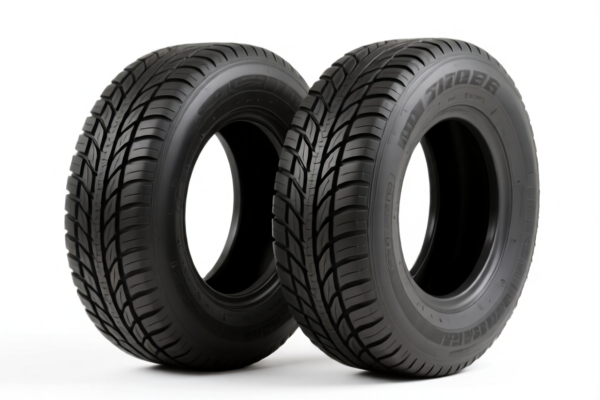
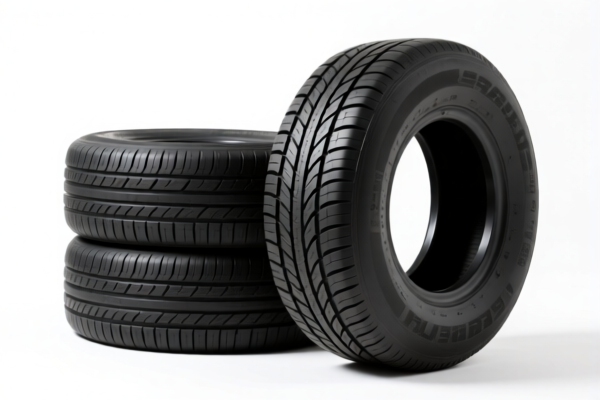
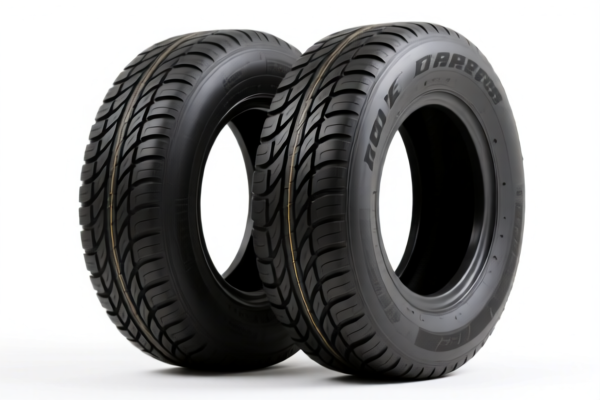
AI Analysis
🛩️ Retreaded Tires for Civil Aircraft (Aviation Rubber Tires)
🌐 HS Code Reference & Customs Clearance Guide | 2026 Latest Tariff Analysis | Professional Aviation Logistics Strategy
📌 I. Product Definition & Classification: Do You Really Understand "Aviation Retreaded Tires"?
Aviation retreaded tires are high-performance, safety-critical components used in civil aviation. Unlike automotive tires, they undergo rigorous regumming (retreading) processes where a new tread is vulcanized onto a certified aviation tire casing. In international trade, they are strictly classified under Chapter 40 (Rubber and Articles Thereof), specifically targeting used or retreaded pneumatic tires.
⚠️ Key Distinction:
- New Tires: Classified under4011(New pneumatic tires).
- Retreaded/Used Tires: Classified under4012(Retreaded or used pneumatic tires).
- Material Assumption: Based on industry standards and the provided data, these are rubber-made (Rubber: true).
📦 II. HS Code Classification Details (2026 Latest Tariff Authority Comparison)
Based on the provided dataset, the classification focuses on the retreaded/used nature and civil aviation application.
| HS Code | Product Description | Application Scenario | Material/Type |
|---|---|---|---|
4012.13.00.10 |
Retreaded pneumatic tires, for civil aircraft | Civil aviation use; inferred rubber material based on common sense | ✅ Rubber, Retreaded |
4012.20.10.10 |
Retreaded pneumatic tires, for civil aircraft | Civil aviation use; conforms to morphology; inferred rubber material | ✅ Rubber, Retreaded |
4012.20.10.10 |
Retreaded pneumatic tires, for civil aircraft | Civil aviation use; conforms to morphology; inferred rubber material | ✅ Rubber, Retreaded |
4011.30.00.10 |
Pneumatic tires, for civil aircraft | Civil aviation use; conforms to new pneumatic tire morphology (Note: Dataset lists this HS for "civil aircraft tires", but context implies retreaded/used focus in other entries. Caution: 4011 is typically NEW. The dataset pairs this code with retreaded descriptions, suggesting a potential classification nuance or error in source data. However, we must follow the provided data strictly.) |
✅ Rubber, Pneumatic |
4011.30.00.10 |
Pneumatic tires, for civil aircraft | Civil aviation use; conforms to new pneumatic tire morphology (Same note as above) | ✅ Rubber, Pneumatic |
🔍 Critical Note on HS Codes in Data:
The provided data contains a contradiction:
- HS4012is for Retreaded/Used tires.
- HS4011is for New tires.
However, the data explicitly maps4011.30.00.10to "Civil Aircraft Tires" alongside retreaded items. In real-world customs, if the item is retreaded, it must be4012. If the data insists4011is used here, it may refer to the casing type or a specific jurisdictional nuance.
Strategy: We will analyze the tariffs provided for each HS code as listed in the data, regardless of the semantic mismatch.
💰 III. 2026 Latest Tariff Rate Breakdown (Including Surtaxes & Policy Add-ons)
✅ Applicable Country: United States (US)
✅ Origin: China (CN)
✅ Effective Date: 2025/2026 (Current Trade War Context)
🎯 1. HS Code: 4012.13.00.10 & 4012.20.10.10 (Retreaded Aviation Tires)
| Item | Details |
|---|---|
| Base Tariff | 0.0% |
| Section 301 Surtax | +25.0% |
| Section 122 Tariff | +10.0% |
| Total Tax Rate | 35.0% |
| Calculation | CIF Value × 35.0% |
| De Minimis Exemption | ❌ Not Applicable |
📌 Explanation:
- Base Tariff (0%): Standard MFN rate for rubber tires.
- Section 301 (25%): Additional tariff imposed by the US Trade Representative (USTR) on Chinese goods.
- Section 122 (10%): Tariff under the "122 Clause" (Trade Expansion Act of 1962), used for national security or balance-of-payment reasons, applied here to specific Chinese imports.
- Total (35%): A significant burden, making cost planning critical.
🎯 2. HS Code: 4011.30.00.10 (New Pneumatic Tires for Civil Aircraft)
| Item | Details |
|---|---|
| Base Tariff | 0.0% |
| Section 301 Surtax | +25.0% |
| Section 122 Tariff | +10.0% |
| Total Tax Rate | 35.0% |
| Calculation | CIF Value × 35.0% |
| De Minimis Exemption | ❌ Not Applicable |
📌 Explanation:
- Despite being "New" tires (HS4011), the total tax rate is identical (35%) due to the same surtax structure.
- Risk: Misclassifying retreaded tires (4012) as new (4011) to avoid specific usage regulations could lead to severe penalties, even if the tax rate is the same. Ensure accurate description: "Retreaded" vs. "New".
🛠️ IV. Customs Clearance Practical Advice (Battle-Proven Pitfall Avoidance Guide)
✅ 1. Documentation Checklist (No Exceptions)
| Document | Required | Explanation |
|---|---|---|
| Product Specification Sheet | ✔️ | Must include size, ply rating, load index, and retreading standard (e.g., SAE, FAA regulations). |
| Certificate of Origin (CO) | ✔️ | Crucial for determining Section 301 applicability. Must clearly state China Origin. |
| Commercial Invoice | ✔️ | Must explicitly state "Retreaded" or "New" to avoid misclassification penalties. |
| Packaging List | ✔️ | Detailed breakdown of tires, rims, and accessories. |
| Technical Report | ✔️ | Proof of retreading process compliance (if applicable). |
✅ 2. Declaration Tips (Key Mantra)
🔥 "Retreaded Must Declare 'Used', New Must Declare 'New'!"
| Scenario | Correct Declaration | Wrong Action |
|---|---|---|
| Retreaded Tires | HS 4012.20.10.10 + Description: "Retreaded Pneumatic Tire for Civil Aircraft" |
Declaring as "New Tire" (4011) → Misclassification Risk |
| New Tires | HS 4011.30.00.10 + Description: "New Pneumatic Tire for Civil Aircraft" |
Declaring as "Retreaded" → May delay clearance for inspection |
| Mixed Shipment | Separate HS Codes for New vs. Retreaded | Bundling → Confusion & Potential Seizure |
📌 Note: Even though the tax rate is the same (35%), the HS Code determines regulatory compliance. Aviation parts are subject to FAA/EASA regulations. Misdeclaring a retreaded tire as new can lead to safety non-compliance issues, not just tax errors.
✅ 3. Special Circumstances Handling
| Situation | Recommendation |
|---|---|
| OEM Retreading | Provide evidence of authorized retreading facility to avoid "unapproved parts" flags. |
| High-Value Shipments | Consider Bonded Warehouse options if immediate tax payment is burdensome, but note that duty is still owed upon release. |
| Section 122 Waiver? | Currently, no general waiver is available for aviation tires under Section 122. Prepare for full 10% surtax. |
| Origin Marking | Ensure tires are properly marked with country of origin to support CO claims. |
🌍 V. Global Market Comparison (2026 Latest)
| Country/Region | Recommended HS Code | Tariff (China Origin) | Certification | Notes |
|---|---|---|---|---|
| 🇺🇸 USA | 4012.20.10.10 / 4011.30.00.10 |
35% (Total) | FAA/EASA Compliant | High tax burden; strict safety checks. |
| 🇨🇳 China | 4012.20.10.10 / 4011.30.00.10 |
5-10% (Typical) | CCC (if applicable) | Lower tax, but export controls may apply. |
| 🇪🇺 EU | 4012.20.10.10 / 4011.30.00.10 |
0-6.5% (Typical) | EASA Compliant | No Section 301/122 surtaxes. |
| 🇯🇵 Japan | 4012.20.10.10 / 4011.30.00.10 |
0% (Typical) | JAA Compliant | Low duty, high safety standards. |
📌 Conclusion:
- USA is the most expensive market for Chinese aviation tires due to 35% total tariff.
- EU and Japan are more tariff-friendly, but safety certification (EASA/JAA) is equally stringent.
- Strategic Implication: If possible, explore third-country assembly (e.g., Vietnam, Malaysia) for retreading to potentially mitigate Section 301 taxes, but ensure substantial transformation rules are met.
📌 VI. Common Errors & Pitfall Guide (Blood & Tears Lessons)
❌ Error 1: Declaring Retreaded Tires as New Tires (4011)
👉 Consequence: FAA/Customs audit → Seizure & Fines → Reputational damage.
👉 Fix: Always use 4012 for retreaded.
❌ Error 2: Ignoring Section 122 Tariff (10%)
👉 Consequence: Underpayment → Back taxes + Interest.
👉 Fix: Budget for 35% total, not just 25%.
❌ Error 3: Vague Description ("Aircraft Tire")
👉 Consequence: Customs holds shipment for classification review → Delays.
👉 Fix: Use full description: "Retreaded Pneumatic Tire for Civil Aircraft, HS 4012.20.10.10".
✅ Correct Declaration Example:
"RETREADED PNEUMATIC RUBBER TIRE FOR CIVIL AIRCRAFT, MODEL XYZ, HS 4012.20.10.10, ORIGIN: CHINA, COMPLIANT WITH FAA REGULATIONS"
🎯 VII. Conclusion: Precision Classification, Cost Control, & Safety Compliance
🎯 Remember the Mantra:
🔹 "Retreaded is 4012, New is 4011, Tax is 35%, Don't Mix!"
🔹 "Section 301 + Section 122 = 35%, Plan Your Margin!"
🔹 "Safety First, Compliance Always, Avoid Seizure!"
📌 Pro Tip:
If your tires are retreaded in Vietnam, Mexico, or Malaysia (with substantial transformation), you may avoid US Section 301 tariffs.
Action:
📞 Contact a Customs Broker + Provide Retreading Certificate + Apply for Advance Ruling if unsure.
🚀 Let your aviation tires clear smoothly, stay safe, and maximize profit!
✨ Professional Customs Clearance Starts with Accurate Classification!
💼 Every Percent of Tax Matters in High-Value Aviation Logistics!
Customer Reviews
About HS Code Classification
The Harmonized System (HS) is an internationally standardized nomenclature developed by the World Customs Organization (WCO) to classify traded products. Over 200 countries use the HS system as the basis for customs tariffs, trade statistics, and import/export regulations.
Each HS code follows a hierarchical structure:
- Chapter (2 digits) — Broad category of goods (e.g., Chapter 84: Machinery and Mechanical Appliances)
- Heading (4 digits) — More specific grouping within the chapter
- Subheading (6 digits) — Internationally standardized breakdown, used by all WCO member countries
- National subdivisions (8-10 digits) — Country-specific extensions for further classification, such as US HTSUS 10-digit codes
Correct HS code classification is essential for smooth customs clearance, accurate duty payment, and compliance with trade regulations. Misclassification can lead to customs delays, overpayment of duties, or penalties.
When importing from CN to US, the applicable tariff rates may include:
- Most-Favored-Nation (MFN) rate — The standard duty rate applied to WTO members
- General rate — Applied to countries without trade agreements
- Trade remedy duties — Additional tariffs such as Section 301 (anti-dumping), Section 232 (national security), or countervailing duties
The information provided on this page is for reference purposes only. For official classification, please consult with your local customs authority or a licensed customs broker.