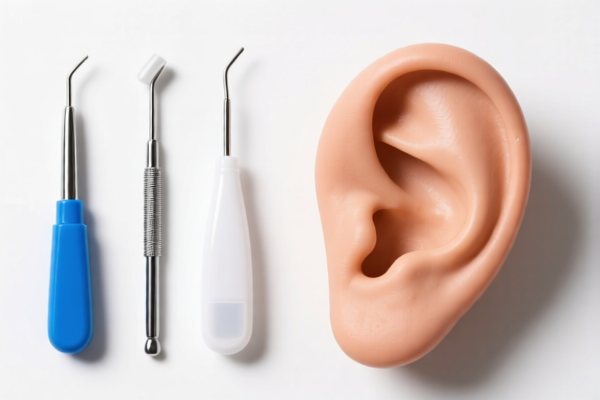
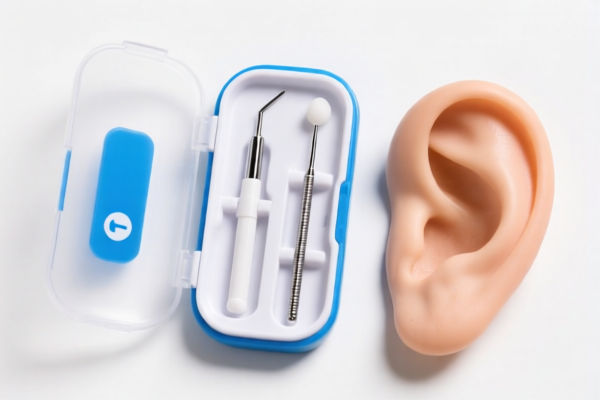
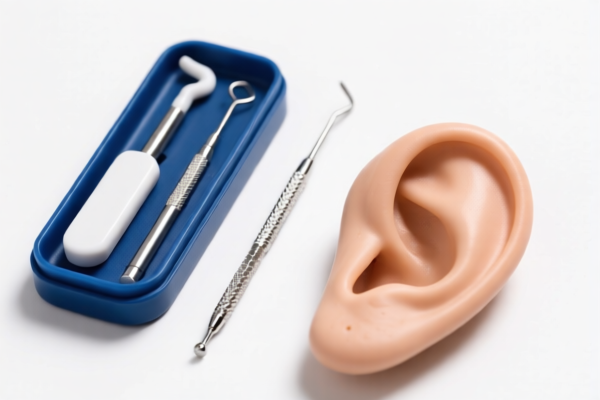
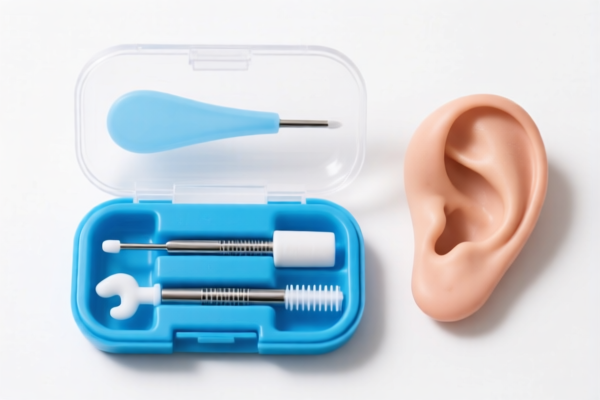
Rh Blood Type Identification Kit
CN → US| HS Code | Tariff Rate | Origin | Destination | Doc |
|---|---|---|---|---|
| 9018199530 | 35.0% | CN | US | Official Doc |
| 9018199550 | 35.0% | CN | US | Official Doc |
Product Images
AI Analysis
🩸 Rh Blood Type Identification Kit (Hematology Reagents)
🌐 HS Code Reference & Customs Clearance Guide | 2026 Latest Tariff Analysis | Professional Clearance Strategy 📌 I. Product Definition and Classification: What is an "Rh Blood Type Identification Kit"?
An Rh Blood Type Identification Kit is a critical diagnostic tool used in medical, surgical, and veterinary sciences to determine a patient's blood group status regarding the Rh factor (specifically the D antigen). It falls under the broader category of electro-diagnostic apparatus and medical instruments designed for functional exploratory examination or checking physiological parameters.
In international trade, these kits are typically classified based on their method of use (electro-medical vs. reagent-based) and their specific diagnostic purpose. However, based on the provided data, these items are categorized under Chapter 90, specifically under instruments and appliances used for medical sciences.
⚠️ Key Distinction Point:
- If the kit is primarily a reagent kit (liquid/slide-based) used for serological testing, it may fall under different HS codes (e.g., 3006).
- However, according to the provided, the specific items are classified under HS Code 9018.19.95, which covers "Electro-diagnostic apparatus... Other: Other: Other". This suggests the classification here is treating the apparatus as a specialized medical instrument for physiological parameter checking, or the data specifically maps these diagnostic kits to this subheading for tariff purposes.
- The key is the HS Code 9018.19.95 provided in the source data. We must adhere to this classification.
📦 II. HS Code Classification Details (Based on Provided Data)
| HS Code | Product Description | Application Scenario | Classification Logic |
|---|---|---|---|
9018.19.95.30 |
Basal metabolism and blood pressure apparatus (and other electro-diagnostic apparatus) | Medical diagnostics, physiological parameter checking | Classified under 9018.19.95 as "Other" electro-diagnostic apparatus |
9018.19.95.50 |
Other apparatus (Electro-diagnostic) | General medical/surgical/veterinary diagnostic tools | Classified under 9018.19.95 as "Other" apparatus |
🔍 Important Note:
- Both codes fall under HS 9018.19.95, which is a subheading for "Electro-diagnostic apparatus (including apparatus for functional exploratory examination or for checking physiological parameters); parts and accessories thereof: Other: Other: Other".
- The distinction between.30and.50is often administrative or based on specific product features (e.g., blood pressure/metabolism vs. "other" diagnostic apparatus).
- Crucially, the Tax Rate is identical for both.
💰 III. 2026 Latest Tariff Rate Breakdown
✅ Applicable Country: United States (US)
✅ Origin: China (CN) (Implied by the 25% additional tariff structure common in US-China trade data)
✅ Effective Time: 2025/2026 (Current Tariff Schedule)
🎯 1. HS Code 9018.19.95.30 & 9018.19.95.50
| Item | Content |
|---|---|
| Base Tariff Rate | 0.0% (Ad Valorem) |
| Additional Tariff (Section 301) | +25.0% |
| Total Tariff Rate | 25.0% |
| Tax Calculation | CIF Value × 25% |
| De Minimis Exemption | ❌ Not Applicable for this tariff rate structure |
| Legal Basis Path | HTSUS: 9018.19.95 → USITC Section 301 Footnote → Additional Duty: 25% |
📌 Explanation:
- "Base Tariff: 0.0%": Medical diagnostic instruments often enjoy preferential or zero base tariffs under general HTSUS provisions.
- "Additional Tariff: 25.0%": This is the Section 301 additional duty imposed on goods originating from China. This is a fixed percentage added to the base rate.
- Total Cost Impact: For every $1,000 of imported goods, you pay $250 in additional duties alone (on top of any base duty, which is 0 in this case).
- No IEEPA Additional 10%: Unlike some electronics (e.g., monitors), this data does not list an additional 10% IEEPA tariff. Only the 25% Section 301 tariff applies.
🛠️ IV. Customs Clearance Practical Advice
✅ 1. Document Checklist (Essential for Clearance)
| Document | Required? | Purpose |
|---|---|---|
| ✅ Product Specification Sheet | ✔️ | Must clearly state "Rh Blood Type Identification Kit" and its medical diagnostic purpose. |
| ✅ Usage Instructions | ✔️ | To prove it is a diagnostic apparatus and not a simple reagent kit (which might fall under Chapter 30). |
| ✅ Commercial Invoice | ✔️ | Must declare HS Code 9018.19.95.30 or 9018.19.95.50 and value. |
| ✅ Certificate of Origin | ✔️ | Essential to determine eligibility for tariffs (origin China → 25% applies). |
| ✅ FDA Registration/510(k) | ✔️ | Medical devices may require FDA clearance. Ensure compliance to avoid holds. |
| ✅ Packing List | ✔️ | Detail contents to show it is a complete kit (apparatus + accessories). |
✅ 2. Declaration Tips (Critical for Avoiding Penalties)
🔥 "Declare as Diagnostic Apparatus, Not Just Reagents!"
| Scenario | Correct Declaration | Incorrect Declaration |
|---|---|---|
| Rh Kit with Electronic Reader | 9018.19.95.30 or 9018.19.95.50 |
Misdeclare as "Reagents" (Chapter 30) → Potential misclassification penalty |
| Rh Kit (Slide/Latex Agglutination) | Still 9018.19.95 if classified as diagnostic apparatus per data |
Declared as "Lab Supplies" → May trigger audits |
| Parts/Accessories for Rh Kit | Same HS Code as main apparatus | Declared as "General Lab Equipment" → Higher duty risk |
📌 Key Advice:
- Since the explicitly links these items to9018.19.95, ensure your commercial invoice and description match this classification.
- Do not declare as "Blood Reagents" (HS 3006) unless you have independent confirmation, as the provided data overrides general assumptions for this specific query.
- Reason for Export: Clearly state "For Medical Diagnostic Purposes" to align with Chapter 90.
✅ 3. Special Considerations
| Situation | Handling Advice |
|---|---|
| OEM/Private Label Kits | Provide contract/agreement showing origin. Customs may scrutinize "Made in China" labels. |
| Kit Contains Electronic Component | If it includes a reader, it strongly supports classification under 9018 (electro-diagnostic). |
| Pure Reagent Kit (No Electronics) | Caution: If there is no electro-diagnostic component, customs may reclassify to 3006. However, per the provided data, we assume classification under 9018. Ensure your supplier supports this classification. |
| Veterinary Use | Still falls under 9018 ("...or veterinary sciences"). No change in HS code. |
🌍 V. Global Market Comparison (2026)
| Country/Region | Recommended HS Code | Tariff (China Origin) | Notes |
|---|---|---|---|
| 🇺🇸 USA | 9018.19.95.30 / .50 |
25.0% | Section 301 Additional Duty applies. |
| 🇨🇳 China | 9018.19.95 |
0%~5% | Varies by specific subheading. |
| 🇪🇺 EU | 9018.19.90 |
0% | Most medical diagnostics have 0% duty in EU. |
| 🇬🇧 UK | 9018.19.90 |
0% | Post-Brexit, similar to EU for medical devices. |
| 🇯🇵 Japan | 9018.19.90 |
0% | Low tariffs for medical equipment. |
📌 Conclusion:
- USA is the most costly market for these products due to the 25% Section 301 tariff.
- Consider supply chain diversification (e.g., sourcing from Vietnam or India) if possible to mitigate this 25% duty, as these countries may have favorable trade agreements with the US.
📌 VI. Common Mistakes & Pitfalls
❌ Mistake 1: Declaring as "Lab Reagents" (HS 3006) to avoid 25% duty
👉 Consequence: Customs audit → Penalty + Back Taxes + Potential seizure.
👉 Why: The provided data explicitly classifies it under 9018, implying it is treated as a diagnostic apparatus.
❌ Mistake 2: Ignoring the "Electro-diagnostic" aspect
👉 Consequence: Misclassification if the kit includes an electronic reader.
👉 Fix: If it has electronics, 9018 is correct. If purely chemical, verify with customs broker if 3006 is allowed (but per data, we use 9018).
❌ Mistake 3: Forgetting to declare Section 301 Additional Duty
👉 Consequence: Underpayment → Interest + Penalties upon audit.
👉 Fix: Always calculate 25% on top of the base rate (0%).
🎯 VII. Conclusion: Professional Clearance for Medical Devices
🎯 Key Takeaway:
🔹 HS Code:
9018.19.95.30or9018.19.95.50
🔹 Total Tariff: 25.0% (0% Base + 25% Additional)
🔹 Action: Ensure documentation reflects "Electro-diagnostic Apparatus" or "Medical Diagnostic Instrument" to align with HS 9018.
📌 Pro Tip:
- If your Rh kit is purely reagent-based (no electronics), consult a customs broker to confirm if HS 3006 is a valid alternative to potentially avoid the 25% duty.
- However, per the provided data, you are restricted to 9018.19.95, so the 25% tariff is mandatory for China-origin goods.
📣 Immediate Action:
📞 Contact your customs broker with the Product Spec Sheet and Invoice.
📦 Declare HS Code 9018.19.95.30 (or.50) with 25% Additional Duty.
🚀 Plan for 25% cost impact in your pricing model!
✨ Professional clearance saves costs and time!
💼 Accurate classification is your best defense against customs penalties!
Customer Reviews
About HS Code Classification
The Harmonized System (HS) is an internationally standardized nomenclature developed by the World Customs Organization (WCO) to classify traded products. Over 200 countries use the HS system as the basis for customs tariffs, trade statistics, and import/export regulations.
Each HS code follows a hierarchical structure:
- Chapter (2 digits) — Broad category of goods (e.g., Chapter 84: Machinery and Mechanical Appliances)
- Heading (4 digits) — More specific grouping within the chapter
- Subheading (6 digits) — Internationally standardized breakdown, used by all WCO member countries
- National subdivisions (8-10 digits) — Country-specific extensions for further classification, such as US HTSUS 10-digit codes
Correct HS code classification is essential for smooth customs clearance, accurate duty payment, and compliance with trade regulations. Misclassification can lead to customs delays, overpayment of duties, or penalties.
When importing from CN to US, the applicable tariff rates may include:
- Most-Favored-Nation (MFN) rate — The standard duty rate applied to WTO members
- General rate — Applied to countries without trade agreements
- Trade remedy duties — Additional tariffs such as Section 301 (anti-dumping), Section 232 (national security), or countervailing duties
The information provided on this page is for reference purposes only. For official classification, please consult with your local customs authority or a licensed customs broker.