Rhinestone Strip
CN → US| HS Code | Tariff Rate | Origin | Destination | Doc |
|---|---|---|---|---|
| 7117191500 | 25.5% | CN | US | Official Doc |
| 7117190500 | 10.0% | CN | US | Official Doc |
| 3926903500 | 24.0% | CN | US | Official Doc |
| 3926904000 | 12.8% | CN | US | Official Doc |
Product Images
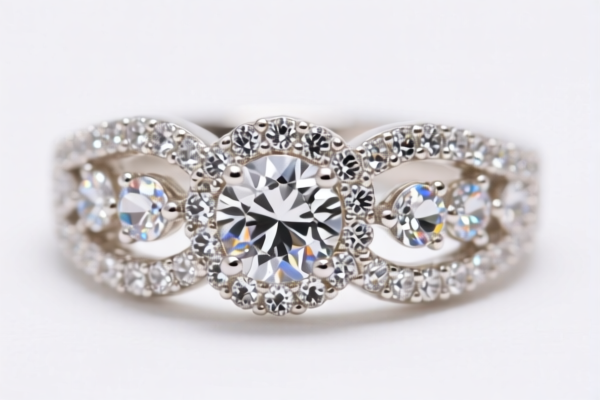


AI Analysis
💎 Rhinestone Strip (Imitation Jewelry / Plastic Beads)
🌐 HS Code Reference & Customs Clearance Guide | 2026 Latest Tariff Analysis | Professional Clearance Strategy
📌 I. Product Definition & Classification: What is a "Rhinestone Strip"?
In international trade, a "Rhinestone Strip" is ambiguous. It can refer to two completely different categories depending on its material composition and construction:
- Metal Chain/Strip Jewelry: If the strip is made of base metal (e.g., zinc alloy, copper) shaped into a rope, curb, or cable chain, often set with imitation stones, it falls under Imitation Jewelry.
- Plastic/Resin Bead Strip: If the strip consists of plastic beads, bugles, or spangles strung or assembled, it falls under Articles of Plastics.
⚠️ Critical Distinction:
- If it is a metal chain suitable for making jewelry → Go to Section 71 (Imitation Jewelry).
- If it is plastic beads/spangles (not strung for jewelry use in the final product) → Go to Section 39 (Plastics).
📦 II. HS Code Classification Details (Based on Provided Data)
Based on the <DATA> provided, here are the exact HS Codes, descriptions, and tax rates for Rhinestone Strips:
| HS Code | Product Description | Material/Type | Tax Rate |
|---|---|---|---|
| 7117.19.15.00 | Imitation Jewelry: Base metal, plated/unplated. Rope, curb, cable, chain, and similar articles produced in continuous lengths. Valued not over 33 cents per meter. | Base Metal (e.g., Zinc Alloy, Iron) with imitation stones | 0.0% (Base: 0%, Additional: 0%) |
| 7117.19.05.00 | Imitation Jewelry: Base metal. Toy jewelry valued not over 8 cents per piece. | Base Metal (Toy category) | 0.0% (Base: 0%, Additional: 0%) |
| 3926.90.35.00 | Other Articles of Plastics: Beads, bugles, and spangles, not strung (except temporarily) and not set. | Plastic (Beads/Spangles not assembled into jewelry) | 14.0% (Base: 6.5%, Additional: 7.5%) |
| 3926.90.40.00 | Other Articles of Plastics: Imitation gemstones. | Plastic (Loose imitation stones) | 0.0% (Base: 0%, Additional: 0%) |
🔍 Key Insight:
- The biggest risk is misclassifying plastic beads as imitation jewelry.
- 3926.90.35.00 has a 14% tariff due to additional duties.
- 7117.19.15.00 has 0% tariff but requires the item to be a metal chain/strip valued ≤ $0.33/meter.
💰 III. Detailed Tariff Clause Explanation
🎯 1. 7117.19.15.00 – Base Metal Imitation Jewelry Chain/Strip
| Item | Detail |
|---|---|
| Base Tariff | 0.0% |
| Additional Tariff | 0.0% |
| Total Tax | 0.0% |
| Condition | Must be made of base metal, produced in continuous lengths (rope, curb, cable, or similar), and valued not over 33 cents per meter. |
| Applicable To | Metal rhinestone strips/chains used in accessories or jewelry making. |
📌 Why this code?
The description explicitly mentions "Rope, curb, cable, chain and similar articles produced in continuous lengths... whether or not set with imitation pearls or gemstones." This fits metal strips with rhinestones perfectly if they are sold by the meter or as continuous chains.
🎯 2. 7117.19.05.00 – Toy Jewelry
| Item | Detail |
|---|---|
| Base Tariff | 0.0% |
| Additional Tariff | 0.0% |
| Total Tax | 0.0% |
| Condition | Must be classified as "Toy jewelry" and valued not over 8 cents per piece. |
| Applicable To | Cheap, plastic-meshed, or base metal children's jewelry strips. |
📌 Why this code?
If the rhinestone strip is marketed or functionally used as toy jewelry (e.g., for children's crafts or play), it falls here. Valuation is key: ≤ $0.08/piece.
🎯 3. 3926.90.35.00 – Plastic Beads/Spangles (Not Strung)
| Item | Detail |
|---|---|
| Base Tariff | 6.5% |
| Additional Tariff | 7.5% |
| Total Tax | 14.0% |
| Condition | Plastic beads, bugles, spangles, not strung (except temporarily) and not set. |
| Applicable To | Bulk plastic rhinestone beads or strips that are loose or pre-assembled on temporary backing but not intended as finished jewelry articles at entry. |
📌 Why this code?
If the item is made of plastic (not metal) and is considered "articles of other materials" (plastics) rather than jewelry, this code applies. The 14% total tariff is significantly higher than the metal jewelry codes.
🎯 4. 3926.90.40.00 – Plastic Imitation Gemstones
| Item | Detail |
|---|---|
| Base Tariff | 0.0% |
| Additional Tariff | 0.0% |
| Total Tax | 0.0% |
| Condition | Imitation gemstones made of plastic. |
| Applicable To | Loose plastic rhinestones/stones, not assembled into a strip or jewelry. |
📌 Why this code?
If the "strip" is just a collection of plastic stones without any metal or stringing structure, it may be classified as imitation gemstones. However, if it's a strip (implying assembly),3926.90.35.00is more likely if not jewelry.
🛠️ IV. Customs Clearance Recommendations
✅ 1. Material Declaration is Critical
- Metal vs. Plastic: Clearly state the material in the commercial invoice.
- If Metal: Use 7117.19.15.00 (0% tax).
- If Plastic: Use 3926.90.35.00 (14% tax) unless it’s loose stones (3926.90.40.00, 0%).
- Avoid Ambiguity: Do not just write "Rhinestone Strip." Write:
- "Base metal chain strip with imitation rhinestones, valued at $0.20/meter"
- "Plastic bugle beads, not strung, for craft use"
✅ 2. Valuation Matters
- For 7117.19.15.00: Ensure the value is ≤ $0.33 per meter. If valued higher, a different subheading may apply (potentially with different tax implications not listed here).
- For 7117.19.05.00: Ensure the value is ≤ $0.08 per piece if claiming "toy jewelry."
✅ 3. Avoid High Tariffs for Plastic Beads
- If your rhinestone strip is made of plastic and is not jewelry (e.g., raw materials for sewing/crafts), it falls under 3926.90.35.00 with a 14% tariff.
- Strategy: If possible, import as loose imitation gemstones (3926.90.40.00, 0% tax) if they can be separated and are not pre-assembled into a "strip" structure. However, if it's a pre-made strip, customs may still classify it as beads/spangles.
✅ 4. Documentation Checklist
| Document | Requirement |
|---|---|
| Commercial Invoice | Clearly state: Material (Base Metal/Plastic), Form (Chain/Strip/Beads), Value per Meter/Piece |
| Product Photos | Show the strip’s construction: Is it a metal chain? Or plastic beads on a temporary backing? |
| Description | Use precise terms: "Imitation Jewelry Base Metal Chain" or "Plastic Beads for Craft" |
🌍 V. Global Market Comparison (2026)
| Country/Region | Recommended HS Code | Tax Rate | Notes |
|---|---|---|---|
| 🇺🇸 USA | 7117.19.15.00 (Metal) |
0.0% | Must be ≤ $0.33/meter |
| 🇺🇸 USA | 3926.90.35.00 (Plastic) |
14.0% | High tariff for plastic beads |
| 🇨🇳 China | 7117.19.15.00 |
Varies | Check local import duties |
| 🇪🇺 EU | 7117.19.15.00 |
Varies | Generally lower tariffs for jewelry |
📌 Conclusion:
- Metal rhinestone strips are tax-free (0%) under 7117.19.15.00 if valued correctly.
- Plastic rhinestone strips face a 14% tariff under 3926.90.35.00 unless they are loose stones (3926.90.40.00, 0%).
- Misclassification leads to high costs: Declaring plastic beads as metal jewelry can result in 14% additional duties + penalties.
📌 VI. Common Mistakes & Pitfalls
❌ Mistake 1: Declaring plastic rhinestone strips as "Imitation Jewelry" (Metal) to avoid the 14% tariff.
👉 Consequence: Customs will inspect, find plastic material, and assess 14% tax + fines.
❌ Mistake 2: Not specifying the value per meter for metal chains.
👉 Consequence: If valued over $0.33/meter, a different, potentially higher-tariff subheading may apply.
❌ Mistake 3: Calling plastic beads "strips" when they are loose.
👉 Consequence: If they are truly loose, declare as 3926.90.40.00 (0% tax) for savings. If they are pre-assembled into a strip, declare as 3926.90.35.00 (14% tax).
✅ Correct Approach:
"Base metal imitation jewelry chain, with rhinestones, $0.25/meter" →
7117.19.15.00(0%)
"Plastic imitation gemstones, loose, not set" →3926.90.40.00(0%)
"Plastic beads/spangles, not strung" →3926.90.35.00(14%)
🎯 VII. Conclusion: Precise Classification Saves Money
🎯 Key Takeaway:
🔹 Metal Strip ≤ $0.33/m → 7117.19.15.00 (0% Tax)
🔹 Plastic Beads (Not Strung) → 3926.90.35.00 (14% Tax)
🔹 Plastic Loose Stones → 3926.90.40.00 (0% Tax)
📌 Pro Tip:
If you are importing plastic rhinestone strips, consider if they can be disassembled into loose stones to qualify for 3926.90.40.00 (0% tax). If they must be imported as pre-assembled strips, budget for the 14% tariff.
📣 Immediate Action:
📞 Consult your customs broker with material samples and value details.
🚀 Ensure your invoice description matches the HS Code intent to avoid delays and fines.
✨ Accurate classification is the first step to efficient customs clearance!
💼 Save costs by choosing the right HS Code!
Customer Reviews
About HS Code Classification
The Harmonized System (HS) is an internationally standardized nomenclature developed by the World Customs Organization (WCO) to classify traded products. Over 200 countries use the HS system as the basis for customs tariffs, trade statistics, and import/export regulations.
Each HS code follows a hierarchical structure:
- Chapter (2 digits) — Broad category of goods (e.g., Chapter 84: Machinery and Mechanical Appliances)
- Heading (4 digits) — More specific grouping within the chapter
- Subheading (6 digits) — Internationally standardized breakdown, used by all WCO member countries
- National subdivisions (8-10 digits) — Country-specific extensions for further classification, such as US HTSUS 10-digit codes
Correct HS code classification is essential for smooth customs clearance, accurate duty payment, and compliance with trade regulations. Misclassification can lead to customs delays, overpayment of duties, or penalties.
When importing from CN to US, the applicable tariff rates may include:
- Most-Favored-Nation (MFN) rate — The standard duty rate applied to WTO members
- General rate — Applied to countries without trade agreements
- Trade remedy duties — Additional tariffs such as Section 301 (anti-dumping), Section 232 (national security), or countervailing duties
The information provided on this page is for reference purposes only. For official classification, please consult with your local customs authority or a licensed customs broker.