Rhodium Catalyst Support
CN → US| HS Code | Tariff Rate | Origin | Destination | Doc |
|---|---|---|---|---|
| 2835295100 | 39.1% | CN | US | Official Doc |
| 3815110000 | 35.0% | CN | US | Official Doc |
| 3815190000 | 35.0% | CN | US | Official Doc |
| 2835100000 | 38.1% | CN | US | Official Doc |
Product Images
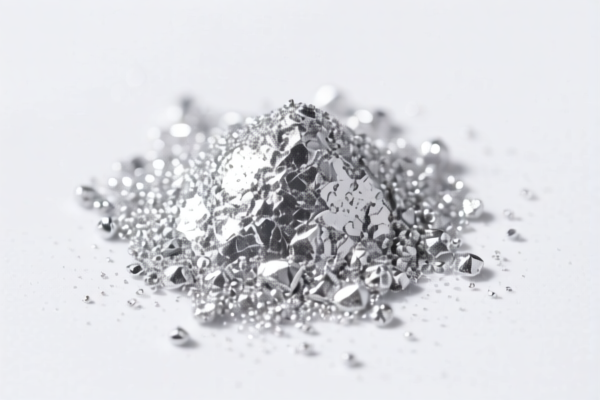
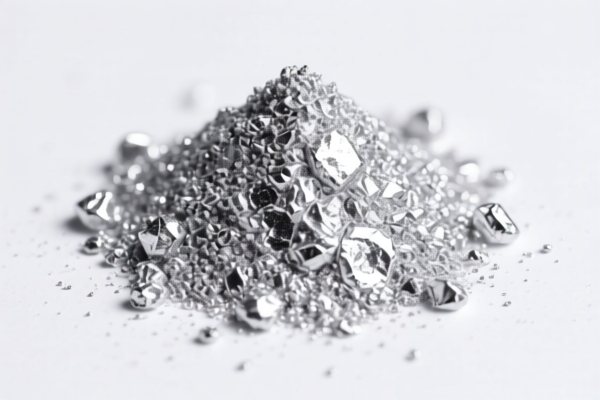
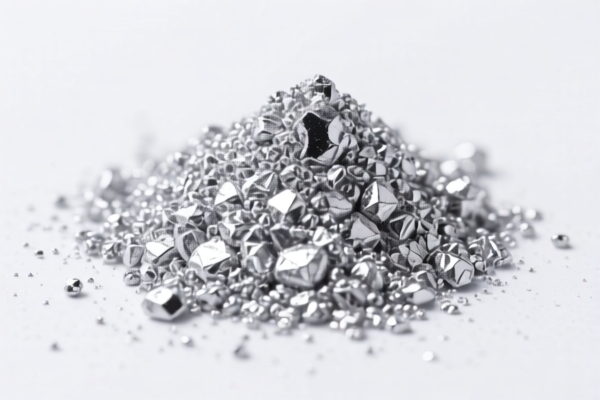
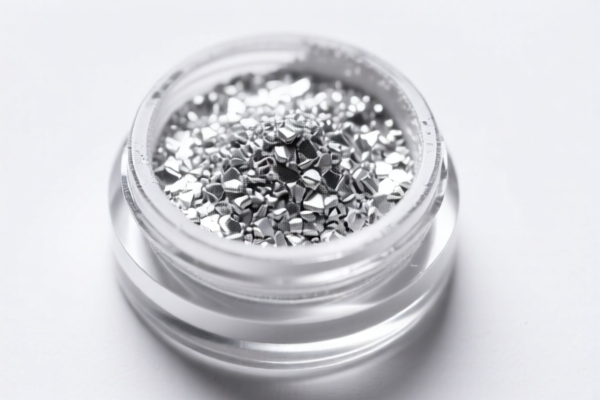
AI Analysis
🚀 Rhodium Catalyst Support: The "Invisible Engine" of Industrial Chemistry
🌐 HS Code Reference & Customs Clearance Guide | 2026 Latest Tariff Analysis | Professional Clearance Strategy
📌 I. Product Definition & Classification: What is a "Catalyst Support"?
A Rhodium Catalyst Support is a critical component in heterogeneous catalysis. Rhodium (Rh) is an expensive precious metal used in automotive catalytic converters, chemical synthesis, and petroleum refining. However, pure rhodium is inefficient; it must be dispersed onto a high-surface-area material to maximize contact with reactants.
This "Support" (Carrier) acts as the structural backbone. It is typically composed of inorganic compounds such as Alumina (Al₂O₃), Silica (SiO₂), Zeolites, or Ceria-Zirconia.
In international trade, the classification depends heavily on whether the product is considered a raw chemical material or a prepared catalyst preparation.
⚠️ Key Distinction Point:
- If the material is a raw inorganic compound (e.g., pure alumina beads, silica gel) used to make a catalyst later → Chapter 28 (Inorganic Chemicals)
- If the material is already processed/formulated specifically to serve as a catalyst carrier or supports a catalyst structure → Chapter 38 (Miscellaneous Chemical Products / Prepared Catalysts)
📦 II. HS Code Classification Details (2026 Latest Tariff Authority Comparison)
| HS Code | Product Description | Applicable Scenario | Key Characteristics |
|---|---|---|---|
| 2835.29.51.00 | Other Phosphates, Hypophosphites, and Phosphonates | Rarely applicable unless the support is specifically a phosphated alumina/silica carrier. Often used for inorganic chemical intermediates. | ✅ Inorganic Chemical Raw Material |
| 3815.11.00.00 | Supported Catalysts | Catalysts where the active metal (Rhodium) is already supported on a carrier. High relevance if "support" implies a pre-functionalized catalytic system. | ✅ Prepared Catalyst (Active Metal Present) |
| 3815.19.00.00 | Other Catalysts, including Catalyst Supports | Most Likely Fit for "Empty" Supports. Includes supports (like alumina/silica) that are specifically shaped/prepared for catalytic use, even without the active metal loaded yet. | ✅ Prepared Catalyst Support (No Active Metal) |
| 2835.10.00.00 | Phosphites, Hypophosphites, and their Salts | Potential classification if the support is a phosphite-based inorganic compound used as a chemical raw material. | ✅ Inorganic Chemical Intermediate |
🔍 Critical Reminder:
- "Support" vs. "Prepared Catalyst": If the product is just a porous alumina bead with no Rhodium loaded, it is generally classified under 3815.19.00.00 (Catalyst Supports) or potentially 2835 if it's a basic chemical.
- "Catalyst Preparation": If Rhodium is already deposited on the support, it must be 3815.11.00.00.
- Misclassification Risk: Declaring a "catalyst support" as a "raw chemical" (2835) when it is functionally a "catalyst preparation" (3815) can lead to customs audits. However, tax-wise, 3815 often offers a lower base tariff.
💰 III. 2026 Latest Tariff Rate Breakdown (Including Surcharges & Policy Add-ons)
✅ Applicable Country: United States (US)
✅ Origin: China (CN)
✅ Effective Time: 2025/2026 (Current Trade Regime)
🎯 1. 3815.19.00.00 —— Catalyst Supports (Prepared, Unloaded)
| Item | Content |
|---|---|
| Base Tariff | 0.0% (ad valorem) |
| USITC Additional Tariff | +25% (Section 301 Duties on Chinese Goods) |
| IEEPA Additional Tariff | +10% (Executive Order 14257 - "122 Clause" Targeting Strategic Sectors/Technology) |
| Total Tariff Rate | 35.0% |
| Tax Calculation | CIF Value × 35.0% |
| De Minimis Exemption | ❌ Not Eligible (Value exceeds $800 threshold for most industrial goods; Section 301/122 duties apply fully) |
| Legal Path | IEEPA:9903.01.25 → USITC:3815.19.00.00 → FOOTNOTE:9903.88.01 |
📌 Explanation:
- The base tariff is 0%, which is significantly cheaper than raw chemicals.
- The 25% is the standard Section 301 tariff for Chapter 38 goods from China.
- The 10% is the additional "122 Clause" tariff targeting strategic supply chains.
- Total: 35%. This is the most favorable classification among the options because it benefits from the 0% base rate.
🎯 2. 3815.11.00.00 —— Supported Catalysts (Pre-Loaded with Rhodium)
| Item | Content |
|---|---|
| Base Tariff | 0.0% (ad valorem) |
| USITC Additional Tariff | +25% (Section 301 Duties) |
| IEEPA Additional Tariff | +10% (Targeted Strategic Sectors) |
| Total Tariff Rate | 35.0% |
| Tax Calculation | CIF Value × 35.0% |
| De Minimis Exemption | ❌ Not Eligible |
| Legal Path | IEEPA:9903.01.24 → USITC:3815.11.00.00 |
📌 Note:
- Tax rate is identical to supports (35%).
- Value Difference: Rhodium is extremely expensive. If you classify pre-loaded catalysts here, the CIF value is higher, but the percentage remains 35%.
🎯 3. 2835.29.51.00 & 2835.10.00.00 —— Inorganic Chemicals (Raw Materials)
| Item | Content |
|---|---|
| Base Tariff | 4.1% (for 2835.29) / 3.1% (for 2835.10) |
| USITC Additional Tariff | +25% (Section 301 Duties) |
| IEEPA Additional Tariff | +10% (Targeted Strategic Sectors) |
| Total Tariff Rate | 38.1% / 38.1% |
| Tax Calculation | CIF Value × 38.1% |
| De Minimis Exemption | ❌ Not Eligible |
📌 Warning:
- Although these are "chemicals," they incur a higher total tax (38.1%) compared to catalyst preparations (35.0%).
- Customs may reject this classification if the product is clearly a "catalyst support" with specific porosity/surface area treatments, forcing you to pay the difference.
🛠️ IV. Customs Clearance Practical Advice (Real-World Pitfall Guide)
✅ 1. Documentation Checklist (Non-Negotiable)
| Document | Must Provide? | Description |
|---|---|---|
| ✅ Technical Data Sheet (TDS) | ✔️ | Must show Surface Area (m²/g), Pore Volume, and Chemical Composition (e.g., % Al₂O₃, % Silica). |
| ✅ Formulation Statement | ✔️ | Explicitly state: "Unloaded Support" (No Rhodium/Pt/Pd loaded) OR "Pre-Loaded Catalyst" (Specify Rhodium content in ppm/wt%). |
| ✅ Product Photos | ✔️ | Show pellets/beads/cords. Label must match commercial name. |
| ✅ Commercial Invoice | ✔️ | Description: "Catalyst Support, Alumina-based, Unloaded, for Chemical Synthesis." Avoid vague terms like "Chemical Powder." |
| ✅ Certificate of Origin (CO) | ✔️ | Required for Section 301/122 duty assessment. |
✅ 2. Declaration Strategy (The Golden Rule)
🔥 "Define Function, Not Just Composition!"
| Scenario | Correct HS Code | Reasoning |
|---|---|---|
| Empty Alumina Beads with high porosity, sold specifically for catalyst manufacturing | 3815.19.00.00 | Function is "Support." Base tariff 0%. Best Option. |
| Rhodium-loaded Honeycomb Monolith (Auto Catalytic Converter) | 3815.11.00.00 | Function is "Prepared Catalyst." Base tariff 0%. |
| Raw Alumina Powder (Generic, no specific catalytic treatment) | 2818.10.00.00 (Not in Data, but common) | If truly generic, might be lower tax, but risky if used for catalysts. Stick to Data: 2835.29.51.00 (38.1% tax) - Less Favorable. |
📌 Critical Insight:
- If the support has been calcined, shaped, or treated to have specific catalytic properties (acid sites, thermal stability), it is a 3815 product.
- Declaring it as 2835 (chemical raw material) to avoid "catalyst" scrutiny is risky because the tax is HIGHER (38.1% vs 35.0%).
✅ 3. Special Case Handling
| Situation | Handling Advice |
|---|---|
| Rhodium Content < 0.1% | If negligible, declare as Support (3815.19.00.00). Provide lab report proving Rhodium is absent or trace impurity only. |
| Rhodium Content > 0.1% | Must declare as Catalyst (3815.11.00.00). Rhodium is a strategic precious metal; under-reporting can lead to fraud allegations. |
| Exporting to US from China | Prepare for 35% Duty. Budget for cash flow. Consider Section 321 De Minimis if shipped as small parcels (< $800), but industrial shipments will pay full duty. |
🌍 V. Global Market Clearance Comparison (2026)
| Country/Region | Recommended HS Code | Tariff Rate (China Origin) | Certification | Notes |
|---|---|---|---|---|
| 🇺🇸 USA | 3815.19.00.00 (Support) | 35.0% (25% Sec 301 + 10% IEEPA) | None specific | Best Tax Rate. Avoid 2835 (38.1%). |
| 🇪🇺 EU | 3815.10.00 | 0% - 6.5% | REACH Registration | No Section 301. REACH compliance critical. |
| 🇨🇳 China | 3815.10.00 | 0% | N/A | Import duty often 0% for catalyst supports. |
| 🇮🇳 India | 3815.10.00 | 10% - 15% | BIS Standard | High anti-dumping duties on some catalysts. |
📌 Conclusion:
- The US market is the most expensive due to the 35% combined tariff.
- 3815.19.00.00 is the optimal classification for unloaded supports, saving 3.1% compared to raw chemical classifications (2835).
📌 VI. Common Errors & Pitfalls (Blood & Tears Lessons)
❌ Error 1: Declaring "Rhodium Catalyst Support" as "Rhodium Metal" (7116)
👉 Consequence: Tariff jumps to 77%+ + Strict Licensing. Rhodium metal is a controlled strategic resource.
❌ Error 2: Declaring unloaded supports as "General Alumina" (2818)
👉 Consequence: Customs may reclassify to 3815 anyway, but delay shipment for "Purpose of Use" verification. No tax saving.
❌ Error 3: Ignoring the 122 Clause (IEEPA 10%)
👉 Consequence: Unexpected 3.1% increase in total cost if not planned for. Many brokers miss this new 2025/2026 rule.
❌ Error 4: Mixing "Loaded" and "Unloaded" in one shipment
👉 Consequence: Customs Audit. Loaded items trigger precious metal reporting. Unloaded do not. Mixed shipments cause major delays.
✅ Correct Declaration Example:
"Catalyst Support, Alumina-Based, Extruded Beads, Unloaded, Surface Area 150m²/g, For Chemical Synthesis Use. HS: 3815.19.00.00."
🎯 VII. Conclusion: Professional Declaration Saves Money!
🎯 Memory Aid:
🔹 "Unloaded Support? Go 3815.19!"
🔹 "Base 0%, Total 35%. Better than 38% in 2835!"
🔹 "Rhodium Loaded? 3815.11!"
🔹 "Don't say 'Chemical Raw Material' if it's a 'Catalyst Part'!"
📌 Pro Tip:
- For US Imports, apply for an Advance Ruling from CBP if you are unsure whether your support is "prepared" (3815) or "raw" (2835). The ruling will lock in the 35% rate.
- Ensure your Technical Data Sheet explicitly mentions "Support for Catalysts" to justify 3815.
📣 Immediate Action:
📞 Contact Your Customs Broker
📄 Submit TDS & Label
💰 Budget for 35% Duty on CIF Value
🚀 Ensure Smooth Clearance & Maximized Profit Margins!
✨ Precision Classification is the Key to Cost Control!
💼 Your Supply Chain Efficiency Starts with the Right HS Code!
Customer Reviews
About HS Code Classification
The Harmonized System (HS) is an internationally standardized nomenclature developed by the World Customs Organization (WCO) to classify traded products. Over 200 countries use the HS system as the basis for customs tariffs, trade statistics, and import/export regulations.
Each HS code follows a hierarchical structure:
- Chapter (2 digits) — Broad category of goods (e.g., Chapter 84: Machinery and Mechanical Appliances)
- Heading (4 digits) — More specific grouping within the chapter
- Subheading (6 digits) — Internationally standardized breakdown, used by all WCO member countries
- National subdivisions (8-10 digits) — Country-specific extensions for further classification, such as US HTSUS 10-digit codes
Correct HS code classification is essential for smooth customs clearance, accurate duty payment, and compliance with trade regulations. Misclassification can lead to customs delays, overpayment of duties, or penalties.
When importing from CN to US, the applicable tariff rates may include:
- Most-Favored-Nation (MFN) rate — The standard duty rate applied to WTO members
- General rate — Applied to countries without trade agreements
- Trade remedy duties — Additional tariffs such as Section 301 (anti-dumping), Section 232 (national security), or countervailing duties
The information provided on this page is for reference purposes only. For official classification, please consult with your local customs authority or a licensed customs broker.