Rice Cooker
CN → US| HS Code | Tariff Rate | Origin | Destination | Doc |
|---|---|---|---|---|
| 7323930045 | 62.0% | CN | US | Official Doc |
| 8516606000 | 12.7% | CN | US | Official Doc |
| 8419819080 | 17.5% | CN | US | Official Doc |
| 8516604070 | 35.0% | CN | US | Official Doc |
| 7323997000 | 65.3% | CN | US | Official Doc |
Product Images
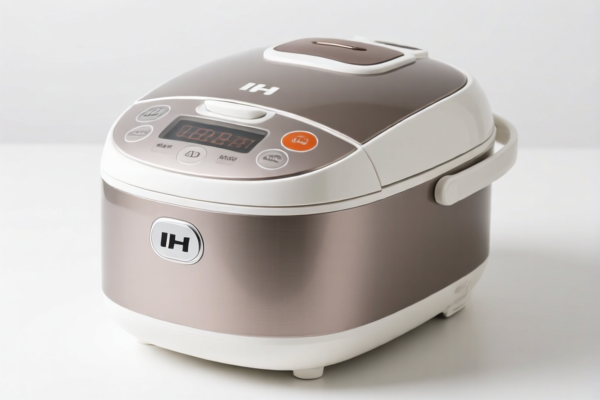


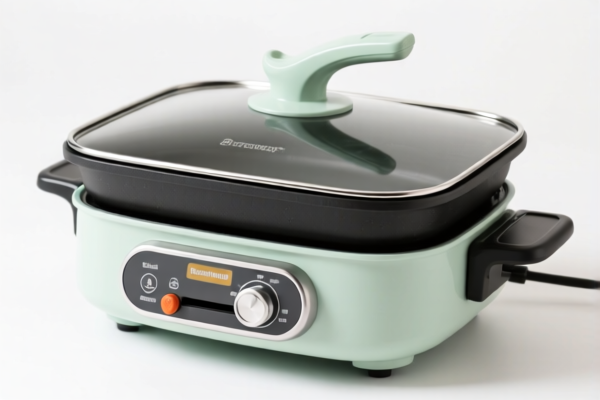
AI Analysis
🍚 Rice Cooker: Global HS Code Classification & 2026 Tariff Strategy
🌐 HS Code Reference & Clearance Guide | 2026 Latest Tariff Breakdown | Professional Customs Strategy
📌 I. Product Definition & Classification: What Really is a "Rice Cooker"?
A Rice Cooker is an electric kitchen appliance designed primarily for cooking rice, but its international classification hinges entirely on its material composition, power source, and specific function.
In global trade, Rice Cookers are often misunderstood. They fall into three distinct categories based on their construction:
1. Stainless Steel Cooking Vessels (7323 Series)
If the cooker is primarily a stainless steel pot with a heating element integrated or sold as a specific metal article, it may be classified under metal kitchenware.
2. Electric Household Cookers (8516 Series)
The vast majority of modern rice cookers are electric heating appliances designed for domestic use. They contain heating elements, thermostats, and electronic controls. This is the most common classification for standard home appliances.
3. Specialized Heating Devices (8419 Series)
Some industrial or non-domestic specific "heating food devices" might fall under general heating machinery, though rare for consumer rice cookers.
⚠️ Critical Distinction:
- If it's a portable electric cooker/oven combo → 8516.60.40.70
- If it's a standard electric home appliance → 8516.60.60.00
- If it's made primarily of stainless steel and marketed as a "cooking utensil" → 7323.93.00.45
📦 II. HS Code Classification Matrix (2026 Data Reference)
| HS Code | Product Description | Primary Material/Function | Typical Scenario |
|---|---|---|---|
7323.93.00.45 |
Stainless Steel Cooking Utensils | Stainless Steel | Metal pots with integrated electric base, marketed as "Steel Cookware" |
8516.60.60.00 |
Electric Cooking Appliances (Domestic) | Electric Heating Element | Standard home rice cookers with digital controls, non-portable |
8419.81.90.80 |
Heating Food Equipment (Other) | General Heating | Specialized heating devices not covered by other specific electric codes |
8516.60.40.70 |
Portable Electric Stoves/Ovens | Electric (Portable) | Mini rice cookers, travel rice cookers, or integrated portable units |
7323.99.70.00 |
Other Metal Kitchen Utensils | Metal (Non-Specific Steel) | Rice cookers made of various metals, not strictly stainless steel pots |
🔍 Key Insight:
- 8516.60.60.00 is the "Gold Standard" for standard home rice cookers.
- 7323.93.00.45 triggers the highest tariffs because it is classified as a metal article (Steel) subject to Section 232 steel/aluminum duties.
- Portability is a major factor; if it's small and travel-ready, it shifts to 8516.60.40.70.
💰 III. 2026 Tariff Rate Breakdown (US Market Focus)
✅ Applicable Region: United States (US)
✅ Origin: China (CN)
✅ Effective Date: 2026 (Based on latest 2026 tariff projections)
🎯 1. 7323.93.00.45 – Stainless Steel Cooking Vessel
The "Metal" Trap – Highest Risk
| Item | Value |
|---|---|
| Base Duty | 2.0% (ad valorem) |
| Section 232 (Steel/Aluminum) | +50% (Steel products) |
| Section 301 / 122 | +10% |
| Total Tariff Rate | 62.0% |
| De Minimis Exemption | ❌ No (Deny) |
| Legal Basis | Section 232:7323.93.00.45 + Section 301:122 |
📌 Explanation:
- This code treats the rice cooker as a stainless steel article. - Section 232 imposes a massive 50% surcharge on steel imports. - Combined with the base 2% and 10% Section 301 tax, the total hits 62%. - Strategy: Avoid this classification unless the product is explicitly sold as a "metal pot" rather than an "electric appliance."
🎯 2. 8516.60.60.00 – Electric Household Cooking Appliance
The Standard Home Appliance
| Item | Value |
|---|---|
| Base Duty | 2.7% (ad valorem) |
| Section 301 / 122 | +10% |
| Total Tariff Rate | 12.7% |
| De Minimis Exemption | ❌ No (Deny) |
| Legal Basis | Section 301:8516.60.60.00 |
📌 Explanation:
- This is the optimal classification for most standard rice cookers. - The tariff is relatively low compared to steel classifications. - It explicitly states "for domestic use," covering 95% of consumer rice cookers.
🎯 3. 8419.81.90.80 – Heating Food Equipment (Other)
The General Heater Classification
| Item | Value |
|---|---|
| Base Duty | 0.0% |
| Section 301 / 122 | +7.5% (Additional) |
| Section 301 / 122 | +10% |
| Total Tariff Rate | 17.5% |
| De Minimis Exemption | ❌ No (Deny) |
| Legal Basis | Section 301:8419.81.90.80 |
📌 Explanation:
- Used if the cooker is classified as a general "heating device" rather than a specific electric cooker. - Slightly higher than the standard 8516 code due to the 7.5% Section 301 add-on.
🎯 4. 8516.60.40.70 – Portable Electric Stove/Oven
The Traveler's Choice
| Item | Value |
|---|---|
| Base Duty | 0.0% |
| Section 301 / 122 | +25.0% (Additional) |
| Section 301 / 122 | +10% |
| Total Tariff Rate | 35.0% |
| De Minimis Exemption | ❌ No (Deny) |
| Legal Basis | Section 301:8516.60.40.70 |
📌 Explanation:
- Warning: This code applies to portable units. - The "Additional" Section 301 duty is 25%, making the total 35%. - If you are exporting a mini-travel rice cooker, expect a significant cost increase compared to a standard unit.
🎯 5. 7323.99.70.00 – Other Metal Kitchen Utensils
The "Other Metal" Trap
| Item | Value |
|---|---|
| Base Duty | 5.3% (ad valorem) |
| Section 232 (Steel/Aluminum) | +50% (Steel products) |
| Section 301 / 122 | +10% |
| Total Tariff Rate | 65.3% |
| De Minimis Exemption | ❌ No (Deny) |
| Legal Basis | Section 232:7323.99.70.00 + Section 301:122 |
📌 Explanation:
- The 65.3% rate is the highest possible tax in this dataset. - It applies to "other" metal utensils, again triggering the 50% Section 232 Steel Surcharge. - Avoid this classification at all costs unless the product is strictly a non-electric metal pot.
🛠️ IV. Customs Clearance实操 Suggestions (Practical Strategy)
✅ 1. Documentation Checklist (Must-Haves)
| Document | Requirement | Why? |
|---|---|---|
| Detailed Product Specification | ✔️ | Must clearly state: "Electric," "Domestic Use," "Power: 1000W," "Voltage: 110V/220V" |
| Schematic Diagram | ✔️ | To prove it contains a heating element and control board (supports 8516 classification) |
| Material Composition Report | ✔️ | To prove it is not primarily a "Stainless Steel Pot" (avoids 7323 codes) |
| Commercial Invoice | ✔️ | Must use HS Code 8516.60.60.00 and description: "Electric Rice Cooker for Household Use" |
| Origin Certificate | ✔️ | Essential to prove origin (China) to calculate correct Section 301/232 duties |
| Photos (Labeled) | ✔️ | Show the plug, control panel, and interior pot separately to distinguish from "cooking pot" |
✅ 2. Declaration Strategy (Golden Rules)
🔥 Rule #1: "It's an Appliance, Not a Pot!"
- Correct: Describe as "Electric Rice Cooker" or "Domestic Electric Cooking Appliance."
- Incorrect: Describe as "Stainless Steel Rice Pot" or "Cooking Utensil."
Why? Calling it a "Pot" triggers7323codes → 62%~65.3% Tax. Calling it an "Appliance" triggers8516→ 12.7% Tax.🔥 Rule #2: "Portability Matters."
- If it's a full-size unit (1-10 cups) → 8516.60.60.00 (12.7%)
- If it's a mini/travel unit → 8516.60.40.70 (35.0%)
✅ 3. Risk Mitigation for "Steel" Codes
| Risk Scenario | Solution |
|---|---|
| Customs suspects "Steel Pot" | Provide a Technical Data Sheet proving the primary function is electric heating, not just metal containment. |
| High Section 232 Duty | If possible, re-classify to 8516 by emphasizing the electronic control board and heating element over the steel material. |
| Portability Misclassification | Clearly mark dimensions. If height > 15cm, argue it is not "portable" (avoid 8516.60.40.70). |
🌍 V. Market Comparison (2026)
| Market | Recommended HS Code | Tariff Rate (China Origin) | Strategy |
|---|---|---|---|
| 🇺🇸 USA | 8516.60.60.00 |
12.7% | Avoid 7323 (62%+) and 8516.60.40.70 (35%) |
| 🇨🇳 China | 8516.60.60.00 |
~5-10% | Domestic consumption rules apply |
| 🇪🇺 EU | 8516.60.60.00 |
0-6% | No Section 301; CE Certification required |
| 🇯🇵 Japan | 8516.60.60.00 |
0-5% | PSE Certification required |
📌 Conclusion:
- USA is the most complex market due to Section 232 and Section 301叠加. - The 12.7% rate (8516.60.60.00) is the "Sweet Spot" for US imports. - 62%+ rates (7323series) are fatal for profit margins unless the product is a luxury high-end steel cookware set.
📌 VI. Common Mistakes & Pitfalls (Learn from Them!)
❌ Mistake 1: Calling it a "Rice Pot" on the invoice.
👉 Result: Customs assigns 7323.93.00.45 → 62% Tax.
👉 Fix: Use "Electric Rice Cooker" or "Domestic Appliance."
❌ Mistake 2: Mixing "Portability" with "Standard" units.
👉 Result: Small units get flagged as 8516.60.40.70 → 35% Tax.
👉 Fix: Ensure product dimensions and weight clearly indicate "Home Use" not "Travel."
❌ Mistake 3: Failing to prove electronic components.
👉 Result: Customs assumes it's a metal pot → 65.3% Tax.
👉 Fix: Include circuit board photos and power cord details in documentation.
✅ Best Practice:
Description: "Electric Rice Cooker, 1.5L, Digital Control, Stainless Steel Inner Pot, Domestic Use, Model RC-150"
HS Code:8516.60.60.00
Expected Tax: 12.7%
🎯 VII. Final Verdict: Strategic Clearance
Remember the Golden Formula:
🛑 "Steel" = 62%+ (Avoid)
✅ "Electric Domestic" = 12.7% (Target)
⚠️ "Portable" = 35% (Caution)
🚀 Action Plan:
1. Review Product Design: Is the heating element the primary feature? Yes → 8516.
2. Draft Invoice: Use precise "Electric Appliance" language.
3. Prepare Docs: Schematics + Material Report to debunk "Steel Pot" classification.
4. Verify Origin: Ensure no misdeclaration of "Made in Vietnam" (if actually China) to avoid penalties.
✨ Professional Customs Clearance Starts with Precision!
💼 Every 1% tax difference saves thousands of dollars!
📞 Contact your broker today to verify the 8516.60.60.00 classification!
Customer Reviews
About HS Code Classification
The Harmonized System (HS) is an internationally standardized nomenclature developed by the World Customs Organization (WCO) to classify traded products. Over 200 countries use the HS system as the basis for customs tariffs, trade statistics, and import/export regulations.
Each HS code follows a hierarchical structure:
- Chapter (2 digits) — Broad category of goods (e.g., Chapter 84: Machinery and Mechanical Appliances)
- Heading (4 digits) — More specific grouping within the chapter
- Subheading (6 digits) — Internationally standardized breakdown, used by all WCO member countries
- National subdivisions (8-10 digits) — Country-specific extensions for further classification, such as US HTSUS 10-digit codes
Correct HS code classification is essential for smooth customs clearance, accurate duty payment, and compliance with trade regulations. Misclassification can lead to customs delays, overpayment of duties, or penalties.
When importing from CN to US, the applicable tariff rates may include:
- Most-Favored-Nation (MFN) rate — The standard duty rate applied to WTO members
- General rate — Applied to countries without trade agreements
- Trade remedy duties — Additional tariffs such as Section 301 (anti-dumping), Section 232 (national security), or countervailing duties
The information provided on this page is for reference purposes only. For official classification, please consult with your local customs authority or a licensed customs broker.