Rice Hull Powder
CN → US| HS Code | Tariff Rate | Origin | Destination | Doc |
|---|---|---|---|---|
| 2302400105 | 35.0% | CN | US | Official Doc |
| 2302400190 | 35.0% | CN | US | Official Doc |
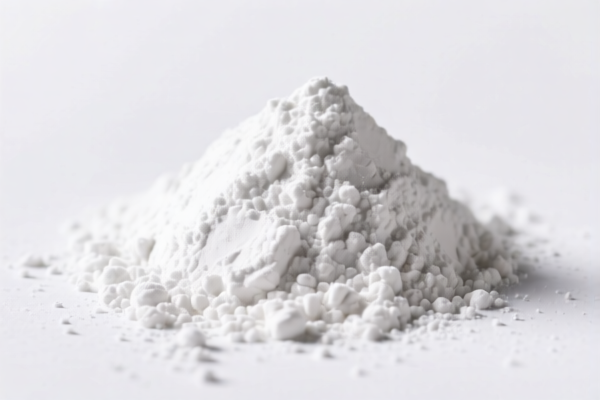
Product Images



AI Analysis
🌾 Rice Hull Powder & Bran Residues (Agricultural By-Products)
🌐 HS Code Reference & Customs Clearance Guide | 2026 Latest Tariff Analysis | Professional Clearance Strategy
📌 1. Product Definition & Classification: What is "Rice Hull Powder"?
Rice hull powder, often referred to in trade as "bran, sharps (middlings), and other residues" derived from the sifting, milling, or working of rice, is a primary agricultural by-product. It consists of the hard outer husk of the rice grain, processed into fine particles or pellets.
In international trade, this product falls under Chapter 23: Residues and Waste from the Food Industries; Prepared Animal Fodder. Specifically, it is classified under Heading 2302, which covers bran, sharps, and other residues derived from the sifting, milling, or other working of cereals or leguminous plants.
⚠️ Key Distinction Point:
- Rice Bran/Middlings: Often softer, nutrient-rich fractions mixed with husks.
- Rice Hulls (Husk): The hard, silica-rich outer shell.
- Classification Rule: Regardless of whether it is pure hull, bran, or a mixture, if it is a residue from rice milling, it falls under 2302.40. The specific subheading depends on whether it is "Of rice" (which might have different codes in some systems) or "Of other cereals." However, based on the provided DATA, the specific codes listed are for "Of other cereals" but explicitly mention "Of rice" in the first line. Let's look closer at the DATA.
Correction based on DATA provided:
The DATA explicitly lists:
1. 2302.40.01.05: "Of rice"
2. 2302.40.01.90: "Of other cereals... Other"
Therefore, "Rice Hull Powder" (derived from Rice) must be classified under 2302.40.01.05. If the product is from other grains (like wheat or corn), it would go to 2302.40.01.90. Since the user asked for "Rice Hull Powder," we focus on the Rice-specific code.
📦 2. HS Code Classification Details (Based on Provided DATA)
| HS Code | Product Description | Applicable Scenario | Rice Origin? |
|---|---|---|---|
2302.40.01.05 |
Bran, sharps, and other residues derived from sifting/milling of cereals: Of rice | Rice hull powder, rice bran pellets, rice milling dust | ✅ YES |
2302.40.01.90 |
Bran, sharps, and other residues: Of other cereals, Other | Wheat bran, corn screenings, barley residues | ❌ NO |
🔍 Crucial Reminder:
- Rice Hull Powder is a residue from rice milling. It must be classified under2302.40.01.05.
- Do not use2302.40.01.90unless the product is derived from non-rice grains. Misclassification can lead to significant penalties and clearance delays.
💰 3. 2026 Latest Tariff Rate Breakdown (Including Additional Duties)
✅ Applicable Country: United States (US)
✅ Country of Origin: China (CN)
✅ Effective Date: Current rates apply (2025-2026 context)
🎯 1. 2302.40.01.05 —— Rice Bran, Sharps, and Residues
| Item | Content |
|---|---|
| Base Tariff Rate | 0.0% (Ad valorem) |
| Additional Tariff (Section 301) | +25.0% |
| Total Tariff Rate | 25.0% |
| Tax Calculation | CIF Value × 25% |
| De Minimis Eligibility | ❌ Not Eligible (Standard de minimis thresholds usually do not apply to bulk agricultural commodities subject to high duties; however, for small shipments, check specific CBP rulings. Generally, bulk agricultural imports are subject to duty.) |
| Legal Basis Path | HTSUS:2302.40.01.05 → Section 301 List 4B → Footnote 9903.88.01 |
📌 Explanation:
- Although the base tariff is 0%, making it seemingly attractive, the 25% Section 301 additional duty applies to Chinese-origin agricultural residues like rice bran.
- This results in a total landed cost increase of 25%.
- Unlike some high-tech goods, agricultural by-products do not typically enjoy IEEPA exemptions. The 25% is a flat addition to the 0% base.
🛠️ 4. Customs Clearance Practical Advice (Real-World Pitfall Guide)
✅ 1. Required Documentation Checklist
| Document | Mandatory? | Notes |
|---|---|---|
| ✅ Commercial Invoice | ✔️ | Must clearly state: "Rice Bran/Hull Powder from Rice" |
| ✅ Packing List | ✔️ | Specify net/gross weight, number of bags/pallets |
| ✅ Bill of Lading/Air Waybill | ✔️ | Standard shipping documents |
| ✅ Certificate of Origin (CO) | ✔️ | To prove origin (China). Note: No preferential tariff applies here. |
| ✅ Phytosanitary Certificate | ✔️ | Critical. Rice products are subject to strict plant quarantine regulations to prevent pest intrusion. |
| ✅ FDA Prior Notice | ✔️ | Required for food/feed ingredients entering the US. |
| ✅ Product Composition Report | ✔️ | Confirm it is 100% rice residue. No contamination with other cereals. |
✅ 2. Declaration Tips (Key Mantra)
🔥 "Accurate Origin, Plant Quarantine, No Hidden Mixes!"
| Scenario | Correct Declaration | Incorrect Practice |
|---|---|---|
| Pure Rice Hull Powder | 2302.40.01.05 + "Of Rice" |
Mislabeling as "Wheat Bran" to avoid 25% duty → Fraud/Seizure |
| Mixed Grain Residues | Separate shipments or specific labeling | Blending rice and wheat without clear declaration → Customs Hold |
| Pelletized vs. Powder | Specify form in description | Ignoring physical form → Minor issue, but accuracy helps |
✅ 3. Special Cases
| Case | Handling Advice |
|---|---|
| Food Grade vs. Feed Grade | Even if for animal feed, ensure FDA registration is valid. |
| Contaminated Goods | If Phytosanitary Certificate is missing, goods will be rejected or destroyed. |
| Small Samples | For non-commercial samples, ensure value is low enough for de minimis if applicable, but 25% duty may still apply depending on CBP interpretation. |
🌍 5. Global Market Comparison (2026 Latest)
| Country/Region | Recommended HS Code | Tariff Rate | Certification Requirements | Notes |
|---|---|---|---|---|
| 🇺🇸 USA | 2302.40.01.05 |
25% (0% Base + 25% Sec 301) | FDA + Phytosanitary | High duty burden. |
| 🇨🇳 China | 2302.40.01.05 |
0% - 5% (Import) | N/A | China is a major exporter. |
| 🇪🇺 EU | 2302.40.10 |
0% - 6.5% | EU Feed Regulations | No Section 301 equivalent. |
| 🇯🇵 Japan | 2302.40.000 |
0% - 3.4% | FSCA Approval | Strict pesticide limits. |
📌 Conclusion:
- USA is the most expensive market due to the 25% Section 301 duty.
- EU and Japan offer more favorable tariff rates, but have strict pesticide and heavy metal standards.
- If targeting the US market, consider supply chain diversification (e.g., sourcing from Vietnam or Thailand) to potentially avoid the 25% additional duty, provided Rules of Origin are met.
📌 6. Common Errors & Pitfall Guide (Lessons Learned)
❌ Error 1: Misclassifying Rice Bran as "Wheat Bran" (2302.40.01.90)
👉 Consequence: While the tariff might be similar (25%), the Phytosanitary requirements are different. Misdeclaration leads to FDA/USDA seizure.
❌ Error 2: Forgetting the Phytosanitary Certificate
👉 Consequence: Goods held at port for fumigation or destruction. Delay costs > Duty savings.
❌ Error 3: Ignoring Contamination
👉 Consequence: If the "Rice Hull Powder" contains >5% other grains, it may be subject to multiple duty rates or reclassification disputes.
❌ Error 4: Assuming "Residue" means "Waste"
👉 Consequence: Customs may classify it as waste rather than commodity, leading to different environmental regulations and higher scrutiny.
✅ Correct Practice:
"Rice Bran Powder, 100% Derived from Rice, For Animal Feed Use, Origin: China, Phytosanitary Certificate Attached, FDA Registered Facility"
🎯 7. Conclusion: Professional Declaration, Save Cost, Avoid Delays
🎯 Remember the Mantra:
🔹 "Rice Origin = 2302.40.01.05"
🔹 "Base 0% + 301 25% = 25% Total"
🔹 "No Phytosanitary = No Entry"
🔹 "Clear Origin, Clean Goods, Smooth Clearance!"
📌 Pro Tip:
If your rice hull powder is sourced from non-Chinese countries (e.g., Vietnam, Thailand, Cambodia), you may avoid the 25% Section 301 duty. Always verify the Country of Origin on the Certificate of Origin to maximize cost efficiency.
📣 Immediate Action:
📞 Engage a licensed Customs Broker
📄 Ensure FDA Prior Notice is filed
🌿 Obtain Phytosanitary Certificate from Origin Country
🚀 Ensure your Rice Hull Powder clears customs smoothly and profitably!
✨ Professional Clearance Starts with Accurate Classification!
💼 Every percentage point of duty matters in agricultural trade!
Customer Reviews
About HS Code Classification
The Harmonized System (HS) is an internationally standardized nomenclature developed by the World Customs Organization (WCO) to classify traded products. Over 200 countries use the HS system as the basis for customs tariffs, trade statistics, and import/export regulations.
Each HS code follows a hierarchical structure:
- Chapter (2 digits) — Broad category of goods (e.g., Chapter 84: Machinery and Mechanical Appliances)
- Heading (4 digits) — More specific grouping within the chapter
- Subheading (6 digits) — Internationally standardized breakdown, used by all WCO member countries
- National subdivisions (8-10 digits) — Country-specific extensions for further classification, such as US HTSUS 10-digit codes
Correct HS code classification is essential for smooth customs clearance, accurate duty payment, and compliance with trade regulations. Misclassification can lead to customs delays, overpayment of duties, or penalties.
When importing from CN to US, the applicable tariff rates may include:
- Most-Favored-Nation (MFN) rate — The standard duty rate applied to WTO members
- General rate — Applied to countries without trade agreements
- Trade remedy duties — Additional tariffs such as Section 301 (anti-dumping), Section 232 (national security), or countervailing duties
The information provided on this page is for reference purposes only. For official classification, please consult with your local customs authority or a licensed customs broker.