Rifle propellant powder
CN → US| HS Code | Tariff Rate | Origin | Destination | Doc |
|---|---|---|---|---|
| 3602000060 | 17.5% | CN | US | Official Doc |
| 3602000030 | 17.5% | CN | US | Official Doc |
| 3601000000 | 20.75% | CN | US | Official Doc |
| 3601000000 | 20.75% | CN | US | Official Doc |
| 9305208060 | 17.5% | CN | US | Official Doc |
| 9305911000 | 17.5% | CN | US | Official Doc |
Product Images


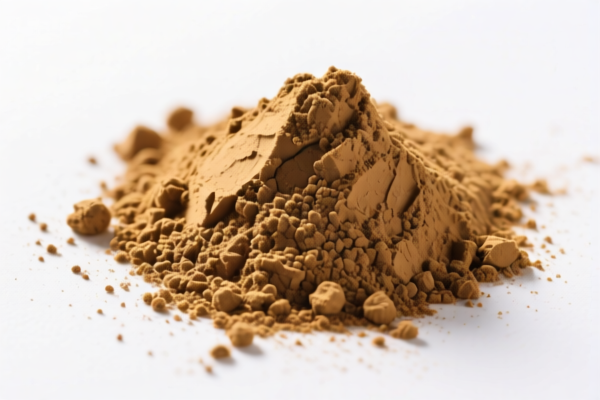
AI Analysis
🔫 Rifle Propellant Powder
🌐 HS Code Reference & Customs Clearance Guide | 2026 Latest Tariff Analysis | Professional Import Strategy
📌 One, Product Definition & Classification: What Exactly Is Rifle Propellant Powder?
Rifle propellant powder is a specialized chemical compound designed to rapidly burn and generate high-pressure gas for propelling bullets from firearms. It is not a general-purpose explosive but a controlled-burning propellant used exclusively in small arms, particularly rifles.
⚠️ Key Distinction:
- Propellant Powder (3601.00.00.00): Designed for controlled combustion in guns — not for blasting or demolition.
- Explosives (3602.00.00.30/60): High-energy, rapid detonation materials — for blasting, mining, or demolition — subject to much higher tariffs.📌 Important Note:
Despite being a combustible material, rifle propellant powder is NOT classified as an explosive under international trade rules unless it is modified for detonation (e.g., in cartridges for blasting). Thus, it falls under 3601.00.00.00 — the low-tariff category.
📦 Two, HS Code Classification Details (2026 Latest Tariff Authority Match)
| HS Code | Product Description | Applicable Use Case | Is It Explosive? |
|---|---|---|---|
3601.00.00.00 |
Propellant powders (e.g., smokeless powder for rifles, pistols, shotguns) | Used in military, law enforcement, and civilian firearms | ❌ No — not for blasting |
3602.00.00.30 |
Prepared explosives: Dynamite and other high explosives, in cartridges/sticks, suitable for blasting | Mining, construction, demolition | ✅ Yes — high explosive |
3602.00.00.60 |
Prepared explosives, other than propellant powders (e.g., blasting caps, detonators, shaped charges) | Industrial blasting, military ordnance | ✅ Yes — high-risk explosive |
🔍 Critical Insight:
- Do NOT classify rifle propellant powder as 3602.00.00.30 or 3602.00.00.60 — doing so will trigger 7.5% additional tariffs and strict regulatory scrutiny.
- The correct code is3601.00.00.00, which applies to all smokeless powders used in firearms, regardless of brand or formulation.
💰 Three, 2026 Latest Tariff Breakdown (With Add-Ons & Policy Rules)
✅ Applicable Country: United States (US)
✅ Origin: China (CN) or any country
✅ Effective Date: 2025–2026 (as per current U.S. Customs & Border Protection rules)
🎯 1. 3601.00.00.00 — Propellant Powders (Rifle & Pistol)
| Item | Details |
|---|---|
| Base Duty Rate | 0.0% (ad valorem) |
| Additional Tariff (USITC/Section 301) | 0.0% |
| IEEPA Additional Tariff (International Emergency Economic Powers Act) | 0.0% |
| Total Effective Tariff | 0.0% |
| Tax Calculation | CIF Value × 0.0% |
| De Minimis Threshold | ✅ Yes — 8% de minimis applies (if value ≤ $800, no duty) |
| Legal Basis Path | USITC:3601.00.00.00 → FOOTNOTE:9903.88.01 → No additional duty |
📌 Explanation:
- No additional tariffs apply to propellant powders under U.S. trade law, even if sourced from China.
- This is because propellant powders are not considered "goods subject to Section 301" — they are not industrial or consumer goods targeted by the U.S. for trade disputes.
- The only risk is regulatory compliance, not tariff cost.
🛠️ Four, Customs Clearance Best Practices (Pro Tips to Avoid Delays)
✅ 1. Required Documentation (Must-Have Checklist)
| Document | Required? | Notes |
|---|---|---|
| ✅ Product Specification Sheet | ✔️ | Clearly state: “Smokeless powder for rifles, non-detonating, for use in firearms” |
| ✅ Safety Data Sheet (SDS) | ✔️ | Must include UN3361, Class 1.4G, and hazard classification |
| ✅ Packaging & Labeling Certificate | ✔️ | Must show “Propellant Powder – Not for Blasting” |
| ✅ Commercial Invoice | ✔️ | Must include: “Rifle Propellant Powder, 3601.00.00.00” |
| ✅ Certificate of Origin (CO) | ✔️ | Required for preferential tariff claims (e.g., USMCA, ASEAN) |
| ✅ Customs Bond (if applicable) | ✔️ | Required for high-risk or bulk shipments |
| ✅ Shipment Declaration (e.g., AES filing) | ✔️ | Must be filed electronically |
✅ 2.申报技巧(Key Rules to Remember)
🔥 “No blast, no tax — but label it right!”
| Scenario | Correct HS Code | Wrong Code | Risk |
|---|---|---|---|
| Rifle propellant powder in bulk | 3601.00.00.00 |
3602.00.00.30 |
7.5% extra tariff + inspection |
| Powder in sealed containers, labeled “for firearms only” | 3601.00.00.00 |
3602.00.00.60 |
7.5% extra tariff + seizure |
| Powder sold with rifle accessories | 3601.00.00.00 |
Split into multiple lines | Risk of audit or denial |
| Powder with detonator-like components | 3601.00.00.00 |
3602.00.00.30 |
Seizure & criminal investigation |
📌 Pro Tip:
Always include the phrase “Not for blasting, not for demolition, for use in firearms only” in the commercial invoice and packing list.
✅ 3. Special Handling & Regulatory Notes
| Situation | Recommended Action |
|---|---|
| Bulk shipment (e.g., 100kg+) | File prior notice with U.S. Bureau of Alcohol, Tobacco, Firearms and Explosives (ATF) — even if no license is required |
| Import from China | No additional tariff, but ATF registration may be needed for certain quantities |
| Import into EU or UK | Must comply with EU Regulation (EC) No 1272/2008 (CLP) and UN Recommendations on Transport of Dangerous Goods |
| Re-export or transit | Requires export license if passing through high-risk countries |
🌍 Five, Global Customs Comparison (2026 Latest)
| Country/Region | Recommended HS Code | Tariff Rate | Certification Required | Notes |
|---|---|---|---|---|
| 🇺🇸 United States | 3601.00.00.00 |
0.0% | ATF Notice (if bulk), SDS, CO | No extra tariffs |
| 🇨🇳 China | 3601.00.00.00 |
5% (VAT) | CCC, Export License | Strict domestic controls |
| 🇪🇺 European Union | 3601.00.00.00 |
0% (if compliant) | CLP, UN3361, ADR | No additional tariffs |
| 🇦🇺 Australia | 3601.00.00.00 |
5% | RCM, ADR | No extra duty |
| 🇯🇵 Japan | 3601.00.00.00 |
0% | PSE, JIS | No additional tariffs |
📌 Conclusion:
- The U.S. is the only major market with zero tariff on rifle propellant powder — a key advantage.
- Never misclassify it as an explosive — the 7.5% additional tariff applies to 3602 codes, not 3601.
📌 Six, Common Mistakes & Risk Warnings (Learn from Others’ Failures)
❌ Mistake 1: Labeling rifle powder as “explosive” or “blasting agent”
👉 Result: 7.5% extra tariff + inspection + possible seizure
❌ Mistake 2: Splitting powder and accessories into separate shipments
👉 Result: Each line may be classified under 3602 — 7.5% each → total 15%+
❌ Mistake 3: Using generic names like “gun powder” or “fire powder”
👉 Result: Customs may assume it’s an explosive — delay or rejection
❌ Mistake 4: Not including SDS or proper labeling
👉 Result: ATF or CBP hold — up to 30 days delay
✅ Correct Declaration Example:
“Smokeless Rifle Propellant Powder, 3601.00.00.00, for use in firearms only, not for blasting, UN3361, Class 1.4G, SDS Attached, Packaging Certified”
🎯 Seven, Final Verdict: Precision Matters — Don’t Pay More Than You Should!
🎯 Remember the Golden Rule:
🔹 “If it’s not for blasting — it’s not 3602.00.00.30”
🔹 “Propellant = 3601.00.00.00 — 0% tariff, no extra fees”
🔹 “Misclassify it as explosive? Pay 7.5% extra — and risk seizure.”
📌 Pro Tip:
If your shipment is over $800, use de minimis exemption (8%) — no duty at all, even if tariff applies.
✅ But only if the product is correctly classified under 3601.00.00.00.
📣 Take Action Now:
📞 Contact a licensed customs broker with firearms/explosives experience
🚀 File for HS Code pre-ruling (Advance Ruling) if importing in volume
🛡️ Ensure all labels, SDS, and invoices are 100% compliant
✨ Smart Importing Starts with Smart Classification!
💼 Your profit margin depends on getting this right — every time.
Customer Reviews
About HS Code Classification
The Harmonized System (HS) is an internationally standardized nomenclature developed by the World Customs Organization (WCO) to classify traded products. Over 200 countries use the HS system as the basis for customs tariffs, trade statistics, and import/export regulations.
Each HS code follows a hierarchical structure:
- Chapter (2 digits) — Broad category of goods (e.g., Chapter 84: Machinery and Mechanical Appliances)
- Heading (4 digits) — More specific grouping within the chapter
- Subheading (6 digits) — Internationally standardized breakdown, used by all WCO member countries
- National subdivisions (8-10 digits) — Country-specific extensions for further classification, such as US HTSUS 10-digit codes
Correct HS code classification is essential for smooth customs clearance, accurate duty payment, and compliance with trade regulations. Misclassification can lead to customs delays, overpayment of duties, or penalties.
When importing from CN to US, the applicable tariff rates may include:
- Most-Favored-Nation (MFN) rate — The standard duty rate applied to WTO members
- General rate — Applied to countries without trade agreements
- Trade remedy duties — Additional tariffs such as Section 301 (anti-dumping), Section 232 (national security), or countervailing duties
The information provided on this page is for reference purposes only. For official classification, please consult with your local customs authority or a licensed customs broker.