Right handed golf glove
CN → US| HS Code | Tariff Rate | Origin | Destination | Doc |
|---|---|---|---|---|
| 6216000800 | 18.3% | CN | US | Official Doc |
| 6216004600 | 20.3% | CN | US | Official Doc |
| 6116100800 | 20.3% | CN | US | Official Doc |
| 6116930800 | 20.3% | CN | US | Official Doc |
| 6216000800 | 18.3% | CN | US | Official Doc |
Product Images
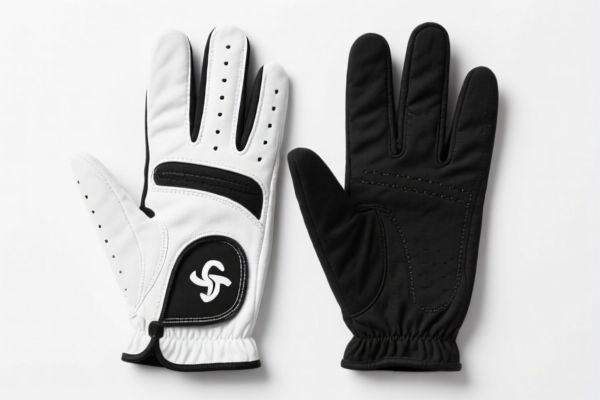
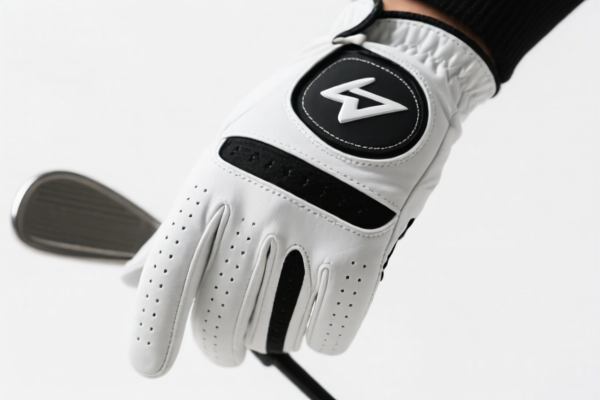
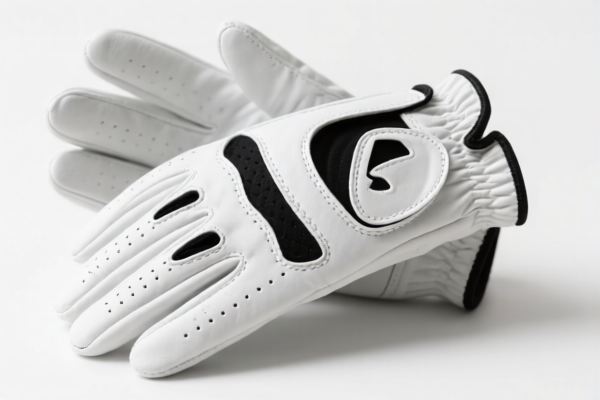
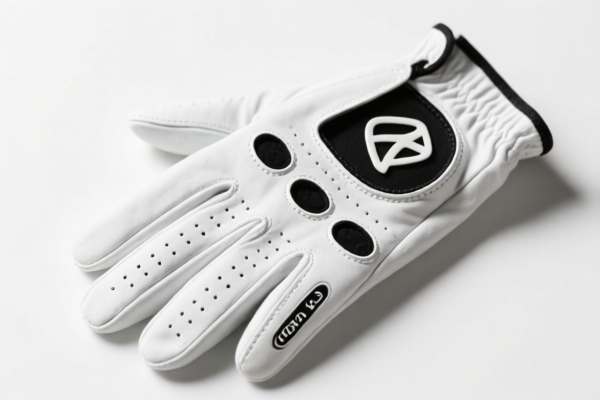
AI Analysis
🎱 Right-Handed Golf Gloves (Sports Gloves)
🌐 HS Code Reference & Customs Clearance Guide | 2026 Latest Tariff Analysis | Professional通关 Strategy
📌 I. Product Definition & Classification: Are You Classifying "Golf Gloves" Correctly?
Golf gloves are essential protective equipment in the sports industry, designed to provide grip, prevent blisters, and ensure stability during play. In international trade, they are categorized based on their material and construction method:
Woven/Knitted Gloves (Textile Base): Made from knitting or weaving processes, possibly coated or impregnated.
Made-Up Gloves (Non-Knitted): Cut from fabric, leather, or artificial leather, sewn or assembled without knitting.
⚠️ Key Distinction Point:
- If the glove is knitted or crocheted (e.g., cotton knit with rubber coating) →归入 6116.xxxxxxx
- If the glove is sewn/assembled from cut fabric or leather (non-knitted) → 归入 6216.xxxxxxx⚠️ Material Matters:
- Rubber/Plastic coating affects duty rates;
- Artificial fiber vs. Leather vs. Knitted changes the HS Code prefix (61xx vs 62xx).
📦 II. HS Code Classification Details (2026 Latest Tariff Authoritative Comparison)
Based on the provided data, here are the 5 possible HS Codes for Right-Handed Golf Gloves, depending on material and structure:
| HS Code | Product Description | Material/Structure | Applicability | Total Tax |
|---|---|---|---|---|
6216.00.08.00 |
Made-up gloves, other, containing >50% rubber/plastic (by weight) | Rubber/Plastic coated or impregnated | Golf gloves with heavy rubber/plastic coating | 18.3% |
6216.00.46.00 |
Other made-up gloves, of artificial textile materials or leather | Artificial fiber or leather | Leather golf gloves or synthetic fabric gloves (non-knitted) | 20.3% |
6116.10.08.00 |
Knitted or crocheted gloves, impregnated, coated, or covered with rubber/plastics | Knitted base + Rubber/Plastic coating | Knitted golf gloves with rubber grip on palm | 20.3% |
6116.93.08.00 |
Other knitted or crocheted gloves, of synthetic fibers | Synthetic fibers (knitted) | Knitted synthetic golf gloves without heavy rubber coating | 20.3% |
🔍 Important Notes:
- Right-handed is a functional feature, not a classification factor. All these codes apply to both left and right-handed gloves.
- Golf is considered a sporting activity, so gloves used for golf fall under Chapter 61 (Knitted) or Chapter 62 (Non-Knitted).
- Tax Rate Difference:
-6216.00.08.00has a lower base tariff (0.8%) due to high rubber content, resulting in 18.3% total.
- Other codes have a higher base tariff (2.8%), resulting in 20.3% total.
💰 III. 2026 Latest Tariff Rate Breakdown (Including Additional Taxes & Policy Surcharges)
✅ Applicable Country: USA (US)
✅ Country of Origin: China (CN)
✅ Effective Date: From November 10, 2025 (including subsequent imports)
🎯 1. 6216.00.08.00 —— Gloves with >50% Rubber/Plastic (Lowest Tax)
| Item | Content |
|---|---|
| Base Tariff | 0.8% (ad valorem) |
| Section 301 Additional Tariff | +7.5% |
| Section 122 Tariff (China-specific) | +10% |
| Total Tariff | 18.3% |
| Tax Calculation | CIF Value × 18.3% |
| De Minimis Eligibility | ❌ Not Eligible (Deny de minimis for Section 301/122 goods) |
| Legal Basis Path | USITC:6216.00.08.00 → Section 301: Footnote 9903.88.01 → Section 122: IEEPA:9903.01.25 |
📌 Explanation:
- This code has the lowest total tax among all options because the base tariff is only 0.8%.
- Suitable for golf gloves with thick rubber grips on the palm/fingers.
- Must declare accurately: If it’s not >50% rubber by weight, it may be misclassified.
🎯 2. 6216.00.46.00 —— Artificial Fiber/Leather Made-Up Gloves
| Item | Content |
|---|---|
| Base Tariff | 2.8% |
| Section 301 Additional Tariff | +7.5% |
| Section 122 Tariff (China-specific) | +10% |
| Total Tariff | 20.3% |
| Tax Calculation | CIF Value × 20.3% |
| De Minimis Eligibility | ❌ Not Eligible |
| Legal Basis Path | USITC:6216.00.46.00 → Section 301: Footnote 9903.88.01 → Section 122: IEEPA:9903.01.25 |
📌 Note:
- Applies to leather golf gloves or synthetic fabric gloves that are sewn (not knitted).
- Leather is often considered higher value, hence the higher base tariff.
🎯 3. 6116.10.08.00 —— Knitted Gloves with Rubber/Plastic Coating
| Item | Content |
|---|---|
| Base Tariff | 2.8% |
| Section 301 Additional Tariff | +7.5% |
| Section 122 Tariff (China-specific) | +10% |
| Total Tariff | 20.3% |
| Tax Calculation | CIF Value × 20.3% |
| De Minimis Eligibility | ❌ Not Eligible |
| Legal Basis Path | USITC:6116.10.08.00 → Section 301: Footnote 9903.88.01 → Section 122: IEEPA:9903.01.25 |
📌 Note:
- Suitable for knitted cotton gloves with rubber coating on the palm for grip.
- Common in professional golf gloves with breathable knit backs.
🎯 4. 6116.93.08.00 —— Knitted Synthetic Fiber Gloves (No Heavy Coating)
| Item | Content |
|---|---|
| Base Tariff | 2.8% |
| Section 301 Additional Tariff | +7.5% |
| Section 122 Tariff (China-specific) | +10% |
| Total Tariff | 20.3% |
| Tax Calculation | CIF Value × 20.3% |
| De Minimis Eligibility | ❌ Not Eligible |
| Legal Basis Path | USITC:6116.93.08.00 → Section 301: Footnote 9903.88.01 → Section 122: IEEPA:9903.01.25 |
📌 Note:
- Applies to knitted synthetic gloves without significant rubber/plastic coating.
- Less common in high-end golf gloves but possible for training gloves or cheap sport gloves.
🛠️ IV. Customs Clearance Practical Advice (Real-World Pitfall Avoidance Guide)
✅ 1. Required Documentation Checklist (All Must Be Provided)
| Document | Must Provide | Description |
|---|---|---|
| ✅ Product Specification Sheet | ✔️ | Include material composition (e.g., 90% cotton, 10% rubber), knitting type, coating details |
| ✅ Material Composition Breakdown | ✔️ | Critical: Prove whether rubber/plastic is >50% by weight (for 6216.00.08.00) |
| ✅ Product Photos (Clear Labels) | ✔️ | Show palm coating, back material, size, brand, model |
| ✅ Third-Party Test Report | ✔️ | SGS, BV, or Intertek report on material composition |
| ✅ Commercial Invoice | ✔️ | Must state “Golf Gloves, Right-Handed, [Material], HS Code XXXX” |
| ✅ Packing List | ✔️ | Detail per-box content, avoid mixed declarations |
| ✅ Certificate of Origin (CO) | ✔️ | If not China-origin, claim FTA benefits (if applicable) |
✅ 2. Declaration Tips (Key Mantra)
🔥 “Material Dictates Code, Rubber % Determines Tax!”
| Scenario | Correct Declaration | Wrong Practice |
|---|---|---|
| Leather golf gloves | 6216.00.46.00 |
Misdeclare as knitted → Audit risk |
| Knitted gloves with rubber palm | 6116.10.08.00 or 6216.00.08.00 (if >50% rubber) |
Vague description → Delay |
| Gloves with thin silicone dots | 6116.93.08.00 (if rubber <50%) |
Claim >50% rubber → Fraud penalty |
| Mixed pack (Left + Right) | Declare as “Golf Gloves, Pair” | Separate L/R → Unnecessary complexity |
✅ 3. Special Case Handling
| Scenario | Handling Advice |
|---|---|
| OEM Custom Golf Gloves | Provide design blueprint + material spec sheet to prove classification |
| Glove with Logo/Branding | Does not change HS Code; ensure brand is declared consistently |
| Glove for Beginners vs Pro | Same HS Code if material/structure is identical; no differentiation needed |
| Glove with RFID/Chip | Still classified under Chapter 61/62; electronic components are minor |
🌍 V. Global Market Comparison (2026 Latest)
| Country/Region | Recommended HS Code | Tariff (China-Origin) | Certification Requirement | Remarks |
|---|---|---|---|---|
| 🇺🇸 USA | 6216.00.08.00 (Best Rate) |
18.3% (Lowest) | None | All codes have +17.5% additional taxes |
| 🇨🇳 China | 6116.10.08.00 or 6216.00.46.00 |
5%-10% | None | Lower base tariffs, no Section 301/122 |
| 🇪🇺 EU | 6116.10.08.00 or 6216.00.46.00 |
4%-12% | REACH, CE (if applicable) | No Section 301/122 |
| 🇬🇧 UK | 6116.10.08.00 or 6216.00.46.00 |
4%-12% | UKCA | Post-Brexit rules apply |
| 🇯🇵 Japan | 6116.10.08.00 or 6216.00.46.00 |
0%-7% | PSE (if electrical, but gloves don’t qualify) | Very favorable |
📌 Conclusion:
- USA has the highest combined tariffs due to Section 301 (+7.5%) and Section 122 (+10%).
- Choose6216.00.08.00if possible (18.3%) to minimize cost;
- Other codes are 20.3%, a 2% difference that adds up on large volumes.
📌 VI. Common Mistakes & Pitfall Guide (Lessons Learned the Hard Way)
❌ Mistake 1: Declaring all golf gloves as 6216.00.46.00 (Leather/Fiber) when they are knitted with rubber
👉 Consequence: Misclassification → Audit, back taxes, penalties!
❌ Mistake 2: Claiming 6216.00.08.00 (18.3%) for gloves with only 30% rubber content
👉 Consequence: Customs rejects → Re-classification → Delay + Interest
❌ Mistake 3: Ignoring “Right-Handed” vs “Left-Handed” in packing list
👉 Consequence: No tariff impact, but causes warehouse confusion → Operational inefficiency
❌ Mistake 4: Not providing material composition report
👉 Consequence: Customs requests info → Delay clearance by 3-7 days
✅ Correct Practice:
“Golf Gloves, Right-Handed, Knitted Cotton with Rubber Coating on Palm, Model G100, 90% Cotton/10% Rubber, HS Code 6116.10.08.00”
🎯 VII. Conclusion: Precision Classification Saves Money!
🎯 Remember the Mantra:
🔹 “Knitted vs Sewn? Rubber % is King!”
🔹 “18.3% vs 20.3%? That’s 2% on every dollar – choose wisely!”
🔹 “Right/Left Hand doesn’t change HS Code – Focus on Material!”
📌 Pro Tip:
If your golf gloves are manufactured in Vietnam, India, or Thailand, you may avoid Section 122 Tariff (10%), reducing total tax to 7.5% or 10.3% depending on code.
Always verify origin and consider supply chain diversification.
📣 Immediate Action:
📞 Contact your customs broker + Provide material test report + Apply for HS Code Advance Ruling
🚀 Ensure smooth clearance, lower costs, and higher profit margins!
✨ Professional Customs Clearance Starts with Accurate Classification!
💼 Every 2% Saved is Pure Profit!
Customer Reviews
About HS Code Classification
The Harmonized System (HS) is an internationally standardized nomenclature developed by the World Customs Organization (WCO) to classify traded products. Over 200 countries use the HS system as the basis for customs tariffs, trade statistics, and import/export regulations.
Each HS code follows a hierarchical structure:
- Chapter (2 digits) — Broad category of goods (e.g., Chapter 84: Machinery and Mechanical Appliances)
- Heading (4 digits) — More specific grouping within the chapter
- Subheading (6 digits) — Internationally standardized breakdown, used by all WCO member countries
- National subdivisions (8-10 digits) — Country-specific extensions for further classification, such as US HTSUS 10-digit codes
Correct HS code classification is essential for smooth customs clearance, accurate duty payment, and compliance with trade regulations. Misclassification can lead to customs delays, overpayment of duties, or penalties.
When importing from CN to US, the applicable tariff rates may include:
- Most-Favored-Nation (MFN) rate — The standard duty rate applied to WTO members
- General rate — Applied to countries without trade agreements
- Trade remedy duties — Additional tariffs such as Section 301 (anti-dumping), Section 232 (national security), or countervailing duties
The information provided on this page is for reference purposes only. For official classification, please consult with your local customs authority or a licensed customs broker.