Rigid PVC Pipe Commercial
CN → US| HS Code | Tariff Rate | Origin | Destination | Doc |
|---|---|---|---|---|
| 3916200091 | 40.8% | CN | US | Official Doc |
| 3916200020 | 40.8% | CN | US | Official Doc |
| 3926909989 | 22.8% | CN | US | Official Doc |
| 3917230000 | 38.1% | CN | US | Official Doc |
| 3917290090 | 38.1% | CN | US | Official Doc |
| 3926909987 | 22.8% | CN | US | Official Doc |
Product Images


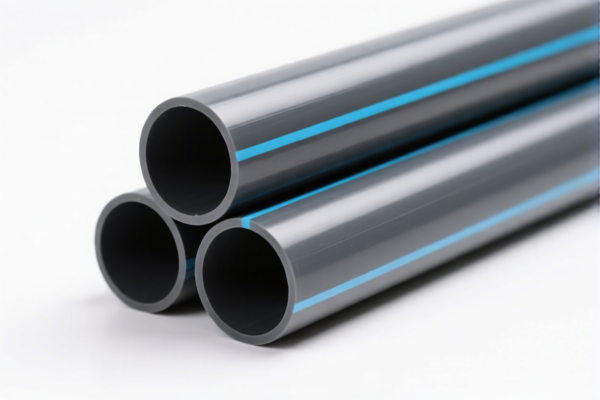
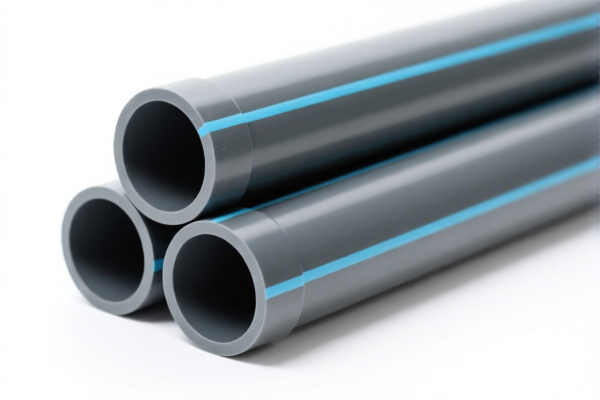
AI Analysis
🏗️ Rigid PVC Pipe for Commercial Use
🌐 HS Code Reference & Customs Clearance Guide | 2026 Latest Tariff Analysis | Professional Clearance Strategy
📌 I. Product Definition & Classification: What Exactly is "Rigid PVC Pipe"?
Rigid PVC (Polyvinyl Chloride) pipes are essential infrastructure components used in commercial construction, plumbing, and industrial fluid transport. In international trade, they are classified based on their material composition, physical form, and intended application.
Key Distinction Points:
Material: Must be primarily composed of Polyvinyl Chloride (PVC) or Chlorine-based polymers.
Form: Solid profiles, tubes, or pipes (excluding flexible hoses).
Application: Commercial use implies non-residential or heavy-duty applications, though the HS code classification often relies more on physical properties than end-use.
Classification Conflict: The main dispute lies between Chapter 39 (Articles of Plastic) vs. Chapter 39 Specific Subheadings (Plastic Pipes vs. Other Plastic Articles).
⚠️ Critical Classification Logic:
- If classified as Plastic Articles (General): Falls under 3926.90.
- If classified as Plastic Pipes/Tubes: Falls under 3917.
- Note: US Customs often scrutinizes whether the pipe is "plastic pipes" (3917) or "other plastic articles" (3926). The shape and rigidity dictate the choice.
📦 II. HS Code Classification Details (2026 Tariff Authority Reference)
| HS Code | Product Description | Applicability Scenario | Key Classification Basis |
|---|---|---|---|
3916.20.00.91 |
Plastic rods, sticks, and profiles (PVC), other | PVC profiles, rods, or non-pipe structural shapes | Category 3916: Rods/Sticks. Not a tube. |
3916.20.00.20 |
Plastic rods, sticks, and profiles (PVC), for flooring or similar | Specific PVC profiles (e.g., flooring tracks) | Category 3916. Specific use case. |
3926.90.99.89 |
Other plastic articles and articles of other materials | General Plastic Pipes (if not strictly 3917) | Category 3926: General plastic articles. Broad catch-all. |
3917.23.00.00 |
Tubes, pipes, and hoses, of polymers of ethylene | Incorrect for PVC. (Included for contrast) | Error Check: PVC is not Ethylene. |
3917.29.00.90 |
Other tubes, pipes, and hoses (PVC) | Rigid PVC Pipes (Standard Commercial Pipe) | Category 3917: Plastic Pipes/Tubes. Most accurate for standard pipes. |
3926.90.99.87 |
Other plastic articles (PVC hard pipes) | Alternative classification for rigid PVC pipes | Category 3926: If deemed "other article" rather than "pipe". |
🔍 Important Clarification:
-3917.29.00.90is typically the most accurate for standard rigid PVC pipes used in plumbing/construction.
-3926.90.99.87/89are used if the item is considered a "general plastic article" rather than a dedicated "pipe."
-3916.20codes apply to profiles, rods, or sticks, NOT hollow pipes. Using these for hollow pipes is a misclassification error.
💰 III. 2026 Latest Tariff Rate Breakdown (Including Surcharges & Policy Add-ons)
✅ Applicable Country: United States (US)
✅ Origin: China (CN)
✅ Effective Date: November 10, 2025 onwards (for subsequent imports)
🎯 1. 3916.20.00.91 & 3916.20.00.20 —— Plastic Rods/Sticks (PVC Profiles)
| Item | Content |
|---|---|
| Base Tariff | 5.8% (Ad Valorem) |
| Section 301 Surcharge | +25.0% (USITC Footnote) |
| Section 122 Surcharge | +10.0% (IEEPA/Historical Add-on) |
| Total Tariff | 40.8% |
| Calculation Method | CIF Value × 40.8% |
| De Minimis Exemption | ❌ Not Eligible (High tariff items are excluded) |
| Legal Authority Path | USITC:3916.20.00.91 → FOOTNOTE:301 → IEEPA:122 |
📌 Explanation:
- These codes are for solid profiles/rods, not pipes.
- Total Duty: 40.8%. High cost. Misclassifying pipes as profiles can lead to penalties if detected, but the duty is similar to pipes.
🎯 2. 3926.90.99.89 & 3926.90.99.87 —— Other Plastic Articles (PVC Pipes)
| Item | Content |
|---|---|
| Base Tariff | 5.3% (Ad Valorem) |
| Section 301 Surcharge | +7.5% (USITC Footnote - Note: Reduced from 25% in some contexts? See Analysis Below) |
| Section 122 Surcharge | +10.0% |
| Total Tariff | 22.8% |
| Calculation Method | CIF Value × 22.8% |
| De Minimis Exemption | ❌ Not Eligible |
| Legal Authority Path | USITC:3926.90.99.89 → FOOTNOTE:301 → IEEPA:122 |
📌 Explanation:
- Total Duty: 22.8%. This is the lowest effective rate for PVC pipes among the options provided in the data.
- Note: The 7.5% surcharge suggests a specific exception or revised listing for "other plastic articles" compared to the standard 25%. Always verify current USITC footnotes.
🎯 3. 3917.29.00.90 —— Plastic Tubes, Pipes, and Hoses (PVC)
| Item | Content |
|---|---|
| Base Tariff | 3.1% (Ad Valorem) |
| Section 301 Surcharge | +25.0% (USITC Footnote) |
| Section 122 Surcharge | +10.0% |
| Total Tariff | 38.1% |
| Calculation Method | CIF Value × 38.1% |
| De Minimis Exemption | ❌ Not Eligible |
| Legal Authority Path | USITC:3917.29.00.90 → FOOTNOTE:301 → IEEPA:122 |
📌 Explanation:
- Total Duty: 38.1%.
- This is the standard classification for plastic pipes. However, it carries a 25% Section 301 surcharge, making it more expensive than the "Other Plastic Articles" (3926) classification.
- Risk: Customs may reclassify to 3926 to lower duty, or to 3917 for accuracy. Consistency is key.
🎯 4. 3917.23.00.00 —— INCORRECT CODE WARNING
| Item | Content |
|---|---|
| Description | Tubes, pipes... of polymers of ethylene |
| Relevance to PVC | ❌ None. PVC is a polymer of vinyl chloride, not ethylene. |
| Risk | Misclassification. Customs will reject this code immediately. |
| Tax Detail | 38.1% (Hypothetical if applied, but legally invalid for PVC) |
🚨 Critical Alert:
- Do NOT use3917.23.00.00for PVC pipes. It is for PE/PP/LDPE pipes.
- Using this code will result in delay, audit, and potential fraud penalties.
🛠️ IV. Customs Clearance Practical Advice (Real-World Pitfall Guide)
✅ 1. Required Documentation Checklist
| Document | Must Provide | Explanation |
|---|---|---|
| ✅ Product Specification Sheet | ✔️ | Material: PVC (Polyvinyl Chloride). Diameter, Wall Thickness, Pressure Rating. |
| ✅ Product Photos | ✔️ | Clear image showing the hollow tube shape, ends, and any markings (e.g., "PVC"). |
| ✅ Commercial Invoice | ✔️ | Description: "Rigid PVC Pipe, Commercial Grade, Not Flexible." |
| ✅ Packing List | ✔️ | Number of pieces, total length, weight. |
| ✅ Certificate of Origin (CO) | ✔️ | Required for origin determination (China vs. Non-China). |
| ✅ Material Safety Data Sheet (MSDS) | Optional but Recommended | Proves chemical composition if challenged. |
✅ 2. Declaration Strategy (Key Mantras)
🔥 “Shape Matters, Material Matters, Don’t Mix Ethylene with PVC!”
| Scenario | Correct HS Code | Incorrect Code | Consequence of Error |
|---|---|---|---|
| Standard Rigid PVC Pipe | 3917.29.00.90 (38.1%) OR 3926.90.99.87 (22.8%) |
3917.23.00.00 |
Rejection. Ethylene ≠ PVC. |
| PVC Profiles/Rods (Solid) | 3916.20.00.91 (40.8%) |
3917.29.00.90 |
Misclassification. Profiles ≠ Pipes. |
| Flexible PVC Hose | Not in list (Likely 3917.21) |
3917.29.00.90 |
Delay. Rigid ≠ Flexible. |
| PVC Pipe (General Art.) | 3926.90.99.89 (22.8%) |
3917.29.00.90 (38.1%) |
Overpayment. Check if 3926 is accepted. |
📌 Strategic Note:
- The3926.90.99.87code offers a significantly lower tariff (22.8%) compared to the standard pipe code (3917.29.00.90at 38.1%).
- However, Customs may argue that rigid PVC pipes are inherently "tubes, pipes, and hoses" (3917).
- Recommendation: Consult a customs broker to determine if3926.90.99.87is currently accepted for your specific pipe type. If not, stick to3917.29.00.90to avoid penalties.
✅ 3. Special Case Handling
| Scenario | Handling Advice |
|---|---|
| Opaque vs. Transparent | Both are PVC pipes. Material composition is key, not visibility. |
| Colored Pipes (Blue/White) | Same classification. Color does not change HS code. |
| PVC-Clad Metal Pipes | Complex. Likely Chapter 73 or 76, not 39. Not in scope of this data. |
| Pre-fabricated Pipe Assemblies | May be classified as "parts of machinery" or "plastic articles." |
🌍 V. Global Market Comparison (2026 Snapshot)
| Country/Region | Recommended HS Code | Tariff Rate (China Origin) | Certification Required | Note |
|---|---|---|---|---|
| 🇺🇸 USA | 3917.29.00.90 or 3926.90.99.87 |
38.1% or 22.8% | CPC (Consumer Product Safety) | High Surcharges Apply. |
| 🇨🇳 China | 3917.29.00.00 |
5% - 10% | GB Standards | No US-style surcharges. |
| 🇪🇺 EU | 3917.29.00 |
6.5% | CE (if plumbing) | No Section 301/122. |
| 🇯🇵 Japan | 3917.29.00 |
6% - 8% | JIS Standards | Stable rates. |
📌 Conclusion:
- The US is the most expensive market due to Section 301 and Section 122 surcharges.
- Tariff Arbitrage: The difference between 22.8% and 38.1% is 15.3%. This is a significant cost saving if3926is applicable.
- Avoid3917.23.00.00completely for PVC products.
📌 VI. Common Mistakes & Pitfalls (Lessons Learned)
❌ Mistake 1: Using 3917.23.00.00 for PVC Pipes
👉 Result: Customs rejects as "Ethylene Polymer." Delay and reclassification.
❌ Mistake 2: Misclassifying Rigid Pipes as "Plastic Profiles" (3916)
👉 Result: If the item is hollow, it is a pipe, not a profile. Potential penalty for incorrect description.
❌ Mistake 3: Ignoring the 122 & 301 Surcharges
👉 Result: Budgeting for 5% base duty only leads to massive unexpected costs (Total 38%+).
❌ Mistake 4: Not Specifying "Rigid" in Description
👉 Result: Customs may suspect flexible hoses (different code) and detain for inspection.
✅ Correct Description Example:
"Rigid PVC Pipe, Commercial Grade, Polyvinyl Chloride, Non-Flexible, for Plumbing/Construction, Not Ethylene-Based, HS 3917.29.00.90"
🎯 VII. Conclusion: Professional Declaration, Cost Efficiency!
🎯 Remember the Mantra:
🔹 "PVC is NOT Ethylene" (Don’t use 3917.23)
🔹 "Pipe vs. Profile: Hollow is Pipe" (3917 or 3926)
🔹 "Check the Surcharge: 38.1% vs 22.8% — Every Percentage Counts!"
📌 Pro Tip:
- If you are importing large volumes, consider applying for a Customs Ruling to confirm if 3926.90.99.87 (22.8%) is acceptable for your specific pipe type. This can save 15.3% in duties.
- Always ensure your commercial invoice explicitly states "Polyvinyl Chloride (PVC) to avoid confusion with Polyethylene (PE).
📣 Immediate Action:
📞 Contact your customs broker + Provide product samples/photos + Request HS Code Pre-Ruling
🚀 Ensure smooth clearance, minimize duty costs, and maximize profit margins!
✨ Professional Clearance Starts with Precise Classification!
💼 Every dollar saved in duty is pure profit!
Customer Reviews
About HS Code Classification
The Harmonized System (HS) is an internationally standardized nomenclature developed by the World Customs Organization (WCO) to classify traded products. Over 200 countries use the HS system as the basis for customs tariffs, trade statistics, and import/export regulations.
Each HS code follows a hierarchical structure:
- Chapter (2 digits) — Broad category of goods (e.g., Chapter 84: Machinery and Mechanical Appliances)
- Heading (4 digits) — More specific grouping within the chapter
- Subheading (6 digits) — Internationally standardized breakdown, used by all WCO member countries
- National subdivisions (8-10 digits) — Country-specific extensions for further classification, such as US HTSUS 10-digit codes
Correct HS code classification is essential for smooth customs clearance, accurate duty payment, and compliance with trade regulations. Misclassification can lead to customs delays, overpayment of duties, or penalties.
When importing from CN to US, the applicable tariff rates may include:
- Most-Favored-Nation (MFN) rate — The standard duty rate applied to WTO members
- General rate — Applied to countries without trade agreements
- Trade remedy duties — Additional tariffs such as Section 301 (anti-dumping), Section 232 (national security), or countervailing duties
The information provided on this page is for reference purposes only. For official classification, please consult with your local customs authority or a licensed customs broker.