Rigid PVC Tubes
CN → US| HS Code | Tariff Rate | Origin | Destination | Doc |
|---|---|---|---|---|
| 3926909987 | 22.8% | CN | US | Official Doc |
| 3917320010 | 38.1% | CN | US | Official Doc |
| 3917230000 | 38.1% | CN | US | Official Doc |
| 3926909989 | 22.8% | CN | US | Official Doc |
| 3917390020 | 38.1% | CN | US | Official Doc |
Product Images
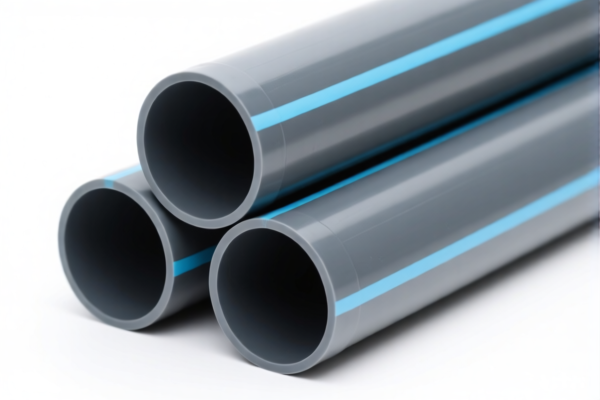
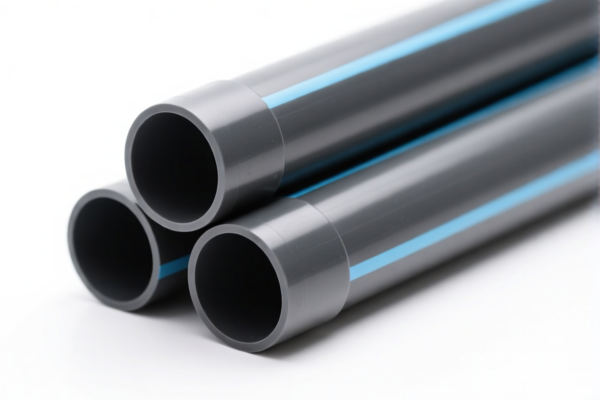
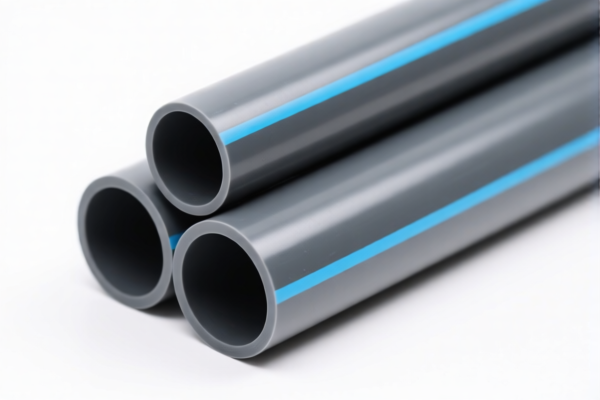
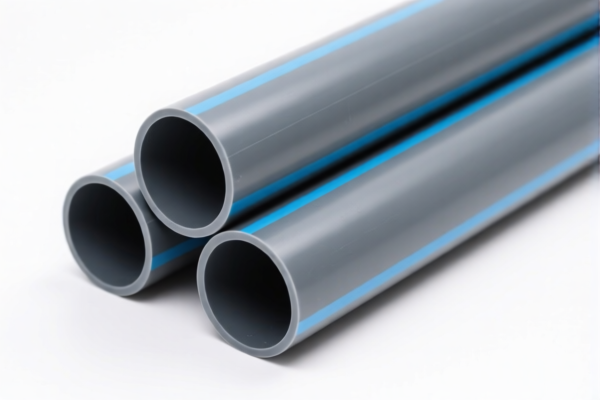
AI Analysis
🏗️ Rigid PVC Tubes (Polyvinyl Chloride Pipes)
🌐 HS Code Reference & Customs Clearance Guide | 2024/2025 Tariff Analysis | Professional Clearance Strategy
📌 1. Product Definition & Classification: Do You Know Your "PVC Tube"?
Rigid PVC tubes are essential components in plumbing, industrial fluid transport, and construction. In international trade, the classification depends heavily on manufacturing specifications and functional design:
General Plastic Pipes (Heading 3926):
Standard PVC pipes that do not meet the specific technical criteria for plastic articles of heading 3917 (often considered "catch-all" or residual categories for certain plastic products).
Plastic Pipes, Tubes, and Hoses (Heading 3917):
PVC pipes that strictly meet the definition of "pipes, tubes, and hoses" under Chapter 39 Note 5. This includes rigid conduits, pressure-rated pipes, and specific hose configurations.
⚠️ Key Distinction Point:
- If the product is a standard PVC pipe without specific "pipe/tube/hose" designation or fails specific chapter notes → May fall under 3926.90.99.87 / 3926.90.99.89
- If it is a rigid PVC conduit, pressure pipe, or specifically manufactured tube → Falls under 3917.32.00.10 / 3917.23.00.00 / 3917.39.00.20
📦 2. HS Code Classification Matrix (Detailed Breakdown)
| HS Code | Product Description | Applicability | Tax Rate (Total) | Status |
|--------|--------------------------|---------------------|-------------------|
| 3926.90.99.87 | PVC Pipe (Catch-all/Residual Category) | General PVC pipes not meeting 3917 specifics | 22.8% | Base: 5.3%, Add: 7.5%, Section 301: 10% |
| 3926.90.99.89 | PVC Pipe (Catch-all/Residual Category) | General PVC pipes not meeting 3917 specifics | 22.8% | Base: 5.3%, Add: 7.5%, Section 301: 10% |
| 3917.32.00.10 | Rigid PVC Pipe (Perfect Match) | Standard rigid PVC conduits/pipes meeting 3917 definition | 38.1% | Base: 3.1%, Add: 25.0%, Section 301: 10% |
| 3917.23.00.00 | PVC Pipe (VCM Polymer, Rigid) | Pipes made from vinyl chloride polymer, rigid form | 38.1% | Base: 3.1%, Add: 25.0%, Section 301: 10% |
| 3917.39.00.20 | PVC High-Pressure Flexible Hose | Specifically high-pressure PVC hoses | 38.1% | Base: 3.1%, Add: 25.0%, Section 301: 10% |
🔍 Critical Note:
- Products classified under 3917 (38.1%) face significantly higher tariffs than those under 3926 (22.8%).
- The difference stems from the 25% Additional Tariff applied to Section 301 goods in the 3917 category, whereas the 3926 category has a lower additional tariff component (7.5%).
- Misclassification Risk: Declaring a 3917-compliant pipe as 3926 to save taxes can lead to severe penalties, seizure, and back-tariffs.
💰 3. Tariff Structure Detailed Analysis (2026 Latest Tariff Rules)
✅ Applicable Country: United States (US)
✅ Origin: China (CN)
✅ Effective Date: Ongoing (Section 301 & IEEPA tariffs)
🎯 1. 3926.90.99.87 & 3926.90.99.89 —— PVC Pipes (Residual/Catch-all)
| Item | Detail |
|---|---|
| Base Duty Rate | 5.3% |
| USITC Additional Tariff (Section 301) | +7.5% |
| IEEPA Additional Tariff | +10% |
| Total Effective Rate | 22.8% |
| Tax Calculation | CIF Value × 22.8% |
| De Minimis Exemption | ❌ Not Applicable |
| Legal Basis Path | USITC:3926.90.99.87 → Section 301: 7.5% → IEEPA: 10% |
📌 Explanation:
- These codes are often used for PVC products that don't fit neatly into other specific plastic article headings.
- The 7.5% additional tariff is significantly lower than the 25% found in the 3917 category.
- Cost Advantage: Compared to 3917 codes, these offer a 15.3% lower total tariff burden. However, correct classification is paramount.
🎯 2. 3917.32.00.10 —— Rigid PVC Pipe (Perfect Match)
| Item | Detail |
|---|---|
| Base Duty Rate | 3.1% |
| USITC Additional Tariff (Section 301) | +25.0% |
| IEEPA Additional Tariff | +10% |
| Total Effective Rate | 38.1% |
| Tax Calculation | CIF Value × 38.1% |
| De Minimis Exemption | ❌ Not Applicable |
| Legal Basis Path | USITC:3917.32.00.10 → Section 301: 25.0% → IEEPA: 10% |
📌 Explanation:
- This code is for rigid PVC pipes that fully comply with the definition of "pipes, tubes, and hoses" under Chapter 39.
- The 25% additional tariff is the maximum standard rate for many Chinese plastic imports under Section 301.
- High Cost: Despite a lower base rate (3.1% vs 5.3%), the 25% surcharge makes this the most expensive option.
🎯 3. 3917.23.00.00 & 3917.39.00.20 —— Other PVC Pipes/Hoses
| Item | Detail |
|---|---|
| Base Duty Rate | 3.1% |
| USITC Additional Tariff (Section 301) | +25.0% |
| IEEPA Additional Tariff | +10% |
| Total Effective Rate | 38.1% |
| Tax Calculation | CIF Value × 38.1% |
| De Minimis Exemption | ❌ Not Applicable |
| Legal Basis Path | USITC:3917.23.00.00 / 3917.39.00.20 → Section 301: 25.0% → IEEPA: 10% |
📌 Explanation:
- 3917.23.00.00: Covers other PVC pipes/tubes (non-rigid or specific types).
- 3917.39.00.20: Specifically for PVC High-Pressure Hoses.
- Both carry the same high tariff burden as 3917.32.00.10 due to the 25% Section 301 surcharge.
🛠️ 4. Customs Clearance Operational Advice (Practical Pitfall Avoidance)
✅ 1. Documentation Checklist (Mandatory)
| Document | Required | Note |
|---|---|---|
| ✅ Product Specification Sheet | ✔️ | Must detail material (PVC), rigid/flexible status, pressure rating, diameter, wall thickness. |
| ✅ Technical Data Sheet | ✔️ | Essential to prove if it meets "Pipe/Tube/Hose" definition under Chapter 39 Note 5. |
| ✅ Product Photos | ✔️ | Clear images of the pipe, labeling, and cross-section. |
| ✅ Commercial Invoice | ✔️ | Must accurately describe the item as "Rigid PVC Pipe" or "PVC Hose" consistent with HS Code. |
| ✅ Packing List | ✔️ | Detail contents to avoid mixed shipments. |
| ✅ Certificate of Origin | ✔️ | Required for Section 301 tariff application. |
✅ 2. Classification Strategy (Key Rules)
🔥 “Rigid Pipes = 3917? Not Always! Check the Notes! Flexible/Hose = 3917. Residual = 3926.”
| Scenario | Correct HS Code | Risk if Misclassified |
|---|---|---|
| Standard Rigid PVC Conduit | 3917.32.00.10 (38.1%) |
If declared as 3926 → Penalty + Back Taxes |
| PVC Water Drain Pipe (Rigid) | 3917.23.00.00 or 3917.32.00.10 |
Same as above |
| PVC High-Pressure Hose | 3917.39.00.20 (38.1%) |
Misclassification leads to incorrect tariff assessment |
| Generic PVC Plastic Fittings/Pipes | 3926.90.99.87/89 (22.8%) |
Only if it does NOT meet Chapter 39 Note 5 "Pipe/Tube/Hose" definition |
| Mixed Shipment | Declare Separately | Do not lump high-tariff items with low-tariff items |
✅ 3. Special Handling Notes
| Situation | Recommendation |
|---|---|
| OEM Custom Pipes | Provide customer-specific drawings to prove compliance with 3917 definitions. |
| PVC Pipes with Fittings | Declare separately if possible. Fittings may have different HS codes/tariffs. |
| Pressure-Rated Pipes | Must provide pressure rating docs to justify 3917 classification (if applicable). |
| Non-Standard PVC Products | If unsure, lean towards 3926 only if explicitly allowed by Chapter 39 Notes; otherwise, 3917 is safer but costlier. |
🌍 5. Global Market Comparison (2024/2025)
| Country/Region | Recommended HS Code | Total Tariff (China Origin) | Key Certifications | Notes |
|---|---|---|---|---|
| 🇺🇸 USA | 3917.32.00.10 / 3926.90.99.87 |
38.1% or 22.8% | ASTM, NSF (if for drinking water) | High tariffs due to Section 301 & IEEPA |
| 🇨🇳 China | 3917.32.00.10 |
~3.1% - 5.3% | CCC (if applicable) | Low import duty, no Section 301 |
| 🇪🇺 EU | 3917.21.00 / 3917.39.00 |
~6.5% | CE, REACH | No additional punitive tariffs |
| 🇬🇧 UK | 3917.21.00 / 3917.39.00 |
~6.5% | UKCA, REACH | Post-Brexit rules apply |
| 🇨🇦 Canada | 3917.21.00 / 3917.39.00 |
~5% - 6.5% | CSA | CUSMA/USMCA may apply for US/Mexico origin |
📌 Conclusion:
- USA is the most challenging market for PVC tubes due to Section 301 (25%) and IEEPA (10%) tariffs.
- Total tariffs can reach 38.1% for correctly classified rigid pipes.
- Supply Chain Strategy: Consider sourcing from non-China origins (e.g., Vietnam, Mexico, Thailand) to mitigate these tariffs, or carefully evaluate if the product can be classified under 3926 (22.8%) if it truly meets the residual category definition.
📌 6. Common Errors & Pitfalls (Lessons Learned)
❌ Error 1: Declaring a rigid PVC conduit as "Plastic Part" under 3926 to save taxes.
👉 Consequence: Customs will reclassify to 3917, assess 38.1%, and impose penalties. Loss: 15.3% + Fees.
❌ Error 2: Mixing "Rigid Pipes" (3917) and "Flexible Hoses" (3917) with "Plastic Fittings" (3926) in one line item.
👉 Consequence: Customs may apply the highest tariff to the entire shipment. Loss: Higher duty on low-tariff items.
❌ Error 3: Ignoring Chapter 39 Note 5.
👉 Consequence: Incorrect classification leads to audits and back-tariffs for all previous imports.
❌ Error 4: Using vague descriptions like "PVC Tube" without specifying rigid/flexible or pressure rating.
👉 Consequence: Delayed clearance, requests for additional documentation, potential detention.
✅ Correct Practice:
"Rigid PVC Conduit, ASTM D1785, Schedule 40, 2-inch Diameter, for Electrical Wiring" → 3917.32.00.10
"PVC Plastic Pipe Fitting, Elbow, 90 Degrees, Not Classified as Pipe" → 3926.90.99.87
🎯 7. Final Recommendation: Professional Classification is Key
🎯 Key Takeaway:
🔹 "Rigid PVC Pipe = 3917 (38.1%)? Check Chapter 39 Note 5!"
🔹 "If it's a 'Residual' Plastic Product, it might be 3926 (22.8%)!"
🔹 "Misclassification Costs 15.3% More + Penalties. Document Everything."
📌 Pro Tip:
- Pre-Request a Binding Ruling from US Customs (CBP) if your product is borderline.
- Consult a Licensed Customs Broker to verify the product's physical characteristics against the HS Code definitions.
- Consider Supply Chain Diversification: If importing large volumes, explore sourcing from countries with lower or no Section 301 tariffs.
📣 Take Action Now:
📞 Contact a Customs Expert + Provide Product Specs + Verify HS Code
🚀 Ensure Smooth Clearance, Avoid Surprises, Protect Your Margins!
✨ Precision in Classification, Peace of Mind in Customs!
💼 Every Percent Counts in Global Trade!
Customer Reviews
About HS Code Classification
The Harmonized System (HS) is an internationally standardized nomenclature developed by the World Customs Organization (WCO) to classify traded products. Over 200 countries use the HS system as the basis for customs tariffs, trade statistics, and import/export regulations.
Each HS code follows a hierarchical structure:
- Chapter (2 digits) — Broad category of goods (e.g., Chapter 84: Machinery and Mechanical Appliances)
- Heading (4 digits) — More specific grouping within the chapter
- Subheading (6 digits) — Internationally standardized breakdown, used by all WCO member countries
- National subdivisions (8-10 digits) — Country-specific extensions for further classification, such as US HTSUS 10-digit codes
Correct HS code classification is essential for smooth customs clearance, accurate duty payment, and compliance with trade regulations. Misclassification can lead to customs delays, overpayment of duties, or penalties.
When importing from CN to US, the applicable tariff rates may include:
- Most-Favored-Nation (MFN) rate — The standard duty rate applied to WTO members
- General rate — Applied to countries without trade agreements
- Trade remedy duties — Additional tariffs such as Section 301 (anti-dumping), Section 232 (national security), or countervailing duties
The information provided on this page is for reference purposes only. For official classification, please consult with your local customs authority or a licensed customs broker.