Rigid Plastic Shell Travel Trunk
CN → US| HS Code | Tariff Rate | Origin | Destination | Doc |
|---|---|---|---|---|
| 4202122120 | 55.0% | CN | US | Official Doc |
| 3923109000 | 38.0% | CN | US | Official Doc |
| 3923900080 | 38.0% | CN | US | Official Doc |
| 4202122150 | 55.0% | CN | US | Official Doc |
Product Images
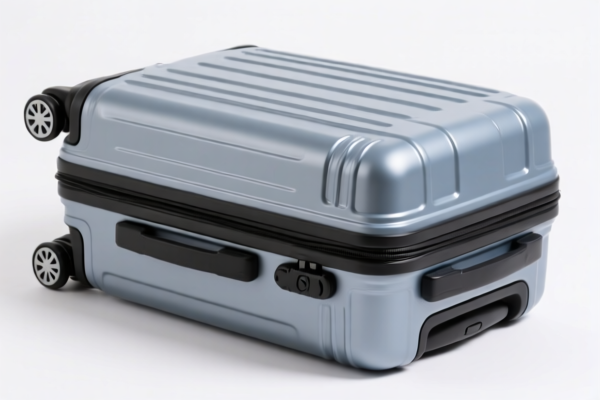
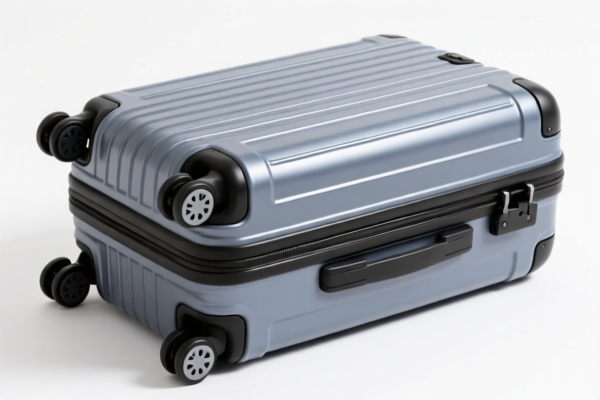
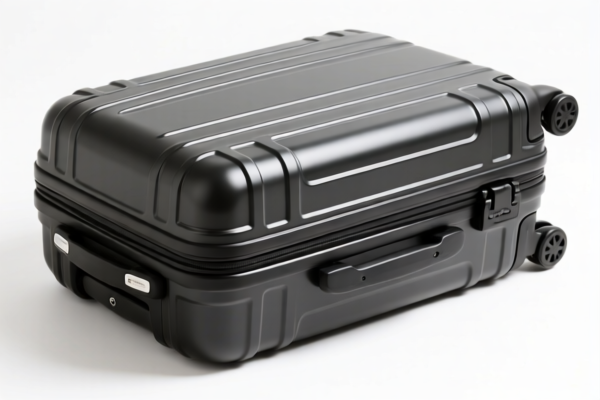
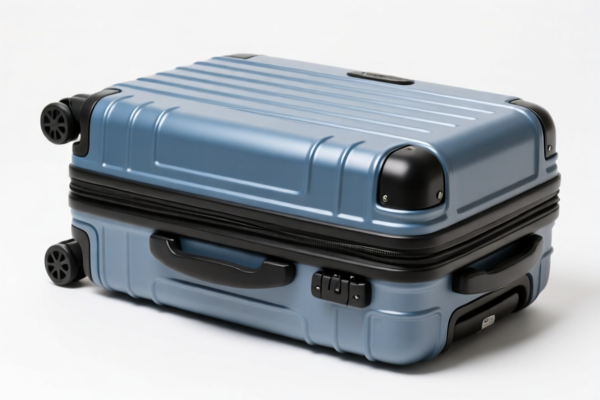
AI Analysis
🧳 Rigid Plastic Shell Travel Trunk (Hard-Side Suitcases)
🌐 HS Code Reference & Customs Clearance Guide | 2026 Latest Tariff Analysis | Professional Clearance Strategy
📌 I. Product Definition: What is a "Rigid Plastic Shell Travel Trunk"?
A Rigid Plastic Shell Travel Trunk (commonly known as a hard-side suitcase) is a durable luggage item designed for transporting personal effects during travel. Its defining characteristic is the hard, non-flexible outer shell made primarily of synthetic materials like ABS, PC (Polycarbonate), or composite plastics.
In international trade, the classification depends heavily on two factors: 1. The Primary Function: Is it viewed as a "container" for personal items (Luggage) or a "package" for goods (Packaging)? 2. The Material Composition: Is the plastic the essential character of the luggage, or is it merely a casing for a different product?
⚠️ Critical Distinction:
- If the item is a finished travel suitcase with handles, wheels, and locks, it generally falls under Heading 4202 (Luggage).
- If the item is a generic plastic box used for shipping or storage (without specific luggage features like wheels/handles), it may fall under Heading 3923 (Articles for the conveyance or packing of goods).
📦 II. HS Code Classification Details (2026 Official Tariff Comparison)
Below is the detailed breakdown of the four HS Codes provided in the reference data, explaining why each applies and the resulting tax implications.
| HS Code | Product Description | Why This Code Applies? | Total Tax Rate |
|---|---|---|---|
4202.12.21.20 |
Luggage (Plastic/Leather) | Primary Classification. The item is a "Trunk/Suitcase" specifically designed for travel. The summary notes the material is plastic or leather, fitting the definition of luggage articles. | 55.0% |
3923.10.90.00 |
Plastic Boxes/Cases | Alternative Classification. Viewed as a "box, case, or similar article" made of plastic. This applies if the item lacks specific travel features (wheels/handles) or is classified purely by its material form as a container. | 38.0% |
3923.90.00.80 |
Other Plastic Packing Articles | General Packaging. Classified under "Other" plastic articles for conveyance or packing. Used if the trunk is deemed a generic shipping container rather than consumer luggage. | 38.0% |
4202.12.21.50 |
Luggage (Mixed Materials) | Luggage (Plastic/Textile/Leather). Similar to the first code but covers cases where the material inference includes textile or leather components alongside plastic. It retains the "Luggage" essential character. | 55.0% |
🔍 Key Insight:
- Codes4202...(Luggage) carry a higher base tariff (20%) because they are consumer goods.
- Codes3923...(Packaging/Boxes) carry a lower base tariff (3%) because they are industrial/commodity packaging.
- However, all codes are subject to significant additional tariffs due to trade policies (see Section III).
💰 III. 2026 Latest Tariff Rate Breakdown (Including Surcharges)
✅ Applicable Country: United States (US)
✅ Origin: China (CN)
✅ Effective Date: Current (Post-2025 Policy Adjustments)
🎯 1. Luggage Classifications (4202.12.21.20 & 4202.12.21.50)
These codes apply when the item is clearly identified as Travel Luggage.
| Item | Detail |
|---|---|
| Base Tariff | 20.0% (Standard Ad Valorem for Luggage) |
| Section 301 Surcharge | +25.0% (USITC Section 301 Duties on Chinese Imports) |
| Section 122 Surcharge | +10.0% (IEEPA/Section 122 Duties targeting specific Chinese goods) |
| Total Effective Rate | 55.0% |
| De Minimis Exemption? | ❌ NO (High-risk category; always declared) |
| Calculation | CIF Value × 55% |
📌 Explanation:
The 55% total rate is the result of adding the 20% base duty, the 25% Section 301 tariff, and the 10% Section 122 tariff. This is a high-cost classification. The key is proving the item is for personal travel use (luggage) rather than generic storage.
🎯 2. Packaging/Box Classifications (3923.10.90.00 & 3923.90.00.80)
These codes apply when the item is viewed as a Plastic Container/Box.
| Item | Detail |
|---|---|
| Base Tariff | 3.0% (Standard Ad Valorem for Plastic Articles) |
| Section 301 Surcharge | +25.0% (USITC Section 301 Duties) |
| Section 122 Surcharge | +10.0% (IEEPA/Section 122 Duties) |
| Total Effective Rate | 38.0% |
| De Minimis Exemption? | ❌ NO |
| Calculation | CIF Value × 38% |
📌 Explanation:
The 38% total rate is significantly lower than the luggage rate because the base duty is only 3% (vs. 20% for luggage). However, the additional tariffs (25% + 10%) remain the same. This classification is often used to reduce the overall tax burden, but it carries the risk of reclassification by Customs if the item clearly has luggage features (wheels, telescopic handles).
🛠️ IV. Customs Clearance Practical Advice (Risk Mitigation Strategy)
✅ 1. Documentation Checklist (Must-Have)
| Document | Required? | Purpose |
|---|---|---|
| ✅ Product Photos | ✔️ | Show wheels, handles, locks, and interior lining to prove it's a "Travel Trunk" |
| ✅ Commercial Invoice | ✔️ | Clearly state: "Rigid Plastic Shell Travel Trunk, for Personal Travel Use" |
| ✅ Product Specification | ✔️ | Detail material (ABS/PC), dimensions, and weight |
| ✅ Packing List | ✔️ | Confirm no other goods are mixed in |
| ✅ HS Code Justification | ✔️ | Explain why it fits either 4202 (Luggage) or 3923 (Container) |
✅ 2. Declaration Strategy: Luggage vs. Container
| Scenario | Recommended HS Code | Risk Level | Reason |
|---|---|---|---|
| Item has Wheels, Handles, Locks | 4202.12.21.20 or .50 |
🟢 Low (Legally Accurate) | It is functionally luggage. Declare as such to avoid "misdeclaration" penalties, even though tax is higher (55%). |
| Item is a Bare Plastic Shell (No wheels/handles) | 3923.10.90.00 |
🟡 Medium | If it lacks travel features, it is legally a "box." Use this to lower tax to 38%. |
| Item is Luggage but you declare as Box | 3923... |
🔴 High | Customs Rejection Risk. CBP may reclassify it as 4202, charge 55%, plus penalties and interest. |
🔥 Pro Tip:
"Don't cheat the system with generic codes."
If the suitcase has telescopic handles and wheels, US Customs (CBP) will almost certainly classify it under 4202. Attempting to declare it as3923(plastic box) will trigger an audit. The 17% tax difference (55% - 38%) is not worth the risk of shipment detention.
✅ 3. Special Considerations
- Material Declaration: Ensure the invoice specifies the plastic type (e.g., "100% Polycarbonate"). Misidentifying material can lead to further scrutiny.
- Section 122 & 301 Compliance: These tariffs are non-negotiable for goods originating in China. No duty-free exemptions apply.
- Value Declaration: Ensure the declared CIF value is accurate. Since the rate is a percentage, under-declaring value is flagged easily.
🌍 V. Global Market Comparison (2026)
| Destination | Recommended HS Code | Total Est. Tax | Notes |
|---|---|---|---|
| 🇺🇸 USA | 4202.12.21.20 |
55.0% | High tariffs due to 301 & 122 clauses. |
| 🇨🇳 China (Export) | Varies | 0-9% | Depends on specific HS code in China's export list. |
| 🇪🇺 EU | 4202.12.00 |
~4-6% | No Section 301/122 equivalents, but anti-dumping duties may apply depending on origin. |
| 🇬🇧 UK | 4202.12.00 |
~4% | Post-Brexit tariffs apply; generally lower than US. |
📌 Conclusion:
The US market is the most expensive for rigid plastic travel trunks from China due to layered tariffs.
- Luggage (4202): 55% Total
- Packaging (3923): 38% Total (but high risk of misclassification)
📌 VI. Common Mistakes & Pitfalls
❌ Mistake 1: Declaring a wheeled suitcase as a "Plastic Box" (3923) to save tax.
👉 Consequence: CBP reclassification → Pay 55% + Penalties + Delay.
Verdict: The 17% savings is not worth the risk.
❌ Mistake 2: Ignoring the "Section 122" tariff.
👉 Consequence: Underpayment of 10%. CBP audits will catch this immediately.
Verdict: Always calculate 20% + 25% + 10% for Luggage.
❌ Mistake 3: Not specifying "Travel Use" in the description.
👉 Consequence: Customs may classify it as industrial storage, leading to queries.
Verdict: Be explicit: "For Personal Travel Use."
🎯 VII. Final Recommendation
🎯 For Rigid Plastic Shell Travel Trunks:
-
If it has Wheels/Handles/Locks:
➡️ Declare as Luggage (4202.12.21.20).
➡️ Budget for 55% Total Duty.
➡️ This is the legally correct and safest path. -
If it is a Bare Shell (No Travel Features):
➡️ Declare as Plastic Container (3923.10.90.00).
➡️ Budget for 38% Total Duty.
➡️ Ensure the product truly lacks luggage components.
📣 Immediate Action:
- Review product photos: Do they show travel features?
- If YES → Use4202.12.21.20.
- If NO → Use3923.10.90.00.
- Never misdeclare to avoid Section 122/301 tariffs. Compliance is cheaper than fines!
✨ Professional Clearance Starts with Accurate Classification!
💼 Every dollar saved in misclassification is lost in penalties.
Customer Reviews
About HS Code Classification
The Harmonized System (HS) is an internationally standardized nomenclature developed by the World Customs Organization (WCO) to classify traded products. Over 200 countries use the HS system as the basis for customs tariffs, trade statistics, and import/export regulations.
Each HS code follows a hierarchical structure:
- Chapter (2 digits) — Broad category of goods (e.g., Chapter 84: Machinery and Mechanical Appliances)
- Heading (4 digits) — More specific grouping within the chapter
- Subheading (6 digits) — Internationally standardized breakdown, used by all WCO member countries
- National subdivisions (8-10 digits) — Country-specific extensions for further classification, such as US HTSUS 10-digit codes
Correct HS code classification is essential for smooth customs clearance, accurate duty payment, and compliance with trade regulations. Misclassification can lead to customs delays, overpayment of duties, or penalties.
When importing from CN to US, the applicable tariff rates may include:
- Most-Favored-Nation (MFN) rate — The standard duty rate applied to WTO members
- General rate — Applied to countries without trade agreements
- Trade remedy duties — Additional tariffs such as Section 301 (anti-dumping), Section 232 (national security), or countervailing duties
The information provided on this page is for reference purposes only. For official classification, please consult with your local customs authority or a licensed customs broker.