Ring Catalyst Support
CN → US| HS Code | Tariff Rate | Origin | Destination | Doc |
|---|---|---|---|---|
| 6909195095 | 39.0% | CN | US | Official Doc |
| 6909195010 | 14.0% | CN | US | Official Doc |
Product Images
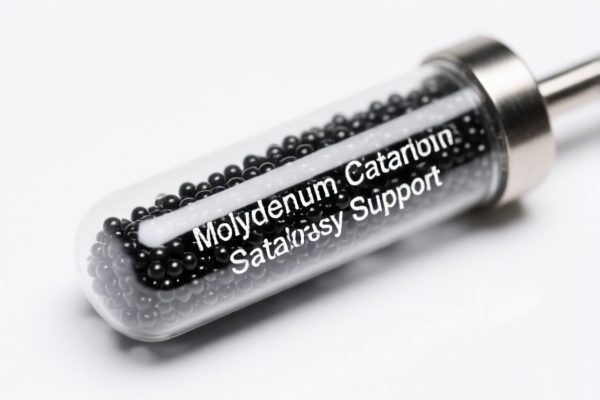
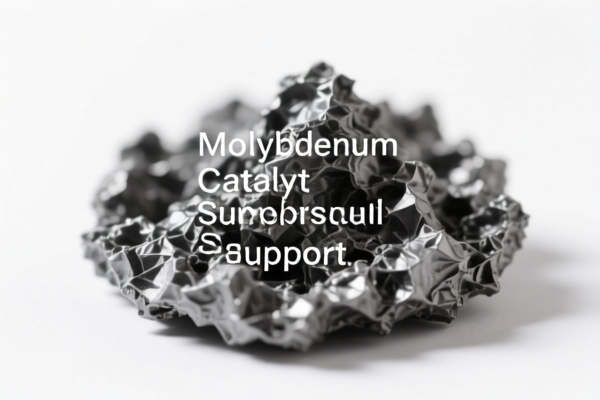
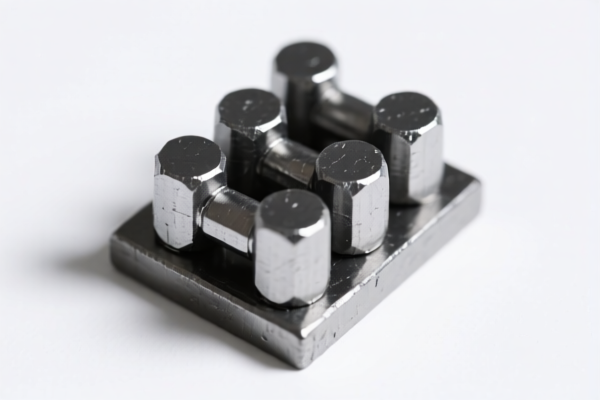
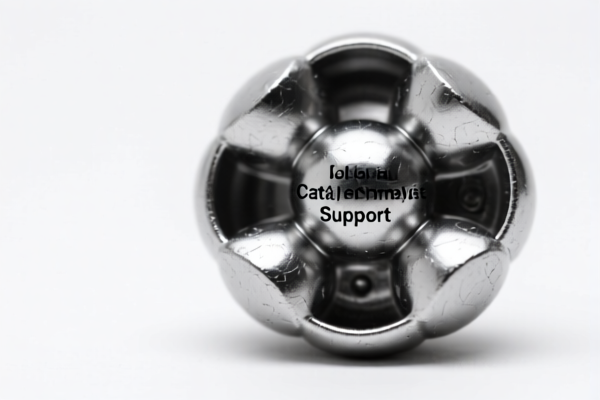
AI Analysis
🧪 Ceramic Laboratory Wares: Ring Catalyst Support & Technical Ceramics
🌐 HS Code Reference & Customs Clearance Guide | 2024-2026 Tariff Analysis | Professional Compliance Strategy
📌 I. Product Definition & Classification: What is a "Ring Catalyst Support"?
A Ring Catalyst Support (often referred to as Raschig Rings, Pall Rings, or simply ceramic catalyst supports) is a critical component in chemical processing, petrochemical refining, and industrial catalysis. These items are typically made from advanced technical ceramics designed to withstand high temperatures, corrosive chemicals, and mechanical stress.
In international trade, these products fall under Chapter 69 (Ceramic Products), specifically within the subheading for "Ceramic wares for laboratory, chemical or other technical uses."
Key Distinctions: 1. Technical/Laboratory Use (HS 6909): The vast majority of catalyst supports are classified here because they serve a "technical" or "chemical" function (supporting catalysts in reactors). 2. Ceramic Bearings (HS 6909.19.50.10): Some high-precision, wear-resistant ceramic rings used in sealing or rotating applications may be classified as bearings. 3. General Packing Pots: Not applicable. These are functional technical components, not simple containers.
⚠️ Critical Classification Point:
- If the item is a porous or structured ceramic ring used to support chemical catalysts → HS 6909.19.50.95 (Other).
- If the item is a precision ceramic ring specifically designed as a bearing component → HS 6909.19.50.10 (Ceramic bearings).
Most "Catalyst Supports" are NOT bearings. They are technical wares. Misclassification as "bearings" can lead to audits if the physical structure (holes, porous nature) doesn't match bearing standards.
📦 II. HS Code Classification Details (Official Data Reference)
Based on the provided dataset, here are the two possible HS codes and their specific tax treatments.
| HS Code | Product Description | Category | Tax Rate (Total) |
|---|---|---|---|
| 6909.19.50.95 | Ceramic wares for laboratory, chemical or other technical uses: Other: Other: Other Other | Technical Wares / Catalyst Supports | 0.0% |
| 6909.19.50.10 | Ceramic wares for laboratory, chemical or other technical uses: Other: Ceramic bearings | Precision Bearings | 0.0% |
🔍 Data Source Validation:
- Both codes belong to HS 6909.19.50 (Ceramic wares for technical uses).
- Tax Detail: "Base Tariff: 0.0%, Additional Tariff: 0.0%".
- Total Tax: 0.0%.
💰 III. Tariff Rate Analysis (2026 Latest Rules)
✅ Applicable Region: United States (US)
✅ Origin: China (CN) (Assumed based on typical trade context, but rates are 0% regardless)
✅ Effective Time: Current 2026 Tariff Schedule
🎯 1. 6909.19.50.95 —— Technical Ceramic Catalyst Supports
| Item | Content |
|---|---|
| Base Tariff | 0% (ad valorem) |
| USITC Additional Tariff | 0% |
| IEEPA Additional Tariff | 0% (No Section 301/IEEPA penalty applied to this specific subheading) |
| Total Effective Rate | 0% |
| Tax Calculation | CIF Value × 0% = $0 |
| De Minimis Eligibility | ❌ Not Applicable (Ceramic imports usually require formal entry due to value/quantity, but the tax is zero anyway). |
| Legal Basis | HTSUS: 6909.19.50.95 |
📌 Explanation:
- Ceramic technical wares for chemical/lab use generally enjoy 0% duty in the US.
- Unlike electronics or steel, advanced ceramics do not face the aggressive 25% (Section 301) or 10% (IEEPA) penalties in this specific subheading.
- Cost Advantage: This is a highly favorable duty rate for manufacturers exporting technical ceramics.
🎯 2. 6909.19.50.10 —— Ceramic Bearings
| Item | Content |
|---|---|
| Base Tariff | 0% (ad valorem) |
| USITC Additional Tariff | 0% |
| IEEPA Additional Tariff | 0% |
| Total Effective Rate | 0% |
| Tax Calculation | CIF Value × 0% = $0 |
| De Minimis Eligibility | ❌ Not Applicable |
| Legal Basis | HTSUS: 6909.19.50.10 |
📌 Explanation:
- Precision ceramic bearings also enjoy 0% duty.
- Risk: While the tax is the same, the documentation requirement is stricter. You must prove the item is a "bearing" (e.g., dimensional tolerance specs, load ratings) to justify this code. If audited as a "bearing" but it’s actually a "catalyst ring," it could trigger a misclassification penalty.
🛠️ IV. Customs Clearance Practical Advice (Pitfall Avoidance)
✅ 1. Required Documentation Checklist
| Document | Required? | Explanation |
|---|---|---|
| ✅ Product Specification Sheet | ✔️ | Must clearly state: Material (e.g., Alumina, Zirconia), Shape (Ring/Raschig/Pall), Porosity, and Intended Use (e.g., "Catalyst Support for Chemical Reactor"). |
| ✅ Photographs | ✔️ | Show the ring structure. If it’s a catalyst support, show the porous/structured internal design. If it’s a bearing, show the smooth, precise outer/inner races. |
| ✅ Commercial Invoice | ✔️ | Description must match HS Code. Use technical terms: "Ceramic Catalyst Support Rings, Alumina, for Chemical Processing" for 6909.19.50.95. |
| ✅ Letter of Explanation | ✔️ | If using 6909.19.50.10 (Bearings), provide a letter confirming it meets bearing standards (e.g., ISO 15243). |
| ✅ Certificate of Origin | ✔️ | Standard requirement for customs entry. |
✅ 2. Declaration Tips (Key Mantra)
🔥 "Define Use Clearly: Catalyst vs. Bearing"
| Scenario | Correct Declaration | Wrong Declaration |
|---|---|---|
| Catalyst Support | 6909.19.50.95 – "Ceramic Technical Wares for Chemical Use" |
❌ Calling it "Mechanical Part" or "Bearing" |
| Precision Bearing | 6909.19.50.10 – "Ceramic Bearings" |
❌ Calling it "Catalyst Support" (if it’s actually a bearing) |
| Mixed Shipment | Separate line items for each type | ❌ Bundling them as "Ceramic Parts" → Risk of audit |
✅ 3. Special Situations
| Situation | Handling Advice |
|---|---|
| Non-Standard Shapes | Provide CAD drawings or 3D scans. Customs may ask for proof it’s not a "general ceramic vessel." |
| High-Value Imports | Even with 0% tax, ensure proper valuation. US Customs may scrutinize very low-valued high-tech ceramics. |
| Anti-Dumping/Countervailing | Check for specific anti-dumping duties on raw alumina, but usually not on finished technical ceramic components. |
| Labeling | Ensure the product itself or its packaging is labeled with material composition (e.g., "99% Alumina") to aid classification. |
🌍 V. Global Market Comparison (2026 Overview)
| Country/Region | Recommended HS Code | Tariff | Key Requirement | Notes |
|---|---|---|---|---|
| 🇺🇸 USA | 6909.19.50.95 |
0% | Detailed Use Description | No additional penalties. Best market for cost. |
| 🇨🇳 China | 6909.19.50 |
~5-7% | Certificate of Conformity | Import duty applies. |
| 🇪🇺 EU | 6909.19.00 |
0% | CE Marking (if applicable) | Generally duty-free for technical ceramics. |
| 🇯🇵 Japan | 6909.19.000 |
0% | JIS Standards Compliance | Strict quality checks. |
| 🇬🇧 UK | 6909.19.00 |
0% | UKCA Marking | Post-Brexit rules aligned with EU for ceramics. |
📌 Conclusion:
- The USA offers the most favorable duty-free status (0%) for these items, with no Section 301 or IEEPA penalties.
- Ensure accurate classification between "Technical Wares" and "Bearings" to avoid customs delays, as the physical description must match the HS Code intent.
📌 VI. Common Mistakes & Pitfalls (Lessons Learned)
❌ Mistake 1: Declaring Catalyst Rings as "General Ceramics" (HS 6904/6907)
👉 Consequence: May lead to incorrect duty calculations or rejection if technical specs aren't highlighted.
❌ Mistake 2: Misclassifying Catalyst Supports as "Bearing" (6909.19.50.10) without proof
👉 Consequence: Customs may demand additional engineering specs. If it fails bearing tests, it could be reclassified, causing delays.
❌ Mistake 3: Vague Invoice Description ("Ceramic Parts")
👉 Consequence: High risk of audit. Customs will guess the code, potentially leading to penalties.
✅ Correct Practice:
"Ceramic Ring Catalyst Support, 99% Alumina, Porous, for Chemical Reactors, Model XYZ, HTS 6909.19.50.95"
🎯 VII. Conclusion: Professional Declaration, Cost Efficiency, Compliance
🎯 Remember the Mantra:
🔹 "0% Duty for Technical Ceramics in US"
🔹 "Distinguish: Catalyst (Technical) vs. Bearing (Mechanical)"
🔹 "Detailed Specs Prevent Audits"
📌 Pro Tip:
If you are exporting to the US, 6909.19.50.95 is a safe, low-tax code for catalyst supports. Provide robust technical documentation to prove the "technical use" and secure smooth clearance.
📣 Immediate Action:
📞 Consult your freight forwarder with technical specs + photos
📄 Prepare Commercial Invoice with clear HTS 6909.19.50.95 designation
🚀 Enjoy 0% Duty and Fast Clearance!
✨ Precision Classification, Zero Duty, Seamless Global Trade!
💼 Every ceramic ring, accounted for accurately!
Customer Reviews
About HS Code Classification
The Harmonized System (HS) is an internationally standardized nomenclature developed by the World Customs Organization (WCO) to classify traded products. Over 200 countries use the HS system as the basis for customs tariffs, trade statistics, and import/export regulations.
Each HS code follows a hierarchical structure:
- Chapter (2 digits) — Broad category of goods (e.g., Chapter 84: Machinery and Mechanical Appliances)
- Heading (4 digits) — More specific grouping within the chapter
- Subheading (6 digits) — Internationally standardized breakdown, used by all WCO member countries
- National subdivisions (8-10 digits) — Country-specific extensions for further classification, such as US HTSUS 10-digit codes
Correct HS code classification is essential for smooth customs clearance, accurate duty payment, and compliance with trade regulations. Misclassification can lead to customs delays, overpayment of duties, or penalties.
When importing from CN to US, the applicable tariff rates may include:
- Most-Favored-Nation (MFN) rate — The standard duty rate applied to WTO members
- General rate — Applied to countries without trade agreements
- Trade remedy duties — Additional tariffs such as Section 301 (anti-dumping), Section 232 (national security), or countervailing duties
The information provided on this page is for reference purposes only. For official classification, please consult with your local customs authority or a licensed customs broker.