Rivet Adapter
CN → US| HS Code | Tariff Rate | Origin | Destination | Doc |
|---|---|---|---|---|
| 8467990190 | 35.0% | CN | US | Official Doc |
| 7326908688 | 87.9% | CN | US | Official Doc |
| 7326908630 | 87.9% | CN | US | Official Doc |
| 8467920090 | 17.5% | CN | US | Official Doc |
| 8302496055 | 90.7% | CN | US | Official Doc |
Product Images
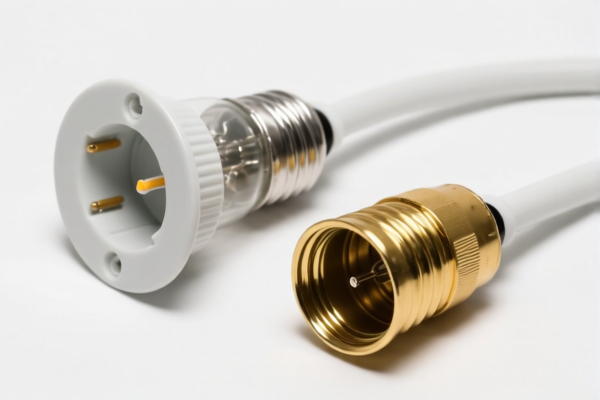


AI Analysis
🔩 Rivet Adapter: HS Code Classification & Customs Clearance Guide (2026)
🌐 HS Code Reference & Customs Clearance Guide | 2026 Latest Tariff Analysis | Professional Strategy
📌 I. Product Definition & Classification: What is a "Rivet Adapter"?
A Rivet Adapter (also known as a rivet nose or rivet shank holder) is a critical accessory used in pneumatic or manual riveting tools. Its primary function is to hold and guide the rivet shank into the tool’s nosepiece, ensuring proper alignment and feed.
In international trade, the classification of a Rivet Adapter depends heavily on its material composition and its relationship to the main tool (e.g., is it a standalone metal part, or an integral component of a pneumatic gun?).
⚠️ Key Distinction:
- If the adapter is simply a metal piece without complex mechanical integration beyond fitting, it may fall under general metal制品 (Chapters 73 or 83).
- If it is specifically designed as a spare part/attachment for a pneumatic riveting gun (HS 8467), it may enjoy lower duty rates.
- Crucial Note: Under US Trade Policy (Section 301 & IEEPA), metal parts often face high additional tariffs, while specific tool attachments may have different exemptions.
📦 II. HS Code Classification Details (2026 Tariff Reference)
The following HS Codes are derived from the provided data. Each code represents a different logical classification path, leading to significantly different tax outcomes.
| HS Code | Product Description | Logic Basis | Total Tax Rate | Key Tax Components |
|---|---|---|---|---|
| 7326.90.86.88 | Other articles of iron or steel | Material-Based: Classified as a generic metal article/part. | 87.9% | Base: 2.9% + 301 Tariff: 25% + IEEPA (Steel/Alu/Cu): 50% + Sec 122: 10% |
| 7326.90.86.30 | Other articles of iron or steel (Mechanical Component) | Component-Based: Classified as a mechanical/tool component under metal articles. | 87.9% | Base: 2.9% + 301 Tariff: 25% + IEEPA (Steel/Alu/Cu): 50% + Sec 122: 10% |
| 8467.92.00.90 | Parts of pneumatic tools (Other) | Functional/Accessory-Based: Classified as an accessory for pneumatic rivet guns. | 17.5% | Base: 0.0% + 301 Tariff: 7.5% + IEEPA: 10% |
| 8302.49.60.55 | Other base metal mountings, fittings, etc. | Fitting-Based: Classified as a "mounting/fitting" of base metal. | 90.7% | Base: 5.7% + 301 Tariff: 25% + IEEPA (Steel/Alu/Cu): 50% + Sec 122: 10% |
| 8467.99.01.90 | Parts of handheld tools (Other) | Tool Part-Based: Classified as a part of a handheld tool (general). | 35.0% | Base: 0.0% + 301 Tariff: 25% + IEEPA: 10% |
🔍 Critical Observation:
- The lowest tariff (17.5%) applies if the adapter is correctly classified as a part of a pneumatic tool (8467.92.00.90).
- Misclassification as a generic metal part (7326) or fitting (8302) results in extremely high tariffs (87.9% - 90.7%) due to the叠加 of Section 301, IEEPA, and Section 122 tariffs on steel/aluminum products.
💰 III. 2026 Latest Tariff Rate Breakdown (With Additional Duties)
✅ Applicable Country: United States (US)
✅ Origin: China (CN)
✅ Effective Date: Current rates as per 2026 trade policy
🎯 1. 8467.92.00.90 — BEST OPTION: Parts of Pneumatic Tools
| Item | Content |
|---|---|
| Base Duty Rate | 0.0% |
| USITC 301 Tariff | +7.5% |
| IEEPA Tariff | +10% (Specific to this subheading under current data) |
| Section 122 Tariff | Not listed/Exempt in this specific data point |
| Total Tariff | 17.5% |
| Calculation | CIF Value × 17.5% |
| Legal Basis | USITC:8467.92.00.90 → IEEPA:9903.01.24 (Partial) |
📌 Explanation:
- This classification leverages the "Parts of Tools" logic.
- It avoids the 50% IEEPA tariff on steel/aluminum and the 25% Section 301 base rate associated with metal articles, replacing them with lower specific rates for tool parts.
- Savings: ~70% less duty compared to metal article classification.
🎯 2. 8467.99.01.90 — Alternative: Parts of Handheld Tools
| Item | Content |
|---|---|
| Base Duty Rate | 0.0% |
| USITC 301 Tariff | +25.0% |
| IEEPA Tariff | +10% |
| Total Tariff | 35.0% |
| Calculation | CIF Value × 35.0% |
| Legal Basis | USITC:8467.99.01.90 → IEEPA:9903.01.24 |
📌 Explanation:
- Classified broadly as "other parts of handheld tools."
- Lower than metal parts but higher than pneumatic-specific parts.
- Useful if the tool is not strictly "pneumatic" but mechanical/handheld.
🎯 3. 7326.90.86.88 / 7326.90.86.30 — AVOID: Other Articles of Iron or Steel
| Item | Content |
|---|---|
| Base Duty Rate | 2.9% |
| USITC 301 Tariff | +25.0% |
| IEEPA Tariff (Steel/Alu/Cu) | +50.0% |
| Section 122 Tariff | +10.0% |
| Total Tariff | 87.9% |
| Calculation | CIF Value × 87.9% |
| Legal Basis | USITC:7326.90.86.88 → IEEPA:9903.01.25 (Steel/Alu) → Section 122 |
📌 Explanation:
- DANGEROUS CLASSIFICATION.
- The 50% IEEPA tariff on steel/aluminum products is the main driver.
- Combined with 301 and Section 122, this makes the product virtually non-profitable to import without significant margin adjustments.
🎯 4. 8302.49.60.55 — AVOID: Base Metal Mountings/Fittings
| Item | Content |
|---|---|
| Base Duty Rate | 5.7% |
| USITC 301 Tariff | +25.0% |
| IEEPA Tariff (Steel/Alu/Cu) | +50.0% |
| Section 122 Tariff | +10.0% |
| Total Tariff | 90.7% |
| Calculation | CIF Value × 90.7% |
📌 Explanation:
- Highest tariff rate.
- "Fittings" often attract stricter scrutiny and higher surcharges on raw metal content.
🛠️ IV. Customs Clearance Practical Advice (Pitfall Avoidance)
✅ 1. Documentation Checklist (Must-Haves)
| Document | Required? | Purpose |
|---|---|---|
| ✅ Product Specifications | ✔️ | Clearly state: "Adapter for Pneumatic Rivet Gun," material (e.g., Steel Grade), dimensions. |
| ✅ Technical Diagrams | ✔️ | Show how the adapter fits into the tool. Prove it is a part/accessory, not a standalone metal block. |
| ✅ Photos | ✔️ | Show the adapter in use or assembled with the rivet gun. |
| ✅ Commercial Invoice | ✔️ | Description should read: "Rivet Adapter, Part #XYZ, for Pneumatic Tool, Material: Steel" |
| ✅ Bill of Lading | ✔️ | Ensure no "Loose Metal Parts" description; use "Tool Accessories." |
✅ 2. Declaration Strategy (Key Tips)
🔥 "Don't Call it 'Steel,' Call it a 'Part'"
| Scenario | Recommended HS Code | Risk if Misclassified |
|---|---|---|
| Adapter for Pneumatic Gun | 8467.92.00.90 (17.5%) | If declared as "Steel Part" (7326) → 87.9% |
| Adapter for Handheld Mechanical Tool | 8467.99.01.90 (35.0%) | If declared as "Fitting" (8302) → 90.7% |
| Loose Metal Adapter (No Tool Context) | 7326.90.86.88 (87.9%) | High tax burden; avoid unless unavoidable. |
⚠️ Critical Warning:
- Never describe the item solely as "Steel Rivet Adapter" without referencing the tool it belongs to.
- Always include the model number of the compatible tool in the description to justify Chapter 84 (Machinery/Tools) over Chapter 73 (Iron/Steel Articles).
✅ 3. Special Cases
| Case | Advice |
|---|---|
| OEM Custom Adapters | Provide customer PO + tool manual to prove intended use with specific pneumatic guns. |
| Mixed Containers | If mixed with other tools, declare separately. Do not lump "adapters" with "raw steel bars." |
| Origin Documentation | Ensure Certificate of Origin matches the declared HS Code. Discrepancies trigger audits. |
🌍 V. Global Market Comparison (2026)
| Country | Recommended HS Code | Est. Duty | Notes |
|---|---|---|---|
| 🇺🇸 USA | 8467.92.00.90 | 17.5% | Best Option. Avoid 7326/8302 due to IEEPA/301. |
| 🇨🇳 China (Import) | 8467.99.00.00 | ~5-10% | Lower base tariffs; fewer surcharges. |
| 🇪🇺 EU | 8467.92.00.00 | 0-2% | Generally low duties for tool parts. |
| 🇬🇧 UK | 8467.92.00.00 | 0-2% | Post-Brexit, similar to EU for tools. |
| 🇯🇵 Japan | 8467.99.00.00 | 0-5% | Low duty for mechanical parts. |
📌 Conclusion:
- The USA is the most complex market due to layered tariffs (301, IEEPA, 122).
- Correct classification is vital to save ~70% in duties.
- EU/Asia markets are more forgiving, but accurate "Tool Part" description still helps for lowest rates.
📌 VI. Common Mistakes & Pitfalls (Blood Lessons)
❌ Mistake 1: Declaring as "Steel Rivet" (7318) or "Other Steel Articles" (7326)
👉 Result: 87.9% Tax.
👉 Fix: Prove it is a part of a machine (HS 8467).
❌ Mistake 2: Using "Metal Fitting" (8302) description
👉 Result: 90.7% Tax.
👉 Fix: Use "Tool Attachment/Accessory."
❌ Mistake 3: Ignoring IEEPA Steel/Aluminum Surcharge
👉 Result: 50% Additional Tax.
👉 Fix: Ensure HS Code does not trigger "Steel Article" classification unless necessary.
✅ Correct Practice:
"Rivet Adapter, Part #12345, Compatible with [Brand] Pneumatic Rivet Gun, Model XYZ. Material: Steel. For Industrial Use Only."
🎯 VII. Conclusion: Smart Classification, Smart Savings
🎯 Key Takeaway:
🔹 "A Rivet Adapter is a Tool Part, not a Steel Block."
🔹 HS 8467.92.00.90 (17.5%) vs. HS 7326.90.86.88 (87.9%).
🔹 The difference is 70.4% in duty.
📌 Action Plan:
1. Verify Compatibility: Ensure your adapter is explicitly for a pneumatic or handheld tool.
2. Update Descriptions: Add "For Pneumatic Tool" to all invoices.
3. Pre-Audit: Check with a customs broker for HS 8467.92.00.90 eligibility before shipping.
📣 Final Advice:
Do not guess the HS Code. A 2% error in classification can cost you 70% in duties.
Prioritize Chapter 84 (Machinery Parts) over Chapter 73 (Metal Articles).
✨ Precision in Classification = Profit in Pocket
💼 Optimize Your Supply Chain with Expert Tariff Strategy
Customer Reviews
About HS Code Classification
The Harmonized System (HS) is an internationally standardized nomenclature developed by the World Customs Organization (WCO) to classify traded products. Over 200 countries use the HS system as the basis for customs tariffs, trade statistics, and import/export regulations.
Each HS code follows a hierarchical structure:
- Chapter (2 digits) — Broad category of goods (e.g., Chapter 84: Machinery and Mechanical Appliances)
- Heading (4 digits) — More specific grouping within the chapter
- Subheading (6 digits) — Internationally standardized breakdown, used by all WCO member countries
- National subdivisions (8-10 digits) — Country-specific extensions for further classification, such as US HTSUS 10-digit codes
Correct HS code classification is essential for smooth customs clearance, accurate duty payment, and compliance with trade regulations. Misclassification can lead to customs delays, overpayment of duties, or penalties.
When importing from CN to US, the applicable tariff rates may include:
- Most-Favored-Nation (MFN) rate — The standard duty rate applied to WTO members
- General rate — Applied to countries without trade agreements
- Trade remedy duties — Additional tariffs such as Section 301 (anti-dumping), Section 232 (national security), or countervailing duties
The information provided on this page is for reference purposes only. For official classification, please consult with your local customs authority or a licensed customs broker.