Road Reflective Tape
CN → US| HS Code | Tariff Rate | Origin | Destination | Doc |
|---|---|---|---|---|
| 3919901000 | 41.5% | CN | US | Official Doc |
| 3919101010 | 41.5% | CN | US | Official Doc |
| 5903102010 | 35.0% | CN | US | Official Doc |
| 5903102090 | 35.0% | CN | US | Official Doc |
Product Images


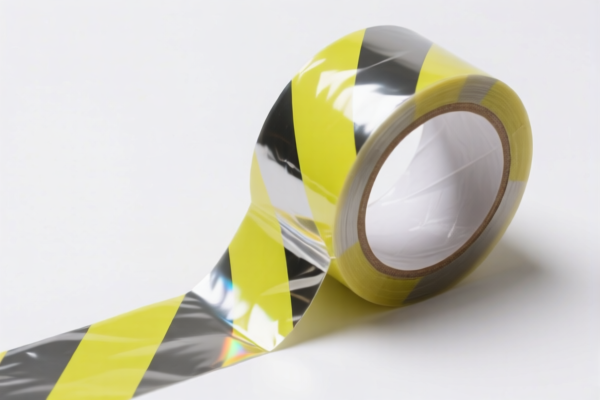

AI Analysis
🛣️ Road Reflective Tape (Traffic Reflective Tape)
🌐 HS Code Reference & Customs Clearance Guide | 2026 Latest Tariff Analysis | Professional Compliance Strategy
📌 I. Product Definition & Classification: Do You Really Understand "Reflective Tape"?
Road Reflective Tape is a critical safety product used for traffic signs, vehicle markings, and road infrastructure. In international trade, its classification depends heavily on its physical structure and material composition. It is generally categorized into two main types:
- Self-Adhesive Plastic Tape (Chapter 39): Tape made primarily of plastic films (like PET or PVC) with a reflective layer, used as a standalone adhesive product.
- Impregnated/Coated Fabric/Film (Chapter 59): Textile or plastic substrates impregnated, coated, or covered with plastics (like PVC), often used for heavy-duty industrial or traffic applications.
⚠️ Key Distinction Point:
- If the product is primarily a plastic self-adhesive tape without a fabric base → Likely Chapter 39. - If the product is a plastic film or fabric that has been impregnated/coated with plastic (PVC) and functions as a composite material → Likely Chapter 59.
📦 II. HS Code Classification Details (2026 Latest Tariff Authority Cross-Reference)
| HS Code | Product Description | Application Scenario | Material Structure |
|---|---|---|---|
3919.90.10.00 |
Self-adhesive plates, sheets, film, foil, tape, strip and other forms, of plastics: Other: Of non-cellular plastics | General traffic reflective tape, standalone adhesive rolls | Plastic-based, adhesive backing |
3919.10.10.10 |
Self-adhesive plates, sheets, film, foil, tape, strip and other forms, of plastics: In rolls of a width not exceeding 20 cm | Narrow traffic reflective tape (≤20cm), self-adhesive | Plastic/Self-adhesive, narrow width |
5903.10.20.10 |
Textile fabrics impregnated, coated, covered or laminated with plastics of PVC: In rolls of a width exceeding 5 m, of a surface weight exceeding 1500 g/m² or of a thickness exceeding 1.05 mm | Large-scale traffic reflective films, heavy-duty PVC laminates | PVC impregnated/laminated, specific weight/thickness |
5903.10.20.90 |
Textile fabrics impregnated, coated, covered or laminated with plastics of PVC: Other | PVC plastic film with fabric substrate, composite reflective material | PVC/Plastic film + Fabric base |
🔍 Critical Reminder:
- Chapter 39 applies to plastic self-adhesive tapes where the plastic is the main identity. - Chapter 59 applies to composite materials where a textile or plastic substrate is impregnated/coated with PVC. The key is the process of impregnation/coating and the resulting composite nature. - If the product is simply a "plastic tape with reflective film," it often falls under 3919. If it is a "PVC-coated fabric/film," it falls under 5903.
💰 III. 2026 Latest Tariff Rate Details (Including Additional Taxes, Policy Add-ons)
✅ Applicable Country: United States (US)
✅ Origin: China (CN)
✅ Effective Date: From November 10, 2025 (including subsequent imports)
🎯 1. 3919.90.10.00 & 3919.10.10.10 —— Self-Adhesive Plastic Tapes
| Item | Content |
|---|---|
| Base Tariff | 6.5% (ad valorem) |
| Section 301 Additional Tariff | +25% |
| Section 122 Tariff | +10% |
| Total Tax Rate | 41.5% |
| Tax Calculation | CIF Value × 41.5% |
| De Minimis Exemption | ❌ Not Applicable (deny_de_minimis) |
| Legal Basis Path | 301:3919.90.10 → 122:3919 → Base:6.5% |
📌 Explanation:
- "Base Tariff 6.5%": The standard Most Favored Nation (MFN) rate for self-adhesive plastic tapes. - "Section 301 Tariff 25%": The retaliatory tariff imposed on Chinese goods under US Trade Act Section 301. - "Section 122 Tariff 10%": An additional 10% tariff under Section 122 of the Trade Expansion Act of 1962 (applies to certain imports). - Total 41.5% is a high tariff burden, requiring precise declaration to avoid penalties.
🎯 2. 5903.10.20.10 & 5903.10.20.90 —— Impregnated/Coated PVC Textile/Film
| Item | Content |
|---|---|
| Base Tariff | 0.0% (ad valorem) |
| Section 301 Additional Tariff | +25% |
| Section 122 Tariff | +10% |
| Total Tax Rate | 35.0% |
| Tax Calculation | CIF Value × 35.0% |
| De Minimis Exemption | ❌ Not Applicable (deny_de_minimis) |
| Legal Basis Path | 301:5903.10.20 → 122:5903 → Base:0.0% |
📌 Explanation:
- "Base Tariff 0.0%": PVC-impregnated textiles/films often have a lower base duty. - "Section 301 Tariff 25%": Same as above. - "Section 122 Tariff 10%": Same as above. - Total 35.0% is 6.5% lower than the Chapter 39 classification. This makes the Chapter 59 classification significantly more cost-effective, if the product structure qualifies.
🛠️ IV. Customs Clearance Practical Advice (Real-World Pitfall Avoidance)
✅ 1. Preparation Checklist (No Missing Items)
| Document | Required | Explanation |
|---|---|---|
| ✅ Product Spec Sheet | ✔️ | Must detail: Width, Length, Material Composition (e.g., "PET reflective layer on acrylic adhesive" vs. "PVC-coated polyester fabric"), Reflectivity Grade. |
| ✅ Material Composition Diagram | ✔️ | Crucial for distinguishing between Chapter 39 (plastic tape) and Chapter 59 (impregnated/composite). |
| ✅ Product Photos | ✔️ | Clear images of the roll, cross-section, and adhesive side. Show if there's a fabric texture. |
| ✅ Commercial Invoice | ✔️ | Must clearly state: "Road Reflective Tape" and specify material (e.g., "Self-adhesive plastic tape" or "PVC-impregnated fabric"). |
| ✅ Packing List | ✔️ | Confirm net/gross weight. |
| ✅ Certificate of Origin (CO) | ✔️ | Required for origin verification (China). |
✅ 2. Declaration Strategy (Key Mnemonics)
🔥 "Material Determines Chapter, Process Determines Tariff!"
| Scenario | Correct Declaration | Wrong Practice | Result |
|---|---|---|---|
| Plastic Self-Adhesive Tape (e.g., PET film + acrylic glue) | 3919.90.10.00 or 3919.10.10.10 |
Declare as "PVC Fabric" | Higher Tax (41.5%) |
| PVC-Coated Fabric/Film (e.g., Polyester fabric + PVC coating) | 5903.10.20.10 or 5903.10.20.90 |
Declare as "Plastic Tape" | Lower Tax (35.0%) if correct |
| Mixed/Composite | Provide detailed material breakdown | Vague description "Reflective Tape" | Risk of Audit/Re-classification |
📌 Critical Tip:
- If your tape is PVC-based but self-adhesive without a fabric base, it may still fall under 3919 because it is a "plastic tape." - If your tape is a PVC film laminated onto a fabric, it is likely 5903 (impregnated/coated textile/film). - Proof is Key: Provide a material cross-section image or a third-party test report confirming the composite structure to justify the Chapter 59 classification and save 6.5%.
✅ 3. Special Cases Handling
| Scenario | Handling Advice |
|---|---|
| OEM Custom Tape | Provide client order + design specs. Ensure material description matches the physical product. |
| Narrow Tape (<20cm) | Use 3919.10.10.10 for better specificity, but tax rate is same as 3919.90.10.00. |
| Wide Roll (>5m) Heavy Duty | Likely 5903.10.20.10. Ensure weight/thickness specs are documented. |
| Small Package (<$800) | ❌ No De Minimis: Due to Section 301 and 122, these items cannot use the $800 de minimis exemption. All packages are subject to full duty. |
🌍 V. Global Market Customs Comparison (2026 Latest)
| Country/Region | Recommended HS Code | Tariff (China Origin) | Certification Requirements | Notes |
|---|---|---|---|---|
| 🇺🇸 USA | 3919.90.10.00 / 5903.10.20.90 |
41.5% / 35.0% | None specific, but accurate declaration is key | High tariffs due to 301/122. No de minimis. |
| 🇨🇳 China | 3919.90.10.00 / 5903.10.20.90 |
6.5% / 0.0% | None | Low base tariffs. |
| 🇪🇺 EU | 3919.90.90 / 5903.90.90 |
6.5% / 0% | CE (if applicable) | No Section 301/122 equivalent. |
| 🇬🇧 UK | 3919.90.90 / 5903.90.90 |
6.5% / 0% | UKCA | Post-Brexit rules apply. |
| 🇨🇦 Canada | 3919.90.00 / 5903.90.00 |
6.5% / 0% | None | USMCA may apply if manufactured in NA. |
📌 Conclusion:
- The USA is the most challenging market due to the combined 301 (25%) and 122 (10%) tariffs. - Chapter 59 (35%) is significantly cheaper than Chapter 39 (41.5%). Ensure your product qualifies for Chapter 59 (i.e., it is a composite of plastic-impregnated fabric/film) to save costs. - De Minimis ($800) is OFF-LIMITS for all Chinese-origin reflective tape imports to the US.
📌 VI. Common Mistakes & Pitfall Guide (Lessons Learned)
❌ Mistake 1: Declaring all reflective tape as 3919.90.10.00 without checking material structure.
👉 Consequence: Paying 41.5% instead of 35.0%. Overpayment of $6,500 per $100,000 shipment.
❌ Mistake 2: Using "Reflective Tape" as the only description without material details.
👉 Consequence: Customs may audit the entry, request additional documentation, or reclassify to the higher rate. Delays + Legal Costs.
❌ Mistake 3: Assuming small packages (<$800) are tax-free.
👉 Consequence: Section 301 and 122 tariffs override the de minimis exemption. All shipments are taxed.
❌ Mistake 4: Confusing "PVC Tape" with "PVC-Impregnated Fabric."
👉 Consequence: Misclassification leads to penalties. Proof of composite structure is essential for Chapter 59.
✅ Correct Practice:
"Self-Adhesive Traffic Reflective Tape, Model XYZ, Width: 5cm, Material: PET Reflective Film on Acrylic Adhesive" → Chapter 39
"PVC-Coated Polyester Fabric Roll, Width: 2m, Reflective Print, Used for Road Marking" → Chapter 59
🎯 VII. Conclusion: Professional Declaration, Save Costs, Ensure Compliance!
🎯 Remember the Mnemonic:
🔹 "Plastic Tape → Chapter 39 (41.5%) | PVC Composite → Chapter 59 (35.0%)"
🔹 "No De Minimis for China! 41.5% or 35% – Choose Wisely!"
🔹 "Material Proof Saves 6.5% – Document Your Composite Structure!"
📌 Pro Tip:
If your tape is manufactured in Vietnam, Mexico, or Thailand, you may avoid the 301/122 tariffs. Consider supply chain diversification if volume is high.
Request a Pre-Ruling (Advance Ruling) from US Customs if you are unsure about the Chapter 39 vs. 59 classification.
📣 Immediate Action:
📞 Contact a professional customs broker + Provide product specs + Apply for HS Code Pre-Ruling
🚀 Let your reflective tape clear customs smoothly, save 6.5%, and boost profits!
✨ Professional Customs Clearance Starts with Precise Classification!
💼 Every cent of cost deserves precise calculation!
Customer Reviews
About HS Code Classification
The Harmonized System (HS) is an internationally standardized nomenclature developed by the World Customs Organization (WCO) to classify traded products. Over 200 countries use the HS system as the basis for customs tariffs, trade statistics, and import/export regulations.
Each HS code follows a hierarchical structure:
- Chapter (2 digits) — Broad category of goods (e.g., Chapter 84: Machinery and Mechanical Appliances)
- Heading (4 digits) — More specific grouping within the chapter
- Subheading (6 digits) — Internationally standardized breakdown, used by all WCO member countries
- National subdivisions (8-10 digits) — Country-specific extensions for further classification, such as US HTSUS 10-digit codes
Correct HS code classification is essential for smooth customs clearance, accurate duty payment, and compliance with trade regulations. Misclassification can lead to customs delays, overpayment of duties, or penalties.
When importing from CN to US, the applicable tariff rates may include:
- Most-Favored-Nation (MFN) rate — The standard duty rate applied to WTO members
- General rate — Applied to countries without trade agreements
- Trade remedy duties — Additional tariffs such as Section 301 (anti-dumping), Section 232 (national security), or countervailing duties
The information provided on this page is for reference purposes only. For official classification, please consult with your local customs authority or a licensed customs broker.