Road Safety Reflective Tape
CN → US| HS Code | Tariff Rate | Origin | Destination | Doc |
|---|---|---|---|---|
| 3919901000 | 41.5% | CN | US | Official Doc |
| 3919101010 | 41.5% | CN | US | Official Doc |
| 5903102010 | 35.0% | CN | US | Official Doc |
| 5903102090 | 35.0% | CN | US | Official Doc |
| 5907006000 | 35.0% | CN | US | Official Doc |
Product Images

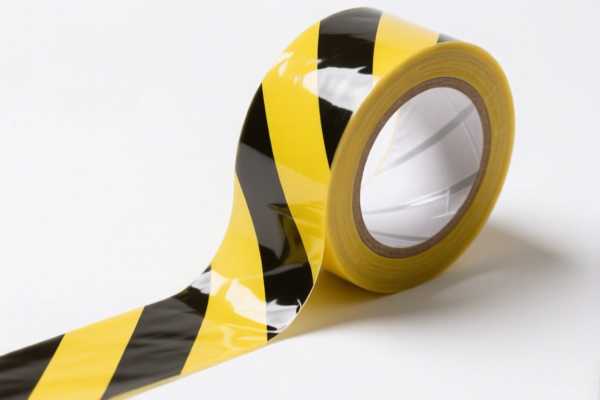
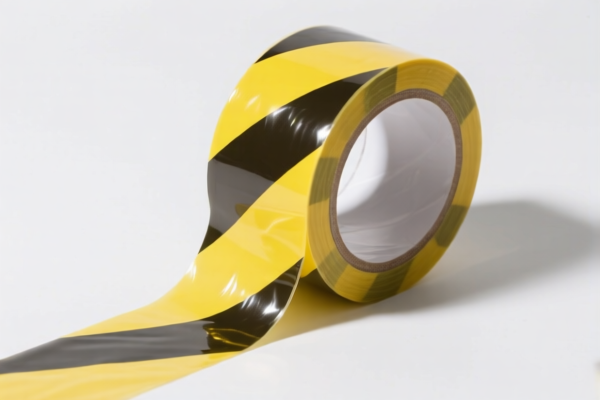
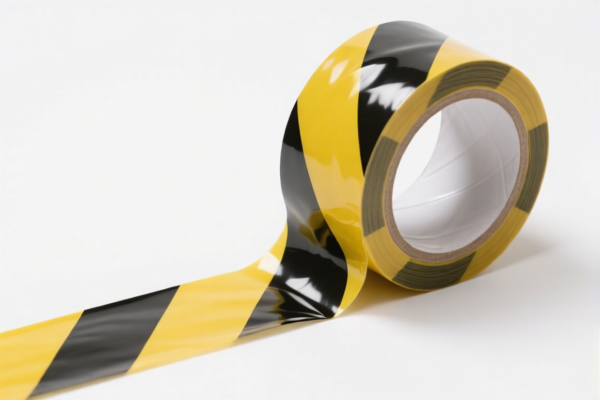
AI Analysis
🛣️ Road Safety Reflective Tape
🌐 HS Code Classification & Tariff Guide | 2026 Updated | U.S. Customs & Trade Compliance Handbook
📌 One-Stop Expert Reference for Exporters, Importers & Logistics Professionals
📦 1. Product Definition & Classification: What Exactly Is “Road Safety Reflective Tape”?
Road safety reflective tape is a high-visibility, retro-reflective material used on roads, highways, construction zones, and vehicles to enhance visibility during low-light or nighttime conditions. It is designed to reflect light back to its source (e.g., car headlights), significantly improving safety.
In international trade, this product is not classified as a simple adhesive tape, but rather as a specialized safety product with specific material composition and functional purpose.
⚠️ Key Determinants for HS Code Assignment: - Material base: Plastic film, PVC, or textile (synthetic/fiber) substrate
- Manufacturing method: Coated, laminated, or impregnated
- Functional design: Retro-reflective (microprismatic or glass bead)
- Form: Tape, strip, or sheet
🔍 2. HS Code Breakdown (2026 U.S. Tariff Schedule – China-Origin)
| HS Code | Product Description | Tax Rate | Base Tariff | Add-on Duties | Total Duty |
|---|---|---|---|---|---|
3919.90.10.00 |
Reflective tape, in tape form, functional for road safety, material inferred as plastic | 41.5% | 6.5% | 25.0% (Section 301) + 10.0% (Section 122) | ✅ 41.5% |
3919.10.10.10 |
Reflective tape, in tape form, used for traffic safety, made of plastic/self-adhesive | 41.5% | 6.5% | 25.0% (Section 301) + 10.0% (Section 122) | ✅ 41.5% |
5903.10.20.10 |
Reflective tape, coated, impregnated, or laminated, containing PVC or other plastics | 35.0% | 0.0% | 25.0% (Section 301) + 10.0% (Section 122) | ✅ 35.0% |
5903.10.20.90 |
Reflective tape made by impregnating PVC or plastic film onto textile substrate (e.g., polyester) | 35.0% | 0.0% | 25.0% (Section 301) + 10.0% (Section 122) | ✅ 35.0% |
5907.00.60.00 |
Reflective warning tape, coated with reflective material, base fabric: synthetic or man-made fiber | 35.0% | 0.0% | 25.0% (Section 301) + 10.0% (Section 122) | ✅ 35.0% |
📌 Note: All tariffs apply to goods originating from China (CN), effective November 10, 2025, under U.S. trade enforcement actions.
💰 3. Detailed Tariff Explanation (U.S. Trade Law & Enforcement)
🔹 Section 301 (USITC) – 25.0% Additional Duty
- Legal Basis: U.S. Trade Representative (USTR) Section 301 Investigation (China’s unfair trade practices)
- Applies to: All goods from China listed in List 3 & List 4A
- Impact: Applies to all 5 HS Codes above — regardless of material or form
- Key Point: Even if the base tariff is 0%, the 25% add-on is mandatory
✅ Example:
5903.10.20.10has 0% base tariff, but +25% under Section 301 → Still 35% total after adding 10% from Section 122
🔹 Section 122 (IEEPA) – 10.0% Additional Duty
- Legal Basis: International Emergency Economic Powers Act (IEEPA), enacted under Executive Order 13959
- Applies to: Goods from China (including Hong Kong), regardless of product type
- Effective Date: November 10, 2025
- Scope: Targets all imports from China with no exceptions for “low-value” or “non-strategic” goods
- Key Point: Cannot be waived, even for small shipments
✅ Why it matters:
- This 10% is in addition to the 25% Section 301 duty
- No de minimis exemption applies → Even $100 shipments face full duty
🔹 Base Tariff (Ad Valorem)
- Varies by HS Code:
- 6.5% for plastic-based tapes (
3919.90.10.00,3919.10.10.10) - 0.0% for coated/impregnated textile or PVC-based tapes (
5903.10.20.10,5903.10.20.90,5907.00.60.00)
⚠️ Critical Insight:
- A lower base tariff does not mean lower total cost
- The 25% + 10% add-ons dominate the final rate
- So, plastic tape (6.5% base) ends up at 41.5% total
- Textile-based tape (0% base) ends up at 35.0% total — still high!
🛠️ 4. Customs Clearance Best Practices (Pro Tips for 2026)
✅ 1. Documentation Checklist (MUST-HAVE)
| Document | Required? | Why It Matters |
|---|---|---|
| ✅ Commercial Invoice | ✔️ | Must clearly state: “Reflective Safety Tape, for Road Use” |
| ✅ Packing List | ✔️ | Include roll dimensions, weight, quantity |
| ✅ Product Specifications | ✔️ | Material type (PVC, polyester, plastic film), reflectivity class (ISO 23530), thickness |
| ✅ Test Report (e.g., ASTM D4956) | ✔️ | Prove retro-reflective performance |
| ✅ Certificate of Origin (CO) | ✔️ | Required for tariff eligibility |
| ✅ Sample Photo (with label) | ✔️ | Show product form, backing, reflective surface |
| ✅ Customs Broker Letter | ✔️ | For pre-clearance or classification request |
✅ 2.申报技巧 (Declaration Strategy)
🔥 “Material First, Form Second, Use Last” — The Golden Rule of Reflective Tape Classification
| Scenario | Correct HS Code | Why? |
|---|---|---|
| Tape made of PVC film with reflective coating | 5903.10.20.10 |
Coated/impregnated plastic → 5903 category |
| Tape made of plastic film with self-adhesive backing | 3919.10.10.10 |
Plastic + adhesive = 3919 category |
| Tape with PVC film laminated to polyester fabric | 5903.10.20.90 |
Textile substrate + plastic → 5903.10.20.90 |
| Tape with synthetic fiber base + reflective coating | 5907.00.60.00 |
Coated textile → 5907 category |
| Tape with no fabric, just plastic film + adhesive | 3919.90.10.00 |
Pure plastic tape → 3919.90.10.00 |
📌 Warning:
- Do not declare as “adhesive tape” or “signage material” — risk of misclassification
- Use precise terms: “Retro-reflective safety tape for road use”
- Avoid vague terms like “warning tape” or “reflective strip”
✅ 3. Special Cases & Risk Mitigation
| Situation | Recommended Action |
|---|---|
| Mixed material tape (PVC + fabric) | Classify under 5903.10.20.90 — textile base dominates |
| Tape with microprismatic reflectors | Still falls under same HS Codes — no special subheading |
| Tape for vehicles (e.g., trucks, buses) | Same HS Code — use case doesn’t change classification |
| Tape for temporary road signs | Still classified as road safety tape → same tariff |
| Tape imported via third country (e.g., Vietnam, Mexico) | Check origin rules: If not substantially transformed, may still be subject to China-origin tariffs |
📌 Pro Tip:
If your tape is manufactured in Vietnam or Mexico, and material is not Chinese, you may avoid Section 301 & 122 tariffs — but must prove with Form A (ASEAN) or USMCA Certificate.
🌍 5. Global Tariff Comparison (2026)
| Country | Recommended HS Code | Tariff | Key Certifications | Notes |
|---|---|---|---|---|
| 🇺🇸 United States | 3919.10.10.10 / 5903.10.20.90 |
35–41.5% | FCC, ASTM, ISO | High tariffs due to China origin |
| 🇨🇳 China | 3919.10.10.10 / 5907.00.60.00 |
5% | CCC, GB/T | No extra tariffs |
| 🇪🇺 European Union | 3919.10.10.10 / 5903.10.20.90 |
0% (if CE) | CE, REACH | No 301/122 tariffs |
| 🇦🇺 Australia | 5903.10.20.90 |
5% | RCM | No extra duties |
| 🇯🇵 Japan | 5907.00.60.00 |
0% | PSE | No additional tariffs |
📌 Insight:
- U.S. is the only market imposing 35–41.5% tariffs on Chinese-origin reflective tape
- EU, Japan, Australia, China have much lower or zero tariffs
🚨 6. Common Mistakes & Penalties (Avoid These!)
❌ Mistake 1: Declaring plastic-based tape as “textile tape” to avoid 6.5% base tariff
👉 Result: Misclassification → $50,000+ in penalties + seizure
❌ Mistake 2: Not including test report proving reflectivity
👉 Result: Customs delays, request for sample testing, or rejection
❌ Mistake 3: Using “adhesive tape” as description
👉 Result: Classification under wrong HS Code → higher duty, fines
❌ Mistake 4: Assuming “low value” = exempt from 301/122 tariffs
👉 Result: No de minimis exemption — full 35–41.5% duty applies
✅ 7. Final Recommendations: Smart Export Strategy
🔥 “Know Your Material, Declare Your Use, Avoid China, or Pay the Price”
✅ Recommended Actions:
- Verify material composition (PVC? Plastic film? Polyester?).
- Use exact product description: “Retro-reflective tape for road safety, made of [material], self-adhesive, ISO 23530 compliant”.
- Consider shifting manufacturing to Vietnam, Mexico, or Thailand to avoid 301/122 tariffs.
- Apply for Advance Ruling (Pre-Clearance) with U.S. Customs to lock in HS Code and tariff.
- Partner with a U.S.-based customs broker experienced in Section 301/122 compliance.
🎯 Summary: Key Takeaways
| Fact | Why It Matters |
|---|---|
| ✅ All 5 HS Codes face 25% + 10% add-ons | Total tax is 35–41.5%, not just base tariff |
| ✅ No de minimis exemption | Even $100 shipments pay full duty |
| ✅ Material base determines HS Code | Plastic vs. textile = different codes & rates |
| ✅ U.S. is the only high-tariff market | EU, Japan, Australia: 0–5% |
| ✅ Pre-clearance is your best defense | Avoid delays, penalties, and disputes |
📣 Act Now: Secure Your Supply Chain!
📞 Contact a U.S. Customs Broker + Submit product specs + Request HS Code Pre-Ruling
🚀 Avoid surprise tariffs, delays, or seizures
💼 Your product’s success depends on precise classification
✨ Pro Tip:
If your tape is not made in China, and not using Chinese materials, you may qualify for 0% tariffs under USMCA or ASEAN — prove it with documentation!
📌 Final Word:
"One wrong HS Code can cost you 40% of your revenue.
One smart classification can save you millions."
✅ Your Road Safety Tape. Your Global Market. Your Control.
🔐 Start with accurate classification. End with smooth customs clearance.
Customer Reviews
About HS Code Classification
The Harmonized System (HS) is an internationally standardized nomenclature developed by the World Customs Organization (WCO) to classify traded products. Over 200 countries use the HS system as the basis for customs tariffs, trade statistics, and import/export regulations.
Each HS code follows a hierarchical structure:
- Chapter (2 digits) — Broad category of goods (e.g., Chapter 84: Machinery and Mechanical Appliances)
- Heading (4 digits) — More specific grouping within the chapter
- Subheading (6 digits) — Internationally standardized breakdown, used by all WCO member countries
- National subdivisions (8-10 digits) — Country-specific extensions for further classification, such as US HTSUS 10-digit codes
Correct HS code classification is essential for smooth customs clearance, accurate duty payment, and compliance with trade regulations. Misclassification can lead to customs delays, overpayment of duties, or penalties.
When importing from CN to US, the applicable tariff rates may include:
- Most-Favored-Nation (MFN) rate — The standard duty rate applied to WTO members
- General rate — Applied to countries without trade agreements
- Trade remedy duties — Additional tariffs such as Section 301 (anti-dumping), Section 232 (national security), or countervailing duties
The information provided on this page is for reference purposes only. For official classification, please consult with your local customs authority or a licensed customs broker.