Road Sign Reflective Film
CN → US| HS Code | Tariff Rate | Origin | Destination | Doc |
|---|---|---|---|---|
| 3919901000 | 41.5% | CN | US | Official Doc |
| 3919905010 | 40.8% | CN | US | Official Doc |
| 3920992000 | 39.2% | CN | US | Official Doc |
| 3920591000 | 41.0% | CN | US | Official Doc |
| 3926909925 | 22.8% | CN | US | Official Doc |
Product Images
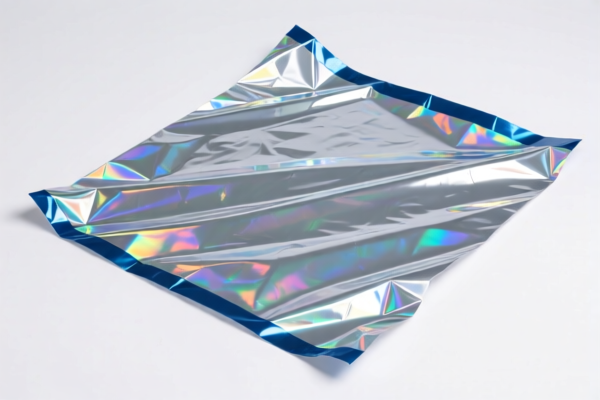
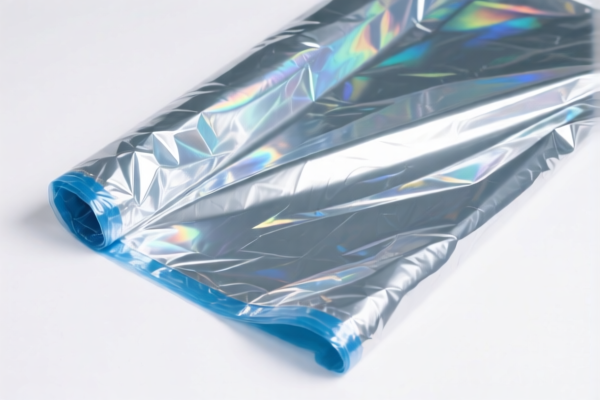


AI Analysis
🚧 Road Sign Reflective Film (Road Marking Sticker/Sheeting)
🌐 HS Code Reference & Customs Clearance Guide | 2026 Latest Tariff Analysis | Professional Compliance Strategy 📌 I. Product Definition & Classification: Do You Really Understand "Reflective Film"?
Road Sign Reflective Film is a critical safety product used in traffic management. It is typically a self-adhesive plastic sheet with a retro-reflective surface (containing glass beads or prismatic elements) designed to reflect light back to its source.
In international trade, classification depends heavily on Material Composition and Function:
- Plastic Sheeting/Films (Chapter 39): If the product is primarily a plastic sheet (PVC, PET, Acrylic) with a reflective coating, it often falls under Chapter 39. The specific subheading depends on the plastic type (e.g., Acrylic, Polyurethane, Other Plastics).
- Signposts/Markings (Chapter 39/70): While sometimes confused with finished signs, "films" are usually classified as raw materials or semi-finished plastic products unless they are specific glass bead assemblies.
⚠️ Key Distinction Point: - If it is a plastic-based reflective sheet → Falls under 3919 (Self-adhesive plates/sheets/film) or 3920 (Other plates/sheets/film). - If it contains glass beads as the primary component → Might be considered 7018 (Glass microspheres), but most commercial "films" are plastic substrates with bead coatings, keeping them in Chapter 39. - If it is a general plastic artifact without specific plastic type alignment → Might fallback to 3926.90 (Other plastic articles).
📦 II. HS Code Classification Details (2026 Latest Tariff Authority Comparison)
Based on the provided data, here are the five potential classifications for "Road Sign Reflective Film":
| HS Code | Product Description | Matching Logic | Total Tax Rate (China Origin -> US) |
|---|---|---|---|
3919.90.10.00 |
Self-adhesive plates, sheets, film, tape, and other flat shapes of plastics | Shape Match: Flat/film shape. Material Match: Inferred plastic. Function Match: Reflective surface features (glass beads). |
41.5% |
3919.90.50.10 |
Other self-adhesive plates, sheets, film... (Reflective Films) | Name Match: "Road sign film" implies plastic. Function Match: Reflective/Signage characteristics. Category: Fits "Reflective Sheet" classification. |
40.8% |
3920.59.10.00 |
Other plates, sheets, film... of acrylic polymers | Form: "Film". Material: Inferred as Acrylic Polymer (common for high-end reflective films). Category: Flexible acrylic sheets. |
41.0% |
3920.99.20.00 |
Other plates, sheets, film... of other plastics | Form: "Film" (matches "film/strip/plate"). Material: PVC or PET (common plastics). Category: Catch-all for "Other Plastics" if specific type isn't defined. |
39.2% |
3926.90.99.25 |
Other articles of plastics | Form: Plastic artifact (film). Use: Road use (reflective warning). Material: Plastic. Category: Fallback for plastic articles not elsewhere specified. |
22.8% |
🔍 Critical Analysis: - Codes 3919.xx are for Self-Adhesive films. If your product is self-adhesive (has a sticky backing), these are the most accurate. - Codes 3920.xx are for Non-Adhesive films or films where adhesion isn't the primary defining feature in the heading. - Code 3926.90 is a broader "Other Plastic Articles" category, often used when the specific plastic type or function doesn't fit neatly into 3919/3920. It currently has the lowest tax burden.
💰 III. 2026 Latest Tariff Rate Breakdown (Including Surcharges & Policy Add-ons)
✅ Applicable Country: United States (US) ✅ Country of Origin: China (CN) ✅ Effective Date: Post-November 10, 2025 (Includes subsequent imports)
🎯 1. 3919.90.10.00 —— Self-Adhesive Plastic Sheets (Reflective)
| Item | Content |
|---|---|
| Base Tariff | 6.5% |
| Section 301 Surcharge | +25.0% |
| 122 Clause (IEEPA) Surcharge | +10.0% |
| Total Rate | 41.5% |
| Tax Calculation | CIF Value × 41.5% |
| De Minimis Eligibility | ❌ No (Deny de minimis for Section 301 goods) |
| Legal Basis Path | USITC:3919.90.10.00 → FOOTNOTE:301 → IEEPA:122 |
📌 Explanation: - Base (6.5%): Standard MFN rate for self-adhesive plastic plates. - Section 301 (+25%): Applied to most Chinese plastic products under HTS 3919. - 122 Clause (+10%): Specific additional tariff for certain Chinese imports under the International Emergency Economic Powers Act. - Total 41.5% is a high cost driver. Accurate classification is vital.
🎯 2. 3919.90.50.10 —— Other Self-Adhesive Sheets (Reflective)
| Item | Content |
|---|---|
| Base Tariff | 5.8% |
| Section 301 Surcharge | +25.0% |
| 122 Clause (IEEPA) Surcharge | +10.0% |
| Total Rate | 40.8% |
| Tax Calculation | CIF Value × 40.8% |
| De Minimis Eligibility | ❌ No |
| Legal Basis Path | USITC:3919.90.50.10 → FOOTNOTE:301 → IEEPA:122 |
📌 Note: - Slightly lower base rate (5.8% vs 6.5%) makes this $0.70 cheaper per $100 than the previous code. - Still subject to the same heavy surcharges.
🎯 3. 3920.59.10.00 —— Acrylic Polymer Sheets (Non-Adhesive or General)
| Item | Content |
|---|---|
| Base Tariff | 6.0% |
| Section 301 Surcharge | +25.0% |
| 122 Clause (IEEPA) Surcharge | +10.0% |
| Total Rate | 41.0% |
| Tax Calculation | CIF Value × 41.0% |
| De Minimis Eligibility | ❌ No |
| Legal Basis Path | USITC:3920.59.10.00 → FOOTNOTE:301 → IEEPA:122 |
📌 Note: - Assumes the film is made of Acrylic. If the film is PVC, this code is incorrect and may lead to misclassification penalties. - 3920 codes are often for non-self-adhesive films. If your product is self-adhesive, 3919 is more appropriate.
🎯 4. 3920.99.20.00 —— Other Plastic Sheets (PVC/PET)
| Item | Content |
|---|---|
| Base Tariff | 4.2% |
| Section 301 Surcharge | +25.0% |
| 122 Clause (IEEPA) Surcharge | +10.0% |
| Total Rate | 39.2% |
| Tax Calculation | CIF Value × 39.2% |
| De Minimis Eligibility | ❌ No |
| Legal Basis Path | USITC:3920.99.20.00 → FOOTNOTE:301 → IEEPA:122 |
📌 Note: - Lower base rate (4.2%) makes this cheaper than the 3919 codes. - Suitable if the film is PVC or PET and not primarily classified as "self-adhesive" in the strict legal sense, or if it falls under "other plastics."
🎯 5. 3926.90.99.25 —— Other Plastic Articles
| Item | Content |
|---|---|
| Base Tariff | 5.3% |
| Section 301 Surcharge | +7.5% (Note: Data shows 7.5% surcharge for this code, lower than standard 301) |
| 122 Clause (IEEPA) Surcharge | +10.0% |
| Total Rate | 22.8% |
| Tax Calculation | CIF Value × 22.8% |
| De Minimis Eligibility | ⚠️ Check Specific Footnotes (Usually 301 applies, but data indicates lower surcharge) |
| Legal Basis Path | USITC:3926.90.99.25 → FOOTNOTE:301 (Reduced?) → IEEPA:122 |
📌 STRATEGIC ADVANTAGE: - Lowest Total Tax: 22.8% - This code is significantly cheaper because the Section 301 surcharge is listed as 7.5% in the provided data, compared to 25% for other codes. - Risk: Must ensure the product can be legitimately classified as "Other Plastic Articles" rather than "Plastic Sheets/Films." If customs determines it is a sheet/film, they may reassess to 3919/3920, leading to back taxes.
🛠️ IV. Customs Clearance Practical Advice (Battle-Tested Pitfall Guide)
✅ 1. Document Checklist (Non-Negotiable)
| Document | Required? | Description |
|---|---|---|
| ✅ Product Specification | ✔️ | Must state material (PVC/PET/Acrylic), thickness, adhesive type, and reflective grade (e.g., Type III, VI, IX). |
| ✅ Commercial Invoice | ✔️ | Must clearly describe as "Reflective Film for Road Signs," NOT just "Plastic Film." |
| ✅ Packing List | ✔️ | Show roll dimensions, weight, and quantity. |
| ✅ Material Safety Data Sheet (MSDS) | ✔️ | For chemical compliance (VOCs, solvents in adhesive). |
| ✅ Certification of Origin | ✔️ | To verify China origin and apply/avoid specific tariffs. |
| ✅ Photographs | ✔️ | Show cross-section (if possible) to prove plastic substrate + reflective layer. |
✅ 2. Declaration Tips (Key Mnemonics)
🔥 "Material First, Adhesive Second, Function Third!"
| Scenario | Correct Declaration | Wrong Practice |
|---|---|---|
| Self-Adhesive Film | HS 3919.xx | Declare as 3920 (Non-adhesive) → Misclassification risk |
| PVC Material | HS 3920.99 or 3926.90 | Declare as Acrylic → Wrong base rate |
| Acrylic Material | HS 3920.59 | Declare as "Other Plastic" → Misses specific material code |
| General Article | HS 3926.90.99.25 | Declare as Film → Misses low-tax opportunity |
✅ 3. Special Situation Handling
| Situation | Handling Suggestion |
|---|---|
| Mixed Materials | If the film has a metal backing, it may not be Chapter 39. Stick to pure plastic films for these codes. |
| Pre-cut Signs | If the film is already cut into specific sign shapes, customs might view it as a "finished article" (3926) rather than a "sheet" (3919/3920). |
| High-End Reflective (Prismatic) | Ensure material is correctly identified. Acrylic prismatic films fit 3920.59. Glass bead films on plastic fit 3919/3920. |
| Low-Tax Strategy (3926.90) | Only use if the product can be argued as an "article" (e.g., pre-cut, specific shape) and not just a roll of film. |
🌍 V. Global Market Clearance Comparison (2026 Latest)
| Country/Region | Recommended HS Code | Tariff (China Origin) | Certification Requirements | Notes |
|---|---|---|---|---|
| 🇺🇸 USA | 3926.90.99.25 (Lowest Cost) |
22.8% | None specific for film, but DOT standards for use | Highest Risk/Reward: 3919/3920 are 40%+. 3926 is 22.8%. |
| 🇨🇳 China | 3919.90.10.00 |
~10-15% | None | Import duties lower than US export duties. |
| 🇪🇺 EU | 3919.90.90 |
0-4% | CE Mark (if used in safety devices) | No major Section 301 equivalent. |
| 🇬🇧 UK | 3919.90.90 |
0-5% | UKCA Mark | Post-Brexit tariffs generally favorable. |
| 🇦🇺 Australia | 3919.90.90 |
5% | RCM | Free Trade Agreement with China may apply. |
📌 Conclusion: - The USA is the only major market with extra punitive tariffs (Section 301 + 122 Clause). - Cost Optimization: In the US market, classifying as
3926.90.99.25can save ~18% in duties compared to standard film codes. However, this requires strong justification that the product is an "article" and not just a "sheet."
📌 VI. Common Mistakes & Pitfall Guide (Lessons from the Field)
❌ Mistake 1: Declaring all reflective films as 3919.90.10.00 without checking material.
👉 Consequence: If it's PVC, the base rate is higher than 3920.99.20.00. If it's pre-cut, you miss the 3926 low-tax option.
❌ Mistake 2: Ignoring the "Adhesive" nature. 👉 Consequence: If it is self-adhesive, it must go to 3919. Declaring it as 3920 (non-adhesive) is a factual error leading to seizure.
❌ Mistake 3: Overlooking the 122 Clause. 👉 Consequence: Even if Section 301 is waived (rare for plastics), the 122 Clause (+10%) often remains. Total tax is still >20%.
❌ Mistake 4: Assuming "Reflective" changes the chapter to 70 (Glass). 👉 Consequence: The reflective layer is usually a coating on plastic. The base material (plastic) dictates Chapter 39.
✅ Correct Practice:
"Self-Adhesive Reflective Film, PVC Base, Glass Bead Surface, for Road Signs, Roll Form" → Consider
3919.90.10.00(41.5%) or argue for3926.90.99.25(22.8%) if pre-cut/articles."Acrylic Prismatic Reflective Sheeting" →
3920.59.10.00(41.0%).
🎯 VII. Conclusion: Professional Declaration Saves Money!
🎯 Remember the Mnemonic:
🔹 "Adhesive is 3919, Plastic Sheet is 3920, Article is 3926!" 🔹 "Acrylic goes to 59, PVC to 99, Beads don't change the Chapter!" 🔹 "USA Tax is 40%+, but 3926 can drop to 22.8% – Justify It Well!"
📌 Pro Tip:
If you are shipping pre-cut road sign decals or specific shapes, lean towards 3926.90.99.25 to utilize the lower surcharge (7.5% vs 25%). Ensure your invoice describes the item as an "Article" rather than a "Sheet" or "Film" to support this classification.
For rolls of film, stick to 3919 or 3920. The savings are smaller, but accuracy is key to avoid penalties.
📣 Immediate Action:
📞 Consult a customs broker with the product cross-section and material composition. 🚀 Apply for a Binding Tariff Information (BTI) or Advance Ruling if shipping large volumes to the US to lock in the
3926classification and mitigate risk.
✨ Professional Clearance, Start with Accurate Classification! 💼 Every Percent Saved is Pure Profit!
Customer Reviews
About HS Code Classification
The Harmonized System (HS) is an internationally standardized nomenclature developed by the World Customs Organization (WCO) to classify traded products. Over 200 countries use the HS system as the basis for customs tariffs, trade statistics, and import/export regulations.
Each HS code follows a hierarchical structure:
- Chapter (2 digits) — Broad category of goods (e.g., Chapter 84: Machinery and Mechanical Appliances)
- Heading (4 digits) — More specific grouping within the chapter
- Subheading (6 digits) — Internationally standardized breakdown, used by all WCO member countries
- National subdivisions (8-10 digits) — Country-specific extensions for further classification, such as US HTSUS 10-digit codes
Correct HS code classification is essential for smooth customs clearance, accurate duty payment, and compliance with trade regulations. Misclassification can lead to customs delays, overpayment of duties, or penalties.
When importing from CN to US, the applicable tariff rates may include:
- Most-Favored-Nation (MFN) rate — The standard duty rate applied to WTO members
- General rate — Applied to countries without trade agreements
- Trade remedy duties — Additional tariffs such as Section 301 (anti-dumping), Section 232 (national security), or countervailing duties
The information provided on this page is for reference purposes only. For official classification, please consult with your local customs authority or a licensed customs broker.