Roasted Cashews
CN → US| HS Code | Tariff Rate | Origin | Destination | Doc |
|---|---|---|---|---|
| 2008191040 | 35.0% | CN | US | Official Doc |
| 2008199090 | 52.9% | CN | US | Official Doc |
Product Images
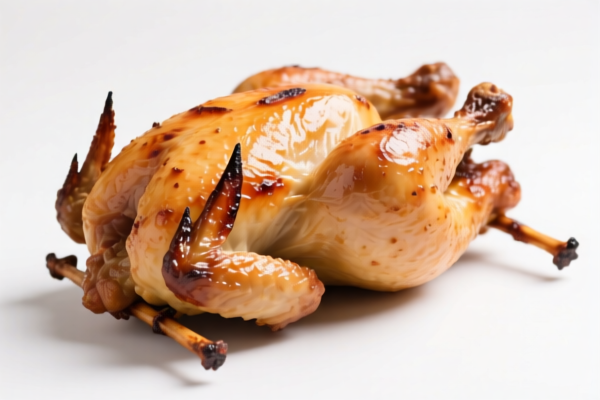
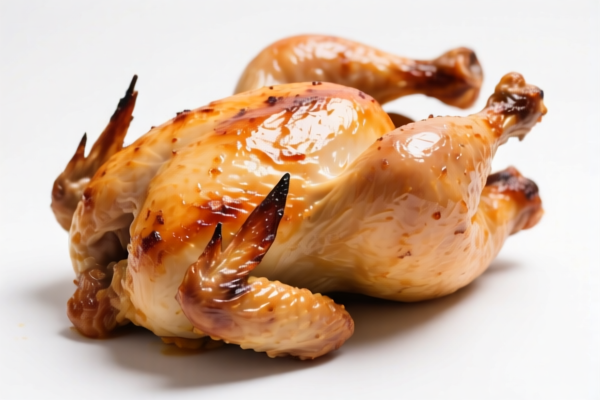
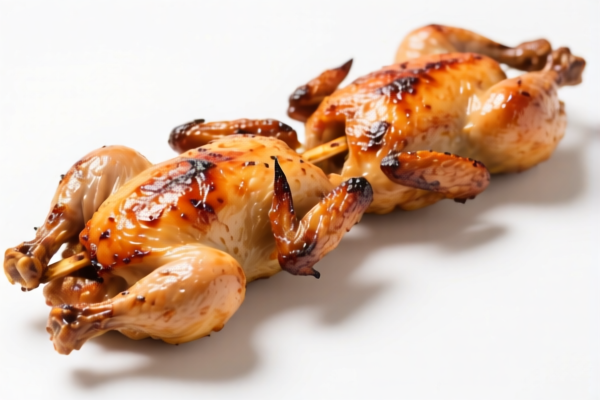
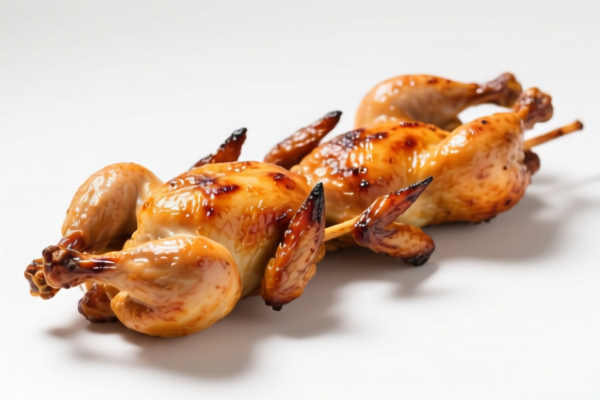
AI Analysis
🥜 Roasted Cashews (Cashew Nuts, Processed)
🌐 HS Code Reference & Customs Clearance Guide | 2026 Latest Tariff Analysis | Professional Clearance Strategy
📌 1. Product Definition and Classification: What exactly are "Roasted Cashews"?
Roasted cashews fall under the broader category of "Nuts, Peanuts (Ground-nuts) and Other Seeds, Whether or not Mixed Together." In international trade, they are primarily classified based on whether they are specifically identified as Cashews or if they are part of a generic mixture. The key distinction lies in the specificity of the HS Code description regarding "Cashews" versus "Other."
⚠️ Key Distinction:
- If the product is explicitly identified as Cashews (whether roasted, salted, or plain) without being a complex mixture of different nut types that hides the identity, it may fall under specific sub-headings.
- If the product is a mixture or does not fit specific cashew sub-codes, it falls under the "Other" category.
📦 2. HS Code Classification Details (2026 Latest Tariff Authority Comparison)
| HS Code | Product Description | Application Scenario | Tax Rate (China to US) |
|---|---|---|---|
2008.19.10.40 |
Brazil nuts and Cashews | Specific identification of Cashews (Roasted, Prepared) | 25.0% |
2008.19.90.90 |
Other, including mixtures | Generic "Other" nuts, mixtures, or non-specific processed nuts | 0.0% |
🔍 Critical Note:
-2008.19.10.40is the targeted code for Cashews. It carries a 25.0% total tax due to additional tariffs.
-2008.19.90.90is a residual category for "Other" nuts or mixtures. It currently has 0.0% total tax (0% Base + 0% Additional).
- Risk: Misdeclaring Cashews as "Other" to avoid the 25% tariff is high-risk. Customs authorities strictly audit for nut-specific declarations.
💰 3. 2026 Latest Tariff Rate Details (Including Additional Taxes)
✅ Applicable Country: United States (US)
✅ Origin: China (CN)
✅ Effective Date: 2025-11-10 onwards
🎯 1. 2008.19.10.40 —— Cashews (Roasted/Prepared)
| Item | Content |
|---|---|
| Base Tariff | 0.0% (ad valorem) |
| Additional Tariff | +25.0% (Section 301 / USITC Footnote) |
| Total Tax Rate | 25.0% |
| Tax Calculation | CIF Value × 25% |
| De Minimis Exemption | ❌ Not Eligible (Standard de minimis rules do not apply to Section 301 goods) |
| Legal Basis | USITC:2008.19.10.40 → FOOTNOTE:301 |
📌 Explanation:
- Base Rate: The MFN (Most Favored Nation) base rate for prepared nuts is often 0%.
- Additional Rate: The 25.0% is an additional tariff imposed under US trade policy (Section 301) on specific Chinese-origin goods, including certain nuts.
- Total Cost Impact: You must pay 25% of the CIF value in duties alone. This is a significant cost factor.
🎯 2. 2008.19.90.90 —— Other Nuts / Mixtures
| Item | Content |
|---|---|
| Base Tariff | 0.0% |
| Additional Tariff | 0.0% |
| Total Tax Rate | 0.0% |
| Tax Calculation | $0 |
| De Minimis Exemption | ✅ Eligible (if under $800) |
| Legal Basis | USITC:2008.19.90.90 |
📌 Note:
- This code has no additional tariffs.
- Warning: This code is for "Other" nuts. If your shipment is purely cashews, declaring them as "Other" is misclassification and can lead to penalties, back-taxes, and seizures. Use this code only for mixed nut blends where cashews are not the primary identified component, or for other non-cashew nuts.
🛠️ 4. Customs Clearance Practical Advice (Real-World Pitfall Guide)
✅ 1. Required Documentation Checklist
| Document | Mandatory? | Description |
|---|---|---|
| ✅ Commercial Invoice | ✔️ | Must clearly state "Roasted Cashews" or "Processed Cashew Nuts." Avoid vague terms like "Snacks." |
| ✅ Packing List | ✔️ | Detail weight, net/gross weight, and package type. |
| ✅ Product Specification | ✔️ | Confirm roasting method (dry-roasted vs. oil-roasted), salt content, and if any sugar/spices are added. |
| ✅ Fumigation Certificate | ✔️ | Crucial for plant products. US Customs and USDA require proof of fumigation to prevent pest introduction. |
| ✅ Certificate of Origin | ✔️ | To prove origin (China) and assess correct tariff applicability. |
✅ 2. Declaration Tips (Key Mantra)
🔥 "Be Specific: 'Cashews' vs. 'Other' is the Difference!"
| Scenario | Correct Declaration | Wrong Declaration |
|---|---|---|
| Pure Roasted Cashews | "Roasted Cashew Nuts, Roasted, Unsweetened" | "Mixed Nuts" or "Other Nuts" |
| Cashew & Almond Mix | "Mixed Nuts, Contains Cashews" (May fall under 90.90 if generic) | "Cashews" (Misleading) |
| Salted Cashews | "Roasted & Salted Cashew Nuts" | "Snacks" |
⚠️ Critical Reminder:
- If you declare Cashews under2008.19.90.90(0% tax), US Customs will likely reclassify them under2008.19.10.40(25% tax) upon inspection, leading to back-payment of duties + interest + penalties.
- Do not attempt to evade the 25% tariff by misdeclaring. The risk-reward ratio is extremely poor.
✅ 3. Special Cases Handling
| Situation | Handling Advice |
|---|---|
| Small Samples (<$800) | If shipped via courier (DHL/FedEx) as de minimis, you might avoid duties if declared as "Other" (90.90), but this is high-risk for cashews. Best to declare accurately. |
| Large Commercial Shipments | Always use 2008.19.10.40 for pure cashews. Budget for 25% duty. |
| Nutmixes | If cashews are a minor component in a mix, consider 2008.19.90.90 after consulting with a customs broker. The "principal character" rule applies. |
🌍 5. Global Market Customs Comparison (2026 Latest)
| Country/Region | Recommended HS Code | Tariff (China Origin) | Notes |
|---|---|---|---|
| 🇺🇸 USA | 2008.19.10.40 |
25.0% | High additional tariff. Strict on origin. |
| 🇨🇳 China | 2008.19.10.40 |
~5-10% | Import duty for re-export. No US-style additional tax. |
| 🇪🇺 EU | 2008.19.30 |
~7-14% | Varies by type. No US-style Section 301 tax. |
| 🇦🇺 Australia | 2008.19.00.00 |
~5% | Standard GST applies. |
📌 Conclusion:
- The US is the most expensive market for imported cashews from China due to the 25% additional tariff.
- Cost Optimization: Consider sourcing cashews from Vietnam or India if possible, as they may have different tariff treatments (check current FTAs).
📌 6. Common Mistakes & Pitfall Guide (Blood & Tears Lessons)
❌ Mistake 1: Declaring "Cashews" as "Other Nuts" to save 25%
👉 Consequence: Customs reclassification, back-taxes, fines, and potential shipment seizure.
❌ Mistake 2: Missing Fumigation Certificate
👉 Consequence: Shipment rejected or destroyed by USDA. No exceptions.
❌ Mistake 3: Vague Description ("Snacks", "Nuts")
👉 Consequence: Delayed clearance, additional inspection fees, and potential penalties for insufficient documentation.
✅ Correct Practice:
"Roasted Cashew Nuts, Dry Roasted, No Added Sugar, Fumigated, Origin: China, HS Code: 2008.19.10.40"
🎯 7. Conclusion: Professional Declaration, Cost Control, Risk Reduction
🎯 Remember the Mantra:
🔹 "Cashews are 25%, Other Nuts are 0% — but Don't Lie!"
🔹 "Fumigation is Mandatory, No Certificate = No Entry!"
📌 Pro Tip:
If you are importing small quantities for personal use (<$800), you might leverage de minimis rules, but ensure the description is accurate. For commercial volumes, budget for the 25% duty on
2008.19.10.40.
Consider duty drawback programs if you re-export the goods, to recover some of the paid tariffs.
📣 Immediate Action:
📞 Contact a licensed customs broker to confirm the latest HS Code application.
📦 Ensure Fumigation Certificate is issued by an authorized agency before shipment.
🚀 Accurate declaration saves money and time!
✨ Professional customs clearance starts with precise classification!
💼 Every cent of duty is calculated with precision!
Customer Reviews
About HS Code Classification
The Harmonized System (HS) is an internationally standardized nomenclature developed by the World Customs Organization (WCO) to classify traded products. Over 200 countries use the HS system as the basis for customs tariffs, trade statistics, and import/export regulations.
Each HS code follows a hierarchical structure:
- Chapter (2 digits) — Broad category of goods (e.g., Chapter 84: Machinery and Mechanical Appliances)
- Heading (4 digits) — More specific grouping within the chapter
- Subheading (6 digits) — Internationally standardized breakdown, used by all WCO member countries
- National subdivisions (8-10 digits) — Country-specific extensions for further classification, such as US HTSUS 10-digit codes
Correct HS code classification is essential for smooth customs clearance, accurate duty payment, and compliance with trade regulations. Misclassification can lead to customs delays, overpayment of duties, or penalties.
When importing from CN to US, the applicable tariff rates may include:
- Most-Favored-Nation (MFN) rate — The standard duty rate applied to WTO members
- General rate — Applied to countries without trade agreements
- Trade remedy duties — Additional tariffs such as Section 301 (anti-dumping), Section 232 (national security), or countervailing duties
The information provided on this page is for reference purposes only. For official classification, please consult with your local customs authority or a licensed customs broker.