Roasted Chicken Skeleton
CN → US| HS Code | Tariff Rate | Origin | Destination | Doc |
|---|---|---|---|---|
| 1602320040 | 41.4% | CN | US | Official Doc |
| 1602390045 | 23.9% | CN | US | Official Doc |
| 1602320030 | 41.4% | CN | US | Official Doc |
| 1602320010 | 41.4% | CN | US | Official Doc |
Product Images
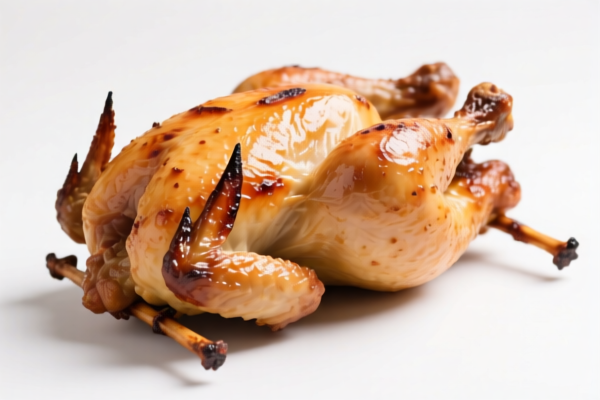
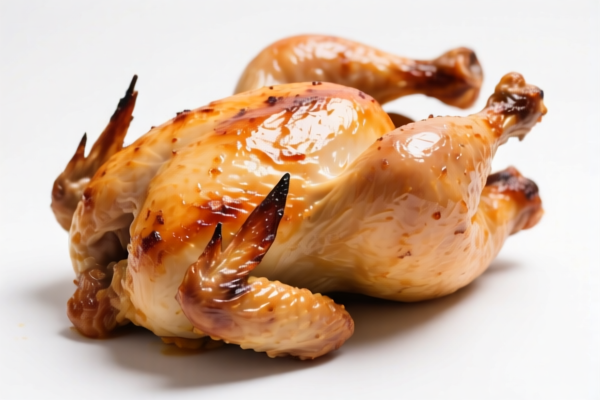
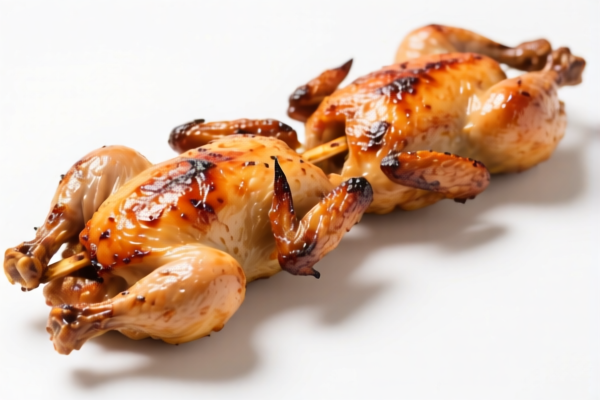
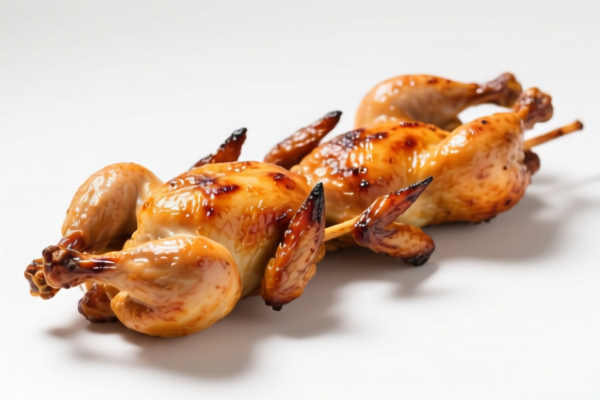
AI Analysis
🍗 Roasted Chicken Skeleton (HS Code Classification & U.S. Import Guide)
🌐 HS Code Reference & Clearance Guide | 2026 Latest Tariff Analysis | Professional Customs Strategy
📌 I. Product Definition & Classification: What Exactly Is "Roasted Chicken Skeleton"?
Roasted Chicken Skeleton, commonly referred to as "Chicken Frame" or "Chicken Rack," is a processed poultry product derived from poultry by-products. In international trade, its classification depends heavily on the degree of processing and material composition.
Key Characteristics: * Material: Poultry meat by-products (chicken bones, cartilage, attached meat scraps). * Processing State: Roasted, seasoned, and prepared for human consumption or further processing. * Nature: It falls under prepared or preserved meat/meat offal, not fresh/raw poultry.
⚠️ Critical Distinction:
- If the product is simple roasted skeleton with minimal meat, it may be classified under specific subheadings for "Other prepared meat of poultry" (1602.32.00.xx).
- If it is considered a generic roasted poultry product without specific seasoning or complex preparation, it may fall under "Other meat and offal of poultry, prepared or preserved" (1602.39.00.xx).
📦 II. HS Code Classification Details (Based on Provided Data)
The provided data indicates three primary HS Codes for "Roasted Chicken Skeleton," all falling under Chapter 16 (Prepared Foodstuffs). The tax burden varies significantly based on the specific subheading chosen.
| HS Code | Product Description (from Data) | Total Tax Rate | Tax Breakdown |
|---|---|---|---|
| 1602.32.00.40 | Roasted chicken skeleton; material is chicken by-products; form is processed/modulated meat; fits "other modulated meat/meat by-products." | 41.4% | Base: 6.4% Additional (Section 301): 25.0% 122 Clause: 10% |
| 1602.39.00.45 | Roasted chicken skeleton; roasted shows processing attributes; chicken fits poultry meat definition; belongs to prepared/preserved meat/offal. | 23.9% | Base: 6.4% Additional (Section 301): 7.5% 122 Clause: 10% |
| 1602.32.00.30 | Roasted chicken rack; roasted chicken falls under poultry category; rack is prepared/preserved pre-form; consistent with chicken pre-made meal attributes. | 41.4% | Base: 6.4% Additional (Section 301): 25.0% 122 Clause: 10% |
| 1602.32.00.10 | Roasted chicken rack; roasted chicken meets poultry material requirements; rack inferred as modulated/processed poultry product; no material or use conflict. | 41.4% | Base: 6.4% Additional (Section 301): 25.0% 122 Clause: 10% |
🔍 Key Observation:
- 1602.32.00.xx codes attract a 25% Additional Tariff, leading to a total rate of 41.4%.
- 1602.39.00.45 attracts a lower 7.5% Additional Tariff, leading to a total rate of 23.9%.
- The difference lies in the specificity of the product description and how customs interpret the "modulated" vs. "general prepared" nature.
💰 III. 2026 Latest Tariff Rate Details (Including Surcharges & Policy Add-ons)
✅ Applicable Country: United States (US)
✅ Origin: China (CN)
✅ Effective Time: 2025/2026 (Current Trade Rules)
🎯 1. HS Code 1602.32.00.40 / .30 / .10 (Other Prepared Poultry Meat)
| Item | Content |
|---|---|
| Base Tariff | 6.4% (ad valorem) |
| USITC Additional Tariff | +25.0% (Section 301 Trade Act) |
| 122 Clause Tariff | +10.0% (Specific trade policy clause) |
| Total Tax Rate | 41.4% |
| Tax Calculation | CIF Value × 41.4% |
| De Minimis Exemption | ❌ Not Applicable (High tariff goods are excluded) |
| Legal Basis Path | USITC:1602.32.00.xx → Section 301: Footnote 9903.08.01 → Clause 122: 10% surcharge |
📌 Explanation:
- These codes classify the product as a specific type of prepared poultry meat (often implying higher value-add or specific cuts).
- The 25% Section 301 tariff is standard for many Chinese-origin food products.
- The 10% Clause 122 is an additional surcharge applicable to certain agricultural/food imports.
- Total cost impact: 41.4% of CIF value.
🎯 2. HS Code 1602.39.00.45 (Other Prepared Poultry Meat/Offal)
| Item | Content |
|---|---|
| Base Tariff | 6.4% (ad valorem) |
| USITC Additional Tariff | +7.5% (Section 301 - Lower Bracket) |
| 122 Clause Tariff | +10.0% (Specific trade policy clause) |
| Total Tax Rate | 23.9% |
| Tax Calculation | CIF Value × 23.9% |
| De Minimis Exemption | ❌ Not Applicable |
| Legal Basis Path | USITC:1602.39.00.45 → Section 301: Footnote 9903.08.02 → Clause 122: 10% surcharge |
📌 Explanation:
- This code is a broader category for "other" prepared poultry products.
- The Section 301 tariff is only 7.5%, significantly lower than the 25% for specific subheadings.
- Total cost impact: 23.9% of CIF value.
- Strategic Advantage: If the product can be legitimately classified under this code, tariff savings are substantial (17.5% lower rate).
🛠️ IV. Customs Clearance Practical Advice (Avoid Pitfalls)
✅ 1. Required Documentation Checklist
| Document | Required | Notes |
|---|---|---|
| ✅ Product Specification Sheet | ✔️ | Must detail ingredients, processing method (roasted), and form (skeleton/rack). |
| ✅ Ingredients List | ✔️ | Crucial for determining if it's "meat by-product" vs. "whole meat." |
| ✅ Commercial Invoice | ✔️ | Must clearly state "Roasted Chicken Skeleton/Rack" and HS Code. |
| ✅ Packing List | ✔️ | Net/Gross weight, number of packages. |
| ✅ Certificate of Origin (CO) | ✔️ | Required for Section 301 tariff determination. |
| ✅ FDA Prior Notice | ✔️ | Mandatory for all food imports into the US. |
| ✅ FSVP Importer Certification | ✔️ | Foreign supplier verification program compliance. |
✅ 2. Declaration Strategy (Key Tips)
🔥 “Be Precise: ‘By-Product’ vs. ‘Prepared Meat’ Defines the Rate!”
| Scenario | Recommended HS Code | Risk |
|---|---|---|
| High-meat attachment, specific cut | 1602.32.00.xx |
Higher tariff (41.4%). Justify with detailed meat content specs. |
| Bone-heavy, minimal meat, generic roasted | 1602.39.00.45 |
Lower tariff (23.9%). Best for cost optimization if accurate. |
| Marinated/Seasoned Skeleton | 1602.32.00.xx |
Likely viewed as "modulated" or value-added. |
📌 Critical Warning:
- Do not simply declare as "Chicken Meat." This is processed poultry (Chapter 16), not fresh poultry (Chapter 02).
- Misclassification can lead to penalties, back-tariffs, and shipment holds.
✅ 3. Special Considerations
| Situation | Handling Advice |
|---|---|
| Low Meat Content | Emphasize "skeleton/by-product" status to support 1602.39.00.45. |
| High Value-Add (Seasoning) | If heavily seasoned, customs may view it as a "prepared meal," supporting 1602.32.00.xx. |
| Small Shipments (De Minimis) | ❌ No Exemption: Both codes exceed the $800 de minimis threshold for tariff-free entry due to high rates. |
| FDA Compliance | Ensure the facility is FDA-registered and the product meets FSMA standards. |
🌍 V. Global Market Comparison (2026)
| Country/Region | Recommended HS Code | Approx. Tariff | Notes |
|---|---|---|---|
| 🇺🇸 USA | 1602.39.00.45 |
23.9% | Best rate if eligible. 1602.32.00.xx = 41.4%. |
| 🇨🇳 China | 1602.39.00.45 |
~12-15% | Import duty for foreign poultry products. |
| 🇪🇺 EU | 1602.39.00.95 |
~12% + VAT | Strict hygiene standards; requires EU approval. |
| 🇯🇵 Japan | 1602.39.00.90 |
~15% | Phytosanitary certificates required. |
📌 Conclusion:
- The US market is the most complex due to Section 301 tariffs and Clause 122 surcharges.
- Optimizing the HS Code selection (aiming for1602.39.00.45if possible) can save 17.5% in duties.
📌 VI. Common Mistakes & Pitfalls
❌ Mistake 1: Classifying as Fresh Poultry (Chapter 02)
👉 Consequence: Rejected by FDA/CBP; product is cooked/processed, so it must be Chapter 16.
❌ Mistake 2: Using Generic Description "Chicken Meat"
👉 Consequence: Customs may assign the highest default tariff or hold shipment for inspection.
❌ Mistake 3: Ignoring FDA Prior Notice
👉 Consequence: Automatic refusal of entry for food items.
✅ Correct Approach:
“Roasted Chicken Skeleton, Poultry By-Product, Processed, Packaged for Human Consumption, FDA Registered Facility, HS 1602.39.00.45”
🎯 VII. Conclusion: Optimize Classification, Maximize Profit
🎯 Key Takeaway:
🔹 Choose Wisely:
1602.39.00.45(23.9%) vs.1602.32.00.xx(41.4%).
🔹 Be Accurate: Provide detailed specs to justify the lower-rate code if applicable.
🔹 Comply Fully: FDA and FSMA compliance is non-negotiable.
📌 Pro Tip:
If your product is bone-heavy with minimal meat, argue for
1602.39.00.45to save on tariffs.
If it’s meat-rich or heavily seasoned, expect the 41.4% rate but ensure proper labeling to avoid fraud accusations.
📣 Next Steps:
📞 Consult a US Customs Broker for Advance Ruling to lock in the 23.9% rate if eligible.
🚀 Reduce Costs, Avoid Delays, Clear Customs Smoothly!
✨ Professional Classification = Competitive Advantage
💼 Every Percent Saved is Pure Profit!
Customer Reviews
About HS Code Classification
The Harmonized System (HS) is an internationally standardized nomenclature developed by the World Customs Organization (WCO) to classify traded products. Over 200 countries use the HS system as the basis for customs tariffs, trade statistics, and import/export regulations.
Each HS code follows a hierarchical structure:
- Chapter (2 digits) — Broad category of goods (e.g., Chapter 84: Machinery and Mechanical Appliances)
- Heading (4 digits) — More specific grouping within the chapter
- Subheading (6 digits) — Internationally standardized breakdown, used by all WCO member countries
- National subdivisions (8-10 digits) — Country-specific extensions for further classification, such as US HTSUS 10-digit codes
Correct HS code classification is essential for smooth customs clearance, accurate duty payment, and compliance with trade regulations. Misclassification can lead to customs delays, overpayment of duties, or penalties.
When importing from CN to US, the applicable tariff rates may include:
- Most-Favored-Nation (MFN) rate — The standard duty rate applied to WTO members
- General rate — Applied to countries without trade agreements
- Trade remedy duties — Additional tariffs such as Section 301 (anti-dumping), Section 232 (national security), or countervailing duties
The information provided on this page is for reference purposes only. For official classification, please consult with your local customs authority or a licensed customs broker.