Roasted Cocoa Beans
CN → US| HS Code | Tariff Rate | Origin | Destination | Doc |
|---|---|---|---|---|
| 1802000000 | 17.5% | CN | US | Official Doc |
| 1802000000 | 17.5% | CN | US | Official Doc |
| 1801000000 | 0.0% | CN | US | Official Doc |
| 1801000000 | 0.0% | CN | US | Official Doc |
| 1806909090 | 23.5% | CN | US | Official Doc |
| 1806909019 | 23.5% | CN | US | Official Doc |
Product Images
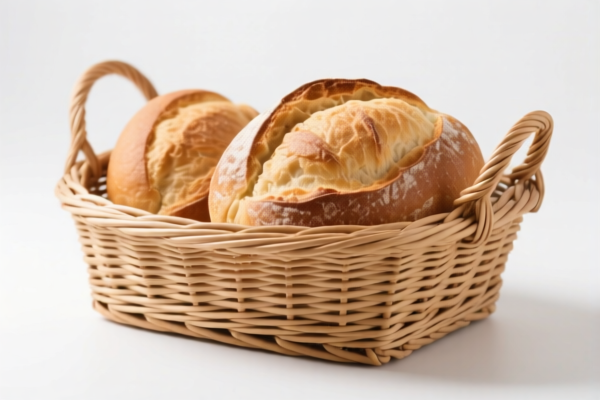
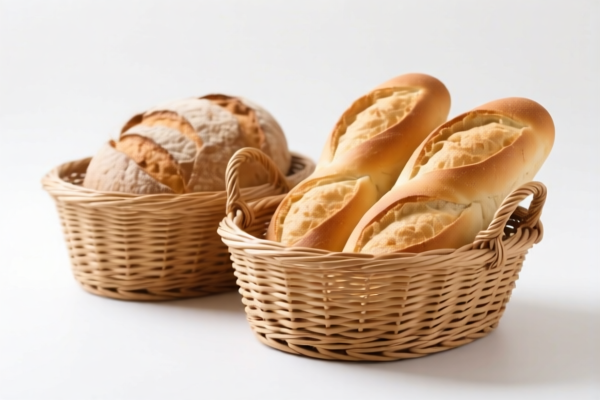
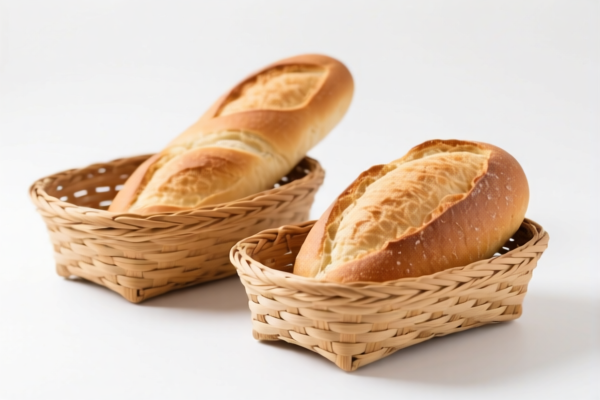
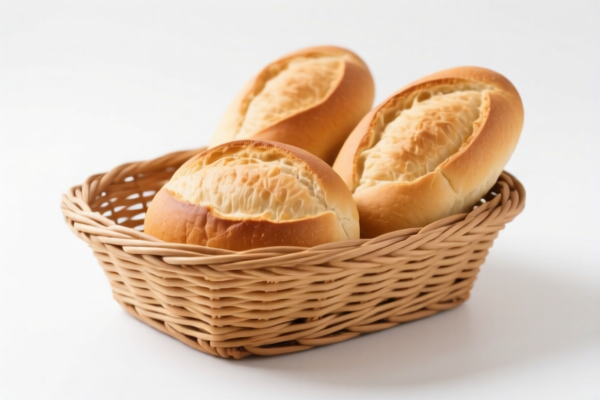
AI Analysis
🍫 Roasted Cocoa Beans (Cocoa Beans, Whole or Broken, Raw or Roasted)
🌐 HS Code Reference & Customs Clearance Guide | 2026 Latest Tariff Breakdown | Professional Import Strategy
📌 One, Product Definition & Classification: What Exactly Are Roasted Cocoa Beans?
Roasted cocoa beans are the foundational ingredient in chocolate production — whole or broken beans that have undergone thermal processing to develop their rich, complex flavor profile. In international trade, they are classified under HS Code 1801.00.00.00, which covers raw or roasted cocoa beans, regardless of whether they are whole, broken, or in any form.
⚠️ Key Classification Insight:
- Roasted = processed by heat (typically 120–140°C) to enhance aroma and reduce bitterness
- Whole or broken = includes cracked, fragmented, or crushed beans — all fall under the same HS code
- Not processed further = if the beans are not yet ground into cocoa mass or used in confectionery, they remain in this category📌 Do NOT confuse with:
- Cocoa butter → HS 1804
- Cocoa powder → HS 1804
- Chocolate products → HS 1806
- Cocoa waste → HS 1802
📦 Two, HS Code Classification Details (2026 Official Tariff Table)
| HS Code | Product Description | Applicable Use Case | Inclusion of Processing |
|---|---|---|---|
1801.00.00.00 |
Cocoa beans, whole or broken, raw or roasted | Raw material for chocolate manufacturing, export-grade beans, bulk shipments | ✅ No further processing (e.g., grinding, roasting, or mixing) |
1802.00.00.00 |
Cocoa shells, husks, skins, and other cocoa waste | By-products from bean processing, used in animal feed or compost | ❌ Not edible; not for chocolate production |
🔍 Critical Note:
- Only beans that are whole or broken and have been roasted fall under 1801.00.00.00
- Any residue after roasting and husking (e.g., shells, skins, fragments) → must be declared under 1802.00.00.00
💰 Three, 2026 Latest Tariff Rate Breakdown (Including附加 Taxes & Trade Policies)
✅ Applicable Country: United States (US)
✅ Origin: China (CN)
✅ Effective Date: November 10, 2025 (and onward)
🎯 1. 1801.00.00.00 — Roasted Cocoa Beans (Whole or Broken)
| Item | Detail |
|---|---|
| Base Tariff Rate | 0.0% (ad valorem) |
| USITC Additional Duty | +7.5% (under Section 301 of U.S. Trade Act) |
| IEEPA Additional Duty | +7.5% (under International Emergency Economic Powers Act, targeting China) |
| Total Effective Duty | 15.0% |
| Tax Calculation | CIF Value × 15.0% |
| De Minimis Threshold | ❌ Not applicable (no de minimis exemption) |
| Legal Basis Path | IEEPA:9903.01.25 → USITC:1801.00.00.00 → FOOTNOTE:9903.88.01 |
📌 Explanation:
- The 7.5% USITC duty is part of the Section 301 Tariff List targeting Chinese agricultural goods deemed to have unfair trade practices.
- The 7.5% IEEPA duty is a national security-related tariff under the U.S. International Emergency Economic Powers Act, applied to goods from China.
- Total = 15.0%, which is high for a raw agricultural product — significantly impacting import cost.
🎯 2. 1802.00.00.00 — Cocoa Shells, Husks, Skins & Other Waste
| Item | Detail |
|---|---|
| Base Tariff Rate | 0.0% |
| USITC Additional Duty | +7.5% |
| IEEPA Additional Duty | +7.5% |
| Total Effective Duty | 15.0% |
| Tax Calculation | CIF Value × 15.0% |
| De Minimis Threshold | ❌ Not applicable |
| Legal Basis Path | IEEPA:9903.01.25 → USITC:1802.00.00.00 → FOOTNOTE:9903.88.01 |
📌 Important Note:
- Even though this is waste material, it is still subject to the same 15.0% total tariff as roasted beans due to its origin from China.
- Often used in animal feed, fertilizer, or biofuel, but must be declared correctly to avoid penalties.
🛠️ Four, Customs Clearance Practical Tips (Real-World Pro Tips)
✅ 1. Required Documentation (Must-Have Checklist)
| Document | Required? | Notes |
|---|---|---|
| ✅ Commercial Invoice | ✔️ | Clearly state: "Roasted Cocoa Beans, Whole or Broken, HS 1801.00.00.00" |
| ✅ Packing List | ✔️ | Specify quantity, weight, packaging type (e.g., jute bags, bulk containers) |
| ✅ Bill of Lading (B/L) | ✔️ | Must match invoice and packing list |
| ✅ Certificate of Origin (CO) | ✔️ | Required for tariff claims; if from China → 15% duty applies |
| ✅ Phytosanitary Certificate | ✔️ | Required for plant-based goods; issued by exporting country |
| ✅ Lab Test Report (Optional) | ✔️ | For quality assurance (e.g., moisture content, aflatoxin levels) |
| ✅ Product Photos | ✔️ | Show beans in raw, roasted, broken state |
✅ 2.申报技巧 (Declaration Best Practices)
🔥 "Whole or broken, roasted or raw — same code, same duty!"
| Scenario | Correct HS Code | Common Mistake |
|---|---|---|
| Roasted whole beans | 1801.00.00.00 |
Misdeclaring as "cocoa powder" → wrong HS, higher risk |
| Broken roasted beans | 1801.00.00.00 |
Declaring as "cocoa waste" → wrong classification |
| Cocoa shells after roasting | 1802.00.00.00 |
Calling it "cocoa bean" → severe penalty |
| Mixed cargo: beans + shells | Separate申报 | One combined entry → risk of audit or denial |
✅ 3. Special Cases & Risk Mitigation
| Situation | Recommended Action |
|---|---|
| Beans from Vietnam, Thailand, or Brazil | Apply for IEEPA exemption → 0% tariff (if origin is not China) |
| Beans with high moisture or mold risk | Provide fumigation certificate and moisture test report |
| High-value shipment (>$2,500) | Apply for Advance Ruling (Pre-Confirmation) to lock in HS code and duty rate |
| Re-exporting beans to EU or Canada | Check non-China origin — many countries have 0% tariffs on cocoa beans |
🌍 Five, Global Market Customs Comparison (2026 Update)
| Country/Region | Recommended HS Code | Tariff Rate | Certification Required | Notes |
|---|---|---|---|---|
| 🇺🇸 United States | 1801.00.00.00 |
15.0% (China origin) | Phytosanitary + CO | High risk if origin is China |
| 🇨🇳 China | 1801.00.00.00 |
0% (if domestic) | None (for domestic trade) | 0% for non-China origin |
| 🇪🇺 European Union | 1801.00.00.00 |
0% (if from non-China) | CE (optional), phytosanitary | No additional tariffs |
| 🇦🇺 Australia | 1801.00.00.00 |
0% | APVMA (if used in feed) | No IEEPA/USITC duties |
| 🇯🇵 Japan | 1801.00.00.00 |
0% | JAS (optional) | No additional tariffs |
📌 Key Takeaway:
- The U.S. is the only major market imposing 15% duty on Chinese-origin roasted cocoa beans
- Non-China origin beans enjoy 0% tariff in most markets — consider shifting sourcing!
📌 Six, Common Mistakes & Pitfalls (Learn from Others’ Errors)
❌ Mistake 1: Declaring cocoa shells as cocoa beans
👉 Consequence: Incorrect HS code, duty underpayment, penalties, delayed release
❌ Mistake 2: Combining roasted beans and shells in one shipment without separate declaration
👉 Consequence: Audit risk, rejection, reclassification, additional fees
❌ Mistake 3: Not providing Certificate of Origin for Chinese goods
👉 Consequence: No tariff exemption, duty paid at 15%, no refund possible
❌ Mistake 4: Using generic terms like “cocoa material” or “cocoa product”
👉 Consequence: Customs confusion, misclassification, rejection
✅ Correct Declaration Phrase:
"Roasted Cocoa Beans, Whole or Broken, HS 1801.00.00.00, Origin: Vietnam, 1000 kg, Jute Bags, Phytosanitary Certificate Attached"
🎯 Seven, Conclusion: Accurate Classification = Lower Costs, Faster Clearance!
🎯 Remember the Golden Rule:
🔹 "Whole or broken, roasted or raw — same code, same duty!"
🔹 "Shells ≠ Beans — declare separately!"
🔹 "China origin = 15% tariff in the U.S. — avoid if possible!"
📌 Pro Tip:
If your cocoa beans are from Vietnam, Ecuador, Ghana, or Brazil, you can apply for IEEPA exemption and enjoy 0% tariff in the U.S.
✅ Apply for Advance Ruling (Pre-Confirmation) to lock in the correct HS code and avoid surprises.
📣 Take Action Now:
📞 Contact a licensed customs broker + Provide product photos + Request HS Code pre-ruling
🚀 Avoid delays, penalties, and overpayment — get your cocoa beans cleared smoothly!
✨ Precision in Classification = Profit in Trade!
💼 Your next shipment starts with the right HS code!
Customer Reviews
About HS Code Classification
The Harmonized System (HS) is an internationally standardized nomenclature developed by the World Customs Organization (WCO) to classify traded products. Over 200 countries use the HS system as the basis for customs tariffs, trade statistics, and import/export regulations.
Each HS code follows a hierarchical structure:
- Chapter (2 digits) — Broad category of goods (e.g., Chapter 84: Machinery and Mechanical Appliances)
- Heading (4 digits) — More specific grouping within the chapter
- Subheading (6 digits) — Internationally standardized breakdown, used by all WCO member countries
- National subdivisions (8-10 digits) — Country-specific extensions for further classification, such as US HTSUS 10-digit codes
Correct HS code classification is essential for smooth customs clearance, accurate duty payment, and compliance with trade regulations. Misclassification can lead to customs delays, overpayment of duties, or penalties.
When importing from CN to US, the applicable tariff rates may include:
- Most-Favored-Nation (MFN) rate — The standard duty rate applied to WTO members
- General rate — Applied to countries without trade agreements
- Trade remedy duties — Additional tariffs such as Section 301 (anti-dumping), Section 232 (national security), or countervailing duties
The information provided on this page is for reference purposes only. For official classification, please consult with your local customs authority or a licensed customs broker.