Roasted Macadamia Nuts
CN → US| HS Code | Tariff Rate | Origin | Destination | Doc |
|---|---|---|---|---|
| 2008199010 | 52.9% | CN | US | Official Doc |
| 2008199090 | 52.9% | CN | US | Official Doc |
Product Images
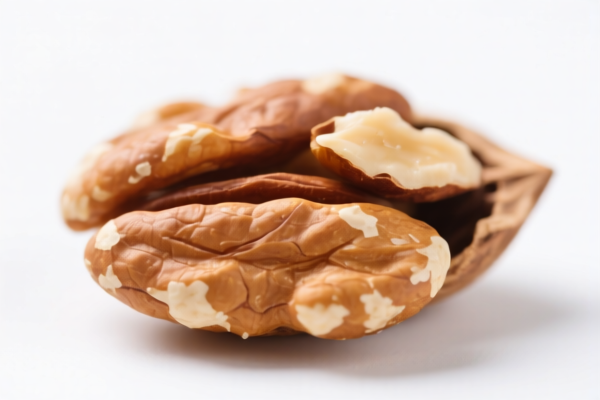



AI Analysis
🥜 Macadamia Nuts: Roasted, Prepared, or Preserved (HS Code 2008.19.90)
🌐 HS Code Reference & Customs Clearance Guide | 2026 Latest Tariff Analysis | Professional Clearance Strategy
📌 I. Product Definition & Classification: What Exactly Are "Roasted Macadamia Nuts"?
Macadamia nuts, often referred to as the "queen of nuts," are high-value edible seeds. In international trade, they fall under Chapter 20: Preparations of Vegetables, Fruits, Nuts, or Other Parts of Plants. Specifically, roasted, salted, or otherwise prepared macadamia nuts are classified as "Otherwise Prepared or Preserved."
⚠️ Critical Distinction:
- Raw, Unshelled Macadamias: Typically fall under Chapter 08 (Edible Fruits and Nuts; Shelled Macadamias).
- Roasted/Salted/Prepared Macadamias: Fall under Chapter 20 because the processing (roasting, salting, frying) changes their essential character into a "prepared" food product.
- Mixed Nuts: If mixed with other nuts (e.g., cashews, almonds), the classification depends on the predominant component, but often still falls under subheading 2008.19.
📦 II. HS Code Classification Details (Based on Provided Data)
The provided data specifies two primary HS Codes for other macadamia nuts that are not specified elsewhere. Both codes carry a 0.0% total tax.
| HS Code | Product Description | Key Characteristics | Tax Rate |
|---|---|---|---|
| 2008.19.90.10 | Macadamia nuts (Other) | Specifically identifies Macadamia nuts within the "Other" category of prepared nuts. | 0.0% |
| 2008.19.90.90 | Other Prepared Nuts (Miscellaneous) | Used for other nuts or seed mixtures that do not have a specific subheading (e.g., mixed nut blends where macadamias are not the sole identifiable component, or other unlisted nuts). | 0.0% |
🔍 Key Insight:
- 2008.19.90.10 is the most accurate code for pure, roasted, or prepared Macadamia Nuts.
- 2008.19.90.90 is a catch-all for other prepared nuts/seeds not specifically listed.
- Both codes have a 0.0% total tax, making them highly favorable for importers.
💰 III. 2026 Latest Tariff Rate Breakdown
✅ Applicable Country: United States (US)
✅ Origin: Any Origin (Based on provided data showing 0% total tax)
✅ Effective Date: Current
✅ Total Tax: 0.0%
🎯 1. HS Code 2008.19.90.10 – Macadamia Nuts (Prepared/Roasted)
| Item | Detail |
|---|---|
| Base Duty Rate | 0.0% (Ad Valorem) |
| Section 301 / IEEPA Surcharges | 0.0% (No additional tariffs indicated in provided data) |
| Total Tax Rate | 0.0% |
| Tax Calculation | CIF Value × 0.0% = $0 |
| De Minimis Exemption | ✅ Yes (If value ≤ $800, no duty or tax applies anyway, but 0% rate applies even above threshold) |
| Legal Basis Path | HTSUS: 2008.19.90.10 → Base Rate: 0% → No Additional Footnotes |
📌 Explanation:
- Macadamia nuts, whether roasted, salted, or otherwise prepared, benefit from a preferential 0% duty rate.
- No additional USITC or IEEPA surcharges apply to this specific subheading in the provided data.
- This makes macadamia nuts a low-tariff, high-margin product for importers.
🎯 2. HS Code 2008.19.90.90 – Other Prepared Nuts
| Item | Detail |
|---|---|
| Base Duty Rate | 0.0% |
| Section 301 / IEEPA Surcharges | 0.0% |
| Total Tax Rate | 0.0% |
| Tax Calculation | CIF Value × 0.0% = $0 |
| De Minimis Exemption | ✅ Yes |
| Legal Basis Path | HTSUS: 2008.19.90.90 → Base Rate: 0% → No Additional Footnotes |
📌 Note:
- If your product is a mixed nut blend containing macadamias but not exclusively macadamias, you may need to use 2008.19.90.90.
- The tax rate remains 0.0%, so classification between 10 and 90 is primarily for statistical and regulatory tracking, not cost avoidance.
🛠️ IV. Customs Clearance Practical Advice (Risk Avoidance Guide)
✅ 1. Required Documentation Checklist (Must-Have)
| Document | Required | Notes |
|---|---|---|
| ✅ Commercial Invoice | ✔️ | Must clearly state "Roasted Macadamia Nuts" or "Prepared Macadamia Nuts" |
| ✅ Packing List | ✔️ | Detail net/gross weight, number of packages, and packaging type |
| ✅ Certificate of Origin (CO) | ✔️ | To prove origin and qualify for any potential FTA benefits (though 0% applies) |
| ✅ Product Specification | ✔️ | Include: Roasting method (dry/oil), salt content, added sugars, preservatives |
| ✅ FDA Prior Notice | ✔️ | Mandatory for all food products entering the US. Submit before arrival. |
| ✅ FSVP Importer Verification | ✔️ | Food Safety Modernization Act requires foreign supplier verification. |
| ✅ Allergen Labeling Compliance | ✔️ | Ensure packaging complies with US FDA allergen labeling rules (macadamias are tree nuts). |
✅ 2. Declaration Best Practices (Key Tips)
🔥 "Be Specific: 'Roasted Macadamia Nuts' not just 'Nuts'!"
| Scenario | Correct Declaration | Incorrect Declaration | Risk |
|---|---|---|---|
| Pure Roasted Macadamias | "Roasted Macadamia Nuts" → HS 2008.19.90.10 | "Mixed Nuts" or "Edible Nuts" | Misclassification → Potential delay or audit |
| Macadamia + Other Nuts Mix | "Prepared Nut Mixture (Macadamia Predominant)" → HS 2008.19.90.90 | "Macadamia Nuts" | Misclassification → Incorrect statistical reporting |
| Raw Macadamias | "Shelled Macadamia Nuts, Raw" → HS 0802.60 | "Roasted Macadamia Nuts" | Wrong Chapter → Incorrect duty (though still low, regulatory mismatch) |
📌 Important:
- Do not use vague terms like "Nuts," "Snacks," or "Edible Seeds."
- Specify processing: "Roasted," "Salted," "Unsalted," "Glazed."
- Clarify packaging: "Vacuum-sealed," "Bulk," "Retail packs."
✅ 3. Special Considerations
| Situation | Handling Advice |
|---|---|
| Added Sugar or Sweeteners | If sugar is added, still falls under 2008.19, but ensure description reflects "Sweetened." No change in 0% tax. |
| Oil-Roasted vs. Dry-Roasted | Both are "otherwise prepared." No tariff difference. Specify for FDA compliance. |
| Allergen Warning | Macadamias are tree nuts. Ensure US-compliant labeling to avoid FDA detention. |
| Shelf Life & Expiry Date | Must be clearly marked on packaging. FDA may reject products with unclear expiry. |
| FDA Registration | Foreign facility must be registered with FDA. Ensure registration is current. |
🌍 V. Global Market Clearance Comparison (2026 Latest)
| Country/Region | Recommended HS Code | Duty Rate | Certification Requirements | Notes |
|---|---|---|---|---|
| 🇺🇸 United States | 2008.19.90.10 |
0.0% | FDA Prior Notice, FSVP, Allergen Labeling | No additional surcharges. Easy clearance. |
| 🇨🇳 China | 2008.19.90.10 |
~5-10% | CIQ Inspection, Certificate of Origin | Import quotas may apply for certain nuts. |
| 🇪🇺 European Union | 2008.19.90 |
0-10% (varies by origin) | HACCP, Allergen Labeling, EFSA Compliance | Strict pesticide residue limits. |
| 🇦🇺 Australia | 2008.19.90 |
0% | Biosecurity Permit, FSANZ Standards | Strict biosecurity controls on plant products. |
| 🇯🇵 Japan | 2008.19.90 |
0-8% | FMD, Allergen Labeling | Strict residue testing for pesticides. |
📌 Conclusion:
- The US offers the most straightforward and cost-effective clearance for roasted macadamia nuts, with 0% duty and clear FDA pathways.
- Key risk is not tariff, but compliance: FDA regulations on allergens, labeling, and facility registration are critical.
📌 VI. Common Mistakes & Pitfalls (Lessons Learned)
❌ Mistake 1: Declaring "Roasted Macadamia Nuts" as "Tree Nuts, Raw" (Chapter 08)
👉 Consequence: Wrong HS code, potential audit, misreporting of trade statistics.
✅ Fix: Always use Chapter 20 for roasted/prepared nuts.
❌ Mistake 2: Failing to submit FDA Prior Notice
👉 Consequence: Cargo detained at port, rejected, or returned.
✅ Fix: Submit FDA Prior Notice at least 4 hours before arrival (vessel) or 2 hours (air).
❌ Mistake 3: Vague description: "Mixed Nuts" when product is 100% Macadamia
👉 Consequence: Misclassification, potential penalty, delay in clearance.
✅ Fix: Be specific: "Roasted Macadamia Nuts, Unsalted."
❌ Mistake 4: Ignoring Allergen Labeling Requirements
👉 Consequence: FDA warning letter, product recall, or detention.
✅ Fix: Ensure packaging includes "Contains: Tree Nuts (Macadamia)" in bold.
🎯 VII. Conclusion: Expert Clearance for Maximum Efficiency
🎯 Remember the Key Points:
🔹 "Roasted = Chapter 20, Raw = Chapter 08."
🔹 "HS 2008.19.90.10 for pure Macadamias."
🔹 "0% Duty, but 100% FDA Compliance Required."
🔹 "Vague descriptions lead to delays; specific descriptions lead to smooth clearance."
📌 Pro Tip:
If your macadamia nuts are organic, include "Organic Certified" in the description. While not affecting duty, it adds value and may simplify FDA scrutiny.
Always verify FDA registration of your foreign supplier before shipment.
📣 Immediate Action Steps:
📞 Contact FDA-registered customs broker to confirm FDA Prior Notice requirements.
📝 Ensure all packaging complies with US FDA allergen labeling.
🚀 Ship with clear, specific documentation to ensure seamless 0% duty clearance.
✨ Precision Classification, Smooth Customs, Profitable Trade!
💼 Your Macadamia Nuts Deserve Zero-Duty Clearance!
Customer Reviews
About HS Code Classification
The Harmonized System (HS) is an internationally standardized nomenclature developed by the World Customs Organization (WCO) to classify traded products. Over 200 countries use the HS system as the basis for customs tariffs, trade statistics, and import/export regulations.
Each HS code follows a hierarchical structure:
- Chapter (2 digits) — Broad category of goods (e.g., Chapter 84: Machinery and Mechanical Appliances)
- Heading (4 digits) — More specific grouping within the chapter
- Subheading (6 digits) — Internationally standardized breakdown, used by all WCO member countries
- National subdivisions (8-10 digits) — Country-specific extensions for further classification, such as US HTSUS 10-digit codes
Correct HS code classification is essential for smooth customs clearance, accurate duty payment, and compliance with trade regulations. Misclassification can lead to customs delays, overpayment of duties, or penalties.
When importing from CN to US, the applicable tariff rates may include:
- Most-Favored-Nation (MFN) rate — The standard duty rate applied to WTO members
- General rate — Applied to countries without trade agreements
- Trade remedy duties — Additional tariffs such as Section 301 (anti-dumping), Section 232 (national security), or countervailing duties
The information provided on this page is for reference purposes only. For official classification, please consult with your local customs authority or a licensed customs broker.