Roasted cashew nuts
CN → US| HS Code | Tariff Rate | Origin | Destination | Doc |
|---|---|---|---|---|
| 2008191040 | 35.0% | CN | US | Official Doc |
| 2008199090 | 52.9% | CN | US | Official Doc |
Product Images
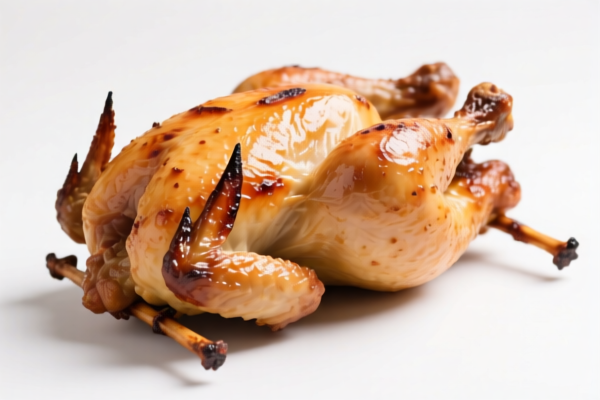
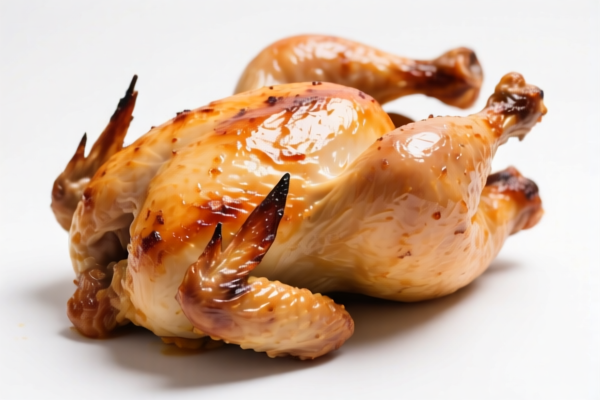
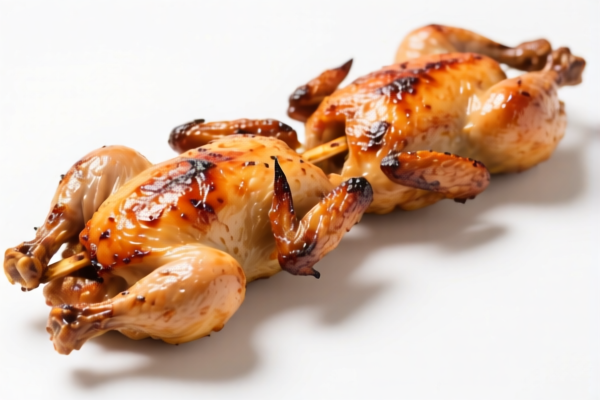
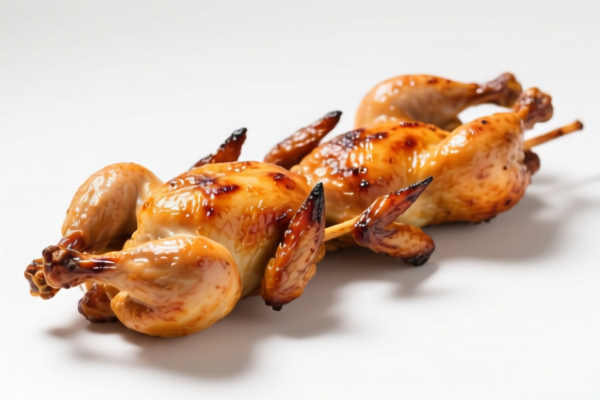
AI Analysis
🥜 Roasted Cashew Nuts: The High-Tax Trap & Precision Classification Guide
🌐 HS Code Reference & Customs Clearance Strategy | 2026 Latest Tariff Analysis | Expert Compliance Guide
📌 1. Product Definition: What Exactly Are "Roasted Cashew Nuts"?
Roasted cashew nuts are edible parts of plants (specifically seeds/nuts) that have undergone processing (roasting, which falls under "otherwise prepared or preserved"). They may or may not contain added sugar, salt, or flavorings.
In international trade, the classification hinges on two critical factors: 1. Processing Level: Are they raw, roasted, fried, or further processed (e.g., coated, chocolate-covered)? 2. Specificity: Are they pure cashews, or mixed with other nuts/seeds?
⚠️ Key Distinction:
- Pure Roasted Cashews: Typically classified under specific subheadings for cashews if listed separately.
- Mixed Nuts/Other Preparations: If mixed with other nuts or if the specific cashew heading is exhausted, they may fall under "Other" categories.
📦 2. HS Code Classification Details (Based on Provided Data)
Based on the provided <DATA>, there are two specific HS codes for roasted/prepared nuts/seeds. Note that the provided data does not list a specific code for pure roasted cashews under a primary cashew heading, but rather routes them through broader "Other" or specific mixed categories. Here is the breakdown:
| HS Code | Product Description (From Data) | Applicable Scenario | Tax Rate (Total) |
|---|---|---|---|
2008.19.10.40 |
Brazil nuts and cashews: Other, including mixtures | Specifically for Cashews (Pure or Mixed) that are prepared/preserved. This code explicitly mentions "Cashews". | 25.0% |
2008.19.90.90 |
Other: Other, including mixtures | Non-Cashew Seeds/Nuts or cashews that do not fit the specific "Brazil nuts and cashews" subheading (rare for pure cashews, but possible if misclassified or specific preparation types fall here). | 0.0% |
🔍 Critical Insight:
- Code2008.19.10.40is the correct primary classification for roasted cashews, as it explicitly names "Brazil nuts and cashews".
- Code2008.19.90.90is a residual category for "Other" seeds/nuts not specified elsewhere. Do not use this for pure cashews unless there is a specific regulatory reason or product characteristic excludes them from the "Cashews" subheading. Misclassification here to avoid tax is a common audit risk.
💰 3. 2026 Latest Tariff Rate Breakdown (With Surtaxes)
✅ Applicable Country: USA (US)
✅ Origin: China (CN) (Assumed based on common context of high tariffs, but verify origin)
✅ Effective Date: Current as per 2026 data provided
🎯 1. 2008.19.10.40 —— Roasted Cashews (Specific to Cashews)
| Item | Detail |
|---|---|
| Base Tariff | 0.0% |
| Surtax (Section 301/Other) | 25.0% |
| Total Tariff Rate | 25.0% |
| Calculation | CIF Value × 25% |
| De Minimis Exemption | ❌ Not Applicable (High-risk category for de minimis claims if misidentified) |
| Legal Basis | Based on provided data: 基础关税: 0.0%, 加征关税: 25.0% |
📌 Explanation:
- Although the base tariff is 0%, the 25% surtax is significant. This is likely due to Section 301 tariffs or similar trade measures on Chinese-origin prepared nuts.
- Total Cost Impact: A $1,000 shipment incurs $250 in duties. This must be factored into your pricing strategy.
🎯 2. 2008.19.90.90 —— Other Prepared Nuts/Seeds (Residual Category)
| Item | Detail |
|---|---|
| Base Tariff | 0.0% |
| Surtax (Section 301/Other) | 0.0% |
| Total Tariff Rate | 0.0% |
| Calculation | CIF Value × 0% |
| De Minimis Exemption | ✅ Potentially Applicable (if under $800 for de minimis, but high risk of reclassification) |
| Legal Basis | Based on provided data: 基础关税: 0.0%, 加征关税: 0.0% |
📌 Warning:
- Do NOT classify cashews under2008.19.90.90to save tax. Customs authorities will likely reclassify them under2008.19.10.40if the product is clearly cashews, leading to back duties, penalties, and delays.
- This code is for other seeds/nuts (e.g., prepared almonds, pistachios, mixed nut blends where cashews are not the primary or specific subheading applies).
🛠️ 4. Customs Clearance Practical Advice (Avoid Pitfalls)
✅ 1. Required Documentation Checklist
| Document | Mandatory? | Purpose |
|---|---|---|
| ✅ Commercial Invoice | ✔️ | Must clearly state "Roasted Cashew Nuts" and HS Code 2008.19.10.40. |
| ✅ Product Specification Sheet | ✔️ | Details: Roasting method (dry/oil), additives (salt, sugar), origin. |
| ✅ Certificate of Origin (CO) | ✔️ | Essential for proving origin. If US-origin, no surtax. If China-origin, 25% applies. |
| ✅ FDA Prior Notice | ✔️ | Critical for Food Products. Roasted nuts are food items; prior notice is mandatory before arrival. |
| ✅ Fumigation Certificate | ✔️ | If packaged in wood, fumigation is required. For nuts, sometimes phytosanitary certs are needed. |
| ✅ Labeling | ✔️ | Must comply with US FDA labeling laws (ingredient list, allergens, net weight). |
✅ 2. Declaration Tips (Key Mantras)
🔥 "Be Precise, Declare Truthfully, Avoid 'Other' for Cashews!"
| Scenario | Correct Declaration | Incorrect Declaration |
|---|---|---|
| Pure Roasted Cashews | HS 2008.19.10.40 | HS 2008.19.90.90 (to avoid tax) → Audit Risk! |
| Cashew-Almond Mix | HS 2008.19.10.40 (if cashews are primary/specific) | HS 2008.19.90.90 → Misclassification |
| Raw Cashews | Different HS Code (likely 0801.xxxx) | 2008.19.10.40 → Wrong Processing Stage |
| Chocolate-Covered Cashews | Possibly 1704.xxxx (Confectionery) | 2008.19.10.40 → Incorrect Category |
✅ 3. Special Situations
| Situation | Handling Advice |
|---|---|
| Mixed Nuts with Cashews | If cashews are the dominant ingredient or specifically listed, use 2008.19.10.40. If it's a general "mixed nut" blend, check if a specific mix code exists. If not, 2008.19.10.40 may still apply if cashews are included. |
| Flavored Cashews | As long as they are "prepared/preserved" and not "chocolate-coated" (which falls under confectionery), they remain under 2008.19. |
| De Minimis (Section 321) | ❌ High Risk. Even if under $800, if the HS Code is 2008.19.10.40 with 25% tax, some carriers/customs brokers may block de minimis clearance for agricultural products or goods with surtaxes. Verify with your carrier. |
| FDA Compliance | Ensure your facility is FDA-registered and the product is on the FDA Prior Notice list. Non-compliance leads to detention/destroy. |
🌍 5. Global Market Comparison (2026 Snapshot)
| Country/Region | Recommended HS Code | Tariff (CN Origin) | Key Requirements | Note |
|---|---|---|---|---|
| 🇺🇸 USA | 2008.19.10.40 |
25.0% | FDA Prior Notice, Allergen Labeling | High tax. Avoid misclassification. |
| 🇨🇳 China | 2008.19.10.40 |
Varies (usually low) | GB Standards | If exporting to China, check for import licenses. |
| 🇪🇺 EU | 2008.19.10.00 (approx) |
~0-5% | EFSA Compliance, Traceability | No 25% surtax like US. |
| 🇬🇧 UK | 2008.19.10.00 |
~0-5% | FSA Compliance | Post-Brexit rules apply. |
📌 Conclusion:
- The USA market is the most expensive for roasted cashews due to the 25% surtax.
- EU/UK are more favorable tariff-wise but have strict food safety/traceability rules.
📌 6. Common Mistakes & Pitfalls (Lessons Learned)
❌ Mistake 1: Declaring roasted cashews as 2008.19.90.90 to pay 0% tax.
👉 Consequence: Customs audit, reclassification to 2008.19.10.40, back taxes + penalties.
❌ Mistake 2: Ignoring FDA Prior Notice.
👉 Consequence: Cargo detained at port, potential destruction, fines.
❌ Mistake 3: Mislabeling "Mixed Nuts" as "Cashews" or vice versa.
👉 Consequence: Incorrect HS code assignment, clearance delays.
✅ Correct Practice:
"Roasted, Salted Cashew Nuts, 500g, Made in China, HS 2008.19.10.40"
🎯 7. Final Recommendations: Smart Clearance, Cost Efficiency!
🎯 Remember the Mantra:
🔹 "Cashews go to .10.40, don't try .90.90!"
🔹 "25% Tax is Real, Plan Your Margin!"
🔹 "FDA First, Then Customs!"
📌 Pro Tip:
If you are shipping under $800 (De Minimis), consult your carrier before declaring. Some carriers automatically block or inspect agricultural products with surtaxes. For large shipments, apply for a Binding Ruling with US Customs to confirm classification and mitigate risk.
📣 Immediate Action:
📞 Contact a Licensed Customs Broker + Verify FDA Status + Prepare Accurate Invoice
🚀 Ensure Smooth Clearance, Avoid Delays, Protect Your Margins!
✨ Precision in Classification Saves Thousands!
💼 Every Dollar of Duty Counts in the Nuts Business!
Customer Reviews
About HS Code Classification
The Harmonized System (HS) is an internationally standardized nomenclature developed by the World Customs Organization (WCO) to classify traded products. Over 200 countries use the HS system as the basis for customs tariffs, trade statistics, and import/export regulations.
Each HS code follows a hierarchical structure:
- Chapter (2 digits) — Broad category of goods (e.g., Chapter 84: Machinery and Mechanical Appliances)
- Heading (4 digits) — More specific grouping within the chapter
- Subheading (6 digits) — Internationally standardized breakdown, used by all WCO member countries
- National subdivisions (8-10 digits) — Country-specific extensions for further classification, such as US HTSUS 10-digit codes
Correct HS code classification is essential for smooth customs clearance, accurate duty payment, and compliance with trade regulations. Misclassification can lead to customs delays, overpayment of duties, or penalties.
When importing from CN to US, the applicable tariff rates may include:
- Most-Favored-Nation (MFN) rate — The standard duty rate applied to WTO members
- General rate — Applied to countries without trade agreements
- Trade remedy duties — Additional tariffs such as Section 301 (anti-dumping), Section 232 (national security), or countervailing duties
The information provided on this page is for reference purposes only. For official classification, please consult with your local customs authority or a licensed customs broker.