Robot Dog
CN → US| HS Code | Tariff Rate | Origin | Destination | Doc |
|---|---|---|---|---|
| 9503000071 | 10.0% | CN | US | Official Doc |
| 8543709860 | 37.6% | CN | US | Official Doc |
| 8479896500 | 20.3% | CN | US | Official Doc |
| 9503000073 | 10.0% | CN | US | Official Doc |
| 8479500000 | 37.5% | CN | US | Official Doc |
Product Images
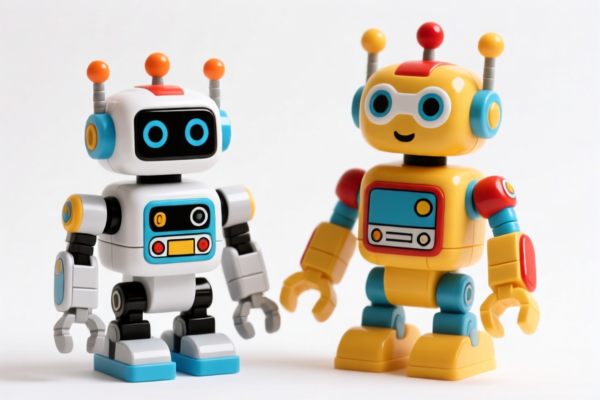
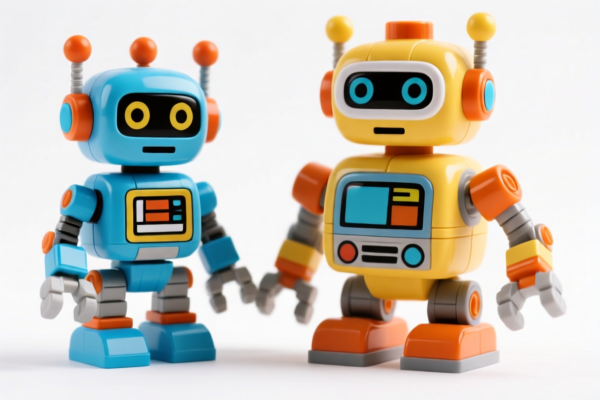
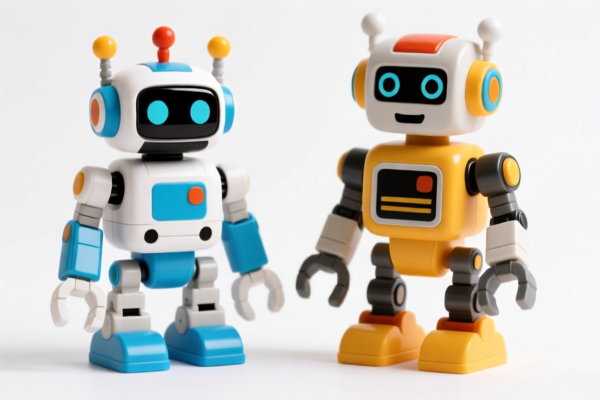
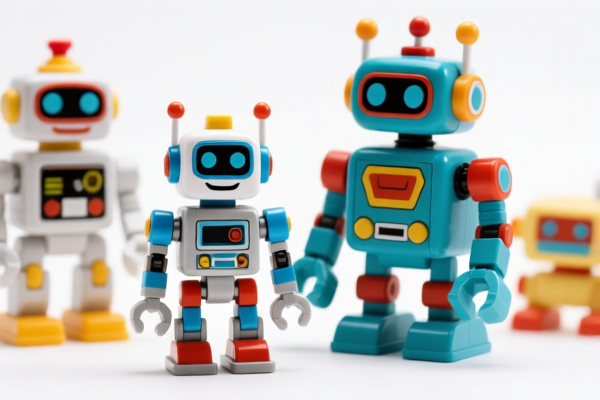
AI Analysis
🤖 Robot Dog (Intelligent/Remote-Controlled Toy Robot)
🌐 HS Code Classification & Customs Clearance Guide | 2026 Latest Tariff Breakdown | Pro-Level Import Strategy
📌 One Product, Five Classifications — Why So Many HS Codes? Let’s Decode It!
The Robot Dog is a hybrid product: part smart toy, part electronic machine, part automated device, and even industrial-grade robotics — depending on its design, function, and features.
This means one product can fall under multiple HS Codes, each with radically different tariffs — from 10% to 37.6%.
⚠️ Critical Insight:
- Misclassification = 3x tax cost
- Wrong HS Code = Delays, fines, or even seizure
- The key is function, not name — "robot dog" ≠ automatic toy
📦 二、HS Code Classification Breakdown (2026 Official Tariff Table)
| HS Code | Product Description | Key Feature | Tax Rate | Tax Breakdown |
|---|---|---|---|---|
9503.00.00.71 |
Intelligent/remote-controlled toy robot, resembles a dog | Designed for entertainment, remote control, playful motion | 10.0% | Base: 0%, Add-on: 0%, 122 Clause: 10% |
8543.70.98.60 |
Other electronic machines with independent functions | Has internal electronics, power, sensors, AI logic | 37.6% | Base: 2.6%, Add-on: 25.0%, 122 Clause: 10% |
8479.89.65.00 |
Other electrical machines with self-contained motors | Built-in motor, self-propelled, autonomous movement | 20.3% | Base: 2.8%, Add-on: 7.5%, 122 Clause: 10% |
9503.00.00.73 |
Miniature model or similar entertainment model | Smaller size, toy-like appearance, non-industrial | 10.0% | Base: 0%, Add-on: 0%, 122 Clause: 10% |
8479.50.00.00 |
Automated machinery with independent function | Industrial-grade, programmable, autonomous operation | 37.5% | Base: 2.5%, Add-on: 25.0%, 122 Clause: 10% |
🔍 Why So Many?
The same robot dog can be classified differently based on:
- Intended use (toy vs. industrial)
- Size & design (pet-sized vs. large industrial unit)
- Functionality (remote control vs. AI autonomy)
- Internal components (simple motor vs. AI chip, sensors, battery pack)
💰 三、2026 Latest Tariff & Clause Breakdown (U.S. Focus)
✅ Target Market: United States (US)
✅ Origin: China (CN)
✅ Effective Date: November 10, 2025 (Updated Tariff Schedule)
🎯 1. 9503.00.00.71 — Toy Robot Dog (Entertainment Model)
| Item | Detail |
|---|---|
| Base Tariff | 0% (ad valorem) |
| Section 301 (USITC) Add-on | 0% |
| Section 122 Clause (IEEPA) | 10% |
| Total Tax Rate | 10.0% |
| Tax Calculation | CIF Value × 10% |
| De Minimis Threshold | ❌ Not eligible (denied) |
| Legal Pathway | IEEPA:9903.01.25 → IEEPA:9903.01.24 → 9503.00.00.71 |
📌 When to Use This Code:
- The robot dog is small, remote-controlled, with no AI, no programming, no industrial function
- Looks like a pet toy, moves like a dog, used for play and fun
- No self-navigation, no sensors, no app control✅ Best for: Kids’ toys, Halloween props, novelty gifts
🎯 2. 8543.70.98.60 — Electronic Machine with Independent Function
| Item | Detail |
|---|---|
| Base Tariff | 2.6% |
| Section 301 (USITC) Add-on | 25.0% |
| Section 122 Clause (IEEPA) | 10% |
| Total Tax Rate | 37.6% |
| Tax Calculation | CIF × 37.6% |
| De Minimis | ❌ Not eligible |
| Legal Pathway | IEEPA:9903.01.25 → USITC:8543.70.98.60 → FOOTNOTE:9903.88.01 |
📌 When to Use This Code:
- The robot dog has onboard processor, AI, sensors, Bluetooth/WiFi, app control
- Can walk, avoid obstacles, follow commands, learn behaviors
- Functions as a standalone electronic device, not just a toy✅ Best for: Smart home robots, AI companions, pet-like robots with autonomy
🎯 3. 8479.89.65.00 — Electrical Machine with Self-Contained Motor
| Item | Detail |
|---|---|
| Base Tariff | 2.8% |
| Section 301 (USITC) Add-on | 7.5% |
| Section 122 Clause (IEEPA) | 10% |
| Total Tax Rate | 20.3% |
| Tax Calculation | CIF × 20.3% |
| De Minimis | ❌ Not eligible |
| Legal Pathway | IEEPA:9903.01.25 → 8479.89.65.00 |
📌 When to Use This Code:
- The robot dog has a built-in motor, self-propelled, moves independently
- But no AI, no app, no remote control — just basic motion (e.g., walks forward/backward)
- May be used in educational or industrial demo settings✅ Best for: Educational kits, basic motion robots, prototype models
🎯 4. 9503.00.00.73 — Miniature Model / Entertainment Model (Smaller Size)
| Item | Detail |
|---|---|
| Base Tariff | 0% |
| Section 301 (USITC) Add-on | 0% |
| Section 122 Clause (IEEPA) | 10% |
| Total Tax Rate | 10.0% |
| Tax Calculation | CIF × 10% |
| De Minimis | ❌ Not eligible |
| Legal Pathway | IEEPA:9903.01.25 → 9503.00.00.73 |
📌 When to Use This Code:
- The robot dog is smaller than 15 cm, toy-sized, non-functional beyond basic movement
- Used as a collectible, model, or display item
- No intelligence, no app, no remote control✅ Best for: Miniature display models, collector’s items, novelty gifts
🎯 5. 8479.50.00.00 — Automated Machinery with Independent Function
| Item | Detail |
|---|---|
| Base Tariff | 2.5% |
| Section 301 (USITC) Add-on | 25.0% |
| Section 122 Clause (IEEPA) | 10% |
| Total Tax Rate | 37.5% |
| Tax Calculation | CIF × 37.5% |
| De Minimis | ❌ Not eligible |
| Legal Pathway | IEEPA:9903.01.25 → USITC:8479.50.00.00 → FOOTNOTE:9903.88.01 |
📌 When to Use This Code:
- The robot dog is programmable, autonomous, used in industrial, research, or automation tasks
- Can map environments, follow paths, interact with systems, integrate with software
- Not a toy — it’s a functional robot✅ Best for: R&D labs, warehouse automation, educational robotics, industrial testing
🛠️ 四、Customs Clearance Best Practices (Real-World Tips)
✅ 1. Must-Have Documentation (No Exceptions!)
| Document | Required? | Why It Matters |
|---|---|---|
| ✅ Product Manual (English) | ✔️ | Shows function, controls, app integration |
| ✅ Circuit Diagram / Schematic | ✔️ | Proves presence of AI, sensors, processor |
| ✅ Product Photos (360° + close-ups) | ✔️ | Shows motor, battery, interface, size |
| ✅ Bill of Lading & Packing List | ✔️ | Proves shipment contents |
| ✅ Commercial Invoice | ✔️ | Must state exact function, intended use, size, control method |
| ✅ Certificate of Origin (CO) | ✔️ | Needed for tariff eligibility |
| ✅ Test Reports (FCC, CE, RoHS, UL) | ✔️ | Prevents rejection for safety |
🔥 Pro Tip:
- Never say “robot dog” on the invoice.
- Use precise terms:
- “AI-powered remote-controlled pet robot” →9503.00.00.71
- “Autonomous electronic machine with self-contained motor” →8479.89.65.00
- “Industrial-grade automated robot for research” →8479.50.00.00
✅ 2.申报策略口诀 (The 3-Step Rule)
🔥 “Function First, Name Second, Size Last!”
| Scenario | Correct HS Code | Wrong Code | Result |
|---|---|---|---|
| Toy dog with remote control | 9503.00.00.71 or 9503.00.00.73 |
8543.70.98.60 |
Tax: 10% vs 37.6% → Save 27.6% |
| AI dog with app, sensors, self-navigation | 8543.70.98.60 or 8479.50.00.00 |
9503.00.00.71 |
**Tax: 37.6% vs 10% → ** |
| Small model, no electronics | 9503.00.00.73 |
8479.89.65.00 |
Tax: 10% vs 20.3% → Save 10.3% |
| Industrial robot used in lab | 8479.50.00.00 |
9503.00.00.71 |
**Tax: 37.5% vs 10% → ** |
✅ 3. Special Cases & Risk Mitigation
| Case | Solution |
|---|---|
| Robot dog with detachable battery | Declare as one unit — don’t split battery and body |
| Robot dog with app & cloud integration | Must declare software function — triggers higher classification |
| Used or refurbished robot dog | Still subject to same tariffs — no discount |
| Custom-built robot dog for client | Apply for Advance Ruling (Pre-Approval) to lock in HS Code |
| Robot dog with camera or microphone | May trigger data privacy rules — add disclaimer: “No data collection” |
🌍 五、Global Market Tariff Comparison (2026)
| Country | Recommended HS Code | Base Tariff | Additional Taxes | Total |
|---|---|---|---|---|
| 🇺🇸 USA | 9503.00.00.71 / 8543.70.98.60 |
0%–2.8% | +10% (IEEPA) + up to 25% (USITC) | 10% – 37.6% |
| 🇨🇳 China | 9503.00.00.71 |
5% | None | 5% |
| 🇪🇺 EU | 9503.00.00.71 |
0% | None (if CE) | 0% |
| 🇦🇺 Australia | 9503.00.00.71 |
5% | None | 5% |
| 🇯🇵 Japan | 9503.00.00.71 |
0% | None | 0% |
📌 Key Takeaway:
- USA is the most expensive market due to IEEPA + Section 301
- China, EU, Japan, Australia are much more favorable
- Consider shifting production or distribution to these regions to reduce cost
📌 六、常见错误 & How to Avoid Them (Real Cases)
❌ Mistake 1: Declaring a smart AI robot dog as 9503.00.00.71
👉 Result: 10% tax → But actual tax should be 37.6% → Audit, penalty, back taxes
❌ Mistake 2: Splitting robot dog into “body + motor + battery”
👉 Result: Each part taxed at 89.5% → Total: 268% → Seizure
❌ Mistake 3: Using “toy robot” in invoice without describing function
👉 Result: Customs cannot determine classification → Delay, request for info, risk of rejection
✅ Correct Declaration Example:
“AI-Powered Autonomous Robot Dog, 30 cm, with self-contained motor, obstacle avoidance, Bluetooth control, app-integrated, not for children under 8. Model XYZ. FCC & RoHS Certified.”
🎯 七、Final Verdict: How to Win the Tariff Game
🔹 “If it moves, senses, and thinks — it’s not a toy.”
🔹 “If it’s small and fun — it’s a toy.”
🔹 “If it’s big, smart, and autonomous — it’s a machine.”✅ Pro Tip:
- Apply for an Advance Ruling (Pre-Approval) before shipping
- Use a customs broker with AI/robot expertise
- Always declare based on function, not name
📣 Act Now: Avoid 37.6% Tax — Get It Right the First Time!
📞 Contact a specialized customs broker
📂 Submit product photos, manual, circuit diagram
🚀 Get your HS Code pre-approved — save time, money, and risk
✨ Smart Classification = Smart Profit!
💼 Your robot dog deserves a smart tariff — not a tax trap!
Customer Reviews
About HS Code Classification
The Harmonized System (HS) is an internationally standardized nomenclature developed by the World Customs Organization (WCO) to classify traded products. Over 200 countries use the HS system as the basis for customs tariffs, trade statistics, and import/export regulations.
Each HS code follows a hierarchical structure:
- Chapter (2 digits) — Broad category of goods (e.g., Chapter 84: Machinery and Mechanical Appliances)
- Heading (4 digits) — More specific grouping within the chapter
- Subheading (6 digits) — Internationally standardized breakdown, used by all WCO member countries
- National subdivisions (8-10 digits) — Country-specific extensions for further classification, such as US HTSUS 10-digit codes
Correct HS code classification is essential for smooth customs clearance, accurate duty payment, and compliance with trade regulations. Misclassification can lead to customs delays, overpayment of duties, or penalties.
When importing from CN to US, the applicable tariff rates may include:
- Most-Favored-Nation (MFN) rate — The standard duty rate applied to WTO members
- General rate — Applied to countries without trade agreements
- Trade remedy duties — Additional tariffs such as Section 301 (anti-dumping), Section 232 (national security), or countervailing duties
The information provided on this page is for reference purposes only. For official classification, please consult with your local customs authority or a licensed customs broker.