Robotic Lawn Mower
CN → US| HS Code | Tariff Rate | Origin | Destination | Doc |
|---|---|---|---|---|
| 8433110010 | 17.5% | CN | US | Official Doc |
| 8433901010 | 35.0% | CN | US | Official Doc |
Product Images
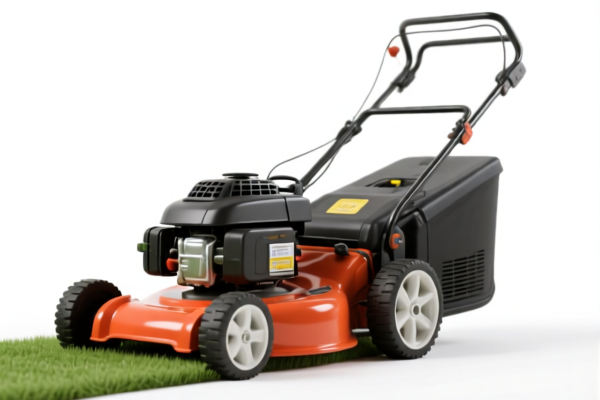
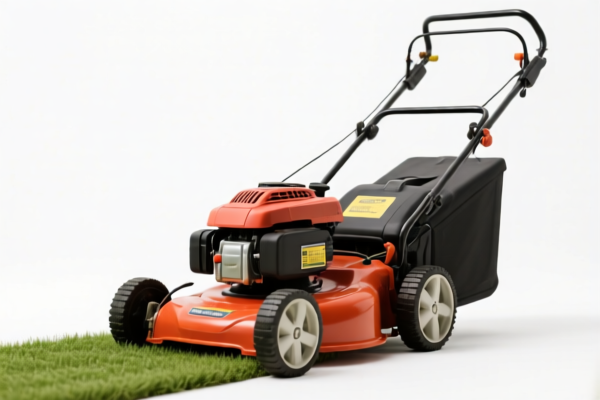
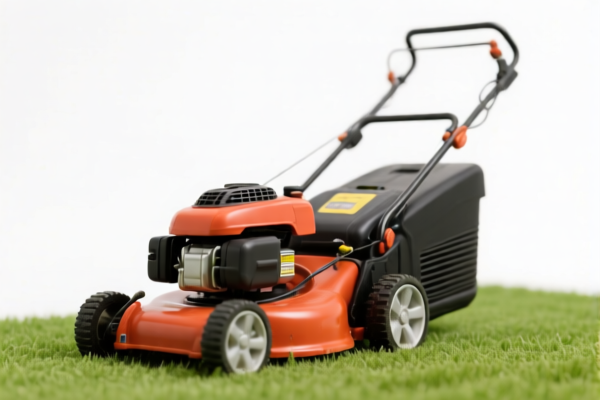
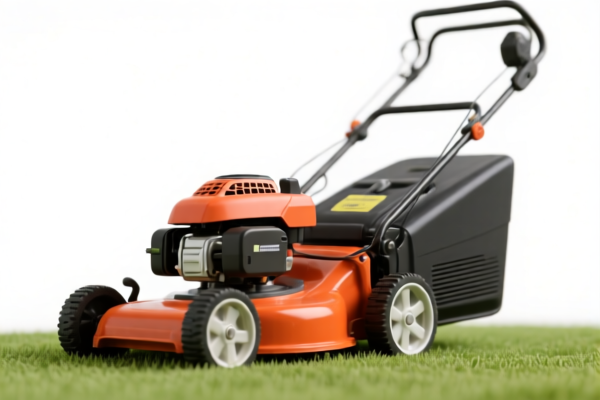
AI Analysis
🌿 Robotic Lawn Mower (Electric, Horizontal Cutting)
🌐 HS Code Reference & Customs Clearance Guide | 2026 Latest Tariff Analysis | Professional Entry Strategy
📌 I. Product Definition & Classification: What Exactly is a "Robotic Lawn Mower"?
A Robotic Lawn Mower is an automated agricultural/landscape maintenance device designed for cutting grass on lawns, parks, or sports grounds. In international trade, these machines are classified under Heading 8433. However, precise classification depends heavily on two factors: 1. Operation Mode: Is it powered manually, by cable, or autonomously? 2. Component Status: Is it a complete machine or a spare part (like wheels/tires)?
For electrically powered robotic mowers (including battery-operated) with the cutting device rotating in a horizontal plane, they fall squarely under HS Code 8433.11.00.10.
⚠️ Critical Distinction:
- If the unit is a complete, functional robot that navigates autonomously → It is classified as a Mower (8433.11.00.10).
- If you are importing only replacement wheel assemblies for these robots → It is classified as a Part (8433.90.10.10).
- Do not confuse with "manual" push mowers or non-rotary cutting devices.
📦 II. HS Code Classification Details (2026 Latest Tariff Authority)
| HS Code | Product Description | Application Scenario | Key Identifier |
|--------|--------------------------|--------------------------|
| 8433.11.00.10 | Robotic Lawn Mower (Electric/Battery) | Autonomous lawn care robots, solar-charging units, boundary-wire systems | ✅ Complete Machine |
| 8433.90.10.10 | Parts: Wheel and Tire Assemblies | Replacement wheels, tires, or axle assemblies for robotic mowers | ✅ Spare Part Only |
🔍 Key Note:
-8433.11.00.10covers the entire robot, including its motor, battery, chassis, and cutting deck.
-8433.90.10.10is strictly for parts. You cannot import a whole robot under this code.
- Both codes are specific to lawn, park, or sports ground mowers. Industrial forestry cutters are different.
💰 III. 2026 Latest Tariff Rate Breakdown (Detailed Analysis)
✅ Applicable Country: USA (US)
✅ Origin: China (CN)
✅ Effective Date: Current 2026 Tariff Schedule
🎯 1. 8433.11.00.10 —— Robotic Lawn Mower (Complete Unit)
| Item | Detail |
|---|---|
| Base Tariff | 0.0% (Ad Valorem) |
| Section 301 / Additional Tariff | +7.5% |
| Total Tax Rate | 7.5% |
| Tax Calculation | CIF Value × 7.5% |
| De Minimis Eligibility | ⚠️ Check Current Limits (Usually >$800 for Section 301 goods is taxable; Important: Section 301 tariffs often apply regardless of de minimis for certain categories, but for complete machines, the $800 exemption may still apply if properly classified as consumer goods, unless specific exclusions have expired. However, the data provided states a total tax of 7.5%, implying the tariff is levied. Note: Always verify if the $800 de minimis exemption is waived for this specific HS code in 2026. |
| Legal Basis | 8433.11.00.10 → Section 301 List 4A/B (if applicable) |
📌 Explanation:
- The Base Duty is 0%, making it attractive for free trade agreements.
- The 7.5% Additional Tariff is likely a Section 301 tariff or a specific bilateral duty.
- Total Cost Impact: For every $10,000 of robots imported, expect $750 in duties.
🎯 2. 8433.90.10.10 —— Parts: Wheel and Tire Assemblies
| Item | Detail |
|---|---|
| Base Tariff | 0.0% (Ad Valorem) |
| Section 301 / Additional Tariff | +25.0% |
| Total Tax Rate | 25.0% |
| Tax Calculation | CIF Value × 25.0% |
| De Minimis Eligibility | ⚠️ High Risk: Parts often face stricter scrutiny. The 25% rate suggests a higher-priority trade restriction list. |
| Legal Basis | 8433.90.10.10 → Section 301 List 3 or 4 |
📌 Explanation:
- Spare parts, especially wheel assemblies, are subject to a much higher 25% additional tariff.
- This is a significant cost driver for after-sales service and spare parts shipments.
- Total Cost Impact: For every $10,000 of wheel sets imported, expect $2,500 in duties.
🛠️ IV. Customs Clearance Practical Advice (Avoiding Pitfalls)
✅ 1. Required Documentation Checklist
| Document | Must Provide? | Purpose |
|---|---|---|
| ✅ Commercial Invoice | ✔️ | Must clearly state "Robotic Lawn Mower" for 8433.11.00.10 OR "Wheel Assembly for Mower" for 8433.90.10.10. |
| ✅ Product Photos | ✔️ | Show the full robot (with battery/charging dock) to prove it’s a complete machine. |
| ✅ Technical Specs | ✔️ | Include power source (Battery/AC), cutting width, and navigation type (Boundary wire/GPS). |
| ✅ Parts List (BOM) | ✔️ | Crucial for 8433.90.10.10 to prove it’s only a wheel/tire assembly, not a full mower. |
| ✅ UL/ETL Certification | ✔️ | Electrical safety compliance is mandatory for battery-powered devices. |
✅ 2. Declaration Strategy (Key Mnemonics)
🔥 "Full Robot? 7.5%. Wheels Only? 25%! Name it Right!"
| Scenario | Correct HS Code | Incorrect Code | Consequence |
|---|---|---|---|
| Importing a complete robot | 8433.11.00.10 |
8433.90.10.10 |
Underpayment of Duty: Will face penalties + back taxes. |
| Importing replacement wheels | 8433.90.10.10 |
8433.11.00.10 |
Overpayment: You pay 0% instead of 7.5%? No, wait: 8433.90 is 25%. So if you misdeclare wheels as mowers, you save money but commit fraud. If you misdeclare mowers as wheels, you overpay (7.5% vs 25%). |
| Importing blades or deck parts | 8433.90.10.10 |
8433.11.00.10 |
Must use "Parts" code. Blades are not "Wheel and Tire" but still fall under Parts (8433.90). Note: The data provided only lists "Wheel and tire assemblies" under 8433.90.10.10. Other parts may have different sub-codes. Check full tariff. |
📌 Critical Warning:
- Do not split shipments artificially to avoid the 25% part tariff. If a shipment contains a complete robot, it must be declared as a robot.
- Wheel assemblies must be clearly identified as spare parts with no motor, battery, or control unit included.
✅ 3. Special Cases
| Case | Handling Advice |
|---|---|
| Kit Assembly | If you ship a "DIY Kit" of a robot (no battery), it may still be classified as a mower if intended for that use. Check with CBP. |
| Used Robots | Importing used robotic mowers may require additional safety inspections and is subject to the same HS codes. |
| Solar Chargers | If sold separately, solar panels may be classified under 8541.43 or 8543.70, not 8433. Do not bundle them under the mower HS code unless they are part of the original packaging and function as a single unit. |
🌍 V. Global Market Comparison (2026)
| Country/Region | Recommended HS Code | Tariff (China Origin) | Notes |
|---|---|---|---|
| 🇺🇸 USA | 8433.11.00.10 |
7.5% | Low duty for complete units. |
| 🇺🇸 USA | 8433.90.10.10 |
25.0% | High duty for parts. |
| 🇪🇺 EU | 8433.19.90 |
0-4.5% | Often lower than US. VAT applies. |
| 🇨🇦 Canada | 8433.11.00 |
0% | CUSMA may offer duty-free if rules of origin met. |
| 🇬🇧 UK | 8433.11.00 |
0-4.5% | Post-Brexit tariffs vary. |
📌 Conclusion:
- The USA offers a relatively favorable 7.5% rate for complete robotic mowers compared to many other electronic goods.
- However, spare parts face a steep 25% tariff, which can erode after-sales profit margins.
📌 VI. Common Mistakes & Pitfalls (Lessons Learned)
❌ Mistake 1: Declaring a complete robot as "Garden Tool" or "Electronics"
👉 Result: Wrong HS Code, potential audit, and missed compliance with electrical safety laws.
❌ Mistake 2: Including a motorized wheel assembly with a remote control in the "Parts" shipment
👉 Result: Customs may classify it as a "Machine" rather than a "Part," leading to unexpected duties or delays.
❌ Mistake 3: Ignoring the 7.5% vs 25% difference in shipping strategy
👉 Result: Shipping whole units for repairs when parts are needed incurs a 17.5% higher duty on the component level. Optimize supply chain to ship parts only if the unit is already in-country.
✅ Best Practice:
"Complete Robot? Say '8433.11.00.10'. Just Wheels? Say '8433.90.10.10'. Be Specific, Save Money, Stay Compliant."
🎯 VII. Conclusion: Precision Pays Off
🎯 Key Takeaway:
- Robotic Lawn Mowers are a growing market with low entry tariffs (7.5%) in the US for complete units.
- Spares are expensive (25%). Plan your inventory and repair logistics to minimize the import of high-tariff parts.
- Always provide clear product descriptions and technical diagrams to avoid misclassification.
📌 Pro Tip:
If you are manufacturing these robots outside of China (e.g., Vietnam, Thailand), you may qualify for lower or zero Section 301 tariffs. Investigate Substantial Transformation rules to reduce your 7.5% duty to 0%.
📣 Immediate Action:
📞 Contact a Customs Broker: Confirm the current status of Section 301 exclusions for
8433.11.00.10.
📦 Prepare Documentation: Ensure your invoice explicitly states "Robotic Lawn Mower, Electric, Battery Operated."
🚀 Optimize Logistics: Ship complete units where possible to leverage the lower 7.5% rate.
✨ Smart Clearance, Start with the Right Code!
💼 Your Profit Margin Depends on Precision!
Customer Reviews
About HS Code Classification
The Harmonized System (HS) is an internationally standardized nomenclature developed by the World Customs Organization (WCO) to classify traded products. Over 200 countries use the HS system as the basis for customs tariffs, trade statistics, and import/export regulations.
Each HS code follows a hierarchical structure:
- Chapter (2 digits) — Broad category of goods (e.g., Chapter 84: Machinery and Mechanical Appliances)
- Heading (4 digits) — More specific grouping within the chapter
- Subheading (6 digits) — Internationally standardized breakdown, used by all WCO member countries
- National subdivisions (8-10 digits) — Country-specific extensions for further classification, such as US HTSUS 10-digit codes
Correct HS code classification is essential for smooth customs clearance, accurate duty payment, and compliance with trade regulations. Misclassification can lead to customs delays, overpayment of duties, or penalties.
When importing from CN to US, the applicable tariff rates may include:
- Most-Favored-Nation (MFN) rate — The standard duty rate applied to WTO members
- General rate — Applied to countries without trade agreements
- Trade remedy duties — Additional tariffs such as Section 301 (anti-dumping), Section 232 (national security), or countervailing duties
The information provided on this page is for reference purposes only. For official classification, please consult with your local customs authority or a licensed customs broker.