Robotic Pool Cleaner
CN → US| HS Code | Tariff Rate | Origin | Destination | Doc |
|---|---|---|---|---|
| 8509801000 | 10.0% | CN | US | Official Doc |
| 8479500000 | 37.5% | CN | US | Official Doc |
| 8479897000 | 35.0% | CN | US | Official Doc |
| 8509805095 | 14.2% | CN | US | Official Doc |
Product Images
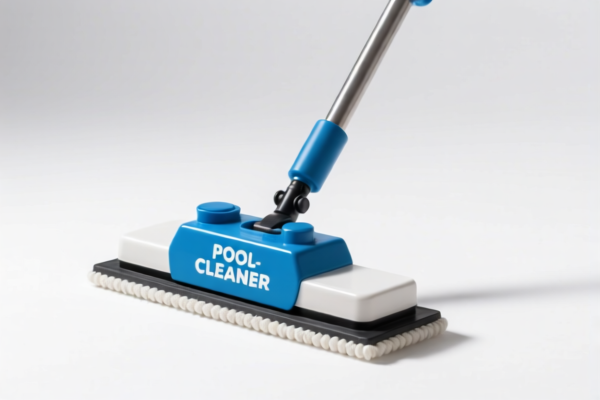
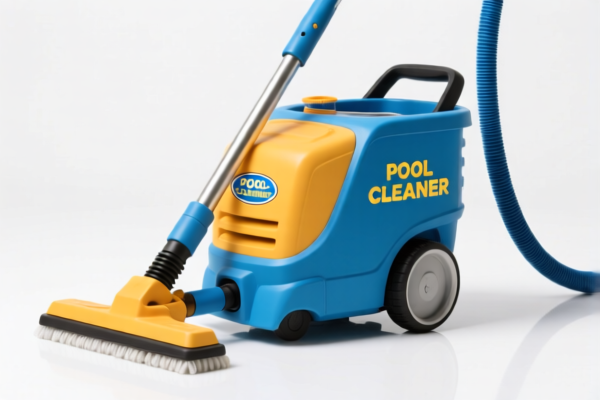
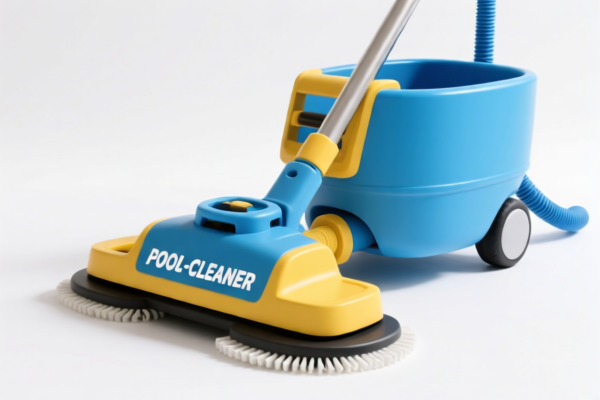
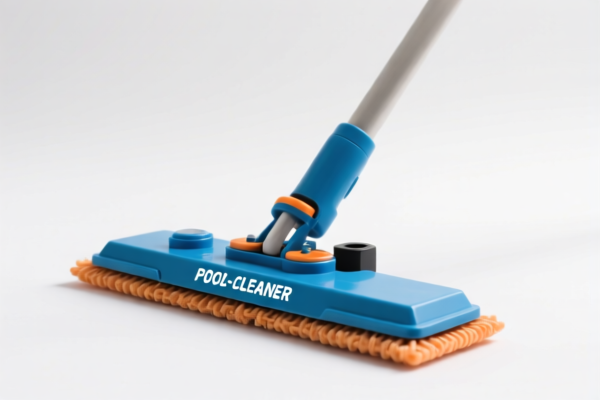
AI Analysis
🏊♂️ Robotic Pool Cleaner (Electric)
🌐 HS Code Classification & Customs Clearance Guide | 2024-2026 Tax Analysis | Professional Compliance Strategy
📌 I. Product Definition & Classification Logic: Is it a Robot or a Appliance?
A Robotic Pool Cleaner is an automated device designed to clean swimming pool floors and walls. In international trade, its classification hinges on a critical technical distinction: Is it a "Household Electrical Appliance" (Chapter 85) or an "Industrial/Independent Mechanical Apparatus" (Chapter 84)?
The Core Conflict: 1. Home Appliance Logic (Chapter 85): If viewed as a consumer electric device similar to a vacuum cleaner, it falls under 8509. This typically attracts lower base duties but is subject to specific "122 Clause" tariffs. 2. Mechanical Apparatus Logic (Chapter 84): If viewed as a specialized autonomous machine with independent function (robotics), it falls under 8479. This often attracts significantly higher tariffs due to Section 301 and "122 Clause" additions.
⚠️ Key Differentiator:
- Consumer Focus + Electric Motor → Likely 8509 (Lower Base Tax, but complex surcharges).
- Industrial/Autonomous Machine Logic → Likely 8479 (Higher Base Tax + Heavy Section 301 Tariffs).
📦 II. HS Code Classification Details (Based on Provided Data)
| HS Code | Product Description | Matching Logic | Total Tax Rate |
|---|---|---|---|
8509.80.10.00 |
Electric Household Appliances (Other) | Matches "Motor-driven household appliances." Logic: Similar to floor polishers/cleaners. No material/shape conflict. | 10.0% |
8479.50.00.00 |
Robotic Machines (Independent Function) | Matches "Industrial Robots." Logic: Automated cleaning device with mechanical execution parts. | 37.5% |
8479.89.70.00 |
Other Independent Mechanical Appliances | Matches "Other machines." Logic: "Robot" implies automation; function aligns with "carpet sweepers" (cleaning apparatus). | 35.0% |
8509.80.50.95 |
Other Electrical Household Appliances | Matches "Household appliances with self-contained motor." Excludes toothbrushes, can openers, humidifiers. Fits "Other" category. | 14.2% |
🔍 Critical Observation:
- The choice between 8509 (Appliance) and 8479 (Machine) drastically changes the tax burden (10-14.2% vs. 35-37.5%).
- All listed codes include a "122 Clause Tariff" (Section 122 of the Trade Act of 1974, typically related to specific country origin or trade remedy measures, often applying to China-origin goods in this context).
💰 III. 2024-2026 Detailed Tax Breakdown
✅ Context: Based on the provided data, these rates apply to imports subject to standard US trade policies (including Section 301/122 clauses for specific origins).
🎯 1. 8509.80.10.00 —— Electric Household Appliances (Other)
Best Case Scenario for Low Base Tax
| Item | Detail |
|---|---|
| Base Duty | 0.0% |
| Section 301 Surcharge | 0.0% |
| 122 Clause Tariff | +10.0% |
| Total Effective Rate | 10.0% |
| Legal Basis | Chapter 85 (Electrical Machinery); Subheading 8509 (Household appliances). |
| Strategy Note | This classification leverages the "Household Appliance" definition to avoid the higher "Robot" duties. |
📌 Explanation:
- This is the lowest tax bracket among the options.
- It assumes the cleaner is purely an electrical device for home use, akin to a vacuum.
- Risk: Customs may reclassify as 8479 if the device is deemed too complex or "industrial" in nature.
🎯 2. 8479.50.00.00 —— Robots (Independent Function)
Highest Tax Scenario
| Item | Detail |
|---|---|
| Base Duty | 2.5% |
| Section 301 Surcharge | +25.0% |
| 122 Clause Tariff | +10.0% |
| Total Effective Rate | 37.5% |
| Legal Basis | Chapter 84 (Machinery); Subheading 8479 (Machines with individual functions); Robot specific heading. |
| Strategy Note | Only use if the device is clearly defined as an industrial robot or autonomous machine outside household appliance norms. |
📌 Explanation:
- This is the most expensive classification.
- The 25% Section 301 tariff is the primary cost driver.
- Suitable only if the product is marketed as a "Robot" with advanced AI/autonomy features distinct from standard electric appliances.
🎯 3. 8479.89.70.00 —— Other Independent Mechanical Appliances
High Tax Scenario (Slightly lower than 8479.50)
| Item | Detail |
|---|---|
| Base Duty | 0.0% |
| Section 301 Surcharge | +25.0% |
| 122 Clause Tariff | +10.0% |
| Total Effective Rate | 35.0% |
| Legal Basis | Chapter 84; Subheading 8479 (Other machines). |
| Strategy Note | Avoids the 2.5% base duty of 8479.50 but retains the heavy 25% Section 301 surcharge. |
📌 Explanation:
- Positions the cleaner as a "general independent machine" rather than a specific "robot."
- Still subject to the 25% penalty tariff, making it significantly more expensive than Chapter 85 options.
🎯 4. 8509.80.50.95 —— Other Electrical Household Appliances
Moderate Tax Scenario
| Item | Detail |
|---|---|
| Base Duty | 4.2% |
| Section 301 Surcharge | 0.0% |
| 122 Clause Tariff | +10.0% |
| Total Effective Rate | 14.2% |
| Legal Basis | Chapter 85; Subheading 8509 (Household appliances). |
| Strategy Note | A safe middle-ground if 8509.10 is not applicable. Higher base than 8509.10 but no Section 301 tariff. |
📌 Explanation:
- 4.2% Base Duty is higher than the 0% in 8509.10.
- No Section 301 Surcharge is the key advantage here.
- Total cost (14.2%) is still much lower than the Chapter 84 options (35%+).
🛠️ IV. Customs Clearance Practical Advice
✅ 1. Documentation Requirements (The "Proof" Kit)
| Document | Requirement | Purpose |
|---|---|---|
| Product Specifications | Must detail motor type, voltage, control system | To prove it is an "Electric Appliance" (Ch 85) vs. "Mechanical Robot" (Ch 84). |
| User Manual | Label as "Household Pool Cleaner" | Supports classification under 8509 (Household use). Avoid words like "Industrial Robot." |
| Circuit Diagram | Show self-contained motor and control unit | Essential for 8509 classification (electrical nature). |
| Commercial Invoice | Describe as "Electric Robotic Pool Cleaner for Home Use" | Clear description prevents ambiguity. |
| Photos | Show product in a residential pool setting | Visual evidence of "Household" application. |
✅ 2. Classification Strategy (How to Save Money)
| Strategy | Action | Target HS Code | Potential Savings |
|---|---|---|---|
| 🏆 Optimal | Emphasize Household Appliance features (electric motor, simple automation) | 8509.80.10.00 |
Saves ~25-27.5% vs. Chapter 84 |
| 🥈 Good | Emphasize Other Electrical Appliance if 8509.10 is contested | 8509.80.50.95 |
Saves ~20-23% vs. Chapter 84 |
| ⚠️ Risky | Classify as Robot/Machine | 8479.50.00.00 |
High risk of audit; Higher tax |
📌 Key Tip:
- Avoid the word "Robot" in the HTS Description if possible. Use terms like "Automatic Electric Pool Cleaner" or "Electric Submersible Cleaner."
- If Customs challenges 8509, be prepared to argue that it lacks the complex mechanical armatures or industrial capabilities of a true "Robot" under 8479.
🌍 V. Global Market Comparison (2024-2026)
| Region | Recommended HS | Est. Duty | Key Certifications | Notes |
|---|---|---|---|---|
| 🇺🇸 USA | 8509.80.10.00 |
10.0% | FCC, UL, CPSC | 122 Clause applies. Avoid 8479 to save 25%. |
| 🇨🇳 China | 8509.80 |
~10-12% | CCC | No Section 301/122 surcharges. |
| 🇪🇺 EU | 8508 (Vacuum-like) |
~4-6% | CE, RoHS, WEEE | Often classified as vacuum cleaners or similar. |
| 🇬🇧 UK | 8508 |
~4-6% | UKCA, RoHS | Post-Brexit rules similar to EU but requires UKCA. |
| 🇦🇺 Australia | 8508 |
~5% | RCM, G-Mark | Standard appliance rates. |
📌 Conclusion:
- The USA is the most complex market due to the 122 Clause and potential Section 301 tariffs.
- Chapter 85 (Electrical) is vastly superior to Chapter 84 (Mechanical) for tariff purposes.
📌 VI. Common Pitfalls & How to Avoid Them
❌ Pitfall 1: Using the word "Robot" prominently in marketing materials.
👉 Consequence: Customs may classify under 8479, triggering a 25% Section 301 surcharge.
✅ Fix: Use "Automatic Electric Cleaner" in technical docs; keep "Robot" as a marketing term only.
❌ Pitfall 2: Misclassifying as "Parts" (e.g., 8509.90).
👉 Consequence: If declared as a part, it may not qualify for the full appliance rate or may be subject to different rules.
✅ Fix: Declare as "Complete Unit".
❌ Pitfall 3: Ignoring the 122 Clause.
👉 Consequence: Unexpected 10% surcharge on all classifications listed above.
✅ Fix: Budget for 10% extra tax regardless of HS Code choice.
🎯 VII. Final Recommendation: The "Safe & Smart" Path
🎯 Target HS Code: 8509.80.10.00
Reason:
1. Lowest Total Tax (10%).
2. Logical Fit: It is an electric household appliance with a motor, similar to a vacuum.
3. Lowest Risk: Avoids the heavy Section 301 tariffs associated with Chapter 84.
📢 Action Plan:
1. Update Product Documentation: Change "Robot" to "Automatic Electric Cleaner" in specs.
2. Verify Motor Specs: Ensure the motor is clearly self-contained and electric.
3. File with Customs Broker: Request pre-classification support for 8509.80.10.00.
4. Prepare for 122 Clause: Budget an additional 10% on top of the base duty.
✨ Pro Tip:
If your supplier claims it's a "Robot," ask for the technical definition. If it has no complex mechanical arms or industrial PLC controls, it is electronic/electrical in nature, supporting Chapter 85.
💼 Precision in Classification = Precision in Profit.
🚀 Start with 8509, avoid 8479, and save 25% today!
Customer Reviews
About HS Code Classification
The Harmonized System (HS) is an internationally standardized nomenclature developed by the World Customs Organization (WCO) to classify traded products. Over 200 countries use the HS system as the basis for customs tariffs, trade statistics, and import/export regulations.
Each HS code follows a hierarchical structure:
- Chapter (2 digits) — Broad category of goods (e.g., Chapter 84: Machinery and Mechanical Appliances)
- Heading (4 digits) — More specific grouping within the chapter
- Subheading (6 digits) — Internationally standardized breakdown, used by all WCO member countries
- National subdivisions (8-10 digits) — Country-specific extensions for further classification, such as US HTSUS 10-digit codes
Correct HS code classification is essential for smooth customs clearance, accurate duty payment, and compliance with trade regulations. Misclassification can lead to customs delays, overpayment of duties, or penalties.
When importing from CN to US, the applicable tariff rates may include:
- Most-Favored-Nation (MFN) rate — The standard duty rate applied to WTO members
- General rate — Applied to countries without trade agreements
- Trade remedy duties — Additional tariffs such as Section 301 (anti-dumping), Section 232 (national security), or countervailing duties
The information provided on this page is for reference purposes only. For official classification, please consult with your local customs authority or a licensed customs broker.