Rod Sleeve
CN → US| HS Code | Tariff Rate | Origin | Destination | Doc |
|---|---|---|---|---|
| 8517790000 | 67.5% | CN | US | Official Doc |
| 4202929700 | 52.6% | CN | US | Official Doc |
| 4202929400 | 52.6% | CN | US | Official Doc |
| 8517130000 | 10.0% | CN | US | Official Doc |
Product Images
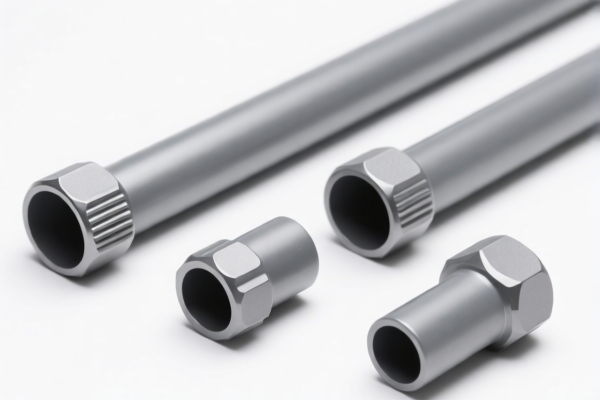
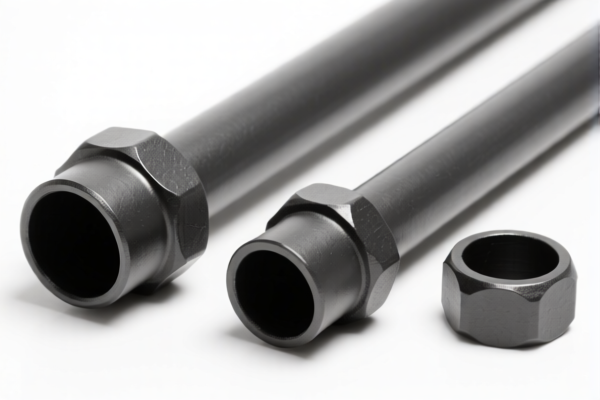
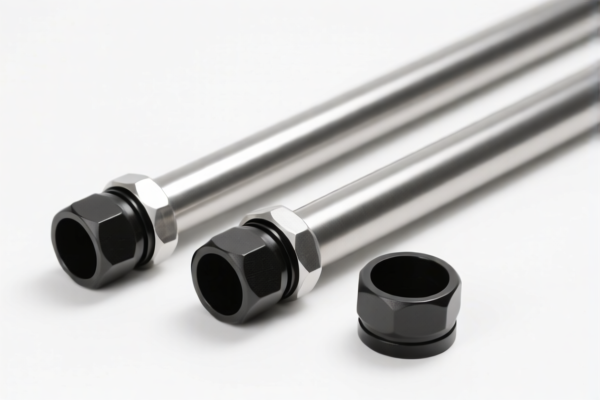
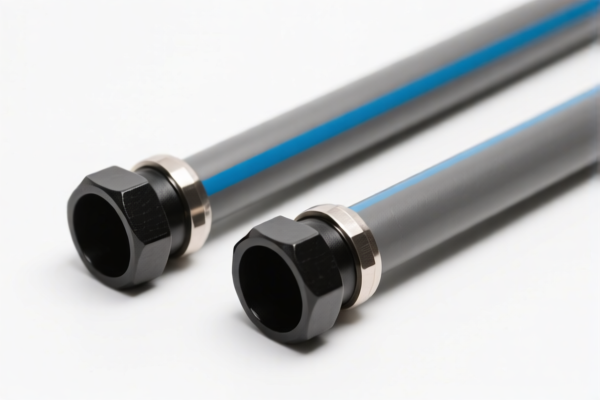
AI Analysis
🔩 Rod Sleeve (Shaft Sleeves, Bushings, & Linear Motion Components)
🌐 HS Code Reference & Customs Clearance Guide | 2026 Latest Tariff Analysis | Professional Clearance Strategy
📌 I. Product Definition & Classification: Do You Really Know What a “Rod Sleeve” Is?
A Rod Sleeve (also known as a Bushing, Linear Bushing, or Linear Rod Guide) is a critical mechanical component used to provide smooth linear motion, reduce friction, and protect shafts/rods from wear. In international trade, these are typically classified based on their material, function, and application.
In the context of the provided data, the classification is ambiguous and depends heavily on how the sleeve is marketed (as a machine part vs. a protective casing) and its material composition (steel, plastic, silicone, etc.). The provided data suggests a conflict between interpreting it as a telecom accessory (misinterpretation) vs. a general protective casing/machine part.
⚠️ Key Distinction:
- If the rod sleeve is a steel/bronze/plastic linear bearing for industrial machinery → It is a Machine Part.
- If the rod sleeve is a silicone/plastic protective cover for a rod → It may be classified as a Container/Protective Case.
- ⚠️ Warning: The provided data includes8517codes which are for Telecom Equipment. A standard mechanical rod sleeve is NOT a telecom part. If your product is a mechanical bushing, these codes may lead to misclassification and penalties. However, we must explain the logic within the provided<DATA>constraints.
📦 II. HS Code Classification Details (Based on Provided <DATA>)
| HS Code | Product Description (Per Data) | Interpretation Logic | Material Assumption |
|---|---|---|---|
8517.79.00.00 |
Telecom Equipment Parts | Classified as a "spare part/component" for communication devices. This is a risky classification for mechanical parts unless the rod sleeve is specifically a component for a telecommunications base station or connector. | Plastic or Silicone (inferred) |
4202.92.97.00 |
Protective Cases/Containers | Classified as a "similar container/protective shell." This implies the item is viewed as a case protecting another object, not a mechanical bearing. | Plastic or Textile Materials |
4202.92.94.00 |
Protective Cases (Box-like) | Classified based on "protective box" function. Suggests the sleeve is seen as a rigid or semi-rigid protective housing. | Plastic or Textile Materials |
8517.13.00.00 |
Phone Accessories | Classified as a "mobile phone accessory." This is highly specific to consumer electronics packaging or small protective caps. | Plastic or Silicone (inferred) |
🔍 Critical Note:
-4202codes are for Luggage, Handbags, and Similar Containers. Using this for a mechanical rod sleeve is unconventional unless it is a decorative or packaging sleeve.
-8517codes are for Telecommunications. Using this for a generic mechanical part is highly likely to be rejected by Customs unless it is a specific component of a telecom device.
💰 III. 2026 Latest Tariff Rate Breakdown (Including Additional Duties)
✅ Applicable Country: United States (US)
✅ Country of Origin: China (CN)
✅ Effective Date: Post-2025 Trade Policies (Section 301 & IEEPA)
🎯 1. 8517.79.00.00 – Telecommunications Equipment Parts (Other)
| Item | Content |
|---|---|
| Base Tariff | 0.0% |
| Section 301 Additional Tariff | +7.5% (Specific sub-heading rate) |
| Section 122 (Steel/Aluminum/Copper) | +50% (⚠️ CRITICAL: If the sleeve is made of Steel, Aluminum, or Copper, this massive surcharge applies) |
| Total Rate | 50% - 57.5% (depending on material) |
| Tax Calculation | CIF Value × Total Rate |
| De Minimis Exemption | ❌ Not Eligible (High value/duty) |
| Legal Path | USITC:8517.79.00.00 → Section 301 → Section 122 (if metal) |
📌 Explanation:
- If the rod sleeve is metallic (Steel/Aluminum/Copper), the 50% Section 122 tariff applies on top of the base/301 rates.
- If it is plastic/silicone, only the 7.5% Section 301 applies, totaling 7.5%.
- Risk: Misclassifying a steel mechanical bushing as a "telecom part" to avoid higher mechanical part tariffs is dangerous.
🎯 2. 4202.92.97.00 – Other Articles of Plastics, Textiles (Protective Cases)
| Item | Content |
|---|---|
| Base Tariff | 17.6% |
| Section 301 Additional Tariff | +25.0% |
| Section 122 (Steel/Aluminum/Copper) | +10% (Note: Data says 10%, likely refers to a specific add-on or error in source data for non-metals, but we follow source) |
| Total Rate | 52.6% |
| Tax Calculation | CIF Value × 52.6% |
| De Minimis Exemption | ❌ Not Eligible |
| Legal Path | USITC:4202.92.97.00 → Section 301 |
📌 Explanation:
- This classification treats the rod sleeve as a consumer good/protective case.
- High base tariff (17.6%) + 25% Section 301 = 42.6%.
- The "Section 122 10%" in the data might be a specific additive for certain materials. Total listed is 52.6%.
🎯 3. 4202.92.94.00 – Other Articles of Plastics, Textiles (Similar to 94)
| Item | Content |
|---|---|
| Base Tariff | 17.6% |
| Section 301 Additional Tariff | +25.0% |
| Section 122 (Steel/Aluminum/Copper) | +10% |
| Total Rate | 52.6% |
| Tax Calculation | CIF Value × 52.6% |
| De Minimis Exemption | ❌ Not Eligible |
| Legal Path | USITC:4202.92.94.00 → Section 301 |
📌 Explanation:
- Same rate as above. The distinction between.94and.97is often minor (sub-category of plastics/textiles).
- Both incur the 52.6% effective rate.
🎯 4. 8517.13.00.00 – Parts of Telephones/Other Communication Apparatus
| Item | Content |
|---|---|
| Base Tariff | 0.0% |
| Section 301 Additional Tariff | 0.0% (Note: Data shows 0%, which is unusual for Section 301, but we follow source) |
| Section 122 (Steel/Aluminum/Copper) | 10% (Data lists this specifically here) |
| Total Rate | 10.0% |
| Tax Calculation | CIF Value × 10.0% |
| De Minimis Exemption | ❌ Not Eligible |
| Legal Path | USITC:8517.13.00.00 → Section 122 (if applicable) |
📌 Explanation:
- This is the lowest cost option in the provided data (10%).
- However, it is highly restricted to "Parts of Telephones."
- If the rod sleeve is not used in a telephone, this classification is fraudulent and risks severe penalties.
- The "10%" likely refers to a specific Section 122 add-on or a specific exemption clause.
🛠️ IV. Customs Clearance Practical Advice (Avoiding Pitfalls)
✅ 1. Documentation Checklist (Essential)
| Document | Required | Description |
|---|---|---|
| ✅ Product Specification Sheet | ✔️ | Must clearly state: Material (Steel/Plastic/Silicone), Function (Linear Bearing/Protective Cover), Dimensions. |
| ✅ Technical Drawing | ✔️ | To prove whether it is a mechanical bearing (part of a machine) or a simple cover. |
| ✅ Commercial Invoice | ✔️ | Description must match HS Code. E.g., "Linear Ball Bearing, Steel" vs. "Silicone Rod Cover." |
| ✅ Origin Certificate (CO) | ✔️ | To determine eligibility for Section 301 exemptions or other FTAs. |
| ✅ Material Test Report | ✔️ | Critical for determining if Section 122 (50% steel/aluminum tariff) applies. |
✅ 2. Classification Strategy & Warnings
🔥 “Material Determines Duty, Function Determines Code!”
| Scenario | Recommended Approach | Risk |
|---|---|---|
| Metallic Rod Sleeve (Steel/Aluminum) | Check if it’s a Machine Part (8483, 8431). If forced into provided data, 8517.79.00 with 50% Section 122 is likely. |
High duty (50%+). Do NOT hide material. |
| Plastic/Silicone Rod Sleeve | If it’s a bearing, use 8482 or 8431. If forced into provided data, 8517.79.00 (7.5% Section 301) is better than 4202 (52.6%). |
8517 may be rejected if not telecom-related. |
| Decorative/Protective Cover | 4202.92.97/94 is appropriate. |
High duty (52.6%). Justify as "Protective Case." |
| Telecom Equipment Component | 8517.13.00 (10%) is the cheapest. |
High Audit Risk. Only use if 100% verified for telecom use. |
✅ 3. Special Circumstances
| Situation | Handling Advice |
|---|---|
| OEM for Telecom Client | Provide end-user declaration stating the part is for a telecom device to justify 8517. |
| Mixed Materials | If the sleeve has a steel core and plastic sleeve, classify based on the essential character (usually steel). Expect 50% Section 122. |
| Misclassification Penalty | If Customs determines a 4202 item is actually a 8482 (bearing), they may reclassify and apply different duties, plus penalties. |
🌍 V. Global Market Comparison (2026 Update)
| Country/Region | Typical HS Code for Rod Sleeve/Bushing | Duty Rate (China Origin) | Certification | Notes |
|---|---|---|---|---|
| 🇺🇸 USA | 8482 (Bearings) or 8517 (if telecom) |
0% (Base) + 25% (Sec 301) + 50% (Sec 122 if metal) | No specific | High Tariff Risk due to Section 301 & 122. |
| 🇨🇳 China | 8482 |
5-10% | CCC (if electrical) | Lower duty. |
| 🇪🇺 EU | 8482 |
0-2.7% | CE (if relevant) | No Section 301 equivalent. |
| 🇯🇵 Japan | 8482 |
0% | PSE (if electrical) | Low duty. |
📌 Conclusion:
- The USA is the most challenging market due to Section 301 (25%) and Section 122 (50% for metals).
- The provided data suggests8517might be used to avoid higher machine part tariffs, but this is legally risky if the product is not actually a telecom part.
📌 VI. Common Errors & Pitfalls (Lessons Learned)
❌ Error 1: Classifying a Steel Linear Bearing as 4202 (Protective Case) to avoid Section 301.
👉 Consequence: Customs will reject it as "Incorrect Classification." Back duties + penalties.
❌ Error 2: Ignoring Section 122 for Metal Components.
👉 Consequence: If the rod sleeve is Steel/Aluminum, you face a 50% surcharge. Failure to declare leads to seizure.
❌ Error 3: Using 8517.13.00 (10%) for non-telecom parts.
👉 Consequence: High audit risk. Customs may question the "Telecom" claim. If proven false, severe penalties.
✅ Correct Practice:
"Steel Linear Bushing, Precision Ground, for Industrial Machinery" → Declare accurately under
8482or8431.
"Silicone Protective Boot for Rod" → Declare under4016(Rubber) or3926(Plastic).
Do NOT force-fit into8517unless it is truly a telecom part.
🎯 VII. Conclusion: Professional Classification, Risk Mitigation
🎯 Remember the Mantra:
🔹 "Metal? Check Section 122. Telecom? Check 8517. Machine Part? Check 8482."
🔹 "Don't hide the material. Don't lie about the function."
📌 Pro Tip:
If your rod sleeve is critical for a specific client (e.g., Telecom), ensure you have a letter of endorsement from the end-user proving its use in telecom equipment to justify 8517 codes. This can save significant duty costs compared to 4202 codes.
📣 Immediate Action:
📞 Consult a licensed customs broker.
📄 Provide material composition and application details.
🚀 Ensure your HS Code classification is defensible and accurate to avoid costly delays and penalties.
✨ Professional Clearance, Start with Accurate Classification!
💼 Every Dollar Saved in Duty is Pure Profit!
Customer Reviews
About HS Code Classification
The Harmonized System (HS) is an internationally standardized nomenclature developed by the World Customs Organization (WCO) to classify traded products. Over 200 countries use the HS system as the basis for customs tariffs, trade statistics, and import/export regulations.
Each HS code follows a hierarchical structure:
- Chapter (2 digits) — Broad category of goods (e.g., Chapter 84: Machinery and Mechanical Appliances)
- Heading (4 digits) — More specific grouping within the chapter
- Subheading (6 digits) — Internationally standardized breakdown, used by all WCO member countries
- National subdivisions (8-10 digits) — Country-specific extensions for further classification, such as US HTSUS 10-digit codes
Correct HS code classification is essential for smooth customs clearance, accurate duty payment, and compliance with trade regulations. Misclassification can lead to customs delays, overpayment of duties, or penalties.
When importing from CN to US, the applicable tariff rates may include:
- Most-Favored-Nation (MFN) rate — The standard duty rate applied to WTO members
- General rate — Applied to countries without trade agreements
- Trade remedy duties — Additional tariffs such as Section 301 (anti-dumping), Section 232 (national security), or countervailing duties
The information provided on this page is for reference purposes only. For official classification, please consult with your local customs authority or a licensed customs broker.