Rodenticide (Granular)
CN → US| HS Code | Tariff Rate | Origin | Destination | Doc |
|---|---|---|---|---|
| 3808615000 | 22.5% | CN | US | Official Doc |
| 3808999501 | 40.0% | CN | US | Official Doc |
Product Images
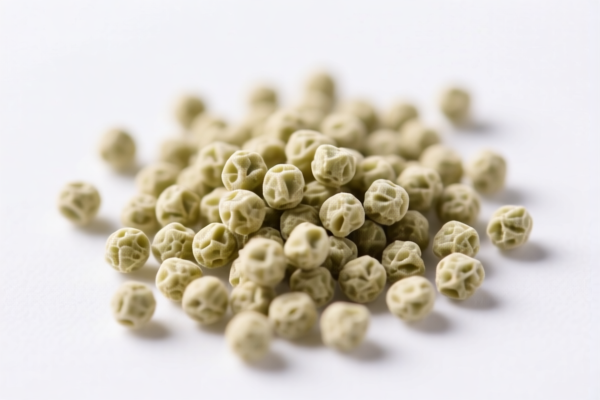
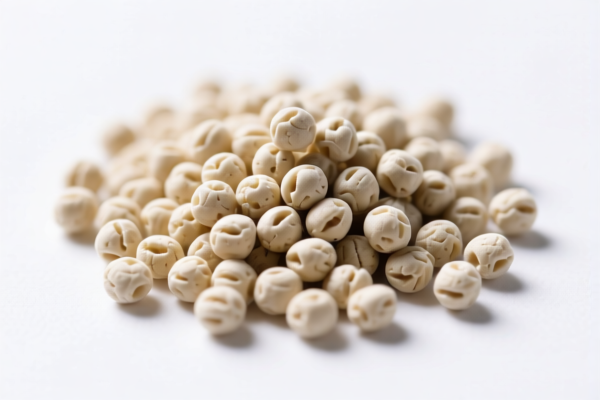
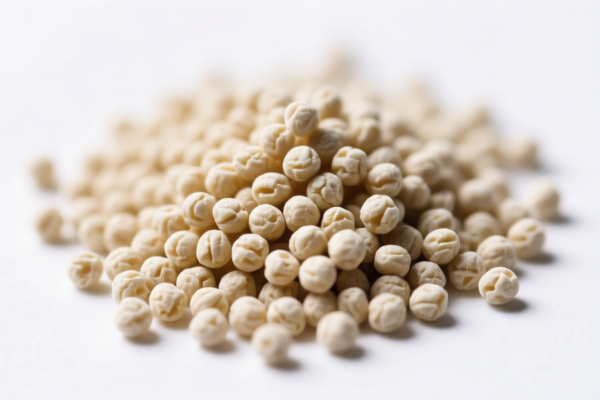
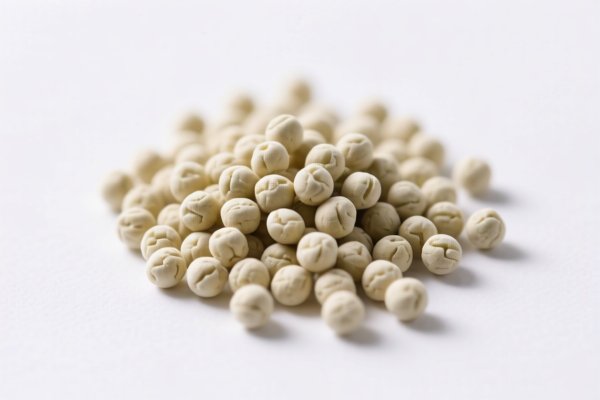
AI Analysis
🐀 Rodenticides, Fungicides, Herbicides & Similar Agricultural Chemicals
🌐 HS Code Reference & Customs Clearance Guide | 2026 Latest Tariff Analysis | Professional通关策略
📌 Part 1: Product Definition & Classification: Do You Really Know "Rodenticides"?
Rodenticides are substances or preparations used to control or kill rodents (rats, mice, etc.). In international trade, these products are strictly regulated under Chapter 38 ("Miscellaneous Chemical Products"), specifically heading 3808.
Key Distinction for Customs Classification: - Retail Packaged Forms: Rodenticides put up in forms or packings for retail sale (e.g., granules, pellets, blocks, bait stations, ready-to-use sprays) are classified under 3808. - Bulk Industrial Chemicals: Raw active ingredients not put up for retail sale may fall under different headings (e.g., 29 chapters for organic chemicals), but Granular Rodenticides intended for end-user use are almost always 3808.
⚠️ Critical Classification Point:
- If the product is granular, pelletized, or formulated as bait for direct consumer or professional use → HS Code 3808.xxxx
- If it is a pure active ingredient in bulk drums for further formulation → Likely Chapter 29 (Organic Chemicals)
- Note: The following analysis assumes the product is a finished, retail-ready granular rodenticide, as implied by the user input.
📦 Part 2: HS Code Classification Details (2026 Latest Tariff Authority)
Based on the provided data, there are two primary HS Codes for Rodenticides. The correct one depends on packaging specifications.
| HS Code | Product Description | Applicable Scenario | Packaging Constraint |
|---|---|---|---|
| 3808.61.50.00 | Insecticides, rodenticides, etc., put up for retail sale Subheading: In packings of net weight ≤ 300 g |
Small-scale retail packs: Handheld bait boxes, small consumer packets, or granules in small bags | ✅ Net Weight ≤ 300g |
| 3808.99.95.01 | Insecticides, rodenticides, etc., put up for retail sale Subheading: Other |
Larger retail packs, professional-grade granules, bulk retail bags | ❌ Net Weight > 300g |
🔍 Key Reminder:
- 3808.61.50.00 applies ONLY if the net weight of the packaging is 300 grams or less.
- 3808.99.95.01 applies to ALL OTHER rodenticides put up for retail sale (i.e., >300g).
- Misclassifying a 500g bag as a 300g pack can lead to severe customs penalties.
💰 Part 3: 2026 Latest Tariff Rate Breakdown (Detailed Tax Provisions)
✅ Applicable Country: United States (US)
✅ Origin: China (CN) (Note: Rates provided are based on the input data, which reflects typical high-tariff scenarios for chemical products from China.)
✅ Effective Date: Current as per input data (2026 context)
🎯 1. 3808.61.50.00 —— Rodenticides (Retail Pack ≤ 300g)
| Item | Content |
|---|---|
| Base Tariff Rate | 5.0% (Ad Valorem) |
| Section 301 Additional Tariff | 7.5% (Specific to this subheading) |
| Total Effective Tariff | 12.5% |
| Tax Calculation | CIF Value × 12.5% |
| De Minimis Eligibility | ❌ Not Applicable (Chemicals generally excluded from $800 de minimis benefits due to anti-dumping/Section 301 restrictions, though specific rules vary by agency. Always verify.) |
| Legal Basis Path | HTSUS:3808.61.50.00 → Section 301 Footnote: 3808.61.50.00 |
📌 Explanation:
- This is the lower tariff bracket for small-packaged rodenticides.
- The 7.5% additional tariff is a specific rate applied to this subheading under current trade measures.
- Total Cost Impact: 12.5% of the customs value.
🎯 2. 3808.99.95.01 —— Rodenticides (Retail Pack > 300g or Other)
| Item | Content |
|---|---|
| Base Tariff Rate | 5.0% (Ad Valorem) |
| Section 301 Additional Tariff | 25.0% (High penalty rate for "Other" chemicals) |
| Total Effective Tariff | 30.0% |
| Tax Calculation | CIF Value × 30.0% |
| De Minimis Eligibility | ❌ Not Applicable |
| Legal Basis Path | HTSUS:3808.99.95.01 → Section 301 Footnote: 3808.99.95.01 |
📌 Note:
- This is the highest tariff bracket for retail rodenticides not meeting the ≤300g criteria.
- The 25% additional tariff significantly impacts profitability.
- Total Cost Impact: 30% of the customs value.
🛠️ Part 4: Customs Clearance Practical Advice (Actionable Pitfall Avoidance Guide)
✅ 1. Documentation Checklist (Non-Negotiable)
| Document | Must Provide | Explanation |
|---|---|---|
| ✅ Product Specification Sheet | ✔️ | Must list active ingredients (e.g., Bromadiolone, Difenacoum), concentration, and physical form (granular). |
| ✅ MSDS / SDS (Material Safety Data Sheet) | ✔️ | Required for hazardous materials. Must comply with GHS standards. |
| ✅ EPA Registration Number | ✔️ | Critical! All rodenticides in the US must be registered with the Environmental Protection Agency (EPA). No EPA No. = Entry Refused. |
| ✅ Commercial Invoice | ✔️ | Must clearly state: "Rodenticide, Granular, EPA Reg. No. XXXXX, Net Weight: XXXg". |
| ✅ Packing List | ✔️ | Clearly indicate Net Weight per pack to justify HS Code selection (≤300g vs. >300g). |
| ✅ Certificate of Origin | ✔️ | To verify country of origin for tariff determination. |
✅ 2. Declaration Strategy (Key Mnemonic)
🔥 "Weight Determines Code, EPA Determines Entry, Granules Mean 3808!"
| Scenario | Correct Declaration | Wrong Practice |
|---|---|---|
| Small retail bait (e.g., 100g box) | 3808.61.50.00 |
Misdeclare as 3808.99.95.01 → Pay extra 12.5% |
| Large bag (e.g., 5kg professional pack) | 3808.99.95.01 |
Misdeclare as 3808.61.50.00 → Severe Penalty + Back Taxes |
| Bulk granules (unregistered, non-retail) | Not 3808 (Likely 29.xxxx) | Declare as 3808 → Rejected by EPA/CBP |
✅ 3. Special Case Handling
| Situation | Handling Advice |
|---|---|
| No EPA Registration | Do not ship. CBP will reject entry without an EPA number. Apply for registration before export. |
| Mixed Packaging | If a carton contains both ≤300g and >300g packs, declare separately. Do not mix codes in one line item. |
| Bait Stations vs. Granules | If the product is a bait station (plastic container + granules), it may still be classified as 3808 if the rodenticide is the essential character. Ensure the invoice describes it accurately. |
| Organic/Natural Rodenticides | Still classified under 3808 if used for pest control. "Natural" does not exempt from EPA or tariff rules. |
🌍 Part 5: Global Market Comparison (2026 Context)
| Country/Region | Recommended HS Code | Tariff Rate (China Origin) | Certification Requirement | Notes |
|---|---|---|---|---|
| 🇺🇸 United States | 3808.61.50.00 / 3808.99.95.01 |
12.5% or 30% | EPA Registration + Labeling Compliance | High regulatory barrier. |
| 🇨🇳 China | 3808.99.95.00 (General) |
~5-10% | Chinese EPA Approval | Import restrictions apply. |
| 🇪🇺 European Union | 3808.94.00 |
~6.5% | EU Biocidal Products Regulation (BPR) | BPR compliance is stricter than US EPA. |
| 🇬🇧 United Kingdom | 3808.94.00 |
~6.5% | UK Biocides Regulation | Post-Brexit rules apply. |
| 🇦🇺 Australia | 3808.94.00 |
~5% | APVMA Registration | Mandatory pre-market approval. |
📌 Conclusion:
- The US market has high tariffs (up to 30%) but clearer HS Code distinctions based on weight.
- The EU and UK require BPR/APVMA-like registration, which is often more complex than EPA registration.
- Always verify the EPA number before shipping to the US.
📌 Part 6: Common Errors & Pitfall Guide (Lessons Learned)
❌ Error 1: Ignoring the 300g net weight threshold
👉 Consequence: Classifying a 1kg bag as 3808.61.50.00 → Underpayment of 17.5% duties → Audit & Penalties.
❌ Error 2: Shipping without EPA Registration Number
👉 Consequence: Entry Refused by CBP. Product destroyed or re-exported. No refund.
❌ Error 3: Vague Description on Invoice ("Chemical Mix")
👉 Consequence: CBP may assign a residual tariff rate or require reclassification, causing delays.
❌ Error 4: Misidentifying "Granular" as "Liquid"
👉 Consequence: If it’s a liquid, it might fall under different packing rules. Granular is solid. Ensure SDS matches physical form.
✅ Correct Declaration Example:
"Rodenticide, Granular, Active Ingredient: Bromadiolone 0.005%, EPA Reg. No. 12345-67, Net Weight 200g, for Retail Sale"
🎯 Part 7: Conclusion: Professional Declaration, Smooth Clearance!
🎯 Remember the Mnemonic:
🔹 "Weight ≤ 300g? Pay 12.5%. Weight > 300g? Pay 30%. No EPA? No Entry!"
🔹 "Granular is 3808, EPA is Key, Classification Saves Money!"
📌 Pro Tip:
- If you are exporting small retail packs (<300g), you save 17.5% in tariffs compared to larger packs.
- Consider optimizing packaging size to stay under 300g where possible, if logistics allow.
- Always apply for an EPA Registration Number before production.
📣 Immediate Action:
📞 Confirm EPA Registration + Verify Net Weight per Pack + Apply HS Code Pre-Ruling
🚀 Ensure your rodenticides clear customs smoothly, avoid penalties, and maximize profit!
✨ Professional Customs Clearance Starts with Accurate Classification!
💼 Your tariff bill should reflect the product, not guesswork!
Customer Reviews
About HS Code Classification
The Harmonized System (HS) is an internationally standardized nomenclature developed by the World Customs Organization (WCO) to classify traded products. Over 200 countries use the HS system as the basis for customs tariffs, trade statistics, and import/export regulations.
Each HS code follows a hierarchical structure:
- Chapter (2 digits) — Broad category of goods (e.g., Chapter 84: Machinery and Mechanical Appliances)
- Heading (4 digits) — More specific grouping within the chapter
- Subheading (6 digits) — Internationally standardized breakdown, used by all WCO member countries
- National subdivisions (8-10 digits) — Country-specific extensions for further classification, such as US HTSUS 10-digit codes
Correct HS code classification is essential for smooth customs clearance, accurate duty payment, and compliance with trade regulations. Misclassification can lead to customs delays, overpayment of duties, or penalties.
When importing from CN to US, the applicable tariff rates may include:
- Most-Favored-Nation (MFN) rate — The standard duty rate applied to WTO members
- General rate — Applied to countries without trade agreements
- Trade remedy duties — Additional tariffs such as Section 301 (anti-dumping), Section 232 (national security), or countervailing duties
The information provided on this page is for reference purposes only. For official classification, please consult with your local customs authority or a licensed customs broker.